The Tree of Life is one of humanity’s oldest and most powerful symbols. It appears in religions, mythologies, and spiritual traditions all over the world—from ancient Egypt and Mesopotamia to Celtic lore, Norse sagas, Kabbalah, and modern psychology. Beneath the surface of these stories lies a shared message: the Tree of Life is a map of connection—between body and spirit, earth and sky, self and the divine.
This guide unpacks the deeper symbolism of the Tree of Life, so you can understand how it applies to your spiritual journey, personal growth, and everyday life.
What Is the Tree of Life?
At its core, the Tree of Life is a universal archetype—a symbolic image that appears across cultures to represent:
- The interconnectedness of all living things
- The cycle of life, death, and rebirth
- Spiritual growth and awakening
- The link between heaven, earth, and the underworld
Picture a great tree:
- Roots dig deep into the soil, drawing nourishment from the earth.
- Trunk stands steady, supporting the whole structure.
- Branches reach up toward the sky, expanding and seeking the light.
- Leaves and fruit express the tree’s fullness, growth, and capacity to give.
This simple image encodes an entire philosophy of life.
Ancient Origins of the Tree of Life
The Tree of Life symbol is so widespread that historians believe it emerged independently in multiple ancient cultures.
Mesopotamia and the Ancient Near East
In ancient Mesopotamia, sacred trees appeared on temple carvings and royal seals. These often depicted a stylized tree between two guardian figures or deities, symbolizing:
- Divine order
- Cosmic balance
- The king’s link to heaven and divine authority
This early imagery influenced later traditions throughout the Near East.
The Tree of Life in the Bible
In the Book of Genesis, the Tree of Life stands in the center of the Garden of Eden, alongside the tree of the knowledge of good and evil. It represents:
- Immortality
- Direct access to divine life
- A state of wholeness and harmony with God
The Tree of Life appears again in the Book of Revelation as a symbol of healing and restored paradise, whose leaves are “for the healing of the nations.”
The Norse World Tree: Yggdrasil
In Norse mythology, Yggdrasil is a mighty ash that connects the Nine Worlds:
- Its roots extend into realms of giants, the dead, and primordial forces.
- Its trunk and branches support gods, humans, and creatures.
Yggdrasil shows the Tree of Life as a cosmic structure—a living architecture of reality itself.
Celtic Tree of Life
The Celts depicted the Crann Bethadh, or Celtic Tree of Life, with roots and branches intertwined in a circle. It symbolized:
- Rebirth and regeneration (trees that “die” in winter and “resurrect” in spring)
- Harmony between the physical world and spiritual forces
- The tribe’s connection to land and ancestors
For the Celts, cutting down a sacred tree was an act of deep spiritual violence, showing how central the Tree of Life was to their worldview.
Universal Symbolism: What the Tree of Life Really Represents
Across cultures, the Tree of Life carries a cluster of shared meanings. Understanding these helps you see how the symbol can guide your own inner work.
1. Interconnectedness of All Things
Every leaf, branch, and root is part of one organism. Likewise:
- All beings are interconnected.
- Your actions ripple outward, seen and unseen.
- Separation is more illusion than reality.
This echoes modern scientific understanding that ecosystems function as complex webs of relationships (source: National Geographic).
2. The Path of Spiritual Growth
A tree starts as a tiny seed, slowly growing toward light. This mirrors the spiritual path:
- The seed is your potential and inner essence.
- The roots are your grounding practices and values.
- The trunk is your will, discipline, and integrity.
- The branches are your exploration of ideas, experiences, and relationships.
- The fruit is wisdom, compassion, and service.
The Tree of Life reminds you that growth is gradual and often invisible at first—but with patience and nourishment, transformation happens.
3. Balance Between Earth and Heaven
The Tree of Life stands at the axis mundi, the axis of the world:
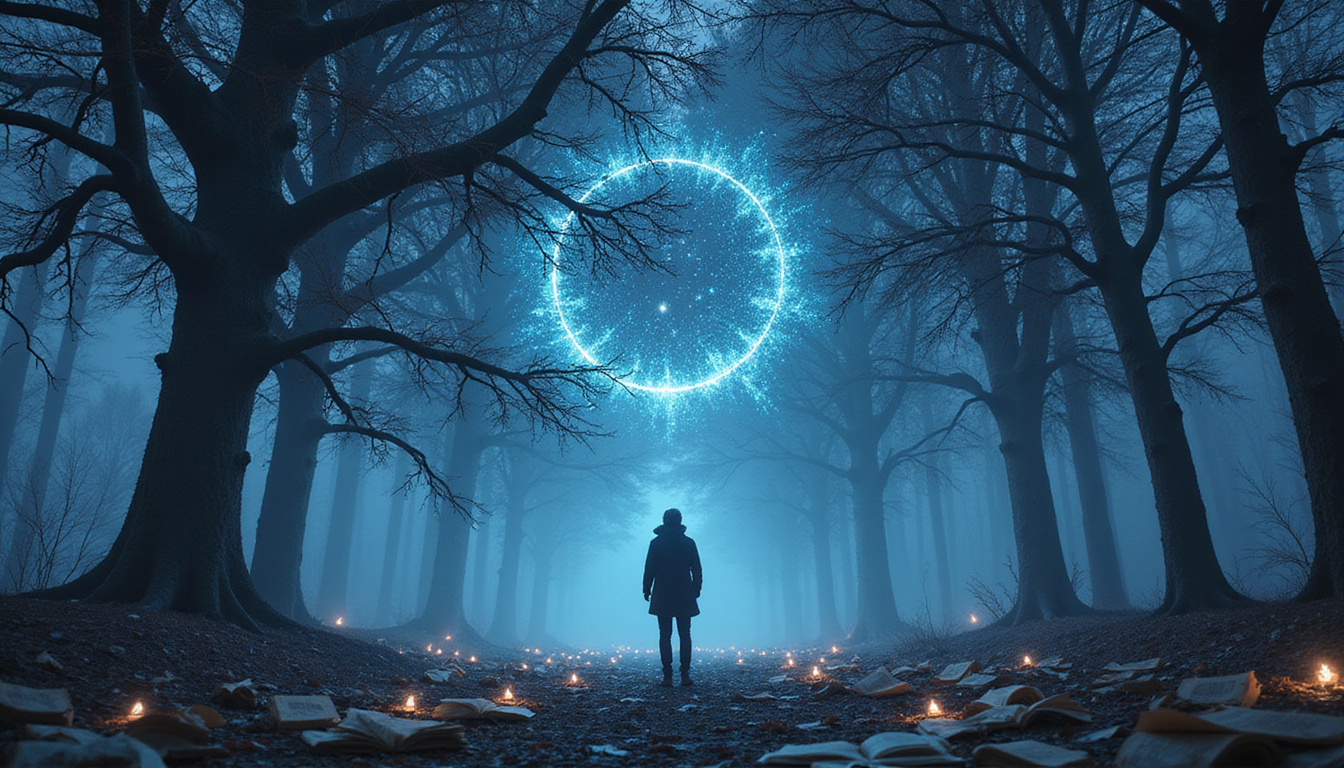
- Roots: body, instinct, ancestry, material life
- Branches: spirit, imagination, higher consciousness
A healthy tree needs both fertile soil and open sky. In the same way, a healthy spiritual life integrates:
- Practical responsibilities and mystical insights
- Grounded realism and visionary aspiration
- Daily discipline and transcendent experiences
4. Life, Death, and Rebirth
Trees shed leaves, endure winter, and return in spring. This cycle reflects:
- Endings that make room for new beginnings
- Personal “winters” that prepare you for inner renewal
- The possibility of rebirth after loss, failure, or crisis
The Tree of Life tells you: change is not the end; it’s the rhythm of existence.
The Tree of Life in Kabbalah and Esoteric Traditions
One of the most detailed interpretations of the Tree of Life appears in Jewish mysticism (Kabbalah). Here, the Tree of Life is a diagram of the inner structure of creation and consciousness.
The Ten Sefirot: Spheres of Divine Emanation
In Kabbalah, the Tree of Life is composed of ten sefirot—spheres or attributes—through which divine energy flows into the world. These include:
- Keter (Crown): Divine will / pure potential
- Chokhmah (Wisdom) and Binah (Understanding): Creative insight and structure
- Chesed (Loving-kindness) and Gevurah (Strength): Expansion and boundaries
- Tiferet (Beauty): Harmony and balance
- Yesod (Foundation): The interface between inner world and physical reality
- Malkhut (Kingdom): Manifestation, the material world
The Tree of Life in Kabbalah serves as:
- A map of the soul
- A framework for meditation and contemplation
- A way to understand the relationship between the human and the divine
Pathworking and Inner Journey
Western esoteric traditions adapted the Kabbalistic Tree of Life into a system of pathworking—guided journeys through the sefirot and connecting paths to:
- Explore inner archetypes
- Integrate shadow aspects
- Develop wisdom and compassion
Even if you’re not formally studying Kabbalah, this shows how the Tree of Life can function as a blueprint for inner development.
Personal Meaning: How to Work With the Tree of Life in Your Life
You don’t have to be religious or scholarly to use the Tree of Life as a powerful symbol in your daily life. You can approach it as a spiritual tool, a psychological map, or a meditation focus.
Reflect on Your Own “Roots, Trunk, and Branches”
Use the structure of a tree to examine your life:
-
Roots
- What grounds you—habits, relationships, beliefs?
- Are your roots deep and diverse, or shallow and fragile?
-
Trunk
- How strong is your sense of self?
- Do you stand firm in your values, or bend with every external pressure?
-
Branches
- Where are you reaching and growing?
- Are you exploring your potential, or staying cramped and small?
-
Fruit and Leaves
- What are you giving to the world—skills, kindness, creativity?
- What signs of growth can you recognize and celebrate?
This simple exercise can reveal where your “tree” needs attention.
Practical Ways to Connect With the Tree of Life Symbol
You can bring the Tree of Life into your spiritual or self-development practice in many grounded ways:
- Meditation: Visualize yourself as a tree—roots descending into the earth, branches lifting toward the sky. Breathe slowly, imagining energy flowing up and down your “trunk.”
- Journaling: Draw your own Tree of Life and label roots (foundations), trunk (strengths), branches (goals), and fruit (achievements).
- Art and creativity: Paint or sketch your personal Tree of Life as a reflection of your inner landscape.
- Ritual or altar: Place a Tree of Life symbol where you meditate or pray as a reminder of connection and growth.
- Nature connection: Sit with a real tree, observe it closely, and contemplate what it mirrors about your own life.
Key Lessons the Tree of Life Offers Seekers
If you’re on a spiritual or self-development path, the Tree of Life crystallizes several essential teachings:
- Growth is slow, layered, and cumulative—don’t rush your evolution.
- True wisdom is embodied: it reaches down into daily life, not just up into abstract ideas.
- You are never isolated; you are part of a vast, living web.
- Your “winters” are not failures; they are necessary seasons.
- Real balance comes from honoring both your earthly needs and your spiritual longings.
When you contemplate the Tree of Life, you’re not just looking at an ancient symbol—you’re holding a mirror to your own journey.
FAQ: Tree of Life Questions Answered
1. What does the Tree of Life symbolize spiritually?
Spiritually, the Tree of Life symbol represents the connection between all forms of existence—physical, mental, and divine. It embodies growth, wisdom, and the journey from unconscious potential (the seed) to awakened realization (the fully grown tree bearing fruit). Different traditions add their own layers—immortality, cosmic order, the soul’s path—but the core message is one of interconnectedness and evolution.
2. How is the Tree of Life used in spiritual practice today?
Today, many people use the Tree of Life spiritual symbol as:
- A focus for meditation or visualization
- A map for understanding personal growth and life stages
- A protective or meaningful design in jewelry, tattoos, or home decor
- A framework in Kabbalistic and esoteric practices for exploring different aspects of the self and the divine
It functions both as a contemplative tool and as a reminder of your connection to something larger than yourself.
3. What’s the difference between the Tree of Life and the Tree of Knowledge?
In biblical tradition, the Tree of Life in the Bible gives access to divine life and wholeness, while the Tree of the Knowledge of Good and Evil introduces moral awareness, duality, and separation. Symbolically, the Tree of Life represents unity and direct experience of the divine, whereas the Tree of Knowledge represents discernment, choice, and the complexity of human consciousness. Some spiritual interpretations suggest that integrating both is part of humanity’s deeper journey.
The Tree of Life is not just an artifact of ancient myth—it’s a living symbol that can transform how you see yourself and the world. When you recognize your life as a tree in constant growth, rooted in the earth yet reaching for the sky, you step into a wiser, more connected way of being.
If this symbol speaks to you, don’t leave it as an abstract idea. Start actively working with the Tree of Life: meditate on it, draw it, reflect on your own roots and branches, and let it guide the choices you make. Allow the Tree of Life to become a personal compass—one that quietly points you back, again and again, to growth, balance, and profound inner connection.
Explore the Science Behind Spirituality
This guide explored the meaning and history of good luck symbols. To discover the psychology, consciousness, and scientific perspectives behind spiritual beliefs, visit SpiritualMindScience.com.