Totem Pole Meanings Revealed: 10 Surprising Cultural Insights
A totem pole is one of the most recognizable Indigenous art forms of the Pacific Northwest Coast—yet it’s also one of the most misunderstood. Many people assume every pole is a religious object, or that the “top figure is the most important,” or even that they’re “idol worship.” In reality, the meanings behind these monumental carvings are far more diverse, nuanced, and deeply rooted in specific Indigenous cultures and histories.
Below, we’ll explore 10 surprising cultural insights that reveal what totem poles truly represent, how they’re used, and why it’s so important to approach them with respect.
1. “Totem Pole” Is a Western Term for Several Distinct Traditions
The phrase “totem pole” is a broad, Western catch-all for a variety of tall carved cedar poles created by several Indigenous nations of the Northwest Coast, including (but not limited to):
- Haida
- Tlingit
- Tsimshian
- Kwakwaka’wakw
- Nuu-chah-nulth (Nootka)
- Coast Salish peoples
Each nation has its own languages, stories, styles, and protocols. Lumping them together as just “totem pole tribes” erases this diversity. In many Indigenous languages, there are distinct words for different kinds of poles—house posts, memorial poles, mortuary poles, or welcome poles—rather than a single term meaning “totem pole.”
Understanding this helps correct the idea that there is one universal totem pole meaning. Instead, there are many traditions and purposes, shaped by specific communities and places.
2. Totem Poles Are Visual Storytelling, Not “Idols”
A common misconception is that a totem pole is an object of worship, similar to a religious idol. In most Northwest Coast traditions, this is not accurate.
Totem poles are better understood as:
- Story carriers – recording histories, events, and relationships
- Identity markers – showing clan or family crests and lineages
- Public records – communicating rights, privileges, and social rank
Rather than being worshiped, the figures on a totem pole function like a visual archive or text carved in wood. They may represent mythic beings, ancestral histories, or specific agreements and obligations among families and clans.
The meaning is deeply contextual. Without knowledge of the stories and language of the community, an outsider can only understand a fraction of what’s represented.
3. Not All Figures on a Totem Pole Are Animals
People often assume a totem pole only features animals—a raven, bear, eagle, or wolf. While these are important and widespread crest figures, they are not the only ones.
Totem poles may also depict:
- Mythic beings (e.g., Thunderbird, sea monsters, supernatural beings)
- Human ancestors or chiefs
- Hybrids of human and animal forms
- Objects from important stories (canoes, houses, tools)
Each figure is chosen for a reason. A Raven might represent a trickster, a creator, a clan crest, or a specific ancestor depending on that community’s teachings. An apparently “strange” or stylized figure might represent a powerful spiritual being known well within that culture but unfamiliar to outsiders.
4. The Top of a Totem Pole Isn’t Always the “Most Important”
The expression “low man on the totem pole” is misleading. It assumes:
- There is a strict hierarchy from top to bottom in every pole.
- The lowest position is the weakest or least important.
Both assumptions are flawed. In some traditions:
- The bottom figures can be foundational, representing origins or crucial ancestors.
- Figures may be arranged to tell stories in a specific sequence, not a power ranking.
- Sometimes the order is dictated by visual balance and style more than hierarchy.
Different nations and carvers have different conventions. Interpreting a totem pole as a simple vertical chain of command strips away the complexity of its meanings and the intentions of the community.
5. Totem Poles Serve Many Functions Beyond Decoration
A totem pole is not just an art piece or tourist attraction—historically, it’s a living part of social, political, and spiritual life. Poles could be:
- House front poles or posts – representing the clan or family whose longhouse it marks.
- Memorial poles – honoring a deceased person of high rank.
- Mortuary poles – sometimes containing a bentwood box with the remains of a loved one.
- Shame or ridicule poles – calling out unpaid debts, broken promises, or wrongdoing.
- Welcome or gateway poles – marking village entrances or important gathering sites.
Each function shapes the images, the stories, and the social meaning carried by the carved figures. For example, a memorial pole might emphasize an individual’s achievements, while a house pole might focus more on ancestral history and clan rights.
6. Totem Poles Are Deeply Tied to Ceremony and Protocol
Many people encounter a totem pole as a static object in a park or museum, but for the communities who create them, poles are embedded in ceremony and protocol.
Traditionally, the raising of a pole is accompanied by:
- Potlatches or feasts – hosted by the family or clan commissioning the pole.
- Public witnesses – invited to observe and confirm the pole’s meaning and the rights it declares.
- Speeches and songs – explaining the stories and acknowledgments represented.
- Gifts and food – distributed to guests to honor their role as witnesses.
In many communities, it’s the ceremony, not just the carving, that activates the full social and spiritual significance of the totem pole. Without these protocols, an erected pole is missing a crucial part of its intended role in the community.
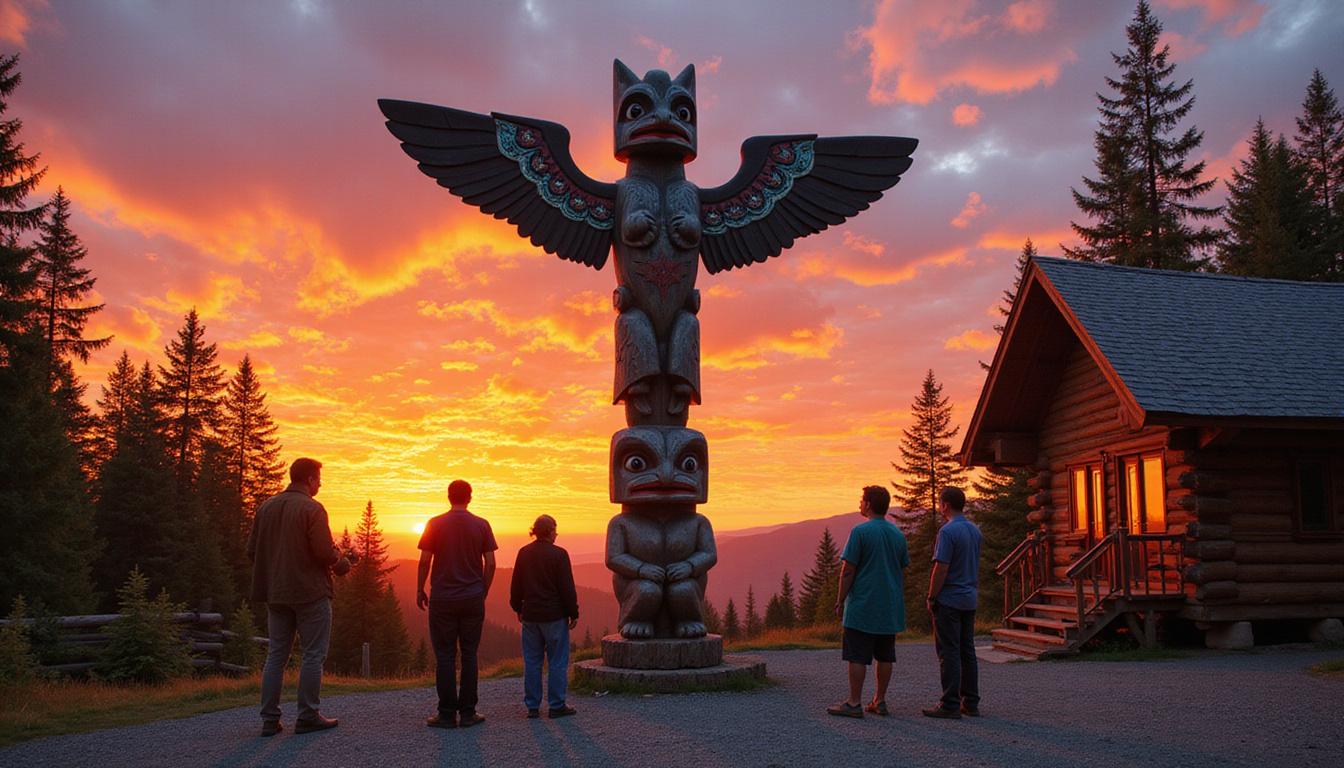
7. Colonialism Nearly Erased the Totem Pole Tradition
One of the most surprising and sobering insights is how close these traditions came to being destroyed. In Canada and the United States, colonial governments:
- Banned potlatches and related ceremonies for decades.
- Removed children to residential/boarding schools, punishing Indigenous languages and arts.
- Encouraged or allowed the looting of poles for sale to museums and private collectors.
By the early 20th century, totem pole carving declined sharply in many areas. Some communities stopped commissioning new poles because the ceremonies around them were criminalized.
Yet carvers, knowledge keepers, and families kept stories alive in quiet ways. From the mid‑20th century onward, a major cultural resurgence began, with artists reviving carving techniques, language use, and ceremonial practices. Today, contemporary carvers blend traditional teachings with modern expression, revitalizing the presence and power of the totem pole in Indigenous communities.
For further historical context on Northwest Coast art and the impact of colonialism, the Smithsonian’s National Museum of the American Indian offers useful background (source: National Museum of the American Indian).
8. Reading a Totem Pole Requires Community Knowledge
Tour guides and signs sometimes try to “decode” a totem pole for visitors, but true interpretation depends on:
- Language – many nuances are carried in Indigenous words and names.
- Clan and family history – only known in detail by those communities.
- Protocol and permission – some stories are not meant to be shared publicly.
- Visual style – recognizing how a specific carver or nation depicts certain beings.
Without this cultural grounding, outsiders can misunderstand or oversimplify meanings. For instance, a bear figure isn’t just “strength”; it might be connected to a specific origin story of a clan, a territorial right, or an actual historical alliance.
Respectful engagement means acknowledging that not everything on a totem pole is for public interpretation—and that communities hold the authority over how and when their stories are told.
9. Modern Totem Poles Address Contemporary Issues
Not all totem poles are centuries old or purely about ancient stories. Many contemporary carvers use the form to speak to current realities facing Indigenous peoples, such as:
- Land and water protection
- Residential and boarding school trauma
- Language revitalization
- Environmental change and climate crisis
- Community pride and healing
A modern memorial pole might honor missing and murdered Indigenous women and girls. Another might commemorate a land rights victory or raise awareness about a threatened salmon run.
These newer works demonstrate that the totem pole is a living art form, evolving with the times while staying rooted in ancestral knowledge and protocols.
10. Respectful Engagement Matters More Than “Decoding”
When visiting a coastal community, museum, or cultural center where a totem pole stands, the most important approach is one of respect and humility, not just curiosity about “what it means.”
A respectful approach includes:
- Reading any posted information and respecting when details are limited.
- Recognizing that communities, not tourists, define the meaning and protocols.
- Asking guides or knowledge keepers for permission before touching or photographing.
- Understanding that some poles and ceremonies are sacred and not for display or social media.
- Learning whose territory you’re in and how to acknowledge that.
Seeing a totem pole as a living part of a people’s identity—not just an exotic curiosity—changes how we relate to it and encourages deeper, more ethical cultural understanding.
Quick Guide: How to Thoughtfully Experience a Totem Pole
When you stand before a totem pole, try this simple practice:
- Look closely at the figures from bottom to top and back again. Notice shapes, colors, and expressions.
- Read context – signs, names, and dates; see if the pole is a house post, memorial, or modern commission.
- Listen and ask – if a local guide, carver, or cultural worker is present, ask what you’re allowed to know.
- Reflect – what does this pole tell you about resilience, identity, and ongoing Indigenous presence?
- Support – consider visiting Indigenous-run cultural centers, buying from Indigenous artists, or supporting language and art programs.
This mindset shifts the experience from passive sightseeing to active, respectful learning.
FAQ: Understanding Totem Poles and Their Meanings
1. What is the purpose of a totem pole in Indigenous communities?
A totem pole can serve many purposes: marking a family or clan’s identity, commemorating an important ancestor, honoring the dead, recording rights and privileges, or calling attention to injustices. The purpose depends on the specific nation, community, and context of the pole’s carving and raising.
2. Do all tribes or nations use totems or totem poles?
No. Totem poles are specific to certain Indigenous peoples of the Pacific Northwest Coast. While many Indigenous nations around the world have clan animals or symbolic beings, that does not mean they carve or use a towering wooden totem pole. It’s important not to generalize one region’s tradition to all Indigenous peoples.
3. How can I learn the meanings behind a particular totem pole?
The most accurate way is to learn from the community connected to that pole: local cultural centers, carvers, hereditary leaders, or interpreters who have permission to share those stories. Museum labels can offer some context, but they’re often incomplete. Remember that some meanings are private or sacred and may not be shared publicly.
A totem pole is not just a wooden monument—it’s a conversation across generations, a record of relationships, and a powerful symbol of Indigenous resilience and presence along the Pacific Northwest Coast. When we take time to understand these carvings on their own terms, guided by the voices of the communities they come from, we move beyond stereotypes and toward genuine respect.
If you’re ready to deepen your understanding, consider visiting an Indigenous-run cultural center, taking a guided tour by local knowledge keepers, or supporting contemporary totem pole carvers through their official websites and galleries. Let your next encounter with a totem pole be the beginning of a more informed, respectful relationship with the cultures that created—and continue to renew—this extraordinary art form.
Sacred objects often carry deep cultural and spiritual meaning. Learn how these symbols relate to history, spirituality, and the human mind by exploring more articles at SpiritualMindScience.com.