A totem pole is far more than a striking piece of outdoor art. For many Indigenous Nations of the Pacific Northwest, these towering cedar carvings are visual stories, records of lineage, expressions of law, memorials, and public declarations of identity. Understanding totem pole meanings means moving beyond tourist stereotypes and engaging with the living cultures, protocols, and histories that created them.
Below, we’ll explore how to read totem poles, the significance of common figures, the different types of poles, and their ongoing legacy in Indigenous communities today.
What is a totem pole, really?
In its most basic sense, a totem pole is a large, carved wooden pole—traditionally red or yellow cedar—created by Indigenous Peoples of the Northwest Coast of North America, including (but not limited to):
- Haida
- Tlingit
- Tsimshian
- Kwakwaka’wakw
- Nisga’a
- Gitxsan
- Coast Salish Nations
Contrary to common myth, totem poles are not “idols” for worship. They are:
- Storytelling devices
- Markers of family or clan history
- Memorials to important individuals
- Visual representations of legal, social, and territorial rights
Each pole belongs to a specific culture and family. Its meanings are rooted in oral histories and protocols that are not fully knowable to outsiders without permission and context.
The cultural roots of totem poles
Totem poles arise from complex societies with highly developed artistic, legal, and ceremonial systems. Key cultural foundations include:
Clan and crest systems
Many Nations that carve totem poles are organized into clans or matrilineal lineages, each associated with crest figures such as Raven, Eagle, Killer Whale, Bear, Frog, or Wolf. These figures are:
- Emblems of identity and belonging
- Proof of ancestral stories and rights
- Protected intellectual and cultural property
Only those with hereditary rights can use specific crests on a totem pole. Using someone else’s crest without permission is a serious breach of protocol.
Oral histories and law
Totem poles do not “replace” oral histories; they accompany them. At potlatches and other ceremonies, hereditary leaders, speakers, and witnesses recount the stories behind a pole as it is raised. In this way, totem poles:
- Affirm and publicize legal claims (to land, names, fishing spots)
- Record significant events like alliances, marriages, or conflicts
- Visibly anchor intangible histories in public space
They function as visual law books and history books combined, but their “text” is understood through the community’s oral tradition.
Types of totem poles and what they signify
Not all totem poles have the same purpose. Understanding basic types helps clarify their meanings.
1. House front and house posts
These poles are part of a longhouse structure:
- House front poles: Freestanding poles placed in front of a longhouse, often featuring the main crests of the family living there.
- House posts: Interior load-bearing posts, often carved, supporting roof beams.
Meaning: They declare who lives there, their crests, their rank, and sometimes the origin stories that give them rights to that territory.
2. Memorial poles
Raised in honor of a deceased chief or important person, these poles might:
- Display the crests associated with the deceased’s lineage
- Include a small box or cavity to hold their remains (in some traditions)
- Stand on or near the person’s former home site
Meaning: They commemorate a life, remind people of that person’s authority, and keep their name and lineage publicly recognized.
3. Heraldic or crest poles
These focus on a family or clan’s main crests and achievements. They:
- Assert status within the community
- Mark important events like marriages or the granting of titles
- Can be associated with potlatches where wealth is distributed
Meaning: They are public declarations of identity, status, and rights.
4. Mortuary poles
Distinct from general memorial poles, mortuary poles often include a container for remains at or near the top. These are more closely tied to burial practices and spiritual traditions.
Meaning: They merge memorial, burial, and spiritual functions, honoring the dead while anchoring them in family territories.
5. Welcome poles
Placed near shores or village entrances, welcome poles:
- Symbolically or literally “greet” arriving visitors
- Announce to whose territory visitors are coming
- May feature outstretched arms or specific greeting postures
Meaning: They assert territorial presence and establish the context for any new relationship or visit.
6. Story poles
Though all poles convey stories, some are carved primarily to visually represent specific narratives—myths, migrations, or key historical events.
Meaning: They record and display stories that are central to a community’s worldview and history.
How to read a totem pole: forms and figures
Reading a totem pole is like trying to follow a graphic novel in a language you partially understand: you can recognize elements, but the full depth belongs to the community.
There is no single universal rule for reading order (top to bottom or bottom to top). Different carvers and Nations use different conventions. However, you can look for:
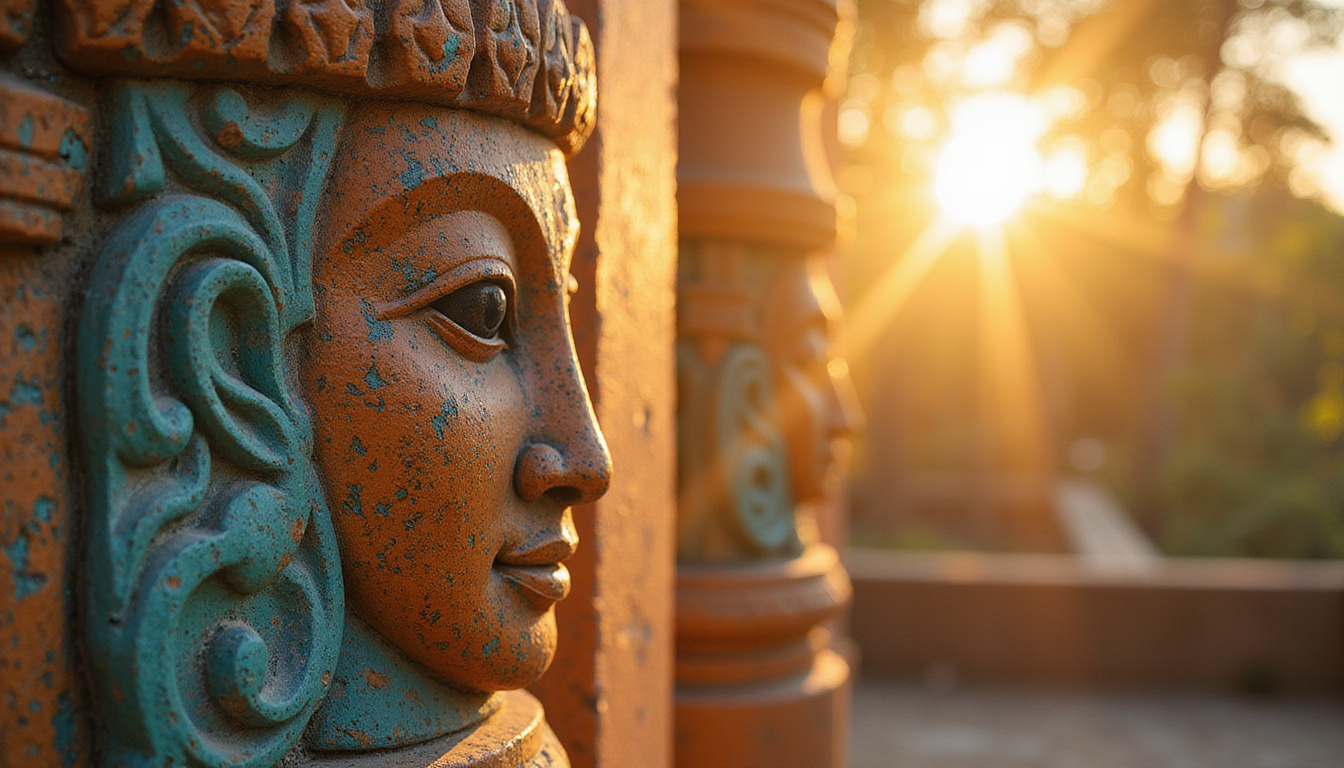
Key figures and their common associations
Each figure can have many different meanings depending on the specific story, clan, and region. Some very general patterns include:
- Raven – Often a creator, transformer, or trickster; associated with knowledge, change, and sometimes mischief.
- Eagle – High rank, power, peace, or leadership; often paired with Raven as an opposite or complement.
- Bear – Strength, protection, motherhood, and connection to the land.
- Killer Whale (Orca) – Power, travel, and the sea; sometimes associated with transformation between sea and land peoples.
- Wolf – Intelligence, family loyalty, teamwork in hunting.
- Frog – Connector between water and land; associated with communication or transformation.
- Thunderbird – A powerful, supernatural being associated with thunder, lightning, and immense strength.
These are only broad associations. On a specific totem pole, Raven might represent a particular ancestor, an event, or a right to a crest rather than an abstract quality.
Formline design
Northwest Coast art is often described as formline art—flowing, continuous lines that create shapes like ovoids, U-forms, and S-forms. On a totem pole:
- Large ovoid shapes often outline eyes and joints.
- U-forms shape limbs, feathers, and fins.
- Negative space is used strategically to distinguish figures.
Recognizing these shapes helps you see where one being ends and another begins on a complex pole.
Context clues
To better interpret totem pole meanings, pay attention to:
- Location – village entrance, former house site, cemetery, cultural center.
- Inscriptions or plaques – some contemporary poles include explanatory text.
- Ceremonial context – poles raised with potlatches have specific histories and witnesses.
Ultimately, the community that owns the pole is the authority on its meaning; any outsider’s interpretation is, at best, partial.
Common myths and misconceptions about totem poles
Totem poles have been widely misunderstood, especially in popular media and tourism.
-
Myth: Totem poles are religious idols.
In reality, they are not worshipped. They are visual records of family, law, and history, sometimes with spiritual dimensions—but they’re not “gods.” -
Myth: Any Indigenous group in North America traditionally made totem poles.
Totem pole carving is a regional practice, historically centered in the Pacific Northwest Coast. Many other Indigenous Peoples have different visual and ceremonial traditions. -
Myth: “Low man on the totem pole” means least important.
The phrase comes from non-Indigenous misunderstanding. Sometimes the lowest figures are very important—or the order has nothing to do with rank at all. The saying is not based in authentic cultural meaning. -
Myth: Totem poles are ancient, unchanged artifacts.
Poles have always been dynamic. Carvers today create new poles addressing contemporary issues, reclaiming language, and revitalizing stories.
Colonial disruption and cultural resilience
The story of totem poles includes periods of intense cultural suppression.
Suppression and removal
In the 19th and early 20th centuries:
- Government policies in Canada and the U.S. restricted or banned potlatches and other ceremonies where poles were raised.
- Missionaries and officials discouraged or attacked totem pole carving as “pagan” or “primitive.”
- Many poles were removed from villages, sometimes purchased under unequal terms or simply taken, and placed in museums, private collections, or tourist attractions (source: Royal BC Museum).
This led to a break in some carving traditions and a scattering of poles far from their home communities.
Revival and repatriation
Since the mid-20th century, Indigenous artists, Elders, and leaders have led a major cultural resurgence:
- New generations of master carvers have emerged, often trained by Elders and through apprenticeships.
- Communities are raising new poles to celebrate language revitalization, treaty processes, and cultural renewal.
- Repatriation efforts are returning stolen or removed poles to their original Nations, sometimes for reburial, conservation, or ceremonial treatment.
Today, totem poles symbolize both survival and ongoing self-determination.
Contemporary totem poles: living art and statement
Modern poles carry both traditional and new meanings.
Cultural continuity
Contemporary carvers use:
- Traditional tools and methods (adzes, carving knives) alongside modern equipment.
- Classic formline styles adapted to individual visions and regional aesthetics.
- Red and black as dominant colors, with yellows, greens, and blues as accents—though palettes continue to evolve.
These artistic choices keep cultural knowledge alive while allowing room for creativity.
New themes and messages
Some recent totem poles address:
- Environmental protection, salmon health, and climate change
- Residential school history and healing
- Urban Indigenous visibility and rights
- Solidarity between Nations
In public spaces like universities, museums, and city centers, these poles may serve as both cultural anchors and political statements.
How to respectfully engage with totem poles
If you encounter a totem pole in a community or museum, you can approach it with respect by:
- Recognizing ownership – Every pole belongs to a specific Nation, family, or artist.
- Reading available information – Look for plaques, QR codes, or guides produced by the Nation or carver.
- Avoiding invented interpretations – Don’t make up explanations based on stereotypes or guesswork.
- Following local protocols – Some poles or associated sites may be sacred; follow guidance on photography or access.
- Supporting Indigenous-led tours and programs – When possible, learn directly from community knowledge keepers.
Respectful curiosity honors the people whose identities and laws are embedded in each totem pole.
FAQ: Understanding totem poles and their meanings
Q1: What do the animals on a Native American totem pole represent?
Animals and supernatural beings on a totem pole represent clan crests, ancestors, and specific stories, not generic “spirit animals.” A Raven might stand for a particular ancestor or legal right rather than simply “cleverness.” The exact meaning is specific to the family, Nation, and narrative.
Q2: How can you tell what a Haida or Tlingit totem pole means?
You can’t fully “decode” a Haida or Tlingit totem pole without the associated oral histories and community permission. You can identify major figures (Raven, Eagle, Killer Whale, Bear, etc.) and note their positions, but the true meaning lies in the clan’s stories, which are transmitted by Elders and knowledge keepers.
Q3: Are modern Indigenous totem pole carvings authentic?
Yes. Contemporary totem pole carvings by Indigenous artists are authentic expressions of living cultures, not copies of a “lost” past. Many blend traditional formline rules with modern themes, addressing current issues like land rights, language revitalization, and environmental protection.
Honoring the legacy of totem poles: your next step
Engaging with the meanings of a totem pole is an invitation into rich, place-based Indigenous worlds—worlds of law, story, kinship, and resilience that continue to evolve. Wherever you live, you can deepen your understanding by seeking out Indigenous-led tours, exhibits, books, and talks from the Nations whose territories you visit or reside upon.
If this overview has sparked your interest, make your next experience with a totem pole an intentional one: visit a cultural center or gallery that works directly with carvers and communities, listen to the stories that are shared, and support Indigenous artists and organizations who are keeping these powerful visual histories alive.
Animals have inspired symbols and beliefs across cultures for centuries. Discover how these traditions connect with psychology, spirituality, and human consciousness at SpiritualMindScience.com.