A Torii gate is one of the most recognizable icons of Japan—instantly evoking shrines, cherry blossoms, and tranquil temple grounds. But beyond being a picturesque backdrop, torii are powerful symbols of spirituality, history, and cultural identity. This guide will walk you through their origins, meanings, different styles, etiquette, and the best photo spots in Japan (and beyond) to capture them.
What Is a Torii Gate?
A torii gate is a traditional Japanese gateway, typically made of wood or stone, that marks the entrance to a Shinto shrine. It represents the boundary between the mundane, everyday world and the sacred realm of the kami (Shinto deities or spirits).
You’ll often see a torii at the start of a path that leads deeper into shrine grounds. Passing underneath is not just a physical transition—it’s also a symbolic act of leaving behind distractions and entering a space of reverence.
The History of Torii Gates
Early Origins
The exact origin of the torii gate is debated, but scholars generally agree it has roots in ancient religious practices:
- Some link the torii to early bird perches that symbolically connected the human and spiritual worlds.
- Others see parallels with gateways in neighboring cultures, such as Indian and Chinese religious architecture.
The earliest written reference to something like a torii appears in Japanese texts from the Heian period (794–1185), although the structures may have existed earlier as wooden frameworks marking sacred spaces.
Evolution Through the Ages
Over time, the torii gate evolved:
- Heian Period (794–1185): Torii appear more frequently at important shrines, often simple wooden forms.
- Kamakura & Muromachi Periods (1185–1573): Styles diversify, stone torii become more common.
- Edo Period (1603–1868): Massive construction of shrines and networks of torii, sponsored by feudal lords and merchants; bright vermilion painted torii become widespread.
By the modern era, the torii gate had become a core icon of Shinto and Japanese identity, often appearing in artwork, stamps, and tourism materials.
For background on Shinto and its shrines, the Japan National Tourism Organization offers concise overviews (source: japan.travel).
Symbolism: What a Torii Gate Represents
The torii gate is rich in layered meanings, both religious and cultural.
Boundary Between Worlds
Fundamentally, a torii marks the threshold between:
- Profane space: the ordinary world of work, noise, and routine.
- Sacred space: the realm dedicated to kami, ritual, and purification.
Passing under a torii is a physical reminder to adjust your mindset: show respect, quiet your voice, and be mindful of the place you are entering.
Purification and Transformation
In Shinto, purity is central. The torii gate doesn’t cleanse you by itself, but it signals the start of a journey toward purification:
- After entering, you usually head to a temizuya (purification basin) to rinse hands and mouth.
- Walking further in, you approach the main hall to pray, give thanks, or make wishes.
This sequence, framed by the torii, turns a casual visit into a small spiritual pilgrimage.
Colors and Materials
The appearance of a torii gate also carries symbolic weight:
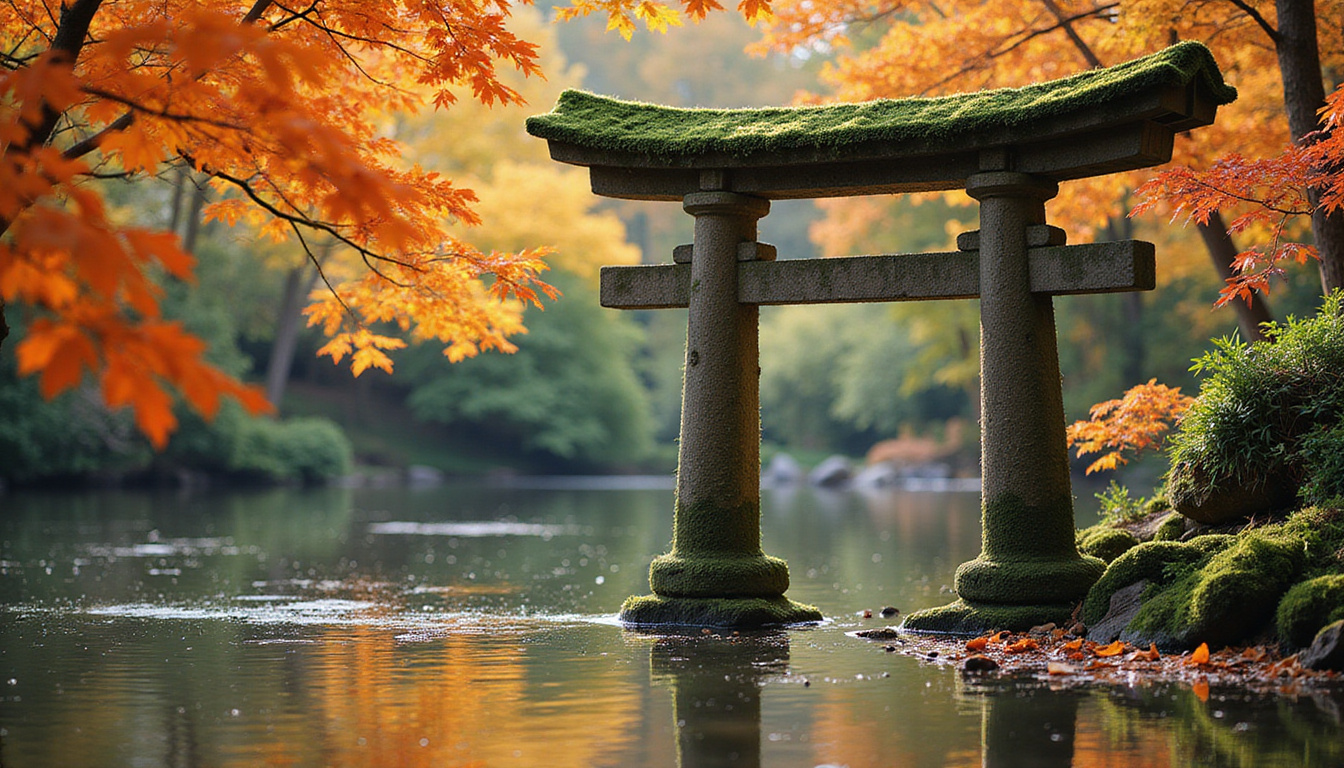
- Vermilion (bright red-orange): Believed to ward off evil and protect from misfortune. The pigment historically contained mercury and was resistant to rot and insects, making it both symbolic and practical.
- Natural wood or stone: Often connected to earthy simplicity and continuity with tradition.
- Black upper crossbeam: Sometimes added for visual contrast and structural reasons; it can also emphasize separation between heaven (above) and earth (below).
Types of Torii Gates You’ll See
Not all torii look the same. Learning a few common types makes shrine visits more engaging, since you can identify styles as you travel.
1. Shinmei Torii
- Very simple, straight lintel and crossbeam.
- No curved elements, often unpainted wood or stone.
- Common at ancient shrines and those associated with Ise Jingu.
2. Myojin Torii
- The most iconic style tourists recognize.
- Features gracefully curved upper lintels.
- Frequently painted vermilion with a black top lintel.
3. Kasuga Torii
- Similar to myojin, but with decorative supports under the crossbeam.
- Often found at shrines connected to Kasuga Taisha in Nara.
4. Ryobu Torii
- Associated historically with sites that blended Shinto and Buddhist elements.
- The pillars might connect to other structures, giving a more complex look.
5. Multiple Torii (Senbon Torii)
Not a distinct design, but a formation: many torii gates lined up back-to-back to create tunnel-like corridors, as famously seen at Fushimi Inari Taisha in Kyoto.
How to Properly Pass Through a Torii Gate
Even if you’re a visitor with no religious background, showing basic respect is appreciated. Here’s a quick etiquette guide:
- Approach slightly to one side, not dead center. The center is traditionally the path of the kami.
- Bow lightly before passing under the torii gate.
- Remove hats if possible, and avoid eating, drinking, or smoking while walking through.
- Walk calmly, without loud conversation or running.
- At the end of your visit, as you leave and pass back under the torii, turn and bow again toward the shrine.
This isn’t strictly enforced, but locals will notice and appreciate your respect.
Top Torii Gate Photo Spots in Japan
If you’re planning a trip, certain locations are especially famous for spectacular torii views and photography. Here are some of the best.
1. Fushimi Inari Taisha (Kyoto)
- Highlight: Thousands of vermilion torii forming tunnels up Mt. Inari.
- Photo tips:
- Go early morning or late evening to avoid crowds.
- Explore beyond the lower paths; the higher you climb, the fewer people and the more serene the atmosphere.
- Use the repeating lines of the torii to frame portraits or create leading lines in landscape shots.
2. Itsukushima Shrine (Miyajima, Hiroshima)
- Highlight: The famous “floating” torii gate rising from the sea.
- Photo tips:
- Check tide schedules—at high tide the gate appears to float; at low tide you can walk right up to its base.
- Sunrise and sunset give the most dramatic skies and reflections.
- Capture shots from the ferry as you approach the island for a grand perspective.
3. Hakone Shrine (Kanagawa)
- Highlight: The lakeside torii gate at the edge of Lake Ashi with Mt. Fuji visible on clear days.
- Photo tips:
- Arrive early; there is often a queue for the famous “torii and lake” portrait shot.
- Overcast days can create mystical fog around the trees and gate—great for atmospheric photos.
4. Nezu Shrine (Tokyo)
- Highlight: A smaller but beautiful path lined with red torii gates, plus seasonal azaleas.
- Photo tips:
- During azalea season (spring), frame the torii with vibrant pink and purple flowers.
- Use a longer lens to compress the rows of gates and create a dense corridor effect.
5. Hie Shrine (Tokyo)
- Highlight: A striking red torii tunnel in central Tokyo, an urban counterpart to Kyoto’s Fushimi Inari.
- Photo tips:
- Visit on weekdays for fewer crowds.
- Try both wide-angle shots to include surrounding buildings and tighter compositions focused solely on the torii.
6. Udo Shrine (Miyazaki, Kyushu)
- Highlight: A coastal shrine with torii gates leading down into caves and along cliffs.
- Photo tips:
- Use contrasting colors: the red torii against deep blue ocean and rugged rock formations.
- Early morning light hitting the cliffs is ideal.
Torii Gates Beyond Japan
The influence of the torii gate extends outside Japan:
- Overseas Shinto shrines: Japanese communities in Hawaii, Brazil, the U.S., and Europe often build torii at the entrances to shrines and cultural centers.
- Japanese gardens: Many botanical gardens and cultural parks worldwide include a symbolic torii to suggest a Japanese landscape.
- Pop culture and design: The torii silhouette appears in logos, anime, video games, and even interior décor as a shorthand for “Japan.”
When photographing or sharing these gates, remember they often maintain a spiritual or cultural role for local communities, not just decorative value.
Photography Tips for Capturing a Torii Gate
To make your torii gate photos stand out, consider both technical and creative angles.
Think About Composition
- Use leading lines: The vertical pillars and horizontal beams naturally draw the eye.
- Play with symmetry: Centered shots can emphasize the gateway’s balanced form.
- Include people: A person walking under a torii adds scale and emotion, and emphasizes the “threshold” meaning.
Work With Light and Weather
- Early or late in the day provides soft, warm light that flatters the vermilion paint.
- Rainy days can deepen colors and add reflections in puddles.
- Fog or mist at mountain or forest shrines enhances the sense of crossing into another world.
Be Respectful
- Avoid blocking worshippers.
- Don’t climb on torii or hang objects unless clearly permitted.
- Check shrine rules; some areas may discourage tripods or flash.
Common Misconceptions About Torii Gates
-
“Torii are Buddhist.”
Torii gates are primarily associated with Shinto, not Buddhism, though you may sometimes see them near temples that historically mixed the two traditions. -
“All torii must be red.”
Many are vermilion, but plenty are unpainted wood, stone-gray, white, or even metal. -
“Torii gates are just decorations.”
For many Japanese people, a torii gate marks a place where the divine is near. Even small, weathered torii in remote areas can be deeply significant to local residents.
FAQ About Torii Gates
1. What is the meaning of a Torii gate in Japan?
A Torii gate in Japan marks the entrance to a Shinto shrine and symbolizes the boundary between the human world and the sacred realm of the kami. Passing through it is an act of respect and a reminder to adopt a more mindful, reverent attitude.
2. Why are Japanese Torii gates often red?
A Japanese torii gate is often painted vermilion because the color is believed to protect against evil and misfortune. Historically, the pigment’s ingredients also helped preserve wood from decay and insects, giving torii both spiritual and practical durability.
3. Can you walk through a Shinto Torii gate any way you like?
You can pass through a Shinto Torii gate freely, but tradition suggests approaching slightly off-center, bowing lightly before entering shrine grounds, and avoiding loud, disruptive behavior. These customs show respect toward the sacred space the torii marks.
Step Through the Gate: Plan Your Own Torii Experience
A torii gate is more than a photo opportunity; it’s an invitation. Whether you’re standing beneath the towering “floating” torii at Miyajima, walking through the endless vermilion tunnel of Fushimi Inari, or quietly entering a small neighborhood shrine, each gate marks a chance to pause, reset, and connect with a deeper sense of place.
When you plan your next trip to Japan—or explore Japanese cultural sites in your own country—seek out these gateways. Walk under them slowly, observe how locals behave, and take the time to capture your own images and impressions. Let the torii guide you beyond surface-level sightseeing into a more meaningful encounter with Japanese history, spirituality, and everyday life.
If you’re ready to experience this for yourself, start mapping out a route that includes at least one major torii landmark and a few smaller, lesser-known shrines. The most memorable moments often come not from the famous postcard view, but from the quiet side path leading through a simple, timeworn gate that you discover on your own.
Sacred objects often carry deep cultural and spiritual meaning. Learn how these symbols relate to history, spirituality, and the human mind by exploring more articles at SpiritualMindScience.com.