If the word tiki makes you think of flaming rum drinks, carved wooden mugs, and tiny paper umbrellas, you’re only seeing the tip of the palm frond. Tiki culture blends escapist fantasy, layered cocktails, and immersive décor into a full-sensory experience you can absolutely recreate at home. With a few smart upgrades, your living room can feel like a tropical hideaway—no plane ticket required.
Below is your step‑by‑step guide to tiki cocktail secrets, from must‑know ingredients to bar tools, glassware, recipes, and styling tricks that bring a permanent vacation vibe to your home bar.
What Is tiki, Really?
Before you start shaking Mai Tais, it helps to understand what tiki actually is—and what it’s not.
Tiki, as a bar style, was born in 1930s America, primarily through Don the Beachcomber in Los Angeles and Trader Vic’s in Oakland. These bars:
- Mixed Caribbean rum traditions with Hollywood escapism
- Used Polynesian-inspired décor and fantasy “South Seas” themes
- Popularized complex rum cocktails with fresh juice and exotic syrups
Modern tiki aims to keep the fun, theatrical side while being more culturally sensitive and respectful of real Polynesian cultures and history. At home, that means:
- Focus on flavor, craftsmanship, and hospitality
- Use “tropical” or “tiki-style” as your inspiration
- Avoid caricatures or stereotypes in your décor and naming
Get the spirit of tiki—layers of flavor, lush décor, and a welcoming, laid‑back vibe—without copying outdated tropes.
The Essential tiki Flavor Toolkit
The heart of tiki cocktails is complex, layered flavor. Instead of one-note rum and juice, classic drinks balance multiple rums, acids, and syrups. Stocking a small but smart set of ingredients unlocks dozens of recipes.
Core Spirits for tiki Drinks
You don’t need a wall of bottles. Start with a focused collection:
- White (light) rum – Clean, bright; base for Daiquiris and many shaken tiki drinks.
- Aged rum – Adds vanilla, caramel, and oak; great for Mai Tais and stirred riffs.
- Overproof rum – For floaters and flames; extremely strong, so use sparingly.
- Dark or blackstrap rum – Molasses-rich, deep flavor; perfect in tiki punches.
Optional but powerful upgrades:
- Jamaican rum – Funky, fruity “hogo” character that screams tiki.
- Demerara rum (Guyana) – Smoky, rich, great in classics like the Zombie.
- Falernum liqueur – A low-proof rum liqueur with lime, almond, and spice.
Tropical Juices & Fresh Citrus
Bottled sour mix is the enemy of great tiki. Fresh is non‑negotiable:
- Lime juice – The backbone of most recipes; always squeeze fresh.
- Lemon juice – Used slightly less, but still important.
- Pineapple juice – Tropical sweetness and froth.
- Orange (and sometimes grapefruit) juice – Adds breadth and softness.
Strain pulpy juices if you prefer a cleaner texture.
Syrups & Sweeteners
Tiki syrups build layers of sweetness, spice, and aroma:
- Simple syrup (1:1 sugar:water) – Base sweetener for many drinks.
- Demerara syrup – Made with raw or demerara sugar for richer caramel notes.
- Orgeat syrup – Almond syrup with orange blossom or rose; crucial for Mai Tais.
- Grenadine (real pomegranate) – Skip neon-red; use or make a natural version.
- Honey syrup (2:1 honey:water) – Floral, luxurious sweetness.
Advanced, but worth exploring:
- Cinnamon syrup – For Zombies and spiced concoctions.
- Passion fruit syrup – Bright, tart-sweet, instantly “tiki.”
- Falernum syrup (non-alcoholic) – Lime, clove, ginger, almond.
The Must‑Have tiki Bar Tools & Glassware
You don’t need a professional setup, but a few key tools will transform your home tiki bar from “makeshift” to magical.
Basic Bar Tools
- Shaker (Boston or cobbler) – Tiki is shake‑heavy: plenty of citrus and juice.
- Hawthorne strainer & fine strainer – To catch ice shards and pulp.
- Jigger – Precision matters in tiki; many recipes are booze-forward.
- Bar spoon – For stirring and layering floats.
- Citrus juicer – Manual or lever-style; your wrists will thank you.
- Blender – For frozen tiki drinks and “whipped” crushed-ice textures.
- Lewis bag & mallet (or crushed ice maker) – Crushed ice is a tiki hallmark.
tiki Glassware & Mugs
The vessel is part of the show. You can serve tiki drinks in any glass, but themed presentation amplifies the escape:
- Tiki mugs – Ceramic, sculpted designs for Zombies, Rum Barrels, and anything elaborate.
- Hurricane or tulip glasses – Great for frozen or tall, juicy tropical cocktails.
- Collins or highball glasses – For long drinks with sparkling water or ginger beer.
- Coupes or Nick & Nora glasses – For spirit-forward, up-style riffs.
Start simple: one or two quirky tiki mugs plus some highballs will handle most recipes.
Mastering Ice, Garnish, and the Art of Spectacle
Tiki isn’t subtle, and that’s the fun of it. Texture, aroma, and visual drama all play a role.
Why Ice Matters in tiki
Ice is an ingredient, not an afterthought:
- Crushed ice – Creates frosty, diluted, highly drinkable tiki cocktails.
- Cubes – Good for shaking and serving sturdier drinks.
- Pebble/nugget ice – The holy grail for tiki at home if you have a machine.
Aim to fill the glass completely with ice for proper dilution and long-lasting chill.
Garnish Like a Tropical Pro
This is where your bar becomes a stage. Stock:
- Fresh mint (spank lightly before using to release aroma)
- Citrus wheels, wedges, peels
- Pineapple fronds, chunks, or spears
- Edible flowers (if available)
Over-the-top additions:
- Paper or bamboo umbrellas
- Colorful swizzle sticks
- Reusable metal or bamboo straws
- Cinnamon sticks (excellent for controlled, safe flaming)
A thoughtfully garnished tiki drink engages the senses before the first sip.
Foundational tiki Cocktails You Should Learn
Master a handful of classic recipes and you’ll understand the architecture behind most tiki drinks. Here are three pillars to build on.
1. The Classic Daiquiri (Your tiki Calibration Tool)
Think of this as your rum sour template.
- 2 oz white rum
- 1 oz fresh lime juice
- 0.75 oz simple syrup
Shake with ice, strain into a chilled coupe. This drink teaches balance—crucial for all tiki recipes.
2. The Mai Tai (Trader Vic Style)
Arguably the signature tiki cocktail.
- 2 oz aged rum (or 1 oz aged + 1 oz Jamaican)
- 1 oz fresh lime juice
- 0.5 oz orange curaçao
- 0.5 oz orgeat syrup
- 0.25 oz simple or demerara syrup (optional, to taste)
Shake with ice and pour into a rocks or tiki mug over crushed ice. Garnish with mint and a spent lime shell. The Mai Tai showcases rum complexity, nutty orgeat, and citrus snap.
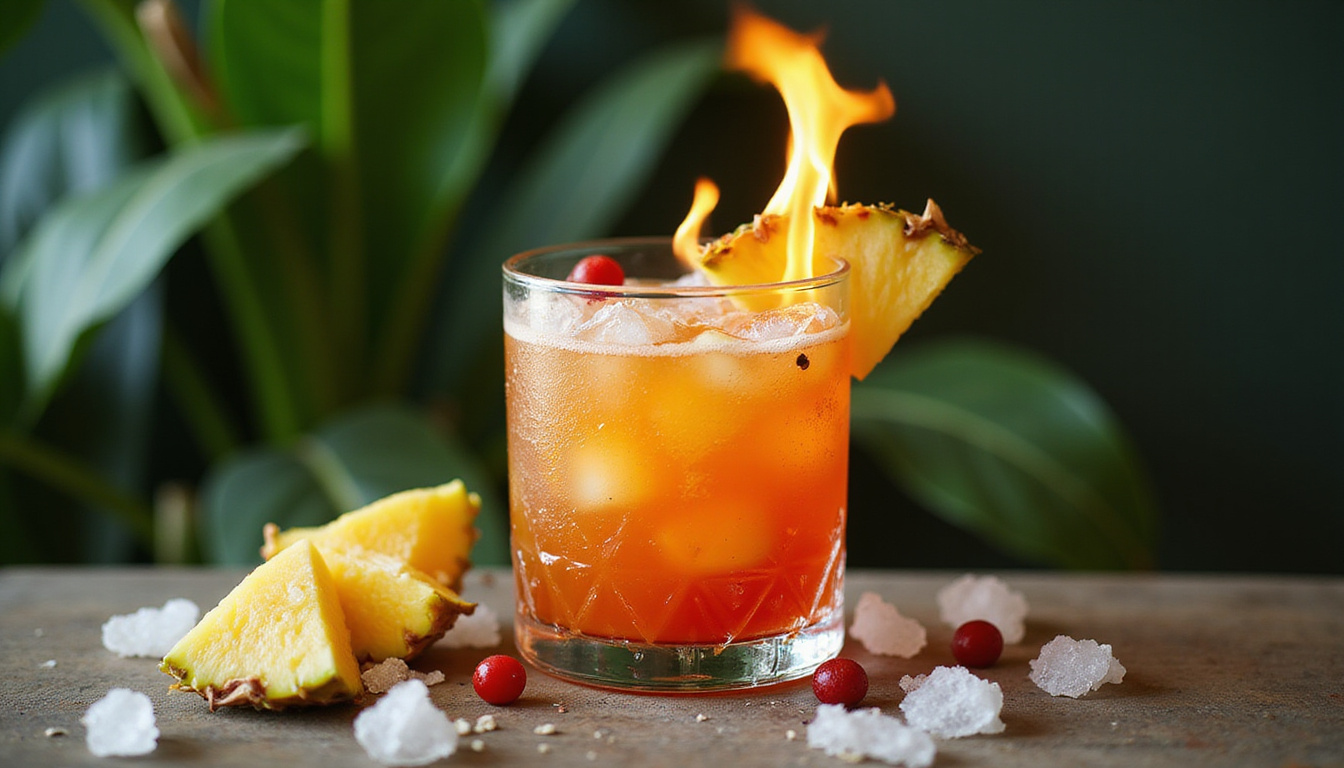
3. A Simple tiki-Style Rum Punch
Punch is ideal for parties and easy batching.
- 1.5 oz dark rum
- 1 oz white rum
- 2 oz pineapple juice
- 1 oz orange juice
- 0.5 oz lime juice
- 0.5 oz grenadine
Shake with ice, strain over crushed ice in a tall glass. Garnish generously with fruit and mint.
As you get comfortable, explore more classics like the Zombie, Navy Grog, and Painkiller—just be mindful that many tiki drinks are quite strong.
Building a tiki Home Bar on Any Budget
You don’t need a thatched hut in your living room to create tiki magic. Start small and layer elements over time.
Step 1: Build Your Liquid Foundation
Prioritize these:
- One good white rum
- One characterful aged or Jamaican rum
- Fresh limes and lemons
- Simple and demerara syrups (homemade)
- One specialty syrup (orgeat or passion fruit)
From there, gradually add dark rums, falernum, and fun liqueurs as you explore more recipes.
Step 2: Add Atmosphere with Affordable Décor
Think about how your space feels the moment you walk in:
- Lighting – Warm bulbs, string lights, or colored LEDs create that twilight-bar glow.
- Natural textures – Bamboo, rattan, woven placemats, or grass table skirts.
- Tropical plants – Real or high‑quality faux palms, monstera, or ferns.
- Wall accents – Vintage-style travel posters, surf art, or maps.
You’re building an escape, not a movie set; even a small corner can feel transportive.
Step 3: Create a Signature tiki Menu
A simple, themed menu adds theater and makes hosting easier. Include:
- 1 light, citrusy drink (e.g., a Daiquiri riff)
- 1 classic tiki icon (e.g., Mai Tai)
- 1 frozen crowd-pleaser (like a pineapple or coconut-based blend)
- 1 no- or low-alcohol option (tropical mocktail)
Print or handwrite your menu with fun, evocative names to reinforce that “you’re not at home anymore” feeling.
Hosting a tiki Night: A Simple Playbook
Once your home bar is ready, bring friends into your tropical world.
Here’s an easy hosting blueprint:
-
Set the scene
- Lights dimmed and warm
- A dedicated playlist: surf rock, exotica, mellow reggae, or Hawaiian slack-key guitar
- Candles or incense with coconut, vanilla, or tropical scents
-
Prep in advance
- Pre-squeeze and bottle citrus for the night
- Batch base mixes (minus ice and carbonated ingredients) for your menu drinks
- Pre-garnish trays of citrus wheels, pineapple chunks, and mint
-
Offer a welcome drink
- A simple rum punch in a pitcher or dispenser
- This buys you time and sets the mood as guests arrive
-
Keep it interactive
- Let guests choose from your small menu
- Offer a DIY garnish station with umbrellas and fruit
-
Mind the alcohol content
- Tiki is notoriously strong; alternate lower-proof options, water, and snacks
- Use smaller glasses for boozier cocktails
The goal: relaxed, immersive hospitality that makes everyone forget about the outside world for a few hours.
tiki Inspiration, Education, and Safety
If you fall in love with tiki, there’s a deep world of recipes and history to explore. Reliable resources like Difford’s Guide and Imbibe Magazine offer cocktail techniques and historical context (for example, see Difford’s Guide on tiki cocktails for in‑depth recipes and background – source).
A few quick best practices:
- Respect the culture – Treat Polynesian and Pacific cultures with respect; avoid costumes or décor that trivialize sacred symbols.
- Handle fire responsibly – If you use overproof rum and flames, keep it minimal, never leave it unattended, and keep a damp bar towel nearby.
- Drink mindfully – Many classic tiki recipes were designed as “limit 2 per customer.” At home, pace yourself and your guests.
FAQ: tiki Cocktails & Home Bar Basics
Q1: What makes a cocktail a “tiki drink”?
A tiki drink typically features rum (often more than one type), fresh citrus, and flavored syrups like orgeat, falernum, or spiced syrups, plus theatrical presentation—crushed ice, bold garnishes, and tropical glassware. It’s the combination of layered flavor and escapist vibe that makes a drink feel tiki.
Q2: Can I make tiki-style cocktails without rum?
Yes. While rum is traditional, you can build tiki-style cocktails with tequila, gin, or even non-alcoholic spirits. Focus on fresh juices, tropical fruits, and complex syrups. A “gin tiki” with lime, pineapple, honey syrup, and tiki bitters can be every bit as transportive.
Q3: How do I start a small tiki bar at home on a budget?
Begin with one white rum, one aged rum, fresh limes, simple syrup, and a single specialty syrup like orgeat. Add a shaker, a jigger, and some crushed ice. Then pick two or three core recipes (such as a Daiquiri, Mai Tai, and a rum punch) and master those before expanding your bottle and décor collection.
Turn Your Home Into a tiki Escape—One Drink at a Time
You don’t need an ocean view or a plane ticket to feel the pull of the tropics. With a few thoughtfully chosen bottles, fresh ingredients, and some imaginative décor, your home bar can become a personal island of calm, color, and creativity.
Start with one or two rum bottles, squeeze real citrus, learn the Mai Tai by heart, and add a touch of drama with crushed ice and vivid garnishes. From there, build out your tiki toolkit, experiment with new recipes, and invite friends into the experience.
Clear a little space on the counter, queue up a beachy playlist, and mix your first tiki cocktail tonight—your own tropical paradise is only a shake away.
Explore the Science Behind Spirituality
This guide explored the meaning and history of good luck symbols. To discover the psychology, consciousness, and scientific perspectives behind spiritual beliefs, visit SpiritualMindScience.com.