Tefillin are far more than black leather boxes and straps. They are a daily, tactile way to bind heart, mind, and action to God. Whether you’re just beginning to explore tefillin, returning after a long break, or looking to make the mitzvah feel more alive, this guide will walk you through simple practices that can deepen your daily prayer and give more meaning to each wrap.
What Are Tefillin and Why Do They Matter?
At their core, tefillin are two small, square leather boxes containing handwritten Torah passages on parchment. One is worn on the arm (tefillin shel yad) facing the heart, and the other on the head (tefillin shel rosh) above the mind. Together, they symbolize a unification of thought, emotion, and action in the service of God.
The mitzvah of tefillin appears several times in the Torah, including:
- “And you shall bind them as a sign upon your arm, and they shall be as frontlets between your eyes” (Deuteronomy 6:8).
- “And it shall be a sign upon your arm and an ornament between your eyes” (Exodus 13:16).
Jewish tradition understands tefillin as a daily spiritual “alignment”:
- The head tefillin represents what you know and believe.
- The arm tefillin represents what you feel and do.
Wearing them in prayer, especially during Shacharit (the morning service), turns abstract faith into something concrete: you literally bind your body to your beliefs.
The Basics: When, Who, and How Often
When Are Tefillin Worn?
Traditionally, men from the age of bar mitzvah wear tefillin on weekday mornings during Shacharit. They are not worn on:
- Shabbat
- Major biblical festivals (e.g., Passover, Shavuot, Sukkot, Rosh Hashanah, Yom Kippur)
Many communities encourage women who wish to adopt the practice—ideally with rabbinic guidance and sensitivity to local custom—as the mitzvah of tefillin carries significant halachic and communal considerations.
How Often?
Ideally, tefillin are worn every weekday. But if you can’t commit daily yet, start with:
- One fixed weekday each week (e.g., Mondays)
- Rosh Chodesh (the start of the Hebrew month)
- Days when you especially crave focus or spiritual grounding
Consistency matters more than intensity. Regular small steps will deepen the practice over time.
Step-by-Step: How to Put On Tefillin with Kavanah
Many guides explain the mechanics, but here we’ll pair the “how” with the “why,” so every step can carry intention (kavanah).
1. Prepare Your Space and Mind
- Choose a quiet spot where you won’t be constantly interrupted.
- Silence your phone or put it on airplane mode.
- Pause for one slow breath before opening the tefillin bag.
Before you touch the tefillin, think (or say quietly):
“I’m putting on tefillin to connect my mind, heart, and actions to God today.”
2. Tefillin Shel Yad (Arm Tefillin)
- Take the arm tefillin out first.
- Place it on your weaker arm (left arm for right-handed, right arm for left-handed), on the bicep, facing the heart.
- Say the blessing:
“Baruch atah Adonai, Eloheinu Melech ha’olam, asher kideshanu b’mitzvotav v’tzivanu l’haniach tefillin.” - Tighten the strap so the box is secure and pointing slightly inwards, toward your heart.
- Wrap the strap around your arm down toward the forearm and hand (exact custom may vary by community).
Inner focus: As you place the box near your heart, imagine your emotions, desires, and loves being directed toward what is good and holy.
3. Tefillin Shel Rosh (Head Tefillin)
- Pick up the head tefillin and place it gently on your head, centered above your forehead, just where the hairline begins (or would begin).
- The knot rests at the center of the back of your head.
- Tighten just enough that it’s secure but not uncomfortable.
- While adjusting it, say (according to many customs):
“Baruch Shem kevod malchuto l’olam va’ed.”
(Blessed be the name of His glorious kingdom forever and ever.)
Inner focus: As you position the tefillin between your eyes, think: “May my thoughts, choices, and plans today reflect God’s will.”
4. Wrapping the Hand and Fingers
Different communities wrap slightly differently, but a common pattern:
- Wrap the strap around your forearm seven times.
- Wrap around your palm and fingers in a pattern that forms the shape of the Hebrew letter shin (or spells out letters symbolizing betrothal).
Many have the custom to recite verses from Hosea (2:21–22):
“Ve’erastich li le’olam… I will betroth you to Me forever…”
Inner focus: The hand wrapping symbolizes a kind of covenant or “marriage” with God. Imagine committing your actions and your work today to a higher purpose.
Simple Practices to Make Tefillin Feel More Alive
The mechanics of tefillin are important, but the real depth comes from the mindset and small habits you build around them.
1. Add One Line of Intention Each Day
Before starting, say one simple sentence out loud or in your heart. For example:
- “I’m putting on tefillin to be more patient today.”
- “I’m putting on tefillin to remember there is meaning in my work.”
- “I’m putting on tefillin to strengthen my connection to my people and my past.”
Rotate intentions based on what you need that day—courage, kindness, gratitude, focus.
2. Connect the Straps to Real-Life Choices
Think of the straps as reminders that every part of you is “tied in”:
- Mind (head): What will you consume today—news, social media, conversations—that either elevates or drains you?
- Heart (arm): How will you respond to frustration, family, coworkers?
- Hand (wrapping): What will you actually do with your time and energy?
Choose one concrete action you’ll take that day inspired by tefillin:
- Calling someone lonely
- Speaking more gently
- Doing your work with more honesty or care
Linking the ritual to a specific action makes the mitzvah echo through your whole day.
3. Slow Down One Part of the Process
If you’re in a rush, you might not be able to lengthen the whole prayer. Instead:
- Select one step (like tying the arm tefillin or placing the head tefillin) and intentionally slow it down by 15–20 seconds.
- During those seconds, breathe slowly and attach one clear thought: “I am giving this moment fully to God.”
This small slowing often shifts your whole mindset.
4. Pair Tefillin with One Short Text
If a full service feels intimidating, start with:
- The Shema (“Shema Yisrael…”)
- Or just Modeh/Modah Ani beforehand, and Shema afterward
- Or one Psalm (e.g., Psalm 23 or 121)
Reading even a few lines with tefillin on connects the physical act to the words you’re saying.
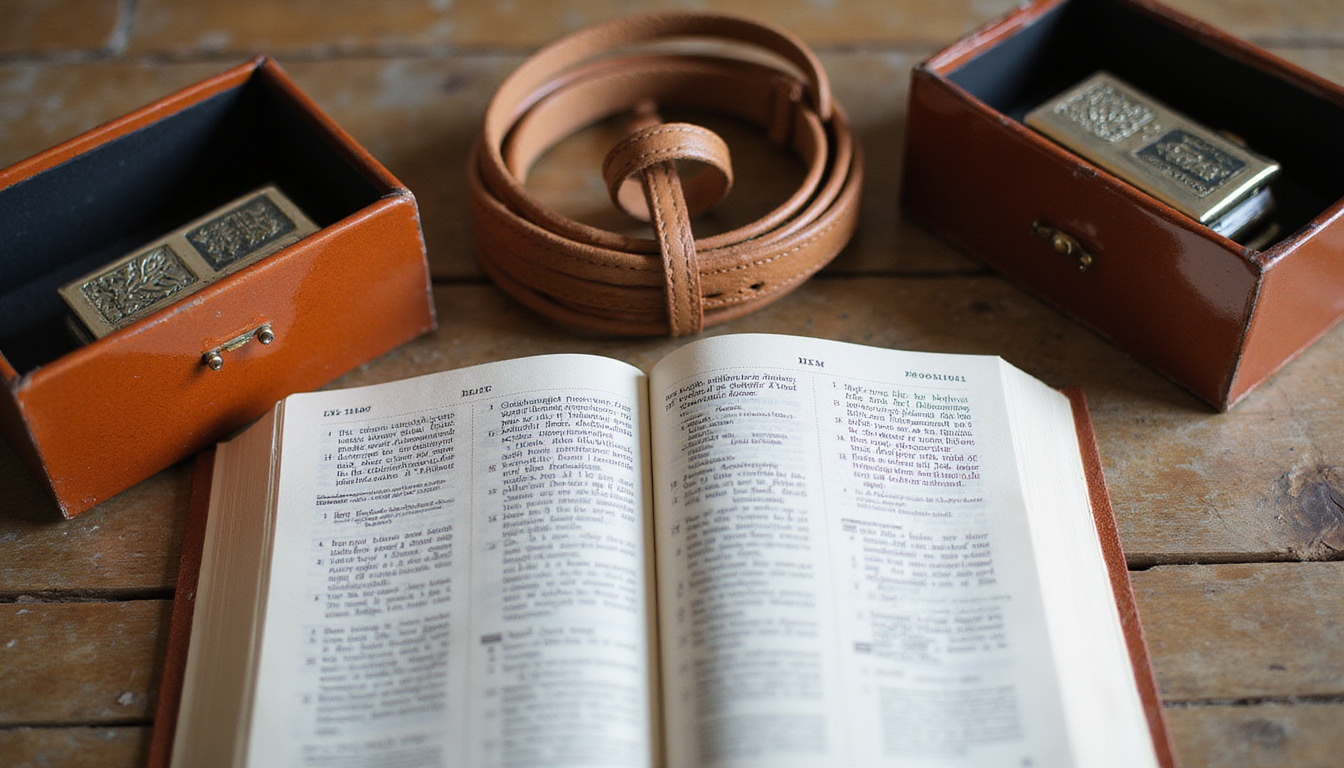
According to traditional sources, the verses inside the tefillin boxes themselves include the Shema and passages about God’s unity, love, and the Exodus from Egypt (source: My Jewish Learning). Saying these verses out loud (from a siddur) while wearing tefillin strengthens that link.
5. Make It a Time-Bound Ritual
Habits stick when they have a clear time anchor. You might choose:
- Right after you get out of bed
- After you brush your teeth
- Before you check messages in the morning
Even if your prayer is short, protect the tefillin time. The predictability builds a strong inner association: “This is when I connect.”
Dealing with Common Challenges
“I Don’t Feel Anything When I Put Them On.”
That’s normal. Jewish practice doesn’t demand that you feel inspired—just that you show up. Emotions often follow action, not the other way around.
Try:
- Keeping a small notebook and jotting one word after prayer: “tired,” “rushed,” “calmer,” “focused.” Over time, you may notice subtle shifts.
- Adding one new small practice every few weeks so the ritual slowly becomes richer.
“It’s Hard to Remember or Make Time.”
Some practical strategies:
- Visual trigger: Leave your tefillin bag where you’ll see it in the morning (on a desk, by your keys, next to your coffee machine).
- Alarm with meaning: Set a daily reminder labeled “Tefillin – 3 minutes of connection.”
- Accountability buddy: Ask a friend or family member also wearing tefillin to check in with you once a week.
“I’m Embarrassed to Put On Tefillin Around Others.”
If you’re shy about it:
- Start at home in a private room.
- If you must be at work or school early, consider finding a quiet corner, a closed office, or even your parked car.
- Remember that tefillin are a visible sign of faith; feeling vulnerable is part of the growth.
Caring for Your Tefillin: Respect as a Spiritual Practice
How you treat your tefillin can itself deepen the mitzvah.
- Store them carefully in their bag, in a respectful, dry place.
- Avoid placing them on the floor; if necessary, place the bag on a chair or table.
- Check them periodically (ideally every few years) with a competent sofer (scribe) to ensure the parchments and structure remain kosher.
- Handle them gently and avoid tossing or squeezing the boxes.
Each small act of care reinforces the idea that your spiritual life, and the tools you use to maintain it, are valuable.
A Simple Daily Tefillin “Flow” (5–10 Minutes)
If you’re looking for a minimal yet meaningful structure, try this:
-
Silent pause (20–30 seconds)
- One slow breath and a simple intention.
-
Put on tefillin shel yad
- Say the blessing and think: “Let my heart be aligned with You today.”
-
Put on tefillin shel rosh
- Think: “Let my thoughts and decisions today serve a higher purpose.”
-
Wrap the hand and fingers
- Imagine binding yourself to kindness, truth, and responsibility.
-
Say Shema (or a short passage)
- Even just the first line with focus:
“Shema Yisrael, Adonai Eloheinu, Adonai Echad.”
- Even just the first line with focus:
-
Close with one sentence
- “Help me carry this connection into my day.”
This short routine can be expanded as you grow more comfortable.
FAQ: Common Questions About Tefillin and Daily Prayer
1. What is the deeper meaning of tefillin in Jewish prayer?
Tefillin symbolize binding your entire being—intellect (head), emotion (heart), and action (hand)—to God. The Torah passages inside speak of God’s unity, love, and the Exodus, so each time you wear them, you’re re-affirming Jewish identity, memory, and mission. Over time, tefillin turn everyday routine into a mini spiritual covenant, even on ordinary weekdays.
2. How can I make putting on tefillin more meaningful if I’m short on time?
Even in a rush, you can:
- Take one deep breath before putting them on.
- Say one line of Shema with full attention.
- Choose one concrete behavior for the day (e.g., “I will be more patient in one conversation”) and silently link it to your tefillin.
A focused minute can outweigh several distracted ones.
3. Can beginners learn to put on tefillin correctly on their own?
Yes, with care. Many beginners use a combination of:
- Clear diagrams or videos from reputable Jewish learning sites
- A siddur or handbook with illustrations
- Guidance from a rabbi, teacher, or experienced friend who can watch and correct your placement and wrapping
Because the details matter for kosher fulfillment, it’s wise to have someone knowledgeable check your technique at least once.
Bring Tefillin into Your Life—One Simple Step at a Time
Tefillin can feel intimidating, overly technical, or even mechanical at first. But when you treat them as a daily moment to align your thoughts, feelings, and actions with something higher, they become a powerful anchor in a scattered world.
You don’t need perfect Hebrew, intense feelings, or a full hour of prayer to start. You need a pair of tefillin, a few minutes, and a willingness to show up.
If you own tefillin but they’re sitting in a closet, take them out, check that they’re in good condition, and choose one morning this week to put them on with just one new intention. If you don’t yet own a pair, reach out to a local rabbi, Judaica store, or community organization to help you obtain kosher tefillin and learn to use them properly.
Begin with a single morning. Wrap once, say one line, and give that moment your full attention. From there, let your practice—and your connection—grow.
Sacred objects often carry deep cultural and spiritual meaning. Learn how these symbols relate to history, spirituality, and the human mind by exploring more articles at SpiritualMindScience.com.