Sweetgrass has been cherished for centuries for its sweet vanilla-like scent, spiritual significance, and practical uses in basketry and crafts. Whether you’re drawn to its aroma, its cultural importance, or its beauty in the garden, learning how to grow, harvest, and use sweetgrass at home is both rewarding and surprisingly simple. This DIY guide walks you step-by-step through everything you need to know to successfully cultivate sweetgrass and make the most of your harvest.
What Is Sweetgrass?
Sweetgrass (Hierochloë odorata, also called holy grass or vanilla grass) is a perennial, cool-season grass native to parts of North America and Europe. Its distinctive fragrance comes from coumarin, the same compound that gives new-mown hay and tonka beans their scent.
Traditionally, sweetgrass has been:
- Braided and burned as an incense or smudge in many Indigenous cultures
- Used in basket-making and weaving
- Valued as a sacred, cleansing, and protective plant
It spreads by rhizomes and forms low, lush mats of grass, making it an attractive and low-maintenance addition to gardens and containers.
Choosing the Right Sweetgrass Variety
When you shop or trade for plants, you’ll mostly encounter:
- Western sweetgrass (Hierochloë odorata): Often shorter; common in North America.
- Seneca sweetgrass / Alpine sweetgrass (Hierochloë hirta or related species): Sometimes labeled simply as sweetgrass; similar look and use.
For home gardeners, the common labeled “sweetgrass” from native plant nurseries or ethical online sellers is usually perfect. Prioritize:
- Native or regionally appropriate varieties
- Plants sourced from reputable, ethical growers (avoid wild-dug plants unless part of a permitted, sustainable harvest)
How to Grow Sweetgrass at Home
Sweetgrass is more forgiving than people think. Once established, it’s hardy, spreads gently, and offers a reliable harvest every season.
Ideal Growing Conditions
Sweetgrass naturally grows in moist meadows, stream banks, and prairies. To mimic that:
- Light: Full sun to light partial shade. In very hot climates, dappled afternoon shade helps.
- Soil: Moist, well-drained, rich in organic matter. Slightly acidic to neutral (pH ~6.0–7.0) is ideal.
- Water: Consistently moist, especially during the first year. It doesn’t like to dry out completely.
- Hardiness: Generally hardy in USDA Zones 3–7 (and sometimes beyond with protection).
Starting Sweetgrass: Plants vs. Seed
You can grow sweetgrass from seed, but it’s slow and often unreliable. Most growers prefer:
1. Starter Plants (Best for Beginners)
- Look for potted sweetgrass at native plant sales, nurseries, or online.
- Choose plants with:
- Bright green blades
- Visible, healthy rhizomes
- No signs of mold or rot
Planting steps:
- Loosen the soil 8–10 inches deep.
- Mix in compost to improve structure and fertility.
- Dig a hole just larger than the root ball.
- Plant so the crown is level with the soil surface.
- Water deeply and mulch lightly with straw or shredded leaves.
2. Divisions (Easy Once You Have a Clump)
Sweetgrass naturally spreads by rhizomes. Every 1–3 years:
- Dig up a section of the clump in early spring or fall.
- Gently pull or cut it into smaller plant “fans” with roots attached.
- Replant divisions 8–12 inches apart.
- Water well until re-established.
3. Seeds (For Patient Growers)
If you want to experiment with seed:
- Cold-stratify in the refrigerator for 4–6 weeks in slightly moist sand.
- Sow on the surface (needs some light) in spring.
- Keep evenly moist and be prepared for low germination.
Caring for Sweetgrass Throughout the Season
Once established, sweetgrass needs minimal care, but a few habits help it thrive.
Watering
- First year: Keep the soil consistently moist—never bone-dry.
- After establishment: Water during prolonged dry spells. In boggy or moist beds, natural rainfall may be enough.
A layer of mulch helps retain moisture, especially in sandy or fast-draining soils.
Feeding
Sweetgrass isn’t a heavy feeder, but it appreciates:
- A light top-dressing of compost in spring
- Optional: a balanced, organic fertilizer once a year if soil is poor
Avoid over-fertilizing; it can cause lush but weak growth.
Pruning and Tidying
- In late winter or very early spring, cut back any dead or brown foliage to 1–2 inches above the ground to encourage fresh green growth.
- Remove weeds that compete for moisture and nutrients.
Container Growing
If you’re short on space—or want more control over moisture—grow sweetgrass in pots:
- Use a 10–14 inch wide container with drainage holes.
- Fill with a rich potting mix plus extra compost.
- Water more frequently; containers dry out faster than garden beds.
- Divide and repot every 1–2 years to prevent root crowding.
How and When to Harvest Sweetgrass
Harvesting sweetgrass is more than just cutting grass; it’s an opportunity for ritual, gratitude, and care for the plant.
Best Time to Harvest
Sweetgrass is usually harvested:
- In late spring through summer once the blades reach 12–20 inches
- On a dry day, after the morning dew has evaporated
- Before plants become too mature and tough
The fragrance is strongest once the grass has dried, but harvesting at the right growth stage ensures soft, flexible blades for braiding.
Harvesting Technique
To support regrowth and plant health:
- Offer gratitude in your own way—many traditions include a moment of silence or prayer before harvesting.
- Gently gather a small handful of blades.
- Cut with sharp scissors or a knife about 2–3 inches above the soil, leaving the growing point intact.
- Avoid pulling up rhizomes or yanking the plant from the ground.
- Move across the patch, taking a little here and there to avoid over-stressing one area.
Drying and Storing Sweetgrass
Proper drying preserves both scent and color.
Drying Methods
-
Hanging in bundles:
- Tie small bunches with string or elastic.
- Hang upside down in a warm, dry, shaded area with good airflow.
- Allow 1–2 weeks to dry fully.
-
Screen or rack drying:
- Lay blades in a single layer on a mesh screen.
- Turn occasionally until crisp but still somewhat flexible.
Avoid bright sun, which can bleach color and degrade aroma.
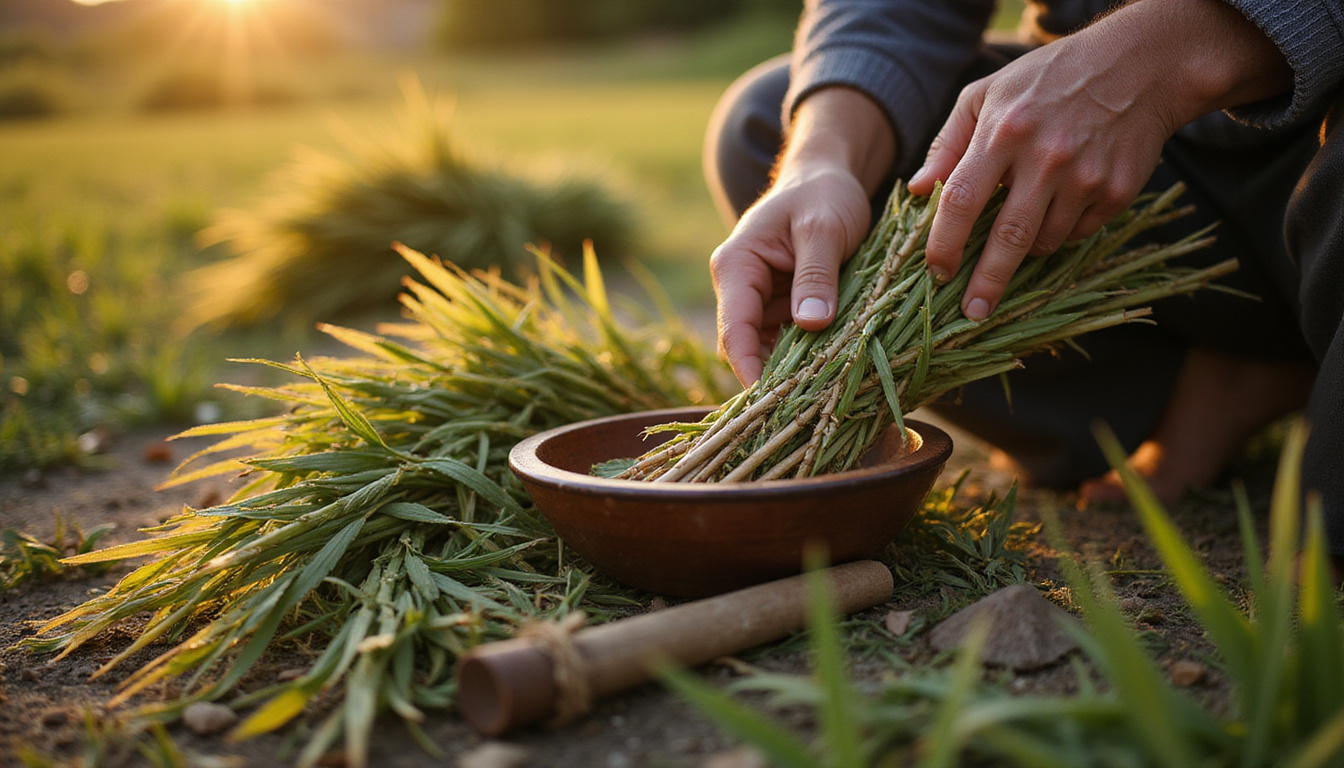
Storage Tips
Once dry:
- Store in paper bags, glass jars, or cloth bags in a cool, dark place.
- Keep whole strands or braids; they retain scent better than chopped pieces.
- Sweetgrass can retain aroma for a year or more; refresh scent by gently warming (e.g., placing near but not on heat).
How to Braid Sweetgrass
Braiding sweetgrass is both practical and meditative. Braids are easier to burn, hang, gift, or use in crafts.
Preparing the Grass
- Use freshly harvested or lightly rehydrated dried sweetgrass.
- To rehydrate, mist dried blades lightly with water and wrap in a damp cloth for 30–60 minutes until pliable.
Basic Braiding Steps
- Sort and group:
- Divide your bundle into three even sections.
- Anchor the top:
- Tie the tops together with string, or hold them tightly in one hand.
- Braid:
- Cross the right section over the center, then the left over the center, repeating like a traditional hair braid.
- Keep tension even and the braid firm but not overly tight.
- Finish:
- Tie the end with thread, natural cord, or another small piece of sweetgrass.
- Dry fully:
- If you used fresh blades, hang the finished braid to dry completely.
Traditional and Modern Uses for Sweetgrass
Sweetgrass is known as a “sacred” or “holy” herb in many Indigenous cultures—and should be approached with respect. If using sweetgrass in spiritual or cultural practices, learn from voices in those cultures and acknowledge their traditions.
Here are common, respectful uses:
1. Smudging and Cleansing
Braids or bundles are often:
- Lit at one end and then blown out, allowing the smoke to drift.
- Used to “wash” oneself or a space in smoke, often as a welcoming, blessing, or cleansing practice.
Always burn in a fire-safe container, in well-ventilated areas, and never leave burning material unattended.
2. Weaving and Crafts
Dried, flexible sweetgrass is excellent for:
- Baskets and coiled basketry
- Mats, small trays, or decorative items
- Adding aromatic accents to wreaths and dreamcatchers
It’s frequently combined with other natural materials like cattail, willow, or pine needles.
3. Potpourri and Scent
Sweetgrass adds a soft, sweet, hay-vanilla scent to:
- Sachets for drawers and closets
- Potpourri blends with lavender, rose petals, or cedar
- Decorative bundles hung in cars or entryways
4. Herbal and Cultural Uses
Historically, some communities used sweetgrass in:
- Teas, infusions, or medicinal preparations
- Ceremonial regalia and objects
Because sweetgrass contains coumarin, do not ingest it regularly or in large amounts without guidance from a knowledgeable practitioner; coumarin can affect the liver in high doses (source: National Institutes of Health).
Growing Sweetgrass Sustainably and Respectfully
Sweetgrass has deep cultural roots, especially among Indigenous peoples across North America. As interest grows, so does the need for ethical growing and use.
Consider the following:
- Grow your own whenever possible instead of harvesting from wild stands, unless you have permission and harvest knowledgeably.
- Avoid over-harvesting: Leave at least two-thirds of any patch untouched.
- Learn from Indigenous educators and knowledge keepers when using sweetgrass in spiritual or ceremonial ways.
- Share plants and knowledge locally to encourage community cultivation and reduce pressure on wild populations.
Common Sweetgrass Growing Problems (and Fixes)
Even an easy plant can run into issues. Here’s what to watch for:
-
Brown or crispy tips:
- Likely underwatering or very hot, dry conditions.
- Increase watering, add mulch, or provide light afternoon shade.
-
Weak, thin growth:
- Soil may be poor or compacted.
- Add compost and loosen soil around the clump; consider a light spring feeding.
-
Patch not spreading:
- Young plant or crowded roots.
- Give time, or divide and replant into a looser, richer bed.
-
Mold on drying grass:
- Drying area too humid or bunches too thick.
- Hang smaller bundles and ensure good airflow.
FAQ: Sweetgrass at Home
1. How do you grow sweetgrass indoors?
You can grow sweetgrass indoors in a bright window or under grow lights:
- Use a wide pot with rich, moist potting mix.
- Provide at least 6–8 hours of light daily.
- Keep soil evenly moist, not soggy.
- Move outdoors in warm months if possible; it thrives with real sun and fresh air.
2. How long does sweetgrass last after harvest?
Properly dried and stored sweetgrass can hold its scent for 6–12 months, sometimes longer:
- Store in airtight glass jars or cloth bags in a cool, dark place.
- Refresh older braids by gently warming them near (not on) a heat source or lightly bending them to release more aroma.
3. What is sweet grass used for besides smudging?
Beyond smudging, sweetgrass is used for:
- Basketry and weaving
- Scented sachets and potpourri
- Decorative braids and bundles for home fragrance
- Cultural, ceremonial, and craft projects where its symbolism and scent are important
Start Your Own Sweetgrass Patch This Season
With a simple patch of sweetgrass in your garden or on your balcony, you gain more than a plant—you cultivate a living connection to land, tradition, and your own daily rituals. From planting and tending, to braiding, burning, and weaving, each step invites intention and care.
Choose a small space, find a healthy starter plant, and commit to nurturing it through one growing season. By this time next year, you could be harvesting your own fragrant braids, crafting meaningful gifts, and filling your home with the subtle, sacred sweetness of sweetgrass.
Begin today: locate a reputable native plant nursery or ethical online source, set aside a patch of moist soil or a generous container, and plant your first sweetgrass. Your future self—and everyone you share it with—will thank you.
Throughout history, many plants and herbs have been associated with luck, protection, and prosperity. To explore their deeper spiritual, psychological, and scientific significance, visit SpiritualMindScience.com.