If you’re dreaming of a bold, cheerful garden with minimal effort, the sunflower is hard to beat. These iconic blooms deliver towering color, attract pollinators, and even feed birds and people—all while asking for surprisingly little in return. Whether you have a sprawling backyard or a single sunny balcony, sunflowers can completely transform your space into a golden, low-maintenance haven.
Below, you’ll discover how to choose the right varieties, plant them properly, keep them healthy with minimal fuss, and creatively use them in your landscape.
Why Sunflowers Belong in Every Low-Maintenance Garden
Sunflowers (Helianthus annuus) aren’t just pretty; they’re practical. Once they germinate and root in, they generally thrive with little more than sunshine and occasional water.
Key benefits of growing sunflowers
- Easy to grow: Ideal for beginners and kids—seeds are large, sprout quickly, and plants are forgiving.
- Drought-tolerant: Once established, many varieties require far less water than thirsty ornamentals.
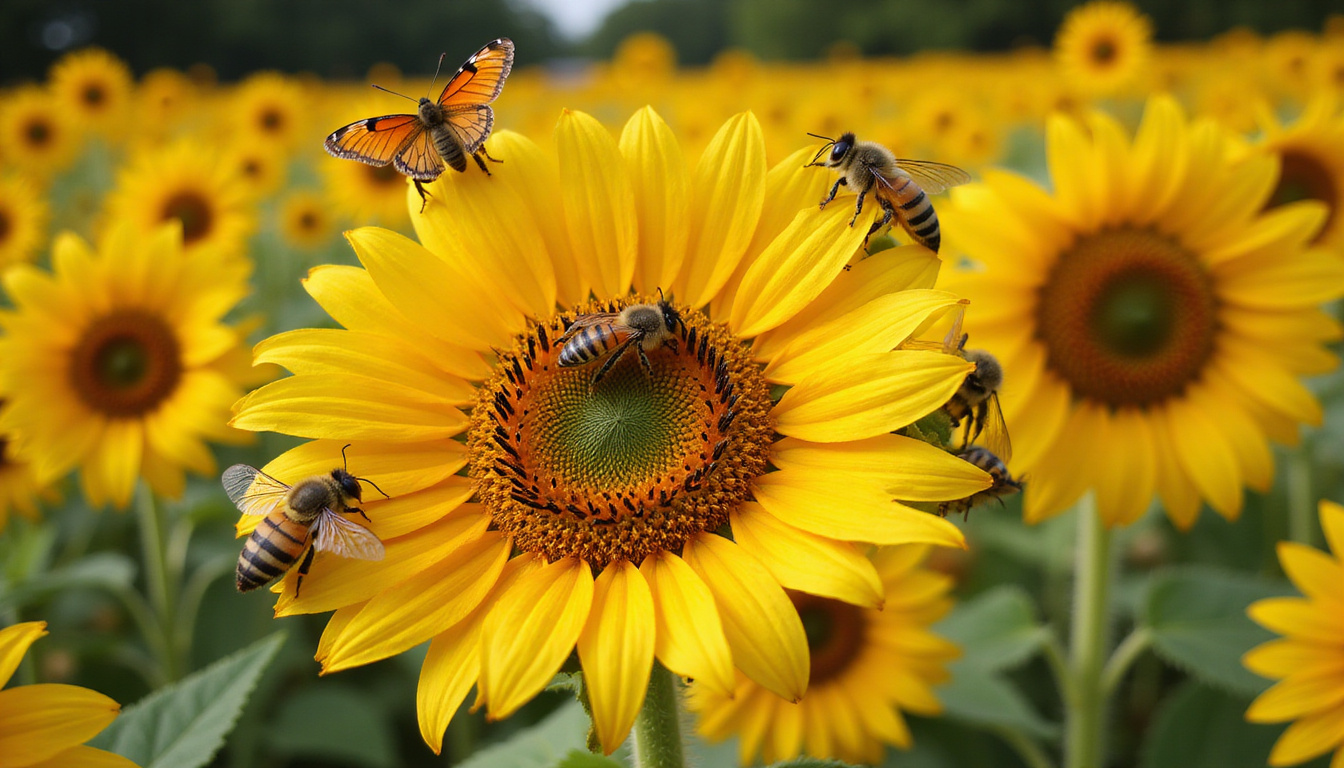
- Pollinator magnets: Bees, butterflies, and beneficial insects flock to the blooms, boosting overall garden health.
- Bird and wildlife food: Seed heads are a natural buffet for finches, chickadees, and other birds.
- Edible and useful: Many types have edible seeds; petals and buds can be used ornamentally and in crafts.
Their vertical growth also creates instant structure, natural privacy screens, and a clear focal point without complex design work.
Choosing the Right Sunflower Varieties for Your Space
Not all sunflowers are the towering, single-stem giants you remember from childhood. Modern breeding has created a spectrum of sizes, branching patterns, and colors, from classic yellow to burgundy and even bicolor blooms.
Giant sunflowers for dramatic impact
If you want those “wow” factor giants:
- ‘Mammoth Grey Stripe’ – 8–12 feet tall; huge seed heads ideal for bird feed or roasting.
- ‘Russian Mammoth’ – 9–12 feet; sturdy stems and excellent for classic backyard drama.
- ‘American Giant’ – Can reach 10–16 feet with proper care; great for creating a living wall.
These towering varieties are perfect as backdrops, property-line screens, or to frame vegetable plots. They do best in a spot that gets full sun and some wind protection.
Branching and multi-bloom sunflowers
If you prefer lots of flowers over several weeks:
- ‘Autumn Beauty’ – Multi-branching, 5–7 feet tall, with red, bronze, and gold tones.
- ‘Soraya’ – Around 4–6 feet; strong stems and multiple blooms excellent for cutting.
- ‘Velvet Queen’ – 5–7 feet, with dramatic dark red blooms.
Branching varieties provide continuous color and more nectar and pollen for pollinators. They’re an excellent choice along fences or borders.
Compact and dwarf sunflowers for small spaces
Even balcony gardeners can enjoy sunflowers:
- ‘Teddy Bear’ – 2–3 feet; fluffy, double blooms that look almost like golden pom-poms.
- ‘Sunspot’ – 2–4 feet; large flower heads on short, sturdy stems.
- ‘Music Box’ – 2–3 feet; bushy plants with many small, cheerful blooms.
Dwarfs and compacts grow well in containers as long as they get at least 6–8 hours of sunlight and a pot that’s deep enough for their roots.
Preparing the Perfect Spot for Sunflowers
Sunflowers are low-maintenance, but a little smart preparation pays off in stronger stems, taller plants, and bigger blooms.
Sunlight and soil needs
- Sun: Aim for a minimum of 6 hours of direct sun per day; 8+ hours is ideal.
- Soil: They tolerate a range of soils but thrive in loose, well-draining ground. Slightly acidic to neutral (pH 6.0–7.5) is ideal.
- Drainage: Avoid spots that stay soggy after rain; waterlogged soil can rot the roots.
Before planting, loosen the soil 12–18 inches deep and mix in some compost. You don’t need heavy fertilization—too much nitrogen can actually cause tall, weak plants with fewer blooms.
How to Plant Sunflowers (Step-by-Step)
Direct sowing seeds outdoors is usually best; sunflowers dislike having their roots disturbed.
Planting outdoors
- Time it right: Sow seeds after your last average frost date when soil has warmed to around 55–60°F (13–16°C).
- Prepare rows or pockets: Rake the soil smooth and remove stones and sticks.
- Sow seeds:
- Giant varieties: 1 inch deep, 18–24 inches apart.
- Medium/branching: 1 inch deep, 12–18 inches apart.
- Dwarfs: ½–1 inch deep, 8–12 inches apart.
- Water gently: Keep the soil consistently moist (not soaked) until germination.
- Thin seedlings: Once seedlings are 3–4 inches tall, thin them to the recommended spacing so each plant has room to grow strong and tall.
Starting in containers or indoors
If your season is short or you’re using pots:
- Use deep containers (at least 12 inches, more for giants).
- Start seeds 2–3 weeks before your last frost date.
- Transplant very carefully, disturbing roots as little as possible.
- Harden them off by gradually introducing them to outdoor conditions over a week.
Caring for Sunflowers With Minimal Effort
Once established, caring for a sunflower is straightforward. A few simple habits will keep them thriving without turning into a high-maintenance project.
Watering wisely
- Seedlings and young plants: Keep soil consistently moist until they’re about 1–2 feet tall.
- Established plants: Deeply water once per week in dry weather; more often in extreme heat or sandy soil.
- Deep vs. frequent: Water more deeply but less often to encourage strong, deep roots and better drought tolerance.
Mulching around the base with straw, shredded leaves, or wood chips helps reduce evaporation and keeps weeds down.
Supporting tall giants
Some giant varieties may need staking, especially in windy areas or very rich soil where they grow extra tall:
- Use sturdy stakes (wood, metal, or bamboo).
- Tie stems loosely with soft cloth or garden tape in a figure-eight pattern so they don’t rub and break.
- Place stakes on the windward side for maximum support.
Fertilizing (or not)
Many gardeners grow sunflowers successfully with little or no added fertilizer if the soil was prepared with compost. If growth seems slow or leaves are pale:
- Apply a balanced, slow-release fertilizer once when plants are 1–2 feet tall.
- Avoid overfeeding; too much nitrogen leads to lush foliage and weak stems rather than strong blooms.
Sunflowers as Garden Design Powerhouses
Sunflowers aren’t just plants; they’re design tools. You can use them to shape the look and function of your garden in surprisingly elegant ways.
Create living fences and privacy screens
Plant tall sunflowers in a single or double row along:
- Property lines
- Patios or decks
- Around a vegetable plot or children’s play area
Giant annual sunflowers grow quickly, creating a seasonal “green fence” that softens hard edges without permanent structures.
Add height and drama to borders
Mix medium-height branching types into perennial beds and borders. They pair beautifully with:
- Purple coneflower (Echinacea)
- Black-eyed Susan (Rudbeckia)
- Ornamental grasses
- Zinnias and cosmos
This blend gives your garden a natural, meadow-inspired look with continuous movement and color.
Design a kid-friendly sunflower tunnel
For a playful feature:
- Outline a curved path or arch shape in your yard.
- Plant tall sunflowers on both sides, leaving a clear walkway.
- Optionally add simple supports or strings across the top for them to lean on.
By mid to late summer, you’ll have a magical sunflower tunnel kids (and adults) will love.
Harvesting Seeds and Enjoying the Full Sunflower Cycle
One of the joys of growing sunflower plants is enjoying their entire life cycle—from the first tender leaves to the heavy seed heads feeding birds in autumn.
How to know when sunflower seeds are ready
Harvest for eating or storage when:
- The back of the flower head turns yellow to brown.
- Petals have mostly fallen off.
- Seeds look plump and firm, often with developed stripes (depending on variety).
Cut the heads with 6–12 inches of stem attached. Hang them upside down in a dry, airy place to finish ripening and drying. Once fully dry, rub or brush the seeds out.
Saving seeds for next season
Many open-pollinated varieties will produce viable seeds you can replant, although cross-pollination can create surprises. Store seeds in a cool, dry, dark place in paper envelopes or jars.
For more detailed guidance on seed saving and sunflower care, the U.S. Department of Agriculture and university extension services offer extensive resources (see, for example, this USDA sunflower profile as a starting point) (source).
Common Sunflower Problems (And Simple Fixes)
Sunflowers are generally tough, but a few issues can pop up.
-
Lodging (falling over):
Caused by wind, shallow roots, or overly rich soil. Plant in a sheltered spot, avoid over-fertilizing, and stake tall varieties. -
Slugs and snails on seedlings:
Use collars around young plants, hand-pick in the evening, or use organic slug controls. -
Birds eating seeds too early:
If you want to keep seeds for yourself, cover ripening heads with paper bags or mesh until ready to harvest.
Because sunflowers grow quickly and robustly, they often outpace minor pest or disease issues, especially in well-spaced, sunny conditions.
Simple Sunflower Project Ideas for Your Garden
Looking for quick ways to enjoy your sunflowers beyond just watching them grow?
- Cut flower bouquets: Branching varieties provide weeks of vase material. Cut stems early in the morning for longest vase life.
- Bird feeding station: Leave some heads on the plant or mount dried heads on posts to feed birds naturally through fall.
- Themed “sunflower corner”: Combine different heights—giants in back, mediums in the middle, dwarfs in front—for a layered, golden display.
- Pollinator patch: Mix sunflowers with herbs like lavender and basil plus other nectar-rich flowers to create a buzzing, beneficial insect hub.
FAQ About Growing Sunflowers
Q1: How much sun does a sunflower really need?
Most sunflowers need full sun—ideally 6–8 hours or more of direct light per day. With less, they’ll grow weaker, lean toward the light, and produce smaller or fewer blooms.
Q2: Can I grow sunflower plants in pots on a balcony?
Yes. Choose dwarf or compact varieties, use a deep pot with drainage holes, and provide at least 6 hours of sun. Water a bit more frequently than in the ground, as containers dry out faster.
Q3: How long do sunflowers take to bloom from seed?
Most common sunflower varieties bloom about 60–90 days after sowing, depending on type and growing conditions. Dwarf types often flower on the earlier side, while giants can take a bit longer.
Transforming your garden with towering color and life doesn’t have to mean constant pruning, pampering, or complex layouts. By choosing the right sunflower varieties and following a few simple steps, you can enjoy giant blooms, swirling pollinators, and a vibrant seasonal show with remarkably little work.
If you’re ready to turn a bare fence, dull corner, or empty balcony into a golden statement, pick a few sunflower varieties that fit your space and start planting this season. A handful of seeds today can become a wall of sunshine that transforms your entire garden—and how you feel in it—by midsummer.
Throughout history, many plants and herbs have been associated with luck, protection, and prosperity. To explore their deeper spiritual, psychological, and scientific significance, visit SpiritualMindScience.com.