From the mountains of Nepal to the plains of India and beyond, the stupa stands as one of the most recognizable symbols of Buddhism. These dome-shaped monuments might seem like distant relics of the past, but their design, symbolism, and purpose contain powerful lessons for modern life. Today, as mindfulness and meditation become mainstream, people are looking back to these ancient structures for inspiration on how to live more present, grounded, and compassionate lives.
In this article, you’ll discover what a stupa really is, why it was built, and how its hidden symbolism can guide your own mindfulness practice—no matter where you live or what you believe.
What Is a Stupa?
A stupa is a Buddhist monument, usually dome-shaped, that often contains relics of the Buddha or other revered teachers. Historically, stupas were built as places of meditation and veneration, serving both as physical embodiments of the Buddha’s presence and as symbolic maps of the path to enlightenment.
Key features of a traditional stupa include:
- A square base representing the earth
- A dome symbolizing the world, the mind, or the womb of awakening
- A spire or tower on top, often with multiple levels
- A pinnacle representing ultimate liberation
- A path for circumambulation (walking meditation) around the monument
Though forms and details differ across regions—such as pagodas in East Asia or chorten in Tibet—the core purpose is the same: to create a space where body, mind, and environment come together in contemplation.
The Symbolism of a Stupa: A Map of the Mind
A stupa is not just an architectural form; it’s a symbolic diagram of the journey from confusion to clarity. Many Buddhist traditions describe the structure as a three-dimensional mandala or a visual meditation on awakening.
The Five Elements
Often, a stupa represents the five elements:
- Square base – Earth: stability, groundedness, physical reality
- Rounded dome – Water: fluidity, adaptability, emotions
- Conical spire – Fire: transformation, energy, willpower
- Upper tiers – Air/Wind: movement, breath, communication
- Top jewel or point – Space: vastness, openness, ultimate awareness
This elemental symbolism mirrors the layers of our own experience—body, feelings, thoughts, energy, and spacious awareness. Meditating on a stupa is, in effect, meditating on your own inner landscape.
The Path Upward
The vertical dimension of a stupa—from its broad base up to the pointed pinnacle—represents the path of spiritual development:
- Base: Ordinary life, often driven by habit and distraction
- Mid-levels: Ethical practice, meditation, and wisdom
- Pinnacle: Awakening, or seeing reality clearly without distortion
This is a powerful reminder that growth is gradual and structured—step by step, breath by breath.
How a Stupa Embodies Mindfulness in Physical Form
Mindfulness is often taught as an internal mental skill, but a stupa shows how outer structure supports inner awareness. Several features of the monument align directly with modern mindfulness principles.
1. A Fixed Point in a Changing World
Amid the flux of daily life, a stupa stands still—unmoving, grounded. In mindfulness, we cultivate a similar inner “still point” as we observe thoughts, feelings, and sensations without being swept away.
- The solid base acts like posture in meditation—stable and supportive.
- The unchanging form mirrors the attitude of non-reactive awareness.
Just as practitioners return to a stupa for reflection, you return to your breath or body as a reliable anchor.
2. Built for Circle-Walking Meditation
Most stupas are designed to be walked around in a clockwise direction, a practice known as circumambulation. This ancient ritual functions very much like a moving mindfulness practice:
- Syncing steps with breath
- Holding intention or mantra in mind
- Using the repetitive circle to deepen focus and calm
Research on walking meditation and mindful walking shows benefits for stress reduction, attention, and emotional regulation (source: American Psychological Association). The ancient engineers of the stupa essentially created a built-in track for this kind of practice.
3. A Visual Cue for Inner Qualities
Every part of a stupa points to qualities relevant for mindful living:
- Base: rootedness and stability
- Dome: wholeness and acceptance
- Spire: aspiration and growth
- Top jewel: clarity and insight
These visual metaphors serve as constant reminders that you can embody these qualities in the midst of work, relationships, and everyday responsibilities.
Lessons from the Stupa for Modern Mindfulness Practice
You don’t need to live near a Himalayan monastery to learn from the design and symbolism of a stupa. Its principles can be translated into practical strategies for daily life.
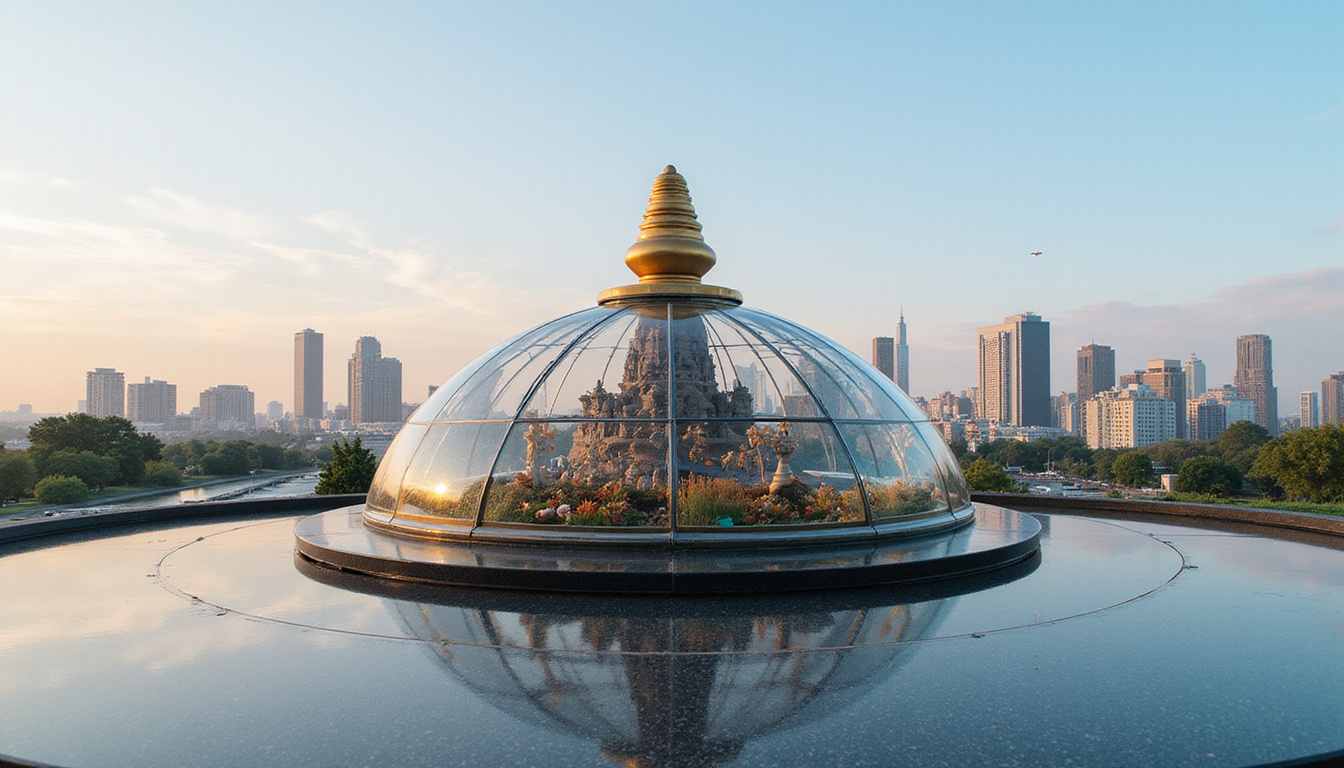
Ground Yourself Like the Base
The base of a stupa is broad and strong, symbolizing connection to earth. In mindfulness terms, this is your felt sense of the body and your connection to the present moment.
Practical applications:
- Start meditation with a short body scan, noticing your feet, legs, and seat.
- When stressed, press your feet into the ground and feel their contact.
- Use posture as a practice—sitting upright yet relaxed, just as a stupa stands tall and steady.
Embrace Experience Like the Dome
The rounded dome holds everything within it, just as mindful awareness allows space for all thoughts and emotions without pushing them away or clinging.
You can mirror this by:
- Noticing a difficult emotion (anxiety, frustration, sadness) and silently labeling it, e.g., “feeling anxious.”
- Imagining your awareness as a spacious dome inside which these experiences arise and pass.
- Practicing non-judgment: allowing what is present to simply be there, without rushing to fix it.
Aspire Upward Like the Spire
The spire atop the stupa symbolizes upward movement toward clarity and compassion. In a mindfulness context, aspiration is your intention—why you practice.
To cultivate this:
- Begin sessions by setting a brief intention (e.g., “May I be present, kind, and clear today”).
- Let your practice be guided by values like wisdom, patience, and kindness.
- Reflect regularly: “How does my mindfulness support who I want to become?”
Creating Your Own “Stupa Space” at Home
Even if you never see a physical stupa, you can create an environment that plays a similar role: a visible reminder and supportive container for mindfulness.
Consider incorporating:
- A quiet corner dedicated to sitting or walking meditation
- A simple object (candle, plant, stone, small statue) as a focal point
- A clear path in your home or nearby park for mindful walking
- A regular ritual—like a short practice each morning or evening
The key is consistency. Just as communities return to a stupa again and again, you return to your space and your practice regularly, letting familiarity deepen calm and presence.
A Simple “Stupa-Inspired” Practice You Can Try Today
Use this brief practice to connect with the symbolism of a stupa, even if you’re sitting in a city apartment or office:
-
Sit like the base
- Feet on the floor or legs crossed.
- Spine gently upright, shoulders relaxed.
- Feel the contact with the ground—steady, supported.
-
Breathe into the dome
- Imagine a gentle, rounded space in your chest and belly.
- With each in-breath, notice sensations in this area.
- With each out-breath, allow softening and release.
-
Align with the spire
- Sense a line from the base of your spine up through the crown of your head.
- Imagine your breath traveling along this line—ground to sky.
- Recall your intention: one word or phrase that expresses how you want to show up today (e.g., “patient,” “present,” “kind”).
-
Close with gratitude
- Take one breath acknowledging you’ve practiced.
- Notice any small shift in body or mind—no matter how subtle.
In two to five minutes, you’ve engaged with all the main symbolic elements of a stupa in a form that fits into modern life.
Why Stupas Still Matter in a Digital Age
With constant notifications, endless scrolling, and chronic multitasking, our attention is more fragmented than ever. The timeless presence of a stupa contrasts sharply with this digital overload:
- It doesn’t move, ping, or update.
- It asks nothing from you except awareness.
- It offers no content, only context: a space to meet your own experience.
For many people today—whether Buddhist or not—visiting a stupa or even seeing one in a photo can evoke a sense of calm, perspective, and connection to something enduring. These structures remind us that inner stillness is always possible, no matter how fast the outer world spins.
FAQ: Understanding Stupas and Mindfulness
1. What is a stupa used for in Buddhism?
A stupa is used as a sacred monument for meditation, veneration, and remembrance. It often enshrines relics or sacred texts and serves as a focal point where practitioners can meditate, walk mindfully around it, and reflect on the teachings of the Buddha.
2. How does a stupa relate to meditation and mindfulness?
A stupa is designed as a physical support for meditation. Its structure symbolizes the path from confusion to clarity, and its circular walking path encourages mindful walking, breath awareness, and reflection. Many practitioners use the presence of a stupa to anchor attention and cultivate calm, present-moment awareness.
3. Can someone who isn’t Buddhist benefit from visiting a stupa monument?
Yes. Even without Buddhist beliefs, a stupa can be experienced as a place of quiet, reflection, and pause. Non-Buddhists often visit stupas for their beauty, serenity, and the mindful atmosphere they create, using the time there to slow down, breathe, and reconnect with themselves.
Bring Ancient Wisdom into Your Modern Practice
The stupa may be an ancient monument, but its wisdom is deeply relevant to the way we live now. It shows us how structure supports freedom, how symbolism can guide inner change, and how a simple, steady presence can transform the way we meet each moment.
If you’re looking to deepen your mindfulness practice:
- Explore images or histories of famous stupas and reflect on their symbolism.
- Create a small “stupa space” at home as a reminder to pause and breathe.
- Try the stupa-inspired practice above for a week and notice any shifts in your mood, clarity, or resilience.
You don’t have to travel to a mountain monastery to benefit from these monuments. Start where you are, with the breath you’re taking right now, and let the spirit of the stupa guide you toward a more grounded, mindful, and meaningful life.
Sacred objects often carry deep cultural and spiritual meaning. Learn how these symbols relate to history, spirituality, and the human mind by exploring more articles at SpiritualMindScience.com.