Understanding spirit animal meaning isn’t just about picking a favorite creature or following a trend. Across many cultures, animal guides are seen as symbols of deeper truths: your strengths, challenges, and the type of wisdom you’re here to embody and learn from. When you explore your own spirit animal, you’re really exploring your inner world in a powerful, symbolic way.
This guide will walk you through what spirit animals are, where the idea comes from, what different animals commonly represent, and how to discover and work with your own personal guide—respectfully and meaningfully.
What Is a Spirit Animal, Really?
In modern spiritual and self-development circles, a spirit animal is usually understood as:
- An inner guide or symbolic ally
- Represented by an animal whose traits mirror your personality, life path, or current challenges
- A tool for reflection, intuition, and self-awareness
In many Indigenous traditions, the concept of animal spirits, power animals, or totems is far more complex and sacred, tied to ancestry, land, ceremony, and community roles. It’s not simply a fun personality type or meme—it’s a relationship of reverence, responsibility, and reciprocity with the natural world.
When you explore spirit animal meaning for yourself, it’s important to:
- Use it as a framework for personal reflection
- Acknowledge and respect its cultural roots
- Avoid claiming specific tribal practices or titles that aren’t yours
Think of it as working with archetypes (like in Jungian psychology) through the language of nature: animal behaviors and qualities become mirrors for your own inner landscape.
Cultural Roots and the Need for Respect
Ideas related to spirit animals or animal guides appear in many places:
- Indigenous cultures of the Americas: Complex systems of animal clans, totems, and spirit helpers that are deeply tied to ceremonies and community identity.
- Shamanic traditions globally: From Siberia to parts of Africa and Asia, practitioners have long described relationships with animal spirits as helpers in healing and guidance.
- Ancient civilizations: Egyptians honored animal-headed deities (like Anubis and Horus); Greeks associated gods with sacred animals (like Athena with the owl).
Important point: While the general concept of animal symbolism is widespread, specific practices, names, and ceremonies belong to living cultures today. Using generic animal symbolism for self-growth is one thing; claiming to be doing “traditional” ceremonies from a culture you’re not part of is another.
A respectful approach:
- Say “animal guide,” “animal ally,” or “personal animal symbol” when in doubt
- Use spirit animal ideas for your own reflection, not as costume or joke
- Support and listen to Indigenous voices on their own traditions (for example, via Native-led cultural organizations and educational sites)
For a deeper understanding of animal symbolism across cultures, resources like the Encyclopaedia Britannica’s entries on totemism offer good historical context (source: Britannica – Totemism).
How Spirit Animal Meaning Works Symbolically
Each animal expresses a unique way of being in the world. The meaning we attribute to them often comes from:
- Behavior: Is the animal nocturnal, migratory, territorial, communal?
- Habitat: Land, water, sky, underground—all carry symbolic flavor.
- Survival strategies: Speed, stealth, endurance, camouflage, cooperation.
- Cultural stories: Myths, folktales, and traditional teachings.
Taken together, these layers give us a symbolic “personality” for each animal. When an animal repeatedly shows up in your life, dreams, or imagination—and it feels meaningful—it can point to qualities you have, need to grow, or are being asked to balance.
Spirit animal meaning isn’t fixed or one-size-fits-all. Context matters: where you saw the animal, what you were feeling, what’s happening in your life right now.
Common Spirit Animals and What They Often Symbolize
Below are some widely recognized animals and their common spiritual meanings. Use these as starting points, not rigid definitions.
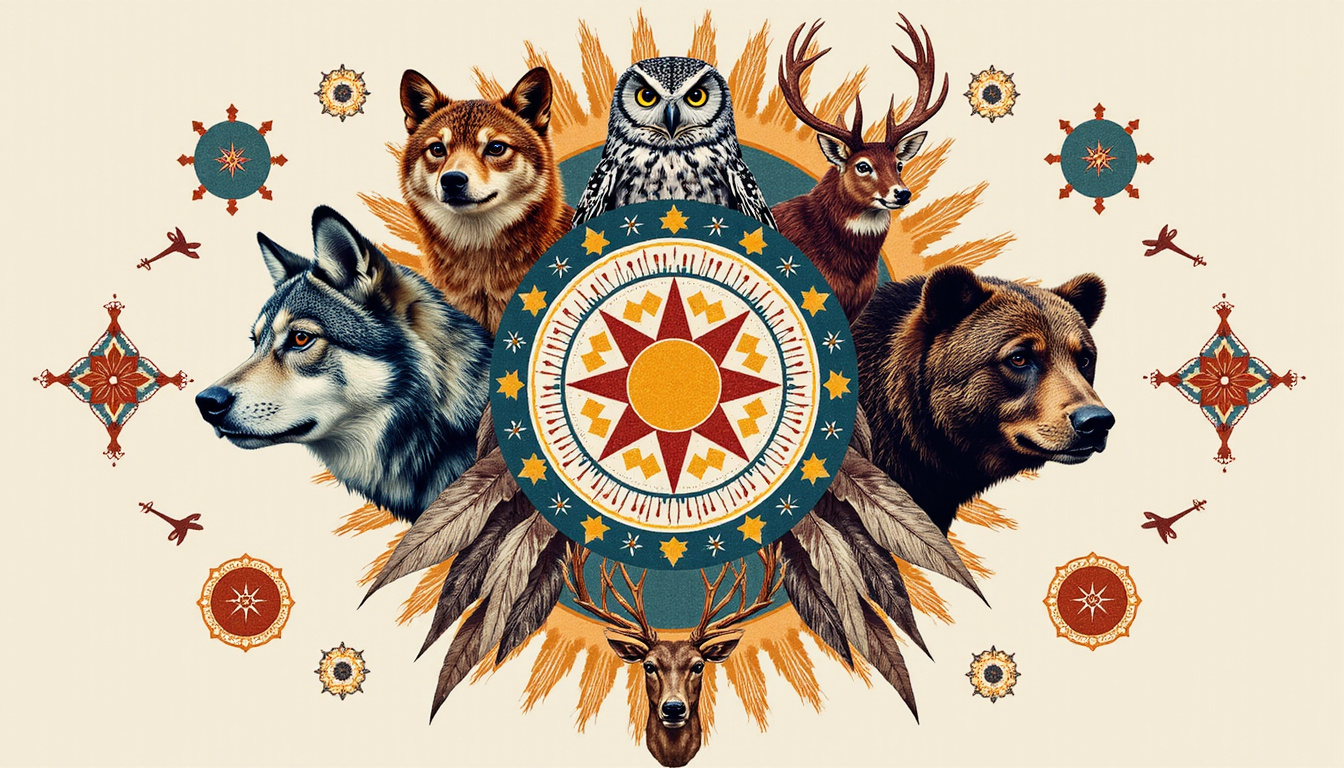
1. Wolf: Intuition and Loyal Leadership
- Strong instincts and deep emotional intelligence
- Loyalty to “pack” (family, chosen family, tribe)
- Learning to balance independence with belonging
- Often appears when you’re called to trust your inner knowing and lead with heart
2. Eagle or Hawk: Vision and Higher Perspective
- Sharp focus and wide, aerial vision
- Connection to sky, spirit, and the “big picture”
- Encouragement to rise above drama and see long-term patterns
- Messages about freedom, destiny, and courage
3. Bear: Strength, Protection, and Inner Retreat
- Powerful physical presence with strong boundaries
- Cycles of action and hibernation
- Calling you to rest, introspect, and trust your natural cycles
- Encouraging healthy self-protection and grounded confidence
4. Deer: Gentleness and Sensitive Courage
- Softness, grace, and emotional sensitivity
- Courage without aggression; strength without harshness
- Reminder to stay open-hearted even in harsh environments
- Support for empaths and highly sensitive people
5. Owl: Hidden Knowledge and Shadow Work
- Night vision: seeing what’s hidden or denied
- Association with mystery, secrets, and deep wisdom
- Invitation to explore your shadow, intuition, and inner truth
- Sometimes appears during transitions or when something isn’t as it seems
6. Butterfly: Transformation and New Identity
- Metamorphosis from caterpillar to winged being
- Letting go of old identities, roles, or limitations
- Embracing vulnerability in the in-between “cocoon” stage
- Symbol of rebirth and lightness after heavy times
7. Snake: Life Force, Shedding, and Healing
- Shedding skin: releasing old patterns, beliefs, or identities
- Life force (kundalini), sexuality, and raw vitality
- Often linked to healing and deep, instinctual wisdom
- May appear when you’re ready for profound inner change
How to Discover Your Personal Spirit Animal
Your spirit animal meaning becomes powerful when you feel a genuine connection to a specific creature. Here’s how to explore that connection in a grounded way.
Pay Attention to Repeating Encounters
Notice what keeps showing up:
- Animals you see frequently in real life (or unusually close encounters)
- Recurring animals in dreams or meditations
- Creatures you’re inexplicably fascinated or obsessed with
- Symbols that pop up repeatedly in art, books, social media, or conversations
Patterns over time matter more than one random sighting.
Tune Into Your Body and Emotions
When an animal appears (physically or symbolically):
- How does your body react—expansion, tension, excitement, calm?
- What emotion comes up—curiosity, fear, comfort, awe?
- What specific personal memory or life situation does it remind you of?
Your emotional response is often the first clue to what the animal is mirroring in you.
Use Quiet Reflection or Meditation
You can try a simple guided process:
- Sit somewhere quiet, close your eyes, and breathe slowly.
- Set an intention: “I’m open to meeting a helpful animal guide that reflects my highest good.”
- Imagine walking in a natural place you love—forest, beach, mountains, desert.
- Notice what animal appears in your imagination, and observe how it behaves.
- Ask it (silently or out loud): “What message do you have for me?” and notice any words, images, or feelings that arise.
- Thank the animal and gently come back to normal awareness.
Don’t force it. Sometimes one animal appears clearly; sometimes you meet several and one stands out over time.
Research but Stay Self-Directed
Look up general symbolism for the animal that came to you, but then ask:
- Which parts of this description truly resonate with my life?
- Is this animal reflecting strengths I already own—or ones I need to develop?
- What is happening in my life that this animal’s traits could help with?
Your interpretation is more important than any list of meanings.
Working With Your Spirit Animal in Daily Life
Once you feel a connection to a certain animal, you can incorporate that relationship into your routine in grounded, respectful ways.
Build a Symbolic Relationship
- Keep an image, statue, or drawing of the animal where you see it daily.
- Journal conversations with your animal guide: “If Wolf were advising me today, what would it say?”
- Before a challenging situation, imagine embodying the animal’s traits—Bear’s steadiness, Eagle’s perspective, or Deer’s gentleness.
This turns your spirit animal meaning into a practical tool, not just an abstract idea.
Use It as a Mirror for Growth
When you’re stuck, ask:
- “What would my animal do in this situation?”
- “Which of its qualities do I need to lean into right now?”
- “Is there a shadow side of this animal I should be careful of?”
For example:
- Wolf can represent intuition and loyalty, but also overprotectiveness or isolation.
- Snake can embody healing and renewal, but also fear of change or manipulation if out of balance.
Seeing both the light and shadow side helps you grow with more honesty.
Stay Flexible: Guides Can Change
Your primary animal guide may shift over time:
- A lifelong “core” animal that feels like your underlying nature
- Season-specific animals that show up for particular lessons or challenges
- Short-term visitors that highlight a passing issue you’re working on
If a new animal strongly enters your awareness, explore its meaning without feeling disloyal to your previous guide. Your inner life is dynamic; your symbols can be too.
Common Mistakes in Understanding Spirit Animal Meaning
To keep your practice grounded and respectful, watch out for:
- Treating it like a joke or meme: This can trivialize living traditions and your own inner work.
- Cultural appropriation: Avoid claiming specific tribal roles, ceremonies, or names if you’re not part of that culture.
- Over-dependence on external meanings: Lists and books can help, but your direct experience matters most.
- Ignoring your instincts: If a commonly listed meaning doesn’t resonate, trust your own body and story.
The most powerful spirit animal work is personal, humble, and rooted in genuine respect for both nature and culture.
Quick Checklist: Are You Interpreting Your Spirit Animal Wisely?
Use this list to keep your exploration balanced:
- [ ] I notice repeating animal symbols rather than chasing random ones.
- [ ] I pay attention to how an animal encounter makes me feel.
- [ ] I research general symbolism but adapt it to my personal context.
- [ ] I acknowledge and respect the cultural roots of spirit animal concepts.
- [ ] I use my animal guide as a mirror for growth, not an excuse for behavior.
- [ ] I stay open to my animal guides changing over time.
FAQ: Spirit Animal Meaning and Personal Guides
What does spirit animal mean in simple terms?
In simple terms, spirit animal meaning refers to the symbolic message or guidance you receive through a particular animal that deeply resonates with you. That animal’s traits—like courage, sensitivity, or intuition—become a mirror for your own strengths, challenges, and life lessons.
How do I find my true spirit animal guide?
To discover your true guide, notice which animals keep appearing in your dreams, daily life, and imagination, and how they make you feel. Combine this with quiet reflection or meditation, then explore the symbolic meaning of that creature. Your felt connection is more important than any online quiz.
Can you have more than one animal spirit guide?
Yes. Many people feel a lifelong connection to one primary animal while also experiencing other animal spirit guides during specific life phases or challenges. Each guide brings its own unique set of meanings and lessons to support your growth.
Step Into Your Own Story With Your Spirit Animal
Exploring spirit animal meaning is ultimately about deepening your relationship with yourself and the living world around you. When you listen to the animals that call to you—whether it’s Wolf, Deer, Owl, Snake, or a creature no one else ever talks about—you’re choosing to see your life as a meaningful, evolving story.
Don’t leave that story to chance. Take the next step now: set aside ten quiet minutes today to reflect, journal, or meditate on the animal that feels most alive in your imagination. Ask it what it wants you to remember about who you are and what you’re capable of. When you treat that guidance with respect and curiosity, you open the door to a deeper, more intuitive way of moving through the world—guided, grounded, and genuinely connected.
Animals have inspired symbols and beliefs across cultures for centuries. Discover how these traditions connect with psychology, spirituality, and human consciousness at SpiritualMindScience.com.