The Spear of Destiny—also known as the Holy Lance or the Lance of Longinus—sits at the crossroads of faith, myth, occult lore, and political intrigue. From biblical references to Nazi obsessions and modern conspiracy theories, this legendary relic has been credited with shaping the fate of empires and holding mysterious powers few dare to fully understand. Whether viewed as sacred artifact or dark instrument, its story is one of blood, belief, and the enduring human hunger for power.
What Is the Spear of Destiny?
At its core, the Spear of Destiny refers to the Roman lance said to have pierced the side of Jesus Christ during his crucifixion. In Christian tradition, this final act confirmed his death and fulfilled Old Testament prophecy. Over time, the object associated with that event evolved into a powerful symbol—believed by some to grant divine favor or catastrophic ruin depending on who wields it.
The spear goes by several names:
- Holy Lance
- Lance of Longinus
- Spear of Longinus
- The Holy Spear
- Spear of Destiny
While the historical existence of the original spear is debated, the idea of a single weapon binding spiritual power to political authority has given the Spear of Destiny an outsized place in Western imagination.
Origins in Scripture and Early Christian Tradition
The biblical roots of the Spear of Destiny are found primarily in the Gospel of John. There, a Roman soldier pierces Christ’s side, and “blood and water” flow out (John 19:34). The soldier isn’t named in Scripture, but later Christian tradition calls him Longinus.
The Biblical Moment
According to Christian theology, this act:
- Confirms that Jesus is truly dead, not merely unconscious
- Symbolically releases the sacraments (often interpreted as blood = Eucharist, water = Baptism)
- Fulfills Old Testament prophecy that none of the Messiah’s bones would be broken
The physical spear involved in that moment became, over centuries, an object of deep fascination. If Christ is the Son of God, then anything that made contact with his blood might carry spiritual potency—whether seen as a conduit of grace, a relic of immense holiness, or a dangerous tool if misused.
Early Relic Traditions
By the early Middle Ages, Christian communities claimed possession of various relics linked to the Passion: the True Cross, the Crown of Thorns, nails, and of course, the Holy Lance. Different regions asserted they had the authentic spear, or at least a fragment.
This competition over authenticity did not reduce the relic’s power in the popular mind; instead, it multiplied the stories, pilgrimages, and legends surrounding the Holy Lance.
Multiple Spears: Vienna, Antioch, Rome, and Beyond
One of the biggest historical puzzles around the Spear of Destiny is straightforward: there are several of them.
Major Claimed Relics
Over the centuries, at least four major “Holy Lances” have been venerated:
-
The Vienna Spear (Hofburg Palace, Austria)
- Once part of the Imperial Regalia of the Holy Roman Empire
- Associated with emperors like Charlemagne and later Habsburg rulers
- Often regarded by conspiracists as “the” Spear of Destiny
-
The Roman Spear (St. Peter’s Basilica, Vatican)
- A lance head kept as a relic in the Vatican
- Said to have arrived from Constantinople after the fall of the Byzantine Empire
-
The Antioch Spear (Crusader Relic)
- Allegedly discovered in 1098 during the First Crusade
- Used to rally demoralized Christian forces, convincing many that God supported their cause
- Later doubted even by some church authorities
-
The Armenian Spear (Etchmiadzin)
- Preserved in the Holy See of Etchmiadzin (Armenian Apostolic Church)
- Venerated for centuries as the actual lance of Longinus
Scholars generally see it as extremely unlikely that all—or perhaps any—of these are the historical spear used at the crucifixion. Nonetheless, each spear has inspired its own chain of legends and pilgrimages. The term Spear of Destiny has increasingly come to refer symbolically to this whole cluster of relics and myths.
Power, Prophecy, and the Fate of Empires
The mystique of the Spear of Destiny isn’t just about piety; it’s about power. By the Middle Ages, a potent idea had taken hold: whoever possessed the spear could not be defeated in battle and was destined to rule.
Holy Roman Emperors and the Imperial Lance
In the Holy Roman Empire, the spear preserved in what is now Vienna became intertwined with rulership itself. Medieval chroniclers claimed that:
- Charlemagne carried the spear in battle
- Later emperors saw it as proof of divine favor
- The object became part of imperial coronation rituals and regalia
The association was clear: to hold the spear was to hold a visible token of God’s backing, something that legitimized earthly power.
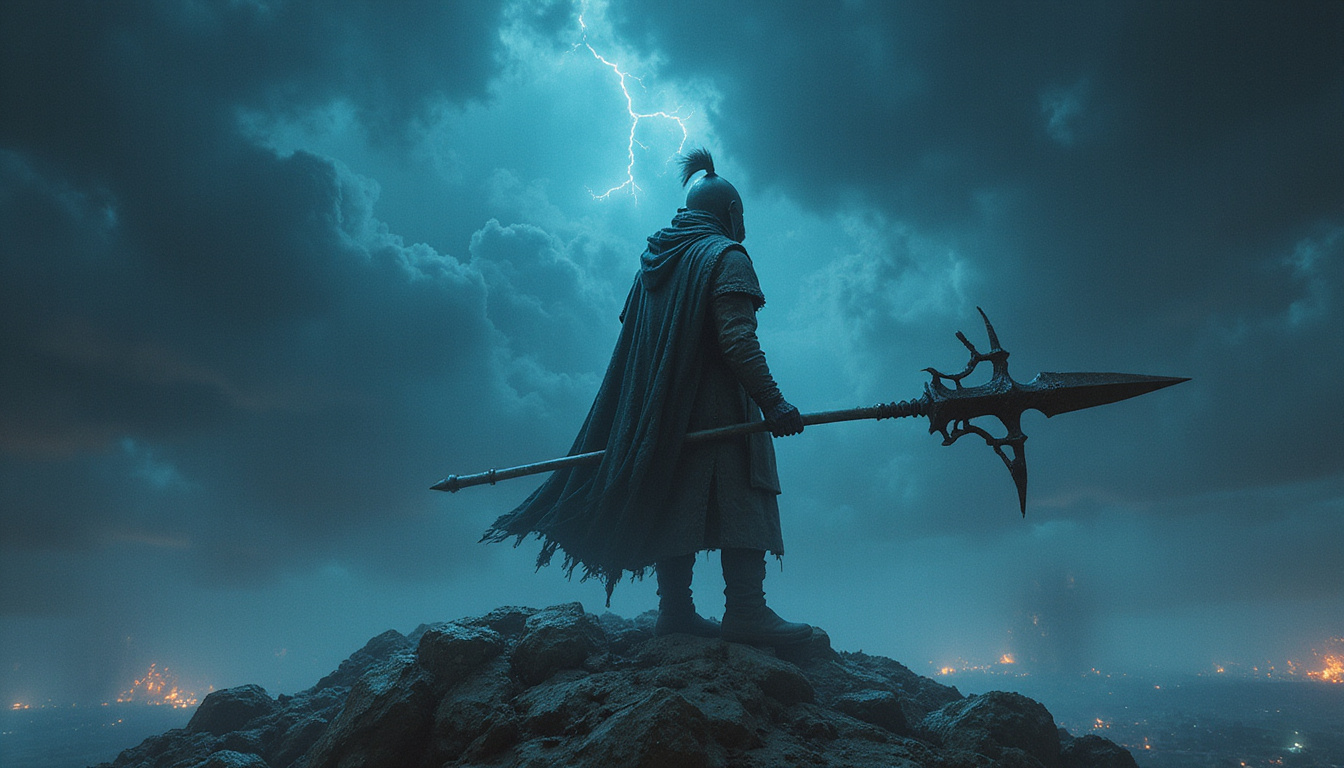
The Legend of Invincibility
Over time, bolder claims emerged: the Spear of Destiny supposedly ensured victory while it remained in a leader’s hands—but spelled disaster the moment they lost it. This idea fed into later speculation that the rise and fall of empires could be traced to their control (or loss) of the spear.
Such notions are hard to document historically, but they have proven irresistible to novelists, filmmakers, and occult writers who love the idea of a single, tangible object threading its way through the fate of nations.
The Spear of Destiny and the Nazis: Myth, Obsession, and Reality
Perhaps no modern chapter in this legend has captured public interest as much as the claimed link between the Spear of Destiny and Adolf Hitler. This connection rests less on solid archival evidence and more on a layered mix of occult culture, post-war mythmaking, and sensationalist writing.
Hitler’s Alleged Fascination
The story popularized in the 20th century—especially by author Trevor Ravenscroft in his 1973 book The Spear of Destiny—claims:
- As a young man in Vienna, Hitler supposedly saw the spear in the Hofburg Museum
- He reportedly experienced a kind of mystical revelation, believing his destiny was tied to the artifact
- After annexing Austria in 1938, Hitler allegedly had the spear transported to Nuremberg, a symbolic center of Nazi power
According to this narrative, Hitler’s fate was bound to the spear, and when the Americans seized it in 1945, his downfall soon followed.
Separating Fact from Fiction
Historians are far more cautious:
- Documentation confirming Hitler’s personal obsession with the Vienna spear is sparse
- The artifact was indeed moved by the Nazis and recovered by U.S. forces, but tying that directly to Hitler’s psychology is speculative
- Many details in Ravenscroft’s account are contested or considered unreliable (source: U.S. National Park Service analysis of Nazi occult myths)
Still, the association of the Spear of Destiny with Nazi occultism persists in popular culture. It shows how the spear functions as a canvas for our fears about evil leaders seeking supernatural tools to dominate the world.
Dark Secrets and Esoteric Interpretations
Beyond historical claims, the Spear of Destiny has taken on profound symbolic and occult meanings. Esoteric traditions across Europe have linked it to themes of sacrifice, initiation, and the shadow side of spiritual power.
The Spear as a Dual-Sided Symbol
The Spear of Destiny can be seen in two opposing lights:
-
As a holy instrument:
- A symbol of the completion of Christ’s redemptive act
- A relic that channels grace, protection, or spiritual insight
-
As a dark weapon:
- The instrument that spills divine blood, representing humanity’s rejection of the sacred
- A potential “cursed object” empowering ruthless rulers
This duality mirrors many mythic weapons—Excalibur, Gungnir, or the Sword of Damocles—where power always comes with cost and moral responsibility.
Occult and New Age Views
In modern occult and New Age writings, the Spear of Destiny is sometimes:
- Interpreted as a symbol of focused will—the ability to pierce illusion and manifest destiny
- Connected to Grail lore, where the lance and the cup form a pair: active (masculine) and receptive (feminine) spiritual forces
- Seen as an archetypal pattern rather than a single physical item; any tool that channels power toward a fateful impact can be “a spear of destiny”
These interpretations aren’t rooted in mainstream religious doctrine, but they reveal how deeply this relic has embedded itself in the Western mystical imagination.
The Spear of Destiny in Fiction, Comics, and Pop Culture
Because the original object is shrouded in uncertainty, storytellers have had enormous creative freedom to reinvent the Spear of Destiny.
Modern Media Appearances
The spear (or variants of it) has appeared in:
- Comics (e.g., DC and other publishers) where the Spear of Destiny is depicted as an artifact capable of controlling or weakening powerful beings
- Films and TV, notably:
- Supernatural- or occult-themed series that make it a central MacGuffin
- Movies playing on Nazi occult themes, where villains seek the spear as a world-conquering weapon
- Novels and thrillers that blend historical research with conspiracy theories about the Holy Lance, Templars, and secret societies
In these stories, the Spear of Destiny is almost always portrayed as a game-changer: whoever controls it gains an edge over both natural and supernatural forces.
Why the Spear of Destiny Still Captivates Us
The enduring power of the Spear of Destiny legend isn’t just about miracles or mysteries. It taps into some of our deepest questions:
- Is history guided by spiritual forces, or is it random chaos?
- Do objects carry moral or spiritual charge, or are they merely symbolic?
- What happens when human ambition tries to harness the sacred for political power?
The spear sits at the junction of these questions. It represents:
- The moment where human violence physically touches the divine
- The temptation to seize spiritual authority for earthly gain
- The paradox of an object of suffering turned into a badge of glory and conquest
Whether you approach the Spear of Destiny as a believer, skeptic, historian, or fantasy fan, its story forces a confrontation with how we understand power—both visible and invisible.
Quick Reference: Key Themes of the Spear of Destiny
- Biblical origin: the lance that pierced Christ’s side
- Multiple relics: Vienna, Vatican, Antioch, Armenia, and more
- Imperial symbol: tied to Holy Roman Emperors and claims of invincibility
- Nazi-era myth: alleged Hitler obsession, heavily disputed by scholars
- Esoteric readings: symbol of will, sacrifice, and dangerous spiritual power
- Pop culture: recurring artifact in comics, films, novels, and games
FAQ: Common Questions About the Spear of Destiny
Q1: Is the Spear of Destiny real, and if so, where is it now?
Several relics claim to be the true Spear of Destiny or Holy Lance, including those in Vienna, Rome, and Etchmiadzin. Historians generally doubt that any can be definitively proven as the actual lance used at the crucifixion, due to the lack of continuous, reliable documentation from the 1st century onward.
Q2: What powers is the Holy Lance supposed to have?
Legends surrounding the Holy Lance of Longinus claim it grants victory in battle, protection from defeat, and even influence over world events when in the hands of a powerful ruler. Esoteric interpretations say it amplifies will or destiny. However, these powers belong to the realm of myth and belief rather than verifiable fact.
Q3: Did Hitler really use the Spear of Destiny to gain power?
Stories about Hitler and the Spear of Destiny artifact are largely based on later occult literature and remain controversial. While the Nazis did seize and transport the Vienna spear, historians have found limited solid evidence that Hitler viewed it as a magical key to power. The idea remains popular in conspiracy theories and fiction more than in documented history.
The legend of the Spear of Destiny weaves together faith, fear, and fascination in a way few stories can match. Whether you see it as a sacred relic, a dangerous myth, or a powerful symbol, exploring its history opens a window into how humanity has always tried to touch the divine—sometimes with reverence, sometimes with ruthless ambition.
If this journey into the Spear of Destiny has sparked your curiosity, take the next step: dive into primary sources, explore museum collections online, and compare scholarly views with the myths you see in films and games. The more you investigate, the more you’ll uncover how one mysterious spear continues to shape stories about power, faith, and the fate of the world.
Sacred objects often carry deep cultural and spiritual meaning. Learn how these symbols relate to history, spirituality, and the human mind by exploring more articles at SpiritualMindScience.com.