A shooting star is one of the simplest—and most magical—sky shows you can enjoy with no special equipment. Whether you call it a meteor, a falling star, or a wish waiting to happen, learning how to find and photograph these brief streaks of light can turn an ordinary night into something unforgettable. This guide walks you through what shooting stars really are, how to spot more of them, how to capture them with your camera or phone, and how to make meaningful wishes that stick with you long after the meteor fades.
What Is a Shooting Star, Really?
Despite the name, a shooting star isn’t a star at all. It’s a tiny bit of space rock or dust—called a meteoroid—that burns up as it slams into Earth’s atmosphere at high speed. That quick burn creates the bright, brief streak of light we see and call a meteor or shooting star.
A few key points:
- Most are tiny. Many are no bigger than a grain of sand.
- They’re incredibly fast. Meteors can travel tens of kilometers per second.
- They burn up high. Most shooting stars vaporize 50–75 miles (80–120 km) above Earth.
Larger pieces that survive all the way down and reach the ground are called meteorites, but those are far rarer than the quick flashes we commonly see as a shooting star.
For a deeper scientific overview, NASA’s meteor page is an excellent resource (source: NASA).
Best Time to See a Shooting Star
You can see a shooting star on any clear night, but your chances increase dramatically when you understand timing and conditions.
Time of Night
- After midnight to pre-dawn: This is usually the best time, because the part of Earth you’re on is turning into the direction of its orbit, effectively “scooping up” more debris.
- Late evening: Still possible, but generally fewer meteors than the early morning hours.
Time of Year
Some nights are better than others thanks to meteor showers—predictable periods when Earth passes through streams of comet debris. During a good shower, you could see dozens of shooting stars per hour.
Famous meteor showers include:
- Perseids (August): Often one of the best, with frequent, bright meteors.
- Geminids (December): Very reliable and can produce a high number of meteors.
- Quadrantids (January): Short but intense peak if you catch it at the right hour.
Check yearly meteor shower calendars for peak dates and expected rates.
Weather and Sky Conditions
- Clear skies: Clouds are your main enemy. A partly cloudy sky can still work if big chunks remain clear.
- Low humidity: Drier air gives better transparency.
- No haze or smoke: Pollution and wildfire smoke can wipe out faint meteors.
Before you head out, check a local clear-sky forecast or astronomy weather site.
How to Find Dark Skies for Shooting Stars
Light pollution is the number-one factor that determines how many meteors you’ll see.
Get Away from City Lights
- Drive 20–60 minutes away from major cities if possible.
- Aim for rural areas, parks, lakeshores, or mountain pullouts with wide horizons.
- Turn off nearby car lights and avoid shining flashlights into your eyes.
Use Light Pollution Maps
Online maps show where the sky is darkest. Look for locations in darker (gray/blue/black) zones rather than bright urban areas. National or state parks often provide great shooting star views.
Let Your Eyes Adjust
- Give your vision 20–30 minutes to adapt to darkness.
- Avoid looking at phone screens; if you must, use red night mode and keep brightness low.
- Once your eyes adapt, you’ll notice more stars—and more faint shooting stars.
Practical Tips for Spotting a Shooting Star
You don’t need a telescope or binoculars to see a shooting star. In fact, you’ll see more with just your eyes.
Where to Look in the Sky
- Look up, not down: It sounds obvious, but many people spend more time on their phones than the sky. Commit to looking up.
- Scan a wide area: Meteors can appear anywhere, so don’t fixate on one tiny patch.
- Avoid staring at bright lights or the Moon: They reduce your night vision.
During meteor showers, meteors will appear to radiate from a specific constellation (the “radiant”), but they can streak across large parts of the sky. You don’t have to know constellations perfectly—just keep a broad view.
Comfort Matters
You’re more likely to stay out long enough to see a shooting star if you’re comfortable:
- Bring a reclining chair, blanket, or sleeping pad.
- Dress in layers; even summer nights can get chilly.
- Bring water, snacks, and insect repellent if needed.
- Invite a friend so you can share the excitement (and stay safe if you’re remote).
Give It Time
Seeing one shooting star in a few minutes is possible—but seeing many often takes patience:
- Plan to stay at least one full hour.
- The longer you stay, the better your odds, especially during shower peaks.
- Periods of quiet can be followed by quick bursts of activity.
How to Photograph a Shooting Star
Capturing a shooting star in a photo is challenging but very rewarding. The key is to let your camera collect light over time, increasing the odds that a meteor will streak through your frame during the exposure.
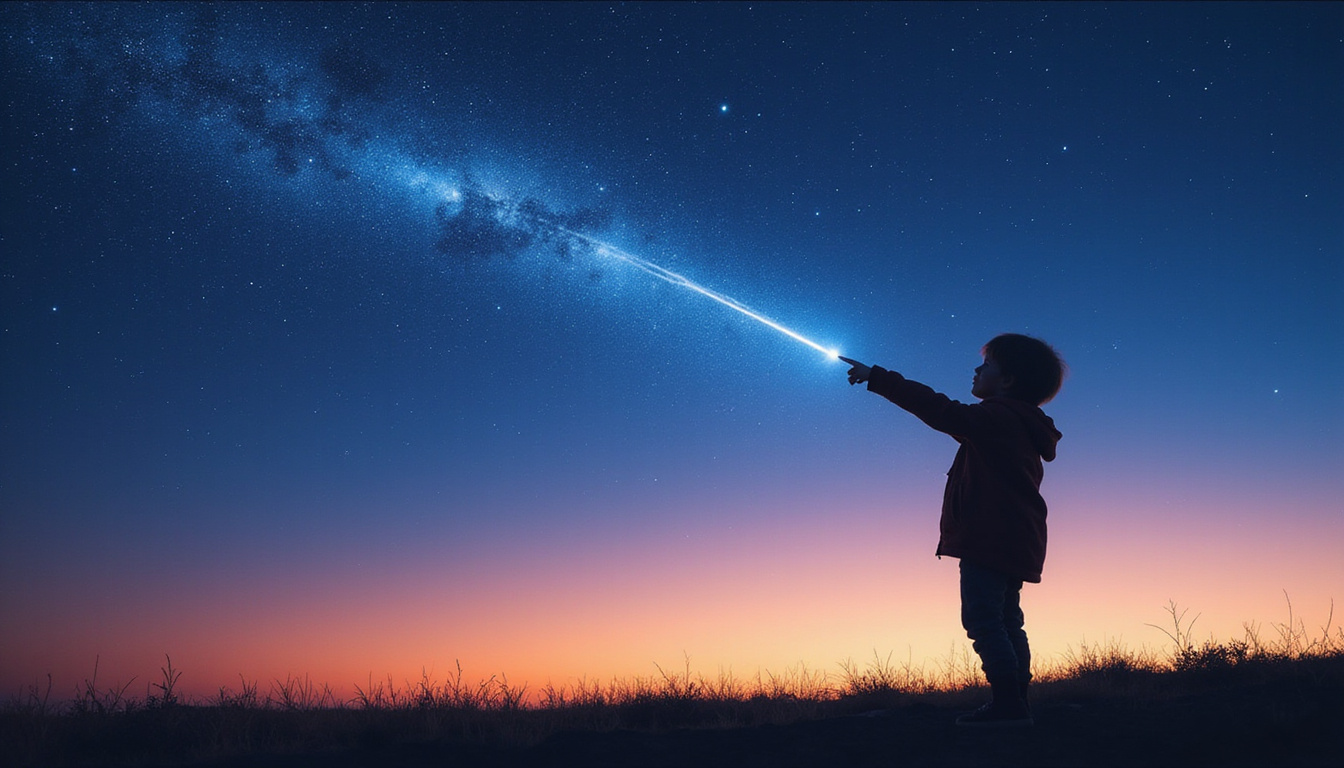
Gear You’ll Need
- Camera with manual controls (DSLR or mirrorless preferred)
- Sturdy tripod
- Wide-angle lens (14–35mm range is ideal)
- Remote shutter release or interval timer (often built into the camera)
- Extra batteries and memory cards
You can photograph a shooting star with a phone (more on that below), but dedicated cameras give better results.
Basic Camera Settings (Starting Point)
Every location is different, but this is a good starting guide for night-sky shooting:
- Mode: Manual (M)
- Focus: Manual, set to infinity (more precise: focus on a bright star, then lock)
- Aperture: f/2.8–f/4 (wide open to let in as much light as possible)
- ISO: 1600–6400 (start at 3200 and adjust based on brightness and noise)
- Shutter speed: 10–25 seconds
- Use the “500 rule” as a rough guide to avoid star trails: 500 ÷ focal length (full-frame equivalent). E.g., 500 ÷ 20mm ≈ 25 seconds.
Shooting Technique
- Compose a wide scene. Include a foreground (tree, rock, building, horizon) to give context. The shooting star will be a bonus in the sky.
- Set your focus carefully. Autofocus usually fails in the dark. Use live view and zoom in on a bright star or distant light, focus manually until sharp, then tape or lock the focus ring.
- Turn on continuous shooting or interval timer. Let the camera take photo after photo without you touching it.
- Shoot for at least 30–60 minutes. The more frames you capture, the more likely a shooting star will appear in one.
- Check test shots. Zoom in to see if stars are sharp and exposure is bright enough. Adjust ISO and shutter speed as needed.
Reducing Noise and Blurry Stars
- Keep ISO as low as possible while still showing plenty of stars.
- Use the shortest shutter speed you can without making the image too dark.
- Turn off in-camera long-exposure noise reduction if it slows you down between shots; you can reduce noise later in editing.
How to Capture a Shooting Star with a Smartphone
Phone cameras have improved dramatically, and many newer models offer a night mode or even an astrophotography mode that can capture stars and, sometimes, a shooting star.
Setup Tips
- Use a tripod or stable rest. Even a rock, wall, or car roof helps.
- Enable night mode / long exposure. Some phones automatically detect low light; others require a manual “Pro” or “Night” setting.
- Use a timer. A 3–10 second timer prevents blurring when you tap the shutter button.
- Aim at a dark part of the sky. Avoid bright streetlights and the Moon if possible.
Expectations
- Phone sensors are small, so they struggle with very faint meteors.
- You’re more likely to catch a brighter shooting star or fireball during a meteor shower.
- Take many photos over time to improve your odds.
The Tradition of Making a Wish on a Shooting Star
The idea that a wish made on a shooting star might come true is ancient and widespread. While it’s not rooted in science, it is a powerful psychological ritual.
Why We Wish on a Shooting Star
- Rarity and surprise. A shooting star appears suddenly and disappears fast, making the moment feel special.
- Focus of intention. The brief streak encourages you to think quickly and clearly about what you want.
- Shared human story. Many cultures have their own versions of wishing on celestial events, connecting your moment to something larger.
How to Make a Meaningful Wish
You can turn a simple wish on a shooting star into a moment of reflection and motivation:
- Be specific. Instead of a vague wish like “I want to be happy,” try “I want to build closer relationships with my friends this year.”
- Keep it positive. Focus on what you want to create or grow, not what you want to avoid or remove.
- Tie it to action. Add a small step: “I’ll start by calling someone I care about tomorrow.”
- Remember it. Write your shooting star wish down when you get home. The act of recording can make it more powerful and memorable.
You don’t have to believe in magic for the ritual to matter. A shooting star wish can become a personal promise you make under the night sky.
Common Myths vs. Reality About Shooting Stars
Understanding what’s real—and what’s legend—can deepen your appreciation of the night sky.
-
Myth: Shooting stars are falling stars.
Reality: They’re small bits of rock or metal burning up high in the atmosphere, not actual stars. -
Myth: You can predict exactly when and where one will appear.
Reality: Even during a meteor shower, each shooting star is unpredictable, which is part of the fun. -
Myth: Bigger, brighter streaks mean something special.
Reality: Brighter meteors (often called fireballs) are usually larger or closer, but their meaning is what you choose to give them.
Quick Checklist for Your Next Shooting Star Night
Before you head out to spot a shooting star, run through this simple list:
- [ ] Check meteor shower calendars and pick a peak night if possible
- [ ] Choose a dark-sky location away from city lights
- [ ] Confirm a clear-weather forecast
- [ ] Pack warm clothes, blanket/chair, snacks, and water
- [ ] Bring a camera or smartphone tripod if you plan to photograph
- [ ] Set your phone to red night mode or dim brightness
- [ ] Give your eyes 20–30 minutes to adjust to the dark
- [ ] Put your phone away and enjoy the sky
FAQ About Shooting Stars
How often can you see a shooting star per hour?
On a typical dark night with no major meteor shower, you might see a shooting star every 10–15 minutes if you’re under a fairly dark sky. During strong meteor showers like the Perseids or Geminids, that rate can jump to 20–60 per hour at peak, sometimes more under exceptional conditions.
What is the difference between a shooting star and a meteor?
There’s no real difference—“shooting star” is just the popular name for a meteor. Astronomers use “meteor” to describe the streak of light in the sky, “meteoroid” for the object in space, and “meteorite” for pieces that reach the ground.
Can I see a falling star in the city?
Yes, but it’s harder. Bright city lights wash out faint meteors, so only the brightest shooting stars are visible from heavily lit areas. If you want to see more than an occasional streak, you’ll get a much better shooting star experience by traveling to a darker location outside the city.
Catching a shooting star—and maybe making a wish on it—doesn’t require expensive gear or expert knowledge. With a bit of planning, a dark sky, and the patience to look up instead of at your screen, you can experience one of the purest, most timeless spectacles our planet offers.
Choose a nearby dark-sky spot, check the next meteor shower date, and set aside one evening this month to chase shooting stars. Bring a friend, a camera if you have one, and a wish in your back pocket. The moment a shooting star blazes across the sky, you’ll be glad you made the time to look up.
Explore the Science Behind Spirituality
This guide explored the meaning and history of good luck symbols. To discover the psychology, consciousness, and scientific perspectives behind spiritual beliefs, visit SpiritualMindScience.com.