The scarab beetle is one of the most recognizable symbols from ancient Egypt, yet most people know it only as a pretty amulet or a museum artifact. In reality, the scarab beetle carries a rich history of spiritual meaning, artistic influence, and even practical applications that reach into the modern world. From its association with the sun god Ra to its role in modern biomimicry and agriculture, this small beetle has had an outsized impact on human culture and science.
What Is a Scarab Beetle?
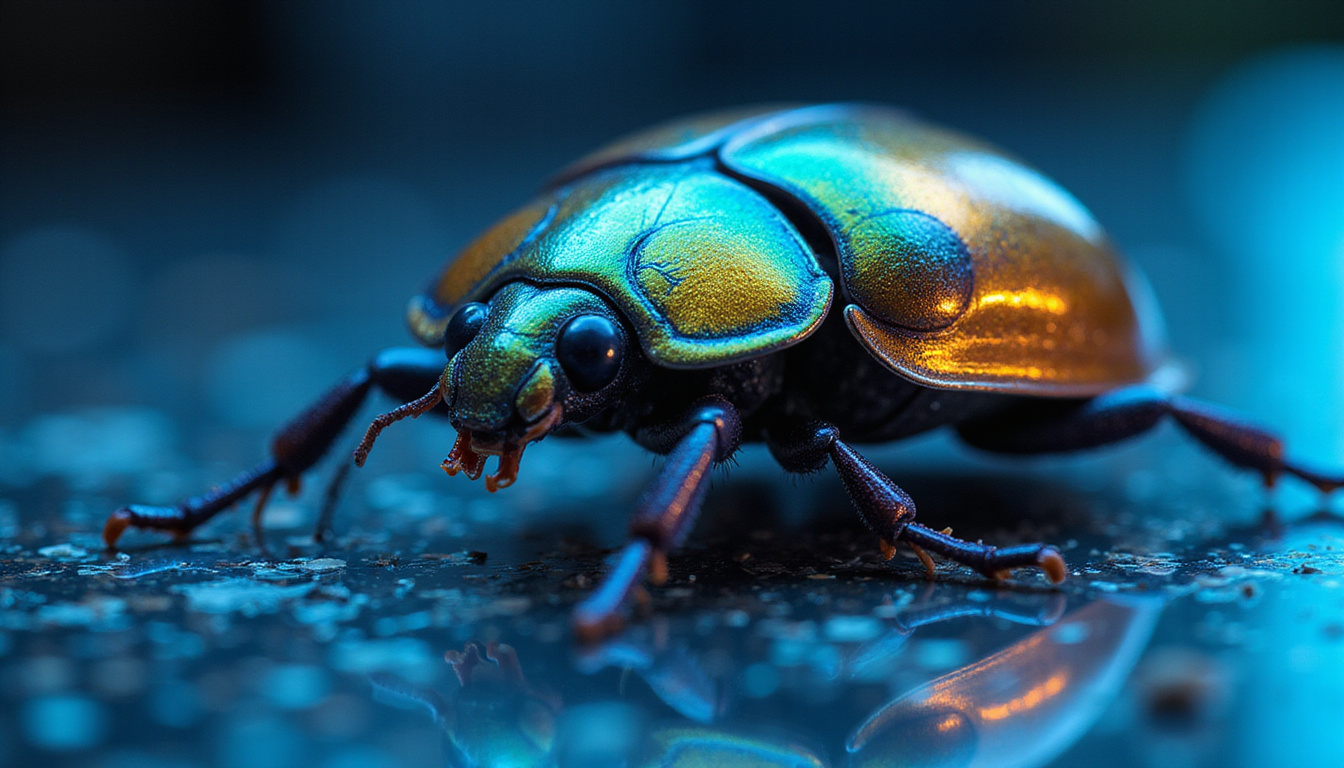
“Scarab beetle” commonly refers to a family of beetles called Scarabaeidae, which includes dung beetles, June beetles, and chafers. In the context of history and symbolism, though, the term usually points to dung beetles from the genus Scarabaeus, revered in ancient Egypt.
Key characteristics of scarab beetles:
- Oval, robust bodies
- Strong, spiny legs adapted for digging and rolling
- Often shiny or iridescent exoskeletons
- Behavior centered around rolling and burying dung
Ancient Egyptians observed how the scarab beetle rolled balls of dung and associated this daily activity with cosmic forces and the cycles of the sun and rebirth.
Scarab Beetle in Ancient Egypt: Symbol of the Rising Sun
To the ancient Egyptians, the scarab beetle was not just an insect; it was a living symbol of cosmic order and renewal.
Khepri: The Scarab-Headed Sun God
The scarab’s most important association was with Khepri, a form of the sun god. Khepri was often depicted as:
- A man with a scarab beetle as a head, or
- A full scarab beetle pushing the sun disc across the sky
Egyptians watched the beetle roll a ball of dung and saw a powerful metaphor: just as the scarab pushed its sphere across the ground, so Khepri pushed the sun across the sky each day. This linked the scarab beetle directly to:
- Sunrise and daily renewal
- The concept of eternal rebirth
- The cyclical nature of life, death, and resurrection
Symbol of Creation and Spontaneous Life
The life cycle of the dung beetle added to its mystique. Egyptians believed scarabs were born from the dung balls themselves, seemingly emerging from nowhere. They didn’t understand the hidden egg-laying process, so they interpreted this as self-creation—life arising from inert matter.
As a result, the scarab beetle became a potent symbol of:
- Spontaneous creation
- Spiritual transformation
- The soul’s capacity to renew itself
Scarab Amulets: Protection, Power, and the Afterlife
Scarab-shaped amulets are among the most numerous artifacts found in Egyptian archaeological sites. These were not simply decorations; each type had specific purposes and meanings.
Personal Scarab Amulets
Millions of small scarab amulets were produced in faience, stone, glazed steatite, and sometimes precious metals. They were worn as rings, pendants, or sewn into clothing. Typically:
- The top was carved in the shape of a beetle.
- The flat underside was inscribed with names, prayers, or protective formulas.
People wore these scarabs for:
- Daily protection from harm or misfortune
- Favor and guidance from the gods
- Good luck in love, business, and legal matters
Heart Scarabs for the Dead
One of the most powerful uses of the scarab beetle in Egypt was as a heart scarab, placed on or near the chest of mummies. These large amulets, often of green stone, were inscribed with Spell 30B from the Book of the Dead, a text guiding the deceased through the afterlife.
The heart scarab’s role:
- It was believed to silence the heart during the “Weighing of the Heart” judgment.
- The heart, seat of memory and conscience, might testify against the deceased.
- The scarab amulet pleaded that the heart not betray its owner, helping secure a favorable judgment and a peaceful afterlife.
This shows how deeply the scarab beetle was woven into Egyptian beliefs about moral responsibility and eternal life.
Beyond Egypt: Global Symbolism of the Scarab Beetle
Although ancient Egypt is the best-known scarab culture, the beetle’s symbolism echoes across time and geography.
Mediterranean and Near Eastern Influence
Egyptian scarab amulets spread through trade and diplomacy. Over centuries, they were adopted or imitated by:
- Canaanite and Phoenician cultures, who used scarabs in seals and jewelry
- Minoan and Mycenaean civilizations, where scarab-shaped beads and talismans were popular
For these cultures, the scarab retained links to protection, royalty, and divine favor, even if the original Egyptian theology was partially lost.
Modern Spiritual and Esoteric Usage
Today, the scarab beetle shows up in:
- Tarot and oracle deck imagery
- New Age and esoteric jewelry
- Symbolic art about transformation and rebirth
In these contexts, the scarab often stands for:
- Personal growth and reinvention
- Overcoming past limitations
- Daily discipline in pursuing one’s goals (echoing the beetle’s constant pushing of its ball)
Biology of the Scarab Beetle: Nature Behind the Myth
Understanding the real-life behavior of the scarab beetle only deepens its significance.
The Dung Rolling Behavior
Dung beetles feed on animal waste, but far from being “dirty,” their behavior is ecologically essential. They:
- Locate fresh dung using highly sensitive antennae.
- Shape a portion into a ball.
- Roll it away from competition, sometimes over great distances.
- Bury it either for immediate feeding or as a brood ball for larvae.
This practical, tireless activity can easily be seen as a natural metaphor for persistence and transformation—turning waste into nourishment and new life.
Navigation by the Stars
One of the most striking discoveries about the scarab beetle is its navigation ability. Some dung beetles, such as Scarabaeus satyrus, can orient themselves using:
- The position of the sun
- The pattern of polarized light
- Even the Milky Way on moonless nights
This celestial navigation was confirmed in behavioral experiments (source: National Geographic). The fact that a scarab beetle uses the stars to roll its dung ball home only reinforces the ancient association with cosmic order and the heavens.
Surprising Modern Uses of the Scarab Beetle
The influence of the scarab beetle extends far beyond mythology. Scientists, engineers, and designers are learning from this insect in unexpected ways.
1. Agriculture and Soil Health
Dung beetles, including many scarab species, provide crucial ecosystem services:
- Soil aeration: By burrowing and burying dung, they loosen and mix the soil.
- Nutrient cycling: They speed up the return of nitrogen and other nutrients to the ground.
- Parasite and pest reduction: Removing dung quickly interrupts the life cycle of pests that breed in manure.
In livestock systems, healthy populations of scarab beetles can:
- Improve pasture quality
- Reduce reliance on chemical treatments
- Support sustainable, regenerative agriculture
Some regions even consider importing or protecting dung beetle species as a natural way to manage waste and boost soil fertility.
2. Biomimicry and Technology
Researchers study the scarab beetle to inspire new technologies. Areas of interest include:
- Exoskeleton structure: The strong, lightweight shell of a scarab suggests designs for durable materials and protective gear.
- Anti-fog and water-shedding surfaces: Certain scarabs have specialized microstructures on their shells that manage moisture and light, inspiring coatings and surface designs.
- Robotics and autonomous navigation: The way a scarab beetle maintains a straight line while rolling its ball—using minimal information from the sky—gives insight into simple, efficient navigation systems for small robots.
By copying these biological solutions, engineers hope to create more efficient, resilient technologies.
3. Art, Fashion, and Jewelry
The scarab beetle’s distinctive shape and symbolism have made it a favorite motif for centuries.
Modern uses include:
- High-end jewelry with scarab-shaped gemstones or enameling
- Fashion prints and accessories drawing on Egyptian revival styles
- Tattoos symbolizing rebirth, resilience, or a “new chapter” in life
- Interior design motifs, from wallpaper to decorative objects
Designers appreciate the scarab beetle for both its visual appeal and its layered meanings—cosmic order, transformation, and inner strength.
4. Education and Citizen Science
Because scarab beetles are relatively easy to find and identify in many regions, they’re used in:
- School projects on biodiversity and ecology
- Citizen science programs tracking insect populations and environmental change
- Public outreach about the importance of insects to ecosystems
Focusing on a charismatic insect like the scarab beetle helps make abstract issues like soil health and nutrient cycling more tangible for students and the public.
Why the Scarab Beetle Still Captivates Us
Across thousands of years, the scarab beetle has remained a compelling symbol and a practical ally to humanity. Several themes explain this enduring fascination:
- Visible transformation: It literally transforms waste into life, echoing psychological and spiritual renewal.
- Daily discipline: Its constant, purposeful rolling mirrors our own need for steady effort toward our goals.
- Cosmic connection: From Khepri moving the sun to modern studies of star navigation, the scarab links everyday life to the cosmos.
- Hidden importance: While small and often overlooked, the scarab beetle quietly supports entire ecosystems—reminding us that true power is not always visible.
In a world increasingly interested in sustainability, cycles, and holistic thinking, the scarab is more relevant than ever.
Practical Ways to Engage with Scarab Beetle Symbolism Today
You don’t need to be an Egyptologist to connect with the scarab beetle’s legacy. Here are some modern, meaningful applications:
- Wear a scarab pendant or ring as a personal reminder of resilience and renewal.
- Use scarab imagery in journaling or meditation when working through change or starting a new phase of life.
- Support regenerative farming and land practices that protect beneficial insects like dung beetles.
- Incorporate scarab motifs into creative projects—art, design, or storytelling—to explore themes of transformation and cosmic order.
FAQ About Scarab Beetles and Their Meaning
Q1: What does a scarab beetle symbolize spiritually?
Spiritually, the scarab beetle symbolizes rebirth, transformation, and the power of daily renewal. Drawing on its role in ancient Egypt, it also represents the soul’s journey, protection in times of transition, and the ability to create a new life from difficult or “waste” experiences.
Q2: Are scarab beetles good luck?
Yes, in many traditions scarab beetles are considered good luck. Ancient Egyptians wore scarab amulets for protection, success, and divine favor. Today, people still use scarab jewelry or talismans as symbols of good fortune, fresh starts, and positive change.
Q3: Is it okay to keep a scarab beetle as a pet or in a collection?
Some hobbyists keep scarab beetles or related dung beetles in terrariums, but it’s essential to research the specific species, ensure it is legal to own in your area, and provide proper care. Whenever possible, it is better to support scarab beetles in their natural role outdoors, where they contribute to soil health and ecosystem balance.
The scarab beetle may be small, but its legacy is vast—bridging ancient temple walls, modern science labs, and personal stories of transformation. If the scarab’s journey from waste to life and from earth to stars resonates with you, consider making it a conscious symbol in your own life. Whether you explore its history, support the ecosystems it depends on, or wear it as a daily reminder of your capacity for renewal, let the scarab beetle inspire you to roll your own “sun” forward—one deliberate step at a time.
Explore the Science Behind Spirituality
This guide explored the meaning and history of good luck symbols. To discover the psychology, consciousness, and scientific perspectives behind spiritual beliefs, visit SpiritualMindScience.com.