For centuries, pilgrims, sailors, soldiers, and everyday commuters have turned to Saint Christopher for protection on their journeys. From medals dangling in cars to tiny icons on keychains and backpacks, this towering saint has become a quiet companion for people on the move. But where does this devotion come from, what do his symbols mean, and how can modern travelers connect with his protection in a meaningful way?
Who Is Saint Christopher? A Brief Background
The historical details of Saint Christopher’s life are a blend of legend and tradition, yet the heart of his story has inspired believers for generations.
The legend of the “Christ-bearer”
According to tradition, Saint Christopher was a large, strong man—some stories call him a giant—who wanted to serve the greatest king he could find. Seeking the most powerful master, he eventually devoted himself to serving Christ by helping people cross a dangerous river.
One night, a small child asked Christopher to carry him across. As they stepped into the water, the child grew heavier and heavier, until it felt as though Christopher was carrying the entire world on his shoulders. When they reached the far shore, the child revealed himself as Christ and said that Christopher had borne not only him, but the weight of the whole world he came to save. From that point forward, Christopher was known as “Christ-bearer.”
Whether every detail is historical or not, the legend captures why so many travelers are drawn to Saint Christopher: he is the one who carries you safely through deep, uncertain waters.
Why Travelers Turn to Saint Christopher
Saint Christopher’s story naturally connects with the experience of travel—especially when it feels risky, unpredictable, or spiritually significant.
Patron saint of travelers
Over the centuries, Saint Christopher became widely recognized as a patron saint of travelers—especially:
- Pilgrims walking long distances
- Sailors crossing dangerous seas
- Soldiers on deployment
- Drivers and commuters
- Air travelers and mission workers
Believers often ask for his intercession before any journey, trusting that he will “carry” them safely as he once carried Christ.
More than physical safety
While many people associate Saint Christopher primarily with protection from accidents, his patronage goes deeper:
- Emotional steadiness during stressful trips
- Spiritual protection in unfamiliar environments
- Courage and resilience when travel involves risk, sacrifice, or service
- Safe return home to family and community
For travelers, wearing or carrying an image of Saint Christopher can be a way of saying, “I don’t go alone.” It’s a daily reminder that God is present even in transit lounges, traffic jams, and stormy seas.
The Symbols of Saint Christopher and What They Mean
If you’ve ever seen a Saint Christopher medal, icon, or painting, several symbols tend to appear again and again. Each element tells part of his story and can help deepen your understanding of his protection.
Christopher carrying the Christ Child
This is the most recognizable image:
- Christopher – often depicted as strong and towering, representing physical strength and willingness to serve.
- The Christ Child on his shoulders – a reminder that true strength is used to carry Christ and to serve others.
- The Child’s globe or orb – symbolizing that Christ carries the world, and Christopher carries Christ.
For travelers, this image can be a reminder to carry Christ “on your shoulders” through your actions, choices, and presence, wherever you go.
The river and the staff
Many depictions include:
- A river with rough currents – life’s dangers, uncertainty, and the unknown paths ahead.
- A wooden staff – which sometimes sprouts leaves, symbolizing how faith and service bring new life.
The river is a powerful symbol of any transition—changing jobs, moving abroad, going on pilgrimage, or entering a new season of life. Saint Christopher’s calm in the rushing water offers a model of steady trust.
Inscriptions: “Protect us” and “Be my guide”
On medals and pendants, you’ll often find phrases such as:
- “Saint Christopher, protect us”
- “Be my guide”
- “Pray for us”
These are not magic formulas, but short prayers. Wearing or carrying them can prompt you to turn your thoughts to God as you travel—an honest moment of connection in a busy, distracted world.
Saint Christopher Medals: Meaning and Modern Uses
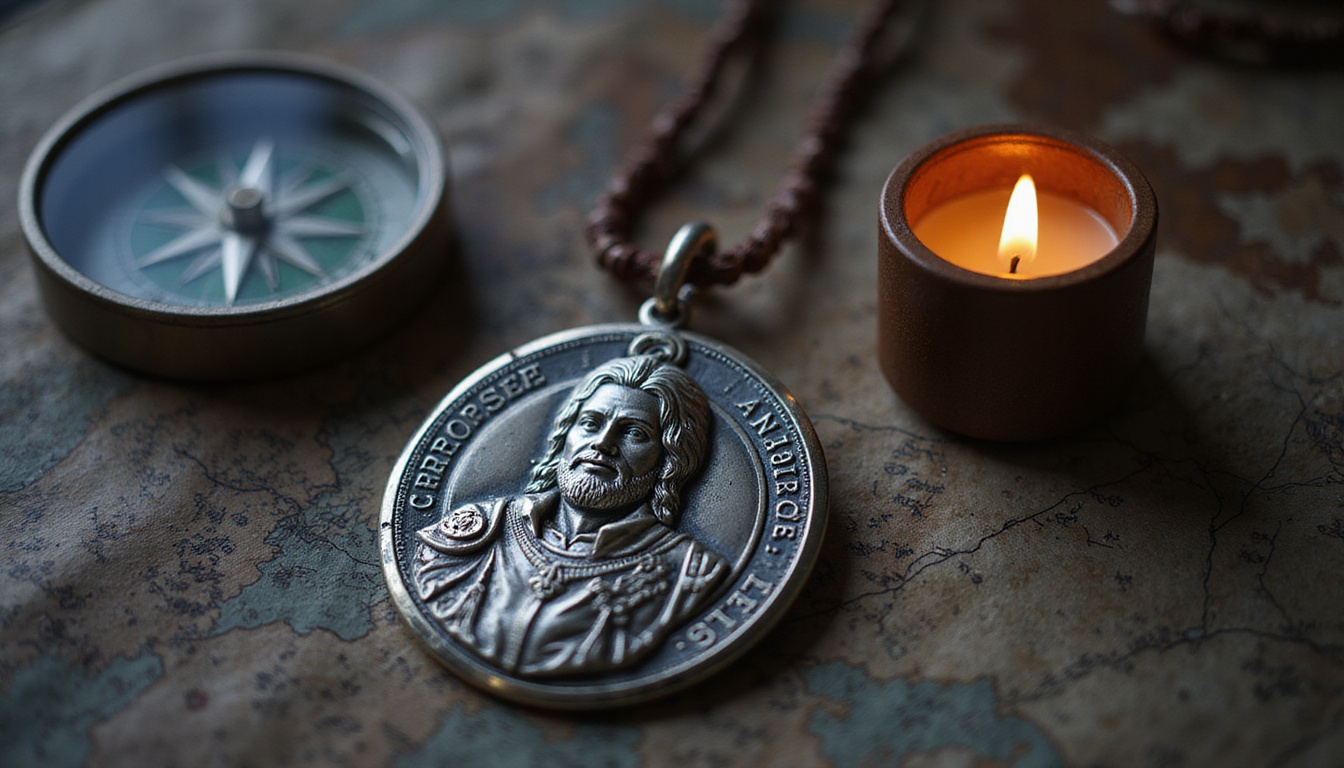
The Saint Christopher medal is one of the most common religious items you’ll see in cars, on backpacks, or around travelers’ necks. But what does it really mean, and how is it used?
Why people wear Saint Christopher medals
People choose a Saint Christopher medal for different reasons:
- Spiritual protection: Asking for his intercession as they travel.
- Faith reminder: A subtle, constant nudge to think beyond the immediate destination.
- Family tradition: Many receive medals from parents or grandparents before a big trip or life change.
- Connection to loved ones: A way to feel held and remembered, especially when far from home.
The medal itself is not a guarantee of safety. In Christian understanding, it’s a sacramental—a physical sign that points to deeper spiritual realities, encouraging faith and prayer rather than replacing them.
Who gifts Saint Christopher medals?
You’ll often see Saint Christopher medals given:
- To teenagers when they begin driving
- Before someone leaves for college
- For military deployment or humanitarian missions
- Ahead of gap-year travel, long hikes, or pilgrimages
- Before major relocations or immigration journeys
The gift usually carries a message: You are loved, and we’re praying for you while you’re away.
Miracles and Stories Attributed to Saint Christopher
Over the centuries, countless stories have circulated about the miracles associated with Saint Christopher’s intercession. While not all are formally investigated or verified, they reflect how deeply people trust his help.
Common themes in Saint Christopher miracles
Reported experiences frequently involve:
- Narrow escapes from accidents – serious car crashes or near-collisions where the outcome seemed inexplicably mild.
- Unexpected protection at sea or in the air – storms diverted, mechanical failures resolved, or surprisingly smooth outcomes after dangerous conditions.
- Guidance during disorientation – travelers who felt “nudged” to change plans, avoid certain routes, or seek help at just the right time.
- Comfort in isolation – people stranded, delayed, or alone who experienced sudden peace and strength after praying to Saint Christopher.
While such stories are often personal and anecdotal, they align with a long Christian tradition of asking saints to pray for specific needs, including safe travel (source: Vatican).
How to understand these miracles
From a Christian perspective:
- Miracles are signs of God’s love, not proof of human worthiness.
- The saint doesn’t “perform” the miracle; he intercedes in prayer.
- Not every prayer for protection results in visible deliverance, but Christians believe that God can bring grace even through hardship or loss.
For travelers, reading these stories can strengthen trust and encourage a habit of turning to God—through the example of Saint Christopher—whenever you step into risky or unknown territory.
Practical Ways to Ask Saint Christopher for Protection
If you’d like to integrate devotion to Saint Christopher into your travel routine, you don’t need anything elaborate. Simple, sincere practices are enough.
Before you travel
You might:
- Say a short prayer:
“Saint Christopher, patron of travelers, protect me on this journey. Carry me safely through every danger and guide me closer to God.” - Ask a friend or family member to pray for you too.
- Pause for a quiet moment before starting the engine, boarding a plane, or beginning a hike.
During your journey
Keep your focus anchored with small reminders:
- Touch a Saint Christopher medal or keychain and silently ask for guidance.
- Offer a short prayer when you feel anxious, lost, or delayed.
- Use moments of waiting—security lines, boarding, traffic—to reconnect spiritually, rather than only scrolling on your phone.
After you arrive
Remember to:
- Offer thanks for safe arrival, especially if the journey was stressful.
- Reflect on where you experienced help, comfort, or “coincidences” that seemed like more than chance.
- Consider how your journey might change you or open new ways to serve others, as Christopher served travelers in his time.
Choosing a Saint Christopher Medal or Icon
If you’re considering carrying a Saint Christopher image, a few simple choices can make it more meaningful.
What to look for
When you select a medal, keychain, or icon, consider:
- Clear imagery – Christopher with the Christ Child and the river, so the story is visually present.
- Durability – especially if you’ll wear it daily or attach it to a backpack or key ring.
- Size and style – something you’ll actually use and notice, not hide away in a drawer.
- Possibility of blessing – Catholics and some other Christians may ask a priest or minister to bless the medal as a sacramental.
Making it personal
You can personalize your connection to Saint Christopher by:
- Choosing a medal tied to a specific event—like a graduation, deployment, or pilgrimage.
- Engraving a date, initials, or short prayer on the back.
- Pairing it with a written intention, such as a note in a travel journal or a prayer card.
The power isn’t in the metal itself, but in how it draws your mind and heart toward God and encourages you to travel with intention and trust.
Saint Christopher for Today’s Travelers
Modern travel looks very different from the ancient world, yet the core human experience is similar:
- We venture into unknown places.
- We face risk, fear, and uncertainty.
- We carry responsibilities—families, work, callings—wherever we go.
- We hope to come home safely, deeper and wiser than before.
In that sense, Saint Christopher remains deeply relevant. He embodies:
- Service – using strength to help others, not to dominate.
- Trust – stepping into dangerous waters because love calls.
- Presence – seeing each traveler as Christ in disguise.
Whether you’re commuting daily, flying overseas, or setting out on a once-in-a-lifetime journey, his story offers a pattern: carry Christ with you, and let Christ carry you.
FAQ About Saint Christopher Protection and Devotion
1. How do I pray to Saint Christopher for safe travel?
You can use formal or informal words. A simple prayer is:
“Saint Christopher, holy patron of travelers, protect me in my journeys by land, sea, or air. Keep me safe from harm and guide me always toward God’s will.”
Many people combine this with wearing a Saint Christopher medal or keeping his image in their car.
2. Is wearing a Saint Christopher necklace only for Catholics?
No. While devotion to Saint Christopher is especially common among Catholics, many Christians from other traditions—and even people exploring faith—wear a Saint Christopher necklace or carry a medal as a reminder of God’s protection and presence while traveling.
3. Does a Saint Christopher medal guarantee nothing bad will happen?
No religious item can guarantee safety. A Saint Christopher medal is not a good-luck charm; it’s a sign of trust and a prompt to pray. Christians believe it helps open the heart to God’s protection and guidance, but they also recognize that life includes risk and suffering, even for the devout.
If you’re preparing for an upcoming journey—whether it’s a daily commute or a life-changing move—consider inviting Saint Christopher along. Learn his story, choose a medal or image that speaks to you, and make a simple habit of prayer before and during your travels. You may find that, like countless travelers before you, you experience not only safer journeys, but deeper peace, stronger faith, and a renewed sense that you are never truly alone on the road.
Explore the Science Behind Spirituality
This guide explored the meaning and history of good luck symbols. To discover the psychology, consciousness, and scientific perspectives behind spiritual beliefs, visit SpiritualMindScience.com.