Religious Icons: Hidden Mysteries, Restoration Secrets and Market Value
Religious icons have fascinated believers, collectors, historians, and investors for centuries. Whether you encounter religious icons in a quiet church corner, a museum, or an auction catalog, you’re seeing much more than painted wood: you’re looking at theology, history, craftsmanship, and economic value condensed into a single object. This article explores the hidden symbolism in icons, the secrets of their restoration, and the key factors that shape their market value today.
What Exactly Are Religious Icons?
In the strictest sense, “icon” refers primarily to sacred images from the Eastern Christian tradition—Orthodox, Eastern Catholic, and related churches. Yet in wider usage, religious icons now includes any devotional image used in worship or private prayer, from Byzantine panels to Russian icons and even later Western interpretations.
Typical characteristics of traditional icons:
- Painted on wood panels (often linden, pine, or oak)
- Tempera (egg tempera) paints and natural pigments
- Gesso (a chalk and glue preparation) as a base layer
- Gold leaf backgrounds symbolizing divine light
- Deep symbolic language in colors, gestures, and composition
To understand their hidden mysteries and monetary value, you must first see them as both spiritual objects and historical artifacts.
Hidden Mysteries: Symbolism and Meaning in Religious Icons
Icons are often called “theology in color.” Almost every detail—pose, color, inscription, even perspective—has layered meaning.
1. Symbolic Use of Color
Colors in religious icons are rarely decorative; they are theological statements.
- Gold: Divine light and uncreated glory; the background is often gold to show the heavenly realm.
- Blue: Humanity and mystery; commonly used in the Virgin Mary’s outer garment to show her sharing in humanity.
- Red: Divine life, love, and sacrifice; Christ’s inner garment is often red, indicating His divine nature.
- White: Purity, resurrection, and divine light; used especially in Transfiguration and Resurrection scenes.
- Green: New life and the Holy Spirit; often associated with Pentecost or prophets.
A trained eye can “read” these colors and understand what the icon is saying without any text.
2. Perspective Turned Inside Out
Unlike Western Renaissance art, which uses linear perspective to draw the viewer into a scene, traditional eastern religious icons often employ reverse perspective. Vanishing points appear in front of the image, as if lines converge toward the viewer.
This visual trick suggests:
- The viewer is being drawn into the sacred space.
- The icon is not a window you look through; it is a presence that looks at you.
- Reality radiates outward from the divine, not inward from human experience.
3. Stylization with Purpose
The elongated figures, large eyes, small mouths, and formal poses aren’t “primitive” errors; they are deliberate choices.
- Large eyes: Spiritual vision, attentiveness to God.
- Small mouth: Silence, restraint, and prayerfulness.
- Thin, elongated bodies: Detachment from earthly heaviness and materialism.
- Frontal gaze: Icons “face” the worshipper, forming a direct relationship.
These stylizations create a visual language that transcends time and place.
4. Layers of Narrative and Theology
Many religious icons compress multiple theological ideas into one image:
- Feast icons (e.g., Annunciation, Nativity, Crucifixion, Resurrection) arrange scenes in vertical or horizontal “registers,” each with symbolic placement.
- Deesis (supplication) compositions show Christ enthroned, flanked by Mary and John the Baptist, expressing intercession and kingship.
- Hodegetria icons of the Virgin show her pointing to Christ, indicating that Christ is “the Way.”
Learning to read these visual codes reveals the “hidden mysteries” that centuries of tradition have packed into panel paintings.
The Craft of Creating Religious Icons
Understanding how icons are made helps explain why restoration is so complex and why genuine examples can command high values.
Traditional Materials and Methods
Classic iconography follows a stable, time-tested process:
-
Wood selection and preparation
- Seasoned, well-dried wood panels
- Battens or braces to reduce warping
- Rabbit-skin glue or similar sizes applied
-
Ground (gesso) application
- Several thin layers of gesso, carefully sanded
- Creates a smooth, absorbent white base
-
Incision and drawing
- Main lines and inscriptions lightly incised or drawn
- Some patterns traced from traditional prototypes
-
Gold leafing
- Clay bole layer, then thin gold leaf applied and burnished
- Gold halo and background symbolize divine radiance
-
Egg tempera painting
- Pigments mixed with egg yolk and water
- Colors built up from dark to light with many translucent layers
-
Final varnish
- Natural resins (e.g., damar, mastic) protect the painted surface
- Over time, these varnishes can darken or crack
Each step leaves its own trace, which conservators must understand to restore icons without erasing history.
Restoration Secrets: How Conservators Save Religious Icons
Many religious icons you see in museums or collections are centuries old. They’ve survived humidity, candle soot, handling, war, and sometimes amateur “cleaning.” Proper restoration is a blend of science, art, and ethics.
1. Investigating Before Touching
Professional conservators begin with a thorough examination:
- Visual assessment under raking and UV light
- Microscopic analysis of paint layers and craquelure
- X-ray or infrared reflectography to reveal underdrawings and repairs
- Pigment and binder tests to distinguish original from later additions
This diagnostic stage is crucial. Stripping away a dirty varnish may accidentally remove original glazes if the materials are misunderstood.
2. Cleaning: The Most Delicate Step
Cleaning religious icons is where the greatest risks and “secrets” lie.
- Conservators custom-mix gentle solvents based on tests in tiny, hidden areas.
- Soot, oily deposits, and discolored varnish are removed gradually.
- Overpainting (later additions covering original areas) may be selectively reduced if it obscures authentic work.
Ethical practice follows the principle of minimal intervention and reversibility: anything done should, ideally, be undoable without harming the original.
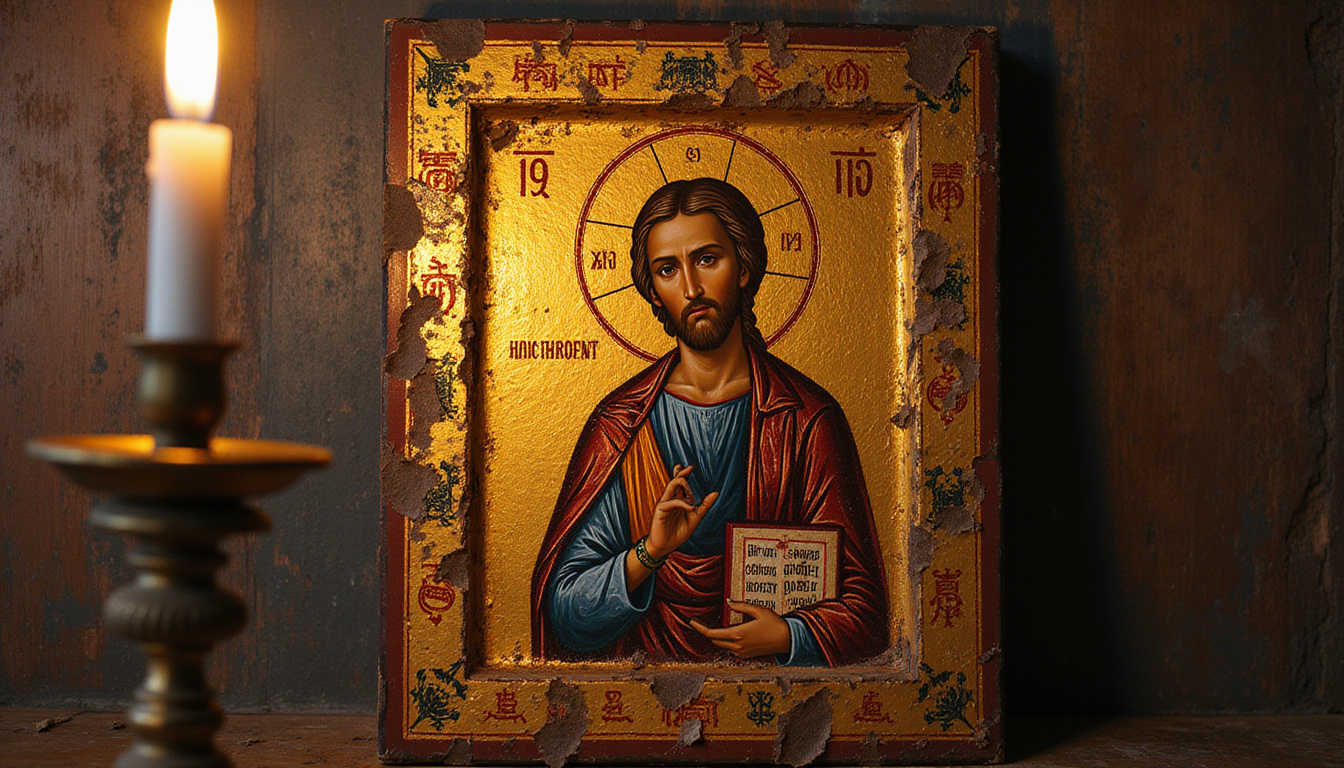
3. Consolidation and Structural Repairs
Old panels often suffer from:
- Cracks due to fluctuating humidity
- Flaking paint where adhesion to gesso fails
- Warping or splitting
Conservators:
- Inject adhesives to reattach lifting paint flakes.
- Use custom clamps or inserts to stabilize cracks.
- Add discreet reinforcements on the back to minimize future warping.
Every addition is documented so future experts know what was altered and why.
4. Retouching vs. Over-Restoration
A major ethical debate in conserving religious icons is how far to go in retouching.
- Inpainting: Small losses filled and retouched to visually integrate with the original without faking age.
- Toning down losses:** Instead of exact replication, some conservators use slightly different hues so experts can distinguish old from new at close examination.
Over-restoration—repainting entire areas, “improving” faces, or adding invented details—can severely damage historical and market value.
According to conservation guidelines from major institutions like the Getty Conservation Institute (source), well-documented, reversible methods are the gold standard in art restoration today.
What Determines the Market Value of Religious Icons?
While religious icons are primarily spiritual objects, they also occupy a significant niche in the art market. Their value can range from a few hundred dollars to millions, depending on key factors.
1. Age and Provenance
- Earlier icons (Byzantine, early post-Byzantine, early Russian) are generally rarer and more valuable.
- Clear provenance—museum deaccession, collection history, documented ownership—greatly increases confidence and price.
- Icons with verified connections to important churches, monasteries, or historical figures may command premiums.
2. Origin and School
Different geographic origins have distinct reputations:
- Byzantine icons: Particularly sought after; early examples are rare and museum-level.
- Russian icons: Schools like Novgorod, Moscow, Stroganov, and Palekh each have characteristic styles.
- Greek and Balkan icons: Cretan, Macedonian, and other regional schools are highly collected.
- Post-iconoclast or later Western icons: Often less valuable, but exceptions exist for outstanding quality.
Knowing the icon’s artistic “school” helps situate it in art history and market comparables.
3. Artistic Quality and Condition
Collectors and institutions pay close attention to:
- Finesse of drawing and modeling of faces
- Harmony and depth of color
- Complexity and balance of composition
- Amount of original surface remaining
A heavily worn but largely original icon can be more valuable than a “perfect”-looking piece that has been aggressively repainted.
4. Subject Matter and Rarity
Certain themes appeal more widely:
- Christ Pantocrator, Virgin Hodegetria, and major feast icons have stable demand.
- Rare saints (local or little-known martyrs) may be less marketable, unless rare specialists seek them.
- Multi-register or narrative icons, which depict many scenes, can command higher prices due to their complexity.
5. Authenticity and Fakes
Because high-quality religious icons can be valuable, forgeries are common:
- 19th–20th century workshop icons sometimes are aged artificially and sold as 17th century.
- Modern fakes may use old panels or fragmented originals embedded in new painting.
- Professional authentication—and sometimes scientific testing—is essential for high-value purchases.
When in doubt, collecting from reputable galleries, auction houses, or dealers specializing in icons helps mitigate risk.
Practical Tips for Collectors of Religious Icons
If you are considering acquiring religious icons as devotional objects, historical artifacts, or investments, keep these points in mind:
- Do your homework: Learn basic iconographic types, schools, and stylistic markers.
- Check condition carefully: Look for active flaking, suspiciously glossy varnish, or heavy overpainting.
- Ask for documentation: Provenance records, previous appraisals, and conservation reports add confidence.
- Consult experts: Curators, experienced dealers, and conservators can spot red flags that beginners miss.
- Think long term: Proper storage (stable humidity, low light, no heat sources nearby) protects both spiritual treasure and financial asset.
FAQ About Religious Icons
1. How can I tell if a religious icon is real and old?
Authentic older religious icons usually show:
- Natural craquelure, especially in varnish layers
- Subtle wear on gold leaf and raised areas
- Pigments that match historical materials
- Signs of panel age, such as warping or oxidation on the back
However, skilled forgers can mimic some signs of age. Professional evaluation with scientific tools (X-ray, pigment analysis) is often needed for high-value icons.
2. What affects the price of antique religious icons the most?
For antique religious icons, the main value drivers are:
- Age and region (Byzantine, early Russian, important Greek schools)
- Artistic quality and stylistic importance
- Provenance and exhibition/publication history
- Condition and degree of original surface
- Demand for the specific subject (e.g., Christ Pantocrator vs. a local saint)
Icons that check several of these boxes often achieve high prices at major auction houses.
3. Is it okay to restore religious icons, or does that lower value?
Careful, professional restoration typically preserves or even enhances both spiritual and market value of religious icons, especially when:
- Work is minimal and reversible
- Documentation is thorough
- Original paint is respected and preserved
Aggressive overpainting or “beautification,” on the other hand, can severely reduce value and historical integrity. Always use qualified conservators specializing in panel paintings or icons.
Religious icons will always mean more than their materials suggest. They carry centuries of prayer, artistic tradition, and cultural memory, while simultaneously functioning as collectible works of art with real market value. Whether you approach them with devotion, curiosity, or as a potential investment, understanding their hidden symbolism, the craft behind their restoration, and the nuances of their valuation will deepen your appreciation.
If you’re ready to take the next step—whether that’s evaluating an icon you already own, starting a focused collection, or learning how to care for inherited pieces—consider consulting a qualified icon expert or conservator. Getting professional guidance now can protect both the spiritual significance and financial worth of your religious icons for generations to come.
Sacred objects often carry deep cultural and spiritual meaning. Learn how these symbols relate to history, spirituality, and the human mind by exploring more articles at SpiritualMindScience.com.