Raven symbolism has fascinated humans for thousands of years. Across cultures and centuries, ravens have been seen as messengers, shapeshifters, tricksters, guardians of mysteries, and omens of both fortune and misfortune. Whether you encounter them in mythology, spiritual practice, dreams, or in your own backyard, ravens carry a powerful energetic presence that demands attention.
In this guide, you’ll learn how different cultures understood ravens, what they represent spiritually, how to interpret raven omens and signs, and how to work with this intense, intelligent bird as a personal totem or guide.
The raven in myth and legend: from creator to trickster
Ravens appear in the world’s oldest stories. To understand raven symbolism today, it helps to see how our ancestors viewed this remarkable bird.
Norse mythology: Odin’s watchful companions
In Norse myth, the god Odin keeps two ravens: Huginn (“Thought”) and Muninn (“Memory” or “Mind”). They fly across the world each day and whisper everything they see and hear into Odin’s ear.
Key themes from this myth:
- Wisdom and higher knowledge – Ravens bring Odin news from all realms, linking them to insight, intelligence, and prophecy.
- Mental power – Their names connect them with thought and memory, suggesting ravens symbolize the power of the mind and the importance of awareness.
- Spiritual messengers – Because they travel between worlds and report to a god, ravens become symbols of communication between the human and the divine.
Here, raven symbolism is more about knowledge and vision than doom or darkness.
Celtic and British lore: war, fate, and transformation
In Celtic traditions, ravens are strongly tied to war and sovereignty. The goddess Morrígan, often associated with battlefields and fate, is linked to ravens and crows. They are said to appear where wars are fought and kings are decided.
From these stories come associations with:
- Death and rebirth – Ravens show up where endings happen, but also where new orders and leaders arise.
- Prophecy and fate – Ravens on the battlefield are seen as indicators of who will live or die, tying them to the threads of destiny.
- Power and protection – Kings sometimes used raven banners; the bird’s fierce presence was seen as protection and a mark of authority.
In British folklore, the ravens of the Tower of London are famously believed to protect the kingdom; if they leave, the crown will fall. This reinforces the raven as a guardian and omen.
Native American traditions: the creative trickster
Among many Indigenous peoples of the Pacific Northwest, Raven is a central cultural figure—often a creator and a trickster in the same breath. Some stories tell of Raven bringing light to a dark world, stealing the sun, moon, or stars to give them to humans.
Common symbolic threads:
- Creation and illumination – Raven is the one who brings light, knowledge, or essential gifts to humanity.
- Cleverness and trickery – Raven uses wit, humor, and sometimes deceit to get what is needed.
- Dual nature – Raven is neither purely good nor purely bad; instead, Raven reveals that reality is complex, and wisdom sometimes comes through chaos or mischief.
This makes raven symbolism deeply paradoxical: a being who disrupts in order to enlighten.
Other global perspectives
- Greek mythology – Ravens are associated with Apollo, god of prophecy, and sometimes appear as his messengers, again tying them to foresight and truth (and sometimes the consequences of betrayal).
- Biblical traditions – In the story of Noah, a raven is the first bird sent out to search for dry land. Ravens also appear as birds fed by God, underlining themes of provision and survival.
- Siberian and Central Asian shamanism – Ravens can be guides into the spirit world, teachers of magic, and protectors of shamans.
Across cultures, the repeated patterns are clear: ravens are mediators between worlds, holders of secret knowledge, and symbols of transition.
Core spiritual meanings of raven symbolism
When people talk about raven symbolism in a spiritual or metaphysical sense, they are typically drawing from these long-standing mythic patterns. While interpretations vary, several core themes consistently appear.
1. Death, rebirth, and the shadow
Because ravens are scavengers and often gather where death has happened, they became emblems of mortality and endings. Spiritually, this expands into:
- Endings and closures – A phase of life, relationship, or belief system may be ending.
- Shadow work – Ravens invite you to look at your hidden fears, repressed emotions, and “darker” aspects of yourself.
- Transformation – Out of endings come new beginnings. Raven energy often marks a powerful period of psychological or spiritual rebirth.
Rather than simply “bad omens,” ravens can signify that it’s time to face what you’d rather avoid and transform it into strength.
2. Mystery, intuition, and hidden knowledge
With their black plumage and observant nature, ravens are often linked to the unknown and the unseen:
- Mystery and magic – They are archetypal “witch’s birds,” associated with sorcery, ritual, and occult knowledge.
- Intuition and psychic insight – Raven symbolism can point to heightened intuitive abilities or a call to trust your inner knowing.
- Secrets and revelations – Ravens can indicate that secrets are about to be revealed, or that you are being asked to see beyond surface appearances.
In this sense, ravens act like gatekeepers to deeper, hidden layers of reality.
3. Intelligence, adaptability, and problem-solving
Modern science backs up ancient impressions: ravens are exceptionally intelligent, use tools, and solve complex problems (source: Cornell Lab of Ornithology). This translates symbolically into:
- Mental agility – They represent cleverness, strategy, and the power of critical thinking.
- Adaptability – Ravens thrive in varied environments, symbolizing resilience and the ability to adjust.
- Creative problem-solving – When raven energy appears, it may be time to use unconventional strategies or “trickster” thinking.
Raven symbolism here is not sinister at all; it’s about brains, not brawn, and the courage to think differently.
4. Messages, omens, and communication between worlds
From Odin’s scouts to shamanic spirit guides, ravens frequently act as messengers:
- Communication from spirit – Many see ravens as carriers of messages from ancestors, guides, or the universe.
- Synchronicity and signs – Repeated raven sightings can feel like a pointed synchronicity, encouraging you to pay attention.
- Threshold guardians – Ravens appear at figurative “doorways” in your life—big decisions, spiritual awakenings, or identity shifts.
If you keep noticing ravens, your life may be at a hinge point, with important information ready to surface.
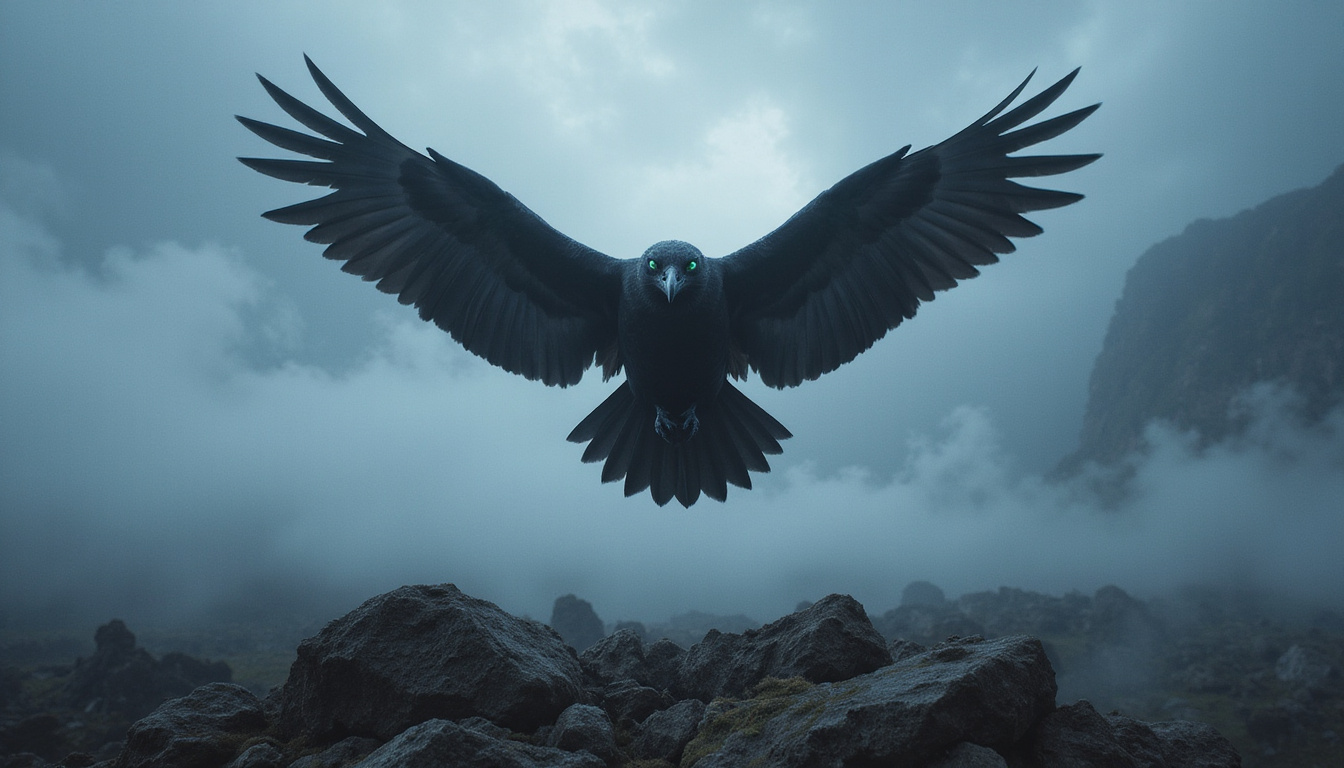
Raven symbolism as an omen: good, bad, or both?
Ravens have been interpreted as omens of war, death, and misfortune, but also as signs of protection, wisdom, and needed transformation. Context matters.
Why ravens are often feared as bad omens
Several factors feed into the “bad omen” association:
- They eat carrion, linking them to death and decay.
- Their black color is often associated with night, the unknown, and the underworld.
- Their harsh calls and watchful presence can feel eerie or threatening.
In times when people lived close to warfare and plague, seeing ravens around battlefields or sites of death solidified their reputation as harbingers of loss.
Reframing the omen: transformation, not just doom
From a modern spiritual perspective, a raven omen doesn’t have to mean something terrible will happen. Instead, it may indicate:
- An ending you’ve been avoiding is drawing near.
- You’re being pushed to confront a truth or secret.
- A major transformation—career, identity, spiritual, or relational—is unfolding.
Interpreting raven symbolism as purely negative misses the deeper pattern: ravens point toward necessary change and often, liberation from what’s no longer aligned.
Seeing ravens in waking life: how to interpret encounters
If you’re noticing ravens around you more than usual, you may wonder what it means. There’s no one-size-fits-all interpretation, but you can decode the symbolism by paying attention to context.
Ask yourself:
- What was happening in my life or thoughts right before I saw the raven?
- How did the encounter feel—threatening, comforting, mysterious, energizing?
- Is this a rare event for me, or part of a clear pattern of sightings?
Then, consider possibilities like:
- Single raven at a turning point – Could symbolize a message about an important decision or a needed ending.
- Pair of ravens – May suggest partnership, shared insight, or mirroring; sometimes linked to thought and memory (echoing Huginn and Muninn).
- Flock of ravens – Could indicate collective energies at play: your social groups, family system, or workplace dynamics.
The meaning of raven symbolism is often personalized; your emotions and circumstances color the message.
Raven symbolism in dreams and meditation
Dreams and meditative visions are classic spaces where animal symbolism intensifies. Ravens appearing here often carry even more focused messages.
Common dream themes involving ravens
- A raven speaking or cawing to you – Communication from your subconscious or a spiritual guide; pay close attention to any words or feelings.
- A raven watching you silently – You’re being observed; this can point to self-judgment, awareness of your own behavior, or unseen forces taking an interest.
- A dying or injured raven – Your connection to intuition, magic, or shadow work may be blocked, ignored, or in need of healing.
- You transforming into a raven (or vice versa) – Identity shift; embracing your own mystery, power, and intelligence.
Rather than relying on generic dream dictionaries, anchor your interpretation in your personal associations with ravens and the emotions in the dream.
Raven as a spirit animal, totem, or guide
For some, raven is more than an occasional symbol—it’s a long-term guide. If you feel drawn to this bird, its energy may mirror major themes in your life path.
People who resonate with raven symbolism often:
- Are drawn to mysteries, occult topics, psychology, or deep introspection.
- Have strong intuitive or psychic abilities, even if undeveloped.
- Are comfortable with taboo subjects: grief, death, trauma, sexuality, or spirituality.
- Serve as transformers in others’ lives—counselors, healers, artists, activists who bring hidden issues to light.
- Navigate intense personal phases of reinvention or rebirth.
Working with raven energy might involve:
- Meditation or journeying – Visualizing a raven guide and asking questions during introspection or shamanic-style journeys.
- Creative expression – Art, writing, or ritual that uses raven imagery to explore your shadow and your power.
- Ritual and altar work – Placing raven feathers (ethically sourced), images, or symbols on your altar to invite transformation and deeper insight.
The key is reciprocity: respect raven as a powerful ally, not a prop, and be willing to do the inner work it reveals.
Quick-reference meanings: what raven symbolism can represent
Use this list as a concise guide when reflecting on your own raven encounters:
- Death, endings, and closures
- Rebirth, renewal, and transformation
- Shadow work and facing fears
- Mystery, magic, and occult knowledge
- Intuition, psychic awareness, and foresight
- Intelligence, cunning, and problem-solving
- Trickster energy and unconventional solutions
- Messages from the spiritual realm or ancestors
- Protection, guardianship, and boundary-keeping
- Thresholds, transitions, and initiation into new phases
Remember: in practice, your experience may blend several of these at once.
FAQ about raven symbolism and meanings
1. What does it mean when a raven visits you repeatedly?
Repeated visits often highlight raven symbolism as a message or wake-up call. It may suggest you are entering a time of transformation, being nudged to listen to your intuition, or urged to confront something hidden—like unresolved grief, a difficult truth, or a needed life change.
2. Are ravens good or bad omens spiritually?
Spiritually, ravens are both and neither. They can signal endings, which people often fear, but they also indicate rebirth, wisdom, and protection. Their presence tends to mark significant turning points rather than simple “good luck” or “bad luck.”
3. What is the difference between crow and raven symbolism?
Crows and ravens share many symbolic meanings—intelligence, mystery, and death/rebirth themes. Ravens are often associated with deeper mystery, higher magic, and more intense transformation, while crows frequently symbolize everyday cleverness, community dynamics, and messages about daily choices. In many traditions, though, the symbolism overlaps heavily.
Raven symbolism invites you into a deeper, more honest relationship with yourself and the world. When this bird shows up—in myth, in meditation, in dreams, or perched on a nearby branch—it’s rarely random. It’s a call to face what is ending, embrace what is being born, and step across the threshold into a more authentic version of you.
If ravens have been circling your thoughts or your path lately, don’t ignore the pull. Take time today to journal about your encounters, reflect on what might be changing in your life, and explore how raven’s blend of mystery, intelligence, and transformation can guide your next steps. The message is there—now is your moment to listen and respond.
Animals have inspired symbols and beliefs across cultures for centuries. Discover how these traditions connect with psychology, spirituality, and human consciousness at SpiritualMindScience.com.