The humble prayer wheel has spun quietly for centuries on Himalayan mountaintops and monastery walls, yet it offers surprisingly relevant tools for modern, mindful living. Whether you’re drawn to its spiritual roots in Tibetan Buddhism, its meditative rhythm, or simply its beauty as a sacred object, learning to use a prayer wheel can deepen your practice of presence, compassion, and inner peace.
This guide walks you through what a prayer wheel is, how it works, how to use one respectfully, and how to integrate it into a contemporary mindfulness routine—even if you’re not Buddhist.
What is a prayer wheel?
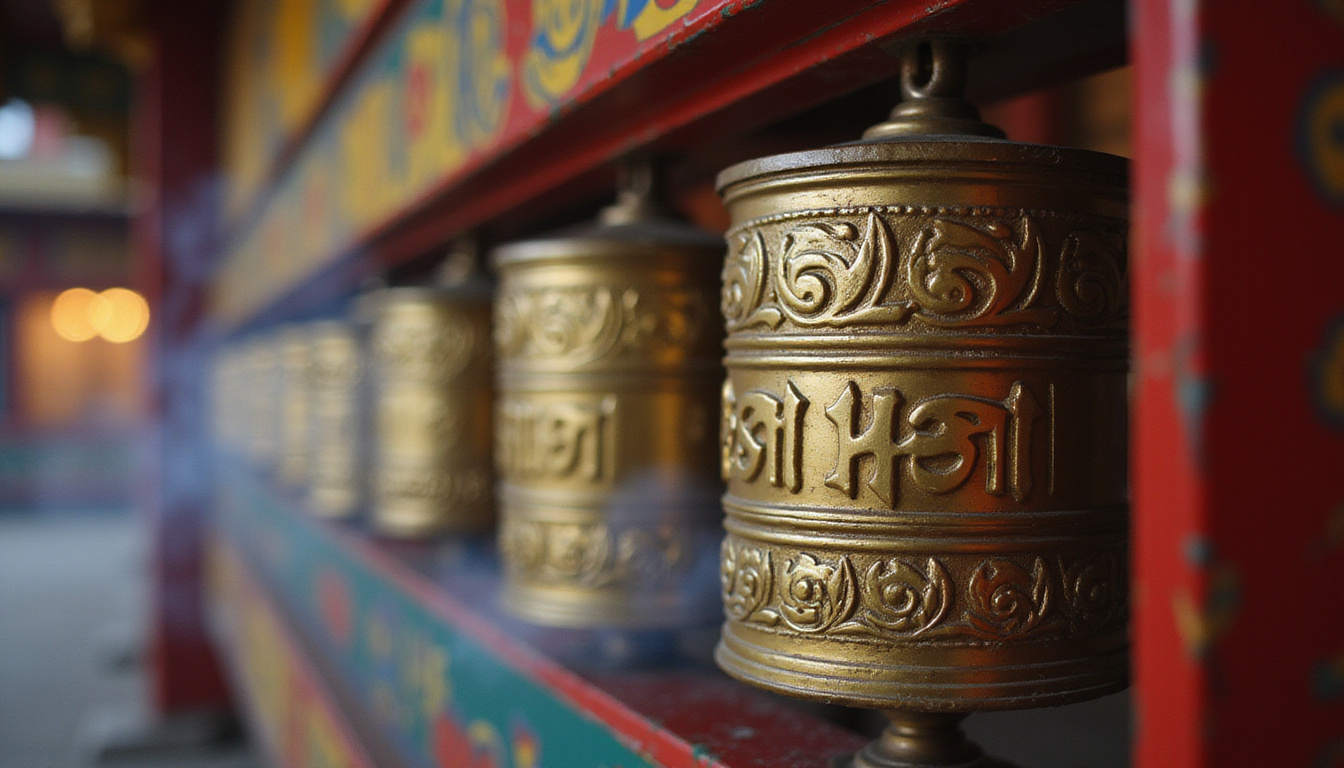
A prayer wheel (Tibetan: mani khorlo) is a cylindrical wheel that spins around a central axis, usually inscribed or filled with mantras—most commonly the mantra of compassion: Om Mani Padme Hum. Turning the wheel is traditionally believed to have the same spiritual effect as reciting the mantra as many times as it is written inside the wheel.
You’ll find prayer wheels:
- Mounted along monastery walls and paths
- Standing as large outdoor wheels moved by water or wind
- As hand-held devices used in personal practice
- In miniature forms for home altars or desks
At its core, a prayer wheel is both a meditation tool and a symbolic technology: the spinning motion represents the continuous turning of compassion and wisdom in the world.
Origins and spiritual meaning
Prayer wheels come from Tibetan Buddhist traditions, with early references going back more than a thousand years. Their origin is often linked to the idea of “turning the Dharma wheel”—spreading the Buddha’s teachings.
Key aspects of their traditional meaning:
-
Mantra embodiment
Each wheel is filled with or inscribed with sacred syllables. These are not just “words” but are considered manifestations of enlightened energy. -
Compassion in motion
Turning the wheel is an act of generating and sharing compassion with all beings. You’re not just practicing for yourself, but for the wider world. -
Merit and purification
In Tibetan belief, using a prayer wheel helps purify negative karma and accumulate merit, similar to reciting mantras or performing other devotional practices (source: Rigpa Shedra).
Even if you don’t share these exact beliefs, you can understand the prayer wheel as a powerful focus for intention and symbol of continuous mindfulness.
Types of prayer wheels (and how to choose one)
If you’re considering using a prayer wheel, it helps to understand the main forms available:
1. Hand-held prayer wheel
- Size: Small, usually 6–12 inches (15–30 cm)
- Parts: Handle, spinning cylinder, top finial, and a small chain with a weight
- Best for: Personal practice, walking meditation, home altars
- Feel: Intimate, tactile, highly portable
2. Wall-mounted or tabletop prayer wheel
- Mounted on walls, shrines, or stands
- Spun by hand as you pass or during seated practice
- Best for: Dedicated practice spaces, homes, meditation rooms
- Feel: Stable, ritualistic, visually grounding
3. Large outdoor prayer wheels
- Found at temples, retreat centers, and some public spaces
- Often spun by many people throughout the day
- Best for: Community practice and pilgrimage settings
4. Modern and digital adaptations
- Mini-wheels for desks or car dashboards
- Digital or app-based spinning wheels (used more symbolically)
When choosing a prayer wheel, consider:
- Material: Brass, copper, wood, and silver are common. Choose something that feels good in your hand and suits your aesthetic.
- Craftsmanship: Look for smooth spinning, legible mantras, and a balanced weight.
- Ethical sourcing: When possible, buy from artisans or reputable spiritual suppliers that support traditional communities, especially in Nepal and Tibet.
How a prayer wheel works (symbolically and experientially)
On a mechanical level, a prayer wheel is simple: a bearing or pivot allows the cylinder to rotate around its central axis, often weighted so it spins smoothly and keeps momentum.
On a symbolic and experiential level, several elements come together:
- Rotation – Represents the cyclical nature of thoughts and life; your intention is to let compassion, rather than reactivity, be what “turns.”
- Mantra – The repeated sacred phrase acts like a mental anchor, training the mind toward qualities such as compassion, wisdom, and patience.
- Embodiment – The hand, arm, and body engage in a gentle, rhythmic movement, helping to connect mind and body in a single action.
- Repetition – Just as with breath or walking meditation, repeating the movement and mantra quiets mental chatter and strengthens focus.
Many practitioners report that after a period of regular use, simply seeing or touching their prayer wheel can trigger a relaxed, meditative state.
How to use a prayer wheel step by step
You don’t need to be Buddhist to benefit from a prayer wheel practice, but it’s important to approach it with respect and sincerity. Here’s a simple, adaptable method:
1. Prepare your space and posture
- Find a quiet place where you won’t be disturbed.
- Sit or stand with a straight but relaxed spine.
- Hold the prayer wheel in your right hand (traditional) or dominant hand if needed.
- Let your shoulders and jaw relax.
2. Set an intention
Before you begin, take a single deep breath and silently form a simple intention, such as:
- “May I be present and kind.”
- “May this practice benefit all beings.”
- “May I act today with clarity and compassion.”
This intention is like “charging” the practice with meaning.
3. Begin to spin the wheel
- Gently spin the prayer wheel clockwise (the traditional direction, following the direction of the mantras).
- Use small, steady movements of the wrist or forearm.
- Allow the weight and momentum of the wheel to help maintain a natural rhythm.
4. Synchronize with breath and mantra
You can practice in any of these ways:
- Mantra-focused: Silently or softly recite Om Mani Padme Hum with each rotation or group of rotations.
- Breath-focused: Inhale for a few rotations, exhale for a few, letting the spinning be continuous while the breath becomes your anchor.
- Compassion-focused: With each spin, mentally repeat a phrase like “May all beings be free from suffering,” directing goodwill outward.
5. Maintain gentle awareness
- If your mind wanders, simply notice and return to the wheel, the mantra, or your breath.
- Let thoughts pass like scenery while the wheel continues its constant turning.
6. Conclude mindfully
When you’re ready to stop:
- Gradually slow the spinning instead of stopping abruptly.
- Bring the wheel to stillness and rest it upright or in its holder.
- Take a few breaths, noticing how your body and mind feel.
- You may close with a simple phrase of gratitude—“Thank you for this moment of peace” or similar.
Integrating prayer wheels into everyday mindfulness
One of the strengths of this practice is how easily a prayer wheel can fit into a modern life. You don’t need a monastery; you just need a willingness to pause.
Walking meditation with a prayer wheel
Use a hand-held wheel while walking slowly:
- Inhale for three steps, exhale for three steps.
- Let the wheel spin gently with your natural arm swing.
- Keep attention on the feeling of your feet and the spinning motion.
This can be done indoors, in a garden, or during quiet parts of your commute.
Micro-practices during busy days
You can integrate a prayer wheel practice into small daily gaps:
- Spin for 1–2 minutes before starting work or meetings.
- Use it during a scheduled break as a reset ritual.
- Spin briefly before sleep to transition away from screens and worry.
Consistency, not duration, is what reshapes your mental patterns over time.
Using a prayer wheel for emotional regulation
In moments of stress or agitation:
- Pick up your prayer wheel.
- Begin spinning slowly, keeping your eyes soft or slightly lowered.
- On each exhale, silently repeat a soothing phrase like “It’s okay to feel this” or “May I be gentle with myself.”
- Continue for 2–5 minutes, letting the repetitive motion signal safety and continuity to your nervous system.
This gives your mind something stable to rest on while difficult emotions move through.
Respectful use and cultural considerations
Prayer wheels are rooted in Tibetan Buddhist culture, which has faced historical upheaval and ongoing challenges. Using a prayer wheel respectfully means:
- Avoiding trivialization: Treat it as a sacred or semi-sacred object, not just decor or a fidget toy.
- Learning the basics: Understand the meaning of at least one mantra you use, especially Om Mani Padme Hum and its association with Avalokiteshvara (Chenrezig), the bodhisattva of compassion.
- Physical respect:
- Don’t place the wheel on the ground.
- Avoid stepping over it or placing things on top of it.
- Store it in a clean, safe place.
- Supporting living traditions: When possible, buy directly from Tibetan or Himalayan artisans and community-supporting shops.
You don’t have to adopt all beliefs, but you can cultivate gratitude for the lineage that developed these tools.
Benefits of using a prayer wheel for mindful living
While research usually focuses on mindfulness and mantra practices generally rather than prayer wheels specifically, it’s reasonable to see overlapping benefits:
- Improved focus – The combined sensory inputs (touch, sight, movement, sound if it has a soft chime) help anchor attention.
- Reduced stress and anxiety – Repetitive, rhythmic activity with intentional breathing is known to calm the nervous system.
- Enhanced compassion – Regularly reciting compassion-based mantras can shift your mental habits from self-criticism toward kindness.
- Embodied mindfulness – Many people find it easier to stay present when their body is engaged in a simple, repetitive action.
- Ritual and meaning – Turning a prayer wheel transforms mundane moments into small, meaningful rituals, which can give structure and purpose to your day.
Over time, you may notice that the qualities you cultivate with the wheel—patience, steadiness, compassion—start to show up more naturally in your relationships and decisions.
Practical tips for maintaining your prayer wheel
To keep your prayer wheel functioning smoothly and respectfully:
- Dust it periodically with a soft cloth; avoid harsh chemicals.
- Check the pivot or bearing for smooth motion; a tiny drop of appropriate oil can help if it sticks.
- Don’t immerse it in water, especially if it’s filled with paper mantras.
- If it falls or is damaged, take a moment to handle it with care, perhaps re-affirming your intention as you check for repairs.
Treating your wheel well reinforces the mindset of care and mindfulness that the practice is meant to build.
FAQ: Prayer wheels and mindful practice
1. What is the purpose of a Tibetan prayer wheel?
A Tibetan prayer wheel is designed to help practitioners continuously generate compassionate intention and focus the mind through the physical act of spinning mantras. Each rotation is traditionally believed to carry the blessings of the written prayers into the world, while also training the practitioner’s own attention and heart.
2. Can non-Buddhists use a prayer wheel for meditation?
Yes. Non-Buddhists can respectfully use a prayer wheel as a meditative tool. You can work with traditional mantras like Om Mani Padme Hum, or pair the spinning with universal intentions such as “May all beings be safe” or “May I live with awareness and kindness.” The key is sincerity, respect, and avoiding using it as mere ornament or novelty.
3. How do I choose a prayer wheel for home use?
When choosing a prayer wheel for home use, consider size (hand-held vs. wall-mounted), material (metal or wood), and how it feels in your hand. Ensure the wheel spins smoothly and is well-balanced. Look for sellers who explain the mantras used and, ideally, support Himalayan or Tibetan artisan communities. Select a style that invites you to actually use it, not just admire it.
Spin ancient wisdom into your daily life
You don’t have to live in a monastery or adopt a new religion to benefit from the quiet power of a prayer wheel. By taking a few minutes each day to spin, breathe, and reconnect with your deepest intentions, you transform a simple object into a living practice of mindfulness and compassion.
If you feel called to explore this further, consider:
- Finding a hand-held or tabletop prayer wheel that resonates with you.
- Setting aside just 3–5 minutes a day to spin with a clear, kind intention.
- Gradually weaving this gentle ritual into transitions—waking, starting work, or winding down at night.
Let each turn of the wheel be a reminder: you can always begin again, with more awareness and more heart. Start with a single spin today, and allow this ancient practice to support a more mindful, compassionate way of living.
Sacred objects often carry deep cultural and spiritual meaning. Learn how these symbols relate to history, spirituality, and the human mind by exploring more articles at SpiritualMindScience.com.