Prayer Rugs: Transform Your Home with Sacred Design and Comfort
Prayer rugs are far more than decorative textiles; they are intimate spaces of devotion, reflection, and calm. Whether you use them daily for worship or simply love their symbolism and beauty, prayer rugs can transform your home with both sacred meaning and physical comfort. By understanding their history, design elements, and practical uses, you can choose pieces that nourish your spiritual life and elevate your interior style.
The Spiritual Significance of Prayer Rugs
At their core, prayer rugs are personal sanctuaries. In many Muslim households, they serve as a clean, designated space for salah (prayer), helping the worshipper focus and mentally transition from everyday life to a state of devotion.
Key spiritual functions of prayer rugs include:
- Creating a defined sacred space even in small apartments or shared homes
- Promoting humility and presence, as spreading the rug becomes a ritual of preparation
- Acting as a visual reminder of prayer times and spiritual priorities
- Preserving cleanliness, central to many prayer traditions
Because prayer rugs are so closely tied to daily worship, their design choices—colors, motifs, and orientation marks—carry symbolic meaning as well as aesthetic value.
A Brief History: From Nomadic Utility to Sacred Art
Historically, prayer rugs evolved from the practical needs of nomadic and rural cultures. Portable, durable textiles allowed people to:
- Sit and sleep off the ground
- Maintain hygiene and warmth
- Create a recognizable “home base” in any setting
Over time, specific shapes, sizes, and motifs associated with worship developed, particularly in regions such as Anatolia (Turkey), Persia (Iran), Central Asia, and North Africa. These rug-making traditions incorporated:
- Local weaving techniques and loom styles
- Natural dyes from plants, insects, and minerals
- Tribal or regional patterns passed down through generations
Some early examples dating back centuries are preserved in museums and collections, recognized as both religious artifacts and masterpieces of textile art (source: The Metropolitan Museum of Art).
Key Design Elements in Prayer Rugs
While designs vary widely by culture and era, several visual features commonly appear in prayer rugs. Understanding them will help you choose a rug that fits both your spiritual and aesthetic needs.
The Mihrab (Prayer Niche)
One of the most recognizable features is the mihrab-shaped design—an arch or pointed niche at one end of the rug. This typically indicates the direction of prayer and helps position the worshipper.
- The top of the mihrab points toward the qibla (direction of Mecca in Islamic prayer).
- Some designs include a stylized lamp within the arch, referencing divine light.
Symbolic Motifs and Patterns
Common motifs include:
- Floral and vine patterns – representing paradise, growth, and life
- Geometric designs – symbolizing order, unity, and the infinite
- Tree of life – connecting earth and heaven, life and the hereafter
- Mosque lamps or domes – evoking sacred architecture
These motifs are rarely random. In many traditions, they are meant to guide contemplation, not distract it.
Borders and Framing
The border around many prayer rugs acts like a frame around a painting. It separates the sacred interior space from the outer world. You’ll often find:
- Multiple borders, each with its own repeating pattern
- Contrasting colors to emphasize the central mihrab field
- Repeated symbols, such as rosettes or stars, conveying continuity
Choosing the Right Prayer Rug for Your Home
Selecting prayer rugs is a personal process that should balance faith, comfort, aesthetics, and budget. Consider the following factors before buying.
1. Size and Placement
Ask yourself how and where the rug will be used:
- For daily prayer: Standard individual sizes are often around 2’ x 4’ (60 x 120 cm), but check measurements for your height and space.
- For family use: Larger rugs can accommodate multiple people praying together.
- For décor: If you plan to hang prayer rugs on the wall or use them as accent pieces, consider proportion relative to furniture and room size.
Measure the intended space before purchasing, especially if you’ll keep the rug permanently laid out in a prayer corner or meditation area.
2. Material and Comfort
Material affects both the feel and longevity of the rug.
Common materials:
- Wool: Soft, durable, naturally stain-resistant; excellent for frequent use.
- Cotton: Lightweight, breathable, and easy to clean; good for warmer climates.
- Silk: Luxurious, with fine detail and sheen; often used as decorative or special-occasion prayer rugs.
- Synthetic fibers (e.g., polyester): More affordable and durable, though sometimes less breathable and less eco-friendly.
If you have knee or back sensitivity, look for extra-padded prayer rugs or place a thin foam mat beneath a traditional rug for additional cushioning.
3. Craftsmanship: Hand-Knotted, Hand-Woven, or Machine-Made
- Hand-knotted rugs are often the highest quality and most collectible, with each knot tied individually.
- Flat-weave rugs (like kilims) are thinner and more portable—great for travel or multi-use spaces.
- Machine-made rugs tend to be more budget-friendly and consistent in design.
The right choice depends on your budget and whether you’re seeking an heirloom piece or practical everyday rug.
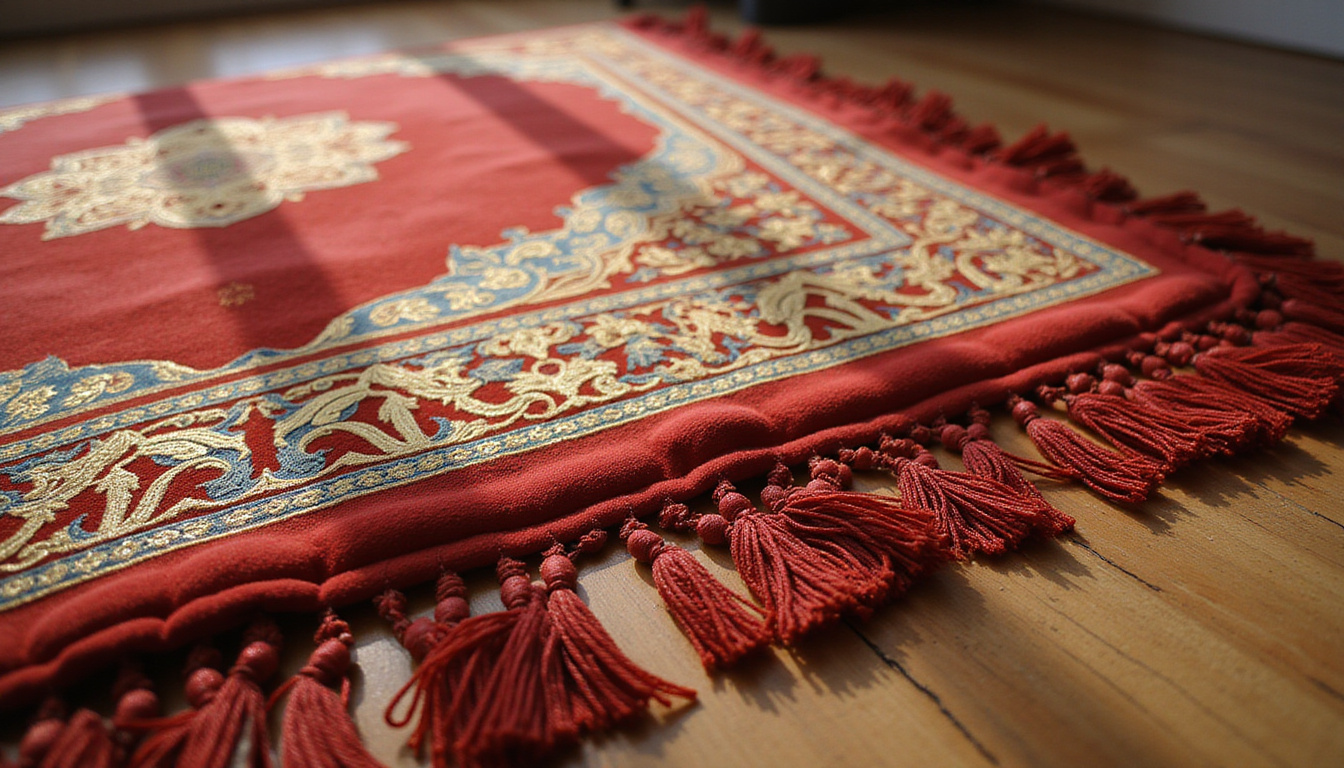
4. Style and Color Palette
Prayer rugs come in an enormous variety of styles:
- Traditional: Persian, Turkish, Moroccan, and Afghan patterns with rich reds, blues, and golds.
- Minimalist/Modern: Simple lines, muted colors (grays, beiges, soft greens), and subtle mihrab shapes.
- Bohemian/Eclectic: Bright colors, mixed patterns, and artisanal textures.
When choosing colors, think about:
- The mood you want for your prayer or meditation space (calm vs. energizing).
- The existing colors in your room’s walls, floors, and furniture.
- Whether you prefer a rug that stands out as a focal point or blends in quietly.
Integrating Prayer Rugs into Your Home Décor
Prayer rugs can be both functional and visually striking. You don’t have to limit them to a hidden corner; they can help define the character of a room.
Create a Dedicated Prayer or Meditation Corner
Transform a small area into a personal sanctuary:
- Place a prayer rug as the foundation.
- Add a low shelf or table for religious texts, candles, or incense.
- Use soft lighting—a floor lamp or string lights to create a tranquil atmosphere.
- Incorporate cushions or poufs for additional comfort before and after prayer.
This micro-space can help you mentally shift into a state of reflection whenever you step onto your rug.
Use Prayer Rugs as Wall Art
Many handwoven prayer rugs are stunning enough to display as tapestries. Wall-hanging can:
- Protect the rug from wear while showcasing its artistry.
- Add warmth, color, and acoustic softening to a room.
- Turn a blank wall into a meaningful focal point.
To hang a prayer rug, use a textile rod, a sleeve sewn onto the back, or specialized clips that won’t damage the fibers.
Layer Rugs for Depth and Comfort
If your flooring is hard or the room is large, try layering:
- A larger neutral area rug as a base
- Your smaller prayer rug on top where you actually stand and kneel
This approach highlights the prayer rug visually while increasing comfort underfoot.
Caring for Your Prayer Rugs
Proper care respects both the object and its symbolic value.
Regular Maintenance
- Vacuum gently on low suction or use a hand brush to remove dust.
- Rotate the rug periodically to prevent uneven wear from sun and foot traffic.
- Keep away from direct sunlight to minimize fading, especially in silk and naturally dyed rugs.
Dealing with Stains and Spills
- Blot (don’t rub) spills immediately with a clean, dry cloth.
- Use a mild detergent and water solution for spot cleaning wool or cotton; test first on a small area.
- For valuable or antique prayer rugs, consult a professional rug cleaner who specializes in handwoven textiles.
Storage Tips
When not in use:
- Roll the rug (never fold, to avoid creases) with the pile side inward.
- Wrap in breathable cotton or muslin—avoid plastic, which can trap moisture.
- Store in a dry, cool place away from pests and humidity.
How Prayer Rugs Support Mindfulness and Well-Being
Even beyond formal religious practice, prayer rugs can support daily mindfulness.
- Spreading a rug can become a ritual signal to pause, breathe, and center yourself.
- The softness under your hands and knees promotes physical grounding.
- Repeated use of the same rug creates emotional familiarity and comfort, a “safe place” for your thoughts.
Many people use their prayer rugs not only for salah, but also for Qur’an recitation, dhikr (remembrance), meditation, journaling, or quiet reading. The consistent association with introspection can make it easier to cultivate a regular spiritual routine.
Simple Checklist Before Buying a Prayer Rug
To make your purchase easier, run through this quick checklist:
- Purpose: Daily prayer, decorative, travel, or special occasions?
- Size: Will it fit comfortably in your chosen space and suit your height?
- Material: Wool, cotton, silk, or synthetic—what works for your comfort and climate?
- Craftsmanship: Hand-knotted, flat-weave, or machine-made based on budget and values.
- Design: Do the colors and motifs support your focus and complement your home?
- Maintenance: Are you willing to care for a delicate rug, or do you need something low-maintenance?
FAQ About Prayer Rugs
Q1: How do I choose the best prayer rug for daily use?
Look for a medium-thick, non-slip prayer rug made of wool or cotton, with enough padding for your knees. Ensure the size matches your height and that the mihrab design (if present) clearly indicates direction. Choose calming colors and patterns that help you focus instead of distract.
Q2: Can prayer carpets be used as regular rugs in living spaces?
Yes, many people use larger prayer carpets in living rooms or family areas. As long as you maintain cleanliness and treat the rug respectfully, it can serve both as a functional surface and a reminder of spiritual life in the heart of your home.
Q3: Are Islamic prayer mats suitable for travel?
Absolutely. There are lightweight, foldable Islamic prayer mats specifically designed for travel. They’re often made from thin fabric or synthetic materials that fit easily into bags, giving you a clean prayer surface wherever you go—hotel rooms, airports, parks, or workplaces.
Prayer rugs are powerful tools for weaving faith, tranquility, and beauty into your everyday life. Whether you’re creating a dedicated worship corner, seeking a meaningful piece of textile art, or simply wanting more comfort and intention in your daily routine, the right rug can make all the difference.
Explore high-quality prayer rugs that resonate with your style and beliefs, and start transforming your home into a sanctuary of sacred design and comfort—one thoughtful piece at a time.
Sacred objects often carry deep cultural and spiritual meaning. Learn how these symbols relate to history, spirituality, and the human mind by exploring more articles at SpiritualMindScience.com.