Prayer Candles: 10 Surprising Ways to Boost Your Spiritual Practice
Prayer candles have been part of spiritual traditions for centuries, yet many people only use them in the most basic way—lighting one and saying a quick prayer. When used with intention, though, prayer candles can become a powerful tool to deepen your spiritual life, create sacred space at home, and bring more peace and focus into your day.
Below are 10 surprising, practical ways to work with prayer candles so they truly support and elevate your spiritual practice—no matter your background or belief system.
1. Turn Lighting Your Candle into a Daily Ritual
Instead of lighting prayer candles only in times of crisis, make them part of your everyday routine. A consistent ritual, even if it’s just five minutes, can anchor your whole day.
Try this simple flow:
- Choose a quiet spot.
- Take three slow, deep breaths.
- Light your candle slowly while setting a clear intention.
- Speak (or silently repeat) one sentence that sums up your intention.
- Sit in silence for a moment, just watching the flame.
Over time, your mind will begin to associate the candle flame with stillness, reflection, and connection. That makes it easier to “drop into” a prayerful state, even on chaotic days.
2. Use Scented Candles to Support Specific Intentions
Scent works directly on the brain’s emotional center, which is why certain smells can instantly calm or uplift you. Pairing intention with scent can make your use of prayer candles more effective and memorable.
You might experiment with:
- Lavender: For peace, sleep, and anxiety relief
- Frankincense or myrrh: For deep prayer, meditation, and reverence
- Rose: For love, compassion, and heart-healing
- Citrus (orange, lemon): For joy, clarity, and motivation
- Cedar or sandalwood: For grounding, protection, and strength
When you light a particular scented candle only for a specific purpose—such as evening gratitude or morning clarity—your mind begins to associate that scent with the spiritual state you’re cultivating.
3. Create a Mini Home Altar Around Your Candle
You don’t need an elaborate setup to create a sacred space. A small corner of a table or shelf dedicated to prayer candles and meaningful objects can transform your environment and mindset.
Include items that symbolize what matters to you, such as:
- A small bowl of water or a shell (for cleansing and renewal)
- A special stone or crystal
- A photo of loved ones or spiritual teachers
- A written affirmation or favorite scripture
- Fresh flowers or a plant
Whenever you see this space, it serves as a visual reminder to pause, breathe, and reconnect with your spiritual intentions—even if you don’t have time for a full practice.
4. Pair Prayer Candles with Journaling
One of the most effective ways to deepen any spiritual practice is to reflect on it. Combining prayer candles with journaling helps you process emotions, notice patterns, and track answered prayers or shifts in your life.
Try this simple three-part practice:
- Light your candle and sit quietly for 1–2 minutes.
- Write for 5–10 minutes about:
- What you’re grateful for today
- What you’re struggling with
- What you’re asking for help or guidance with
- Close with a short prayer or affirmation, then blow out or safely leave the candle to burn (following safety rules).
Over weeks and months, your journal becomes a record of your spiritual journey, and the act of lighting your candle signals to your mind: “This is a time to be honest and open.”
5. Use Candles to Mark Transitions and Thresholds
Life is full of small and large transitions: starting a new job, moving homes, ending a relationship, or even just shifting from work mode to rest mode at the end of the day. Prayer candles can help you honor these transitions instead of rushing through them.
Some ideas:
- Light a candle on your first day of a new job and say a prayer for courage and clarity.
- At the end of the workday, light a small candle and intentionally “hand over” your worries. When you blow it out, symbolically release the day.
- Before a difficult conversation, light a candle for honesty, kindness, and mutual understanding.
- On anniversaries of losses or important events, burn a candle to honor memories and invite healing.
This practice transforms ordinary moments into meaningful thresholds, deepening your sense of living consciously rather than on autopilot.
6. Pray for Others with Dedicated Candles
One powerful way to use prayer candles is to dedicate them to specific people or intentions. Knowing that you’ve set aside a candle for someone can be deeply comforting—to you and, if you choose to tell them, to them as well.
You might:
- Write the person’s name (or initials) on a small piece of paper and place it under the candle.
- Light the candle daily for a set period—e.g., seven days—for that person’s well-being.
- Offer a brief, specific prayer when you light it, such as:
“May [Name] feel supported, healed, and guided in exactly the way they need today.”
This practice can also help relieve the sense of helplessness we often feel when someone we love is struggling—it gives you a concrete, caring action to return to regularly.
7. Combine Breathwork or Meditation with Candle Gazing
Candle gazing (often called trataka in yogic traditions) is an ancient meditative practice that can sharpen focus and calm the mind. Used gently and safely, it pairs beautifully with prayer candles.
A simple method:
- Sit comfortably with a lit candle at eye level, about an arm’s length away.
- Soften your gaze and look at the flame—not straining, just resting your eyes.
- Breathe slowly and evenly, in and out through your nose.
- If your eyes water, close them for a moment and visualize the flame in your mind’s eye.
- Continue for 2–5 minutes, then close with a brief prayer or word of thanks.
Studies suggest that even short periods of focused attention meditation can reduce stress and improve emotional regulation (source: National Center for Complementary and Integrative Health). Adding the gentle focus of a candle flame can make meditation feel more accessible, especially if you struggle with racing thoughts.
8. Match Candle Colors to Your Spiritual Goals
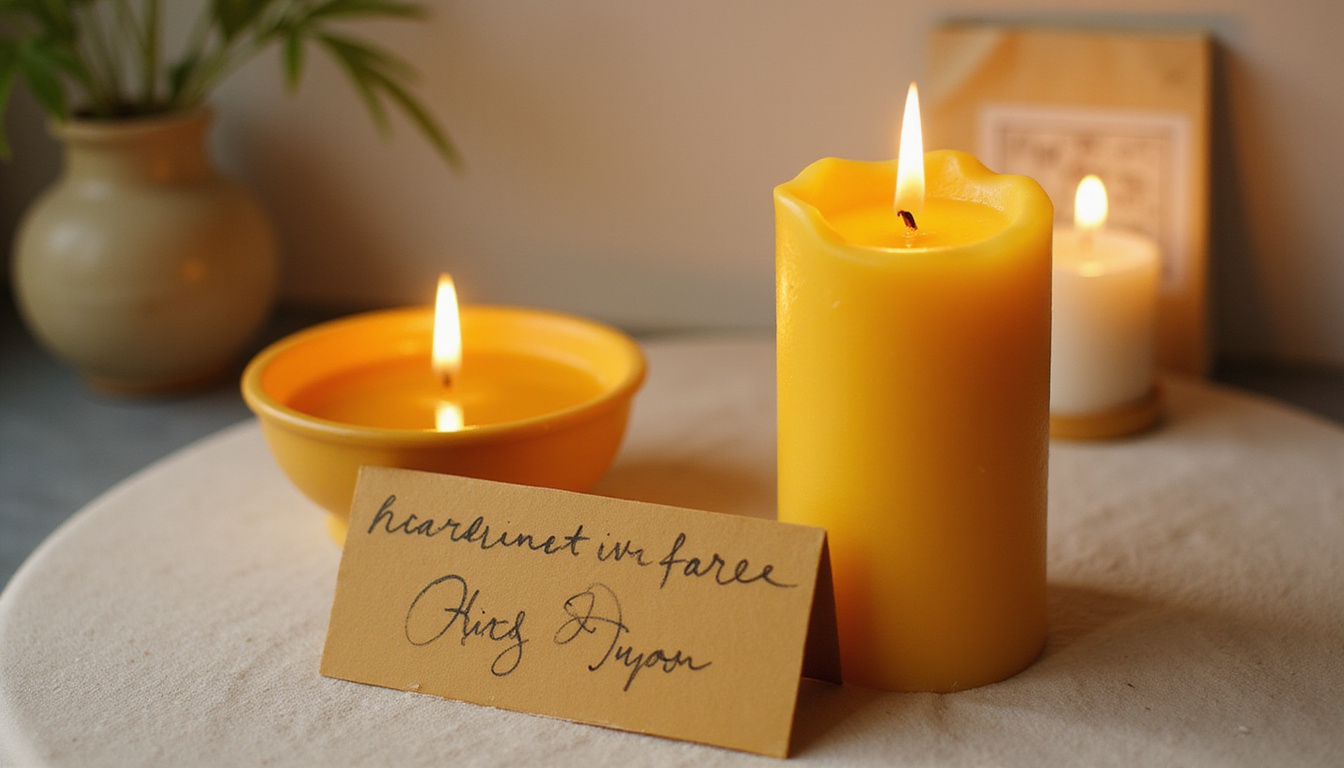
Many traditions associate different candle colors with particular energies or intentions. While you don’t have to follow any rules strictly, color can be a creative way to focus your mind.
Common associations include:
- White: Purity, peace, new beginnings, spiritual clarity
- Blue: Calm, protection, communication, truth
- Green: Healing, growth, abundance, balance
- Red: Strength, courage, passion, vitality
- Yellow or gold: Joy, wisdom, confidence, clarity
- Purple: Spiritual insight, transformation, intuition
When choosing prayer candles, select colors that visually remind you of the quality you’re inviting into your life. Over time, picking up a certain color can become a powerful mental cue.
9. Sync Candle Use with Moon Phases or Weekly Rhythms
If you’re drawn to cycles and natural rhythms, tying your candle practice to the moon phases or days of the week can add an extra layer of meaning.
For example:
- New moon: Light a candle for new intentions, goals, and fresh starts.
- Full moon: Use candles for release, forgiveness, and gratitude.
- Sunday: Focus on rest, worship, or reflection.
- Monday: Pray for emotional resilience and clarity for the week ahead.
- Friday: Light a candle for relationships, love, and connection.
You don’t need to follow any strict system. What matters most is choosing a rhythm that feels natural and sustainable, so your connection with your prayer candles grows steadily over time.
10. Turn Clean-Up and Extinguishing into a Sacred Act
Many people focus only on the moment of lighting a candle, but how you end your time with prayer candles can be just as important.
Try ending your practice with intention:
- Before extinguishing, say: “Thank you for this time of connection and clarity.”
- As you blow out the candle (or snuff it safely), visualize your prayers and intentions continuing to “glow” within you, even without the physical flame.
- Gently tidy the space—wipe the surface, remove any clutter, refresh flowers if you have them.
This reinforces the idea that your spiritual practice doesn’t end when the candle goes out. Instead, you’re carrying its light into the rest of your day.
Safety Tips for Working with Prayer Candles
Because candles involve open flames, it’s important to treat them with respect. A few key guidelines:
- Never leave burning candles unattended.
- Keep them away from curtains, papers, bedding, and other flammable materials.
- Use a stable, heat-safe holder or plate.
- Keep candles away from children and pets.
- Trim wicks to about ¼ inch before lighting to reduce smoke and uneven burning.
Taking these simple steps allows you to enjoy the peace and beauty of prayer candles without unnecessary risk.
FAQ About Prayer Candles and Spiritual Practice
1. How do I use a prayer candle effectively?
To use a prayer candle effectively, set a clear intention before you light it. Sit quietly for at least a minute or two, focusing on your breath and your purpose—whether it’s gratitude, healing, guidance, or support for someone else. You can speak a prayer out loud or silently, then allow yourself to simply rest in the presence of the flame.
2. Are spiritual candles from different traditions okay to mix?
Yes, many people blend spiritual candles from various traditions if it feels respectful and authentic. What matters most is the sincerity of your heart and the integrity of your practice. If you use candles associated with a specific culture or religion, take time to learn about their meaning and treat them with reverence.
3. What color prayer candle should I choose for my intentions?
Choose a prayer candle color that matches the feeling or goal you’re focusing on—for example, white for peace, green for healing and growth, or blue for calm and protection. If you’re unsure or don’t have options, a simple white candle is always appropriate for any sincere prayer or spiritual intention.
Prayer candles are more than decorative objects; they can be anchors of calm, tools for focus, and symbols of hope in your daily life. You don’t need expensive supplies or complex rituals—just a simple flame, a genuine intention, and a willingness to pause.
If you’re feeling called to deepen your spiritual practice, start by choosing one of the ideas above and try it for the next seven days. Create a small space, light a candle with purpose, and see how this quiet, steady light begins to shift your inner world.
When you’re ready to go further, explore additional candle colors, scents, or rituals, and let your practice grow naturally. Your spiritual life deserves this kind of gentle, steady attention—and a single lit candle can be the first step.
Sacred objects often carry deep cultural and spiritual meaning. Learn how these symbols relate to history, spirituality, and the human mind by exploring more articles at SpiritualMindScience.com.