Peony Planting and Care Hacks That Guarantee Big Blooms
If you’ve ever fallen in love with a lush, fragrant peony in full bloom and wondered why yours don’t look the same, you’re not alone. Peonies are surprisingly low-maintenance once established, but they’re also famously particular about a few key details. Get those details right, and you’ll be rewarded with armfuls of huge, long-lasting flowers year after year.
This guide walks you through practical, proven planting and care hacks that set your peonies up for big, show-stopping blooms.
Know Your Peony: Types and What They Need
Before planting, understand which kind of peony you have, because care varies slightly:
-
Herbaceous peonies (most common garden type)
Die back to the ground in winter and re-emerge in spring. Ideal for classic borders. -
Tree peonies
Woody shrubs that keep above-ground stems. Larger, often earlier blooms, need a bit more protection. -
Intersectional (Itoh) peonies
Cross between herbaceous and tree types. Strong stems, huge flowers, extended bloom period.
Most planting and care hacks in this article apply best to herbaceous and Itoh peonies, with notes for tree peonies where it matters.
Hack #1: Choose the Right Spot (Sun and Soil Are Everything)
Peonies will survive in less-than-perfect locations, but they won’t bloom their best. Location is your first big-bloom hack.
Sunlight: Aim for Full Sun
- Ideal: 6–8 hours of direct sun daily.
- Minimum: 4–5 hours, but blooms will be fewer in partial shade.
- Avoid: Deep shade or locations with late-afternoon dense shade; this often leads to weak stems and no blooms.
In very hot climates (Zones 8–9), light afternoon shade can actually help preserve flowers longer and prevent scorching.
Soil: Well-Drained and Moderately Fertile
Peonies hate “wet feet.” Constantly soggy soil leads to root rot and poor performance.
- Texture: Loamy or sandy-loam is ideal.
- Drainage test: Dig a hole, fill it with water, and see if it drains within an hour. If water is still standing, improve drainage before planting.
- pH: Slightly acidic to neutral (about 6.5–7) is best (source: University of Minnesota Extension).
Hack: If you have heavy clay, mix in coarse sand, compost, and some fine bark to loosen the soil. Planting in raised beds can help where natural drainage is poor.
Hack #2: Plant at the Correct Depth (The #1 Peony Mistake)
Planting depth is the single most common reason mature peonies don’t bloom. They’ll grow lush leaves but no flowers.
For Herbaceous and Itoh Peonies
- Look for the “eyes”: reddish buds on the tuberous root.
- In cold climates (Zones 3–6): Eyes should be about 2 inches (5 cm) below soil level.
- In warmer climates (Zones 7–8/9): Plant even shallower, with eyes just 1 inch (2.5 cm) below soil level.
Planting too deep (3–4 inches or more) can delay or stop blooming for years.
For Tree Peonies
Most tree peonies are grafted onto a different rootstock:
- Set the graft 3–4 inches (7–10 cm) below soil level to encourage the tree peony to form its own roots.
- Do not bury existing woody branches; only the graft and roots.
Hack: After backfilling, gently firm the soil with your hands instead of stamping with your feet, which can sink the crown deeper than intended.
Hack #3: Perfect Planting Time and Technique
Peonies like to be planted at the right season and then left undisturbed.
Best Planting Time
- Bare-root peonies: Fall is optimal (September–October in most regions). This allows rooting before winter.
- Container-grown peonies: Can be planted in spring or fall, but fall still gives the best start.
Avoid planting right before a hard freeze or in scorching mid-summer heat.
Planting Steps (Herbaceous Peonies)
- Dig a wide hole, about 18–24 inches across and 12–18 inches deep.
- Mix removed soil with compost and a little bone meal or rock phosphate (for root and flower development).
- Make a low mound in the center of the hole.
- Place the peony root on the mound, eyes facing up, at the right depth.
- Backfill, firm gently, and water deeply to settle soil around the roots.
Hack: Mark the location with a sturdy plant label or small stake. Peonies can be inconspicuous when dormant, and you don’t want to accidentally dig them up.
Hack #4: Smart Watering for Strong Roots
Peonies are relatively drought-tolerant once established but need consistent moisture in their first year and during key growth phases.
-
New plantings:
Water deeply once or twice a week in the absence of rain, keeping soil evenly moist but not soggy. -
Established plants:
Focus watering during:- Spring shoot and bud development
- Bloom period
- A few weeks after blooming as they form buds for next year
Allow the top inch of soil to dry slightly before watering again. Avoid frequent, shallow sprinkling.
Hack: Use a slow soaker hose or drip line to keep foliage dry. Wet foliage can encourage fungal problems, especially in humid climates.
Hack #5: Feed for Flowers, Not Just Foliage
Peonies don’t need heavy feeding, but targeted nutrition can enhance blooming.
What to Use
- A balanced, slow-release fertilizer (e.g., 10-10-10 or 5-10-5) in early spring as shoots emerge.
- Light top-dressing of compost each spring can often provide all needed nutrients in fertile soils.
How and When
- Sprinkle fertilizer around the drip line (outer edge of the plant), not directly on the crown.
- Water it in thoroughly.
- Avoid high-nitrogen lawn fertilizers drifting onto peonies—excess nitrogen encourages leaf growth at the expense of flowers.
Hack: After blooming, skip nitrogen but you can give a small dose of phosphorus and potassium to support root health and encourage next year’s buds.
Hack #6: Mulch, But Don’t Smother
Mulch helps conserve moisture, moderate soil temperature, and suppress weeds—if used correctly.
- Apply a light layer (1–2 inches) of organic mulch (shredded bark, compost, leaf mold) around, not over, the crown.
- Keep a donut-shaped gap around the stem base so the crown remains at the correct depth and well-aerated.
In cold climates, a slightly thicker winter mulch can help prevent freeze–thaw damage. Just remember to pull extra mulch back in early spring so new shoots can emerge freely.
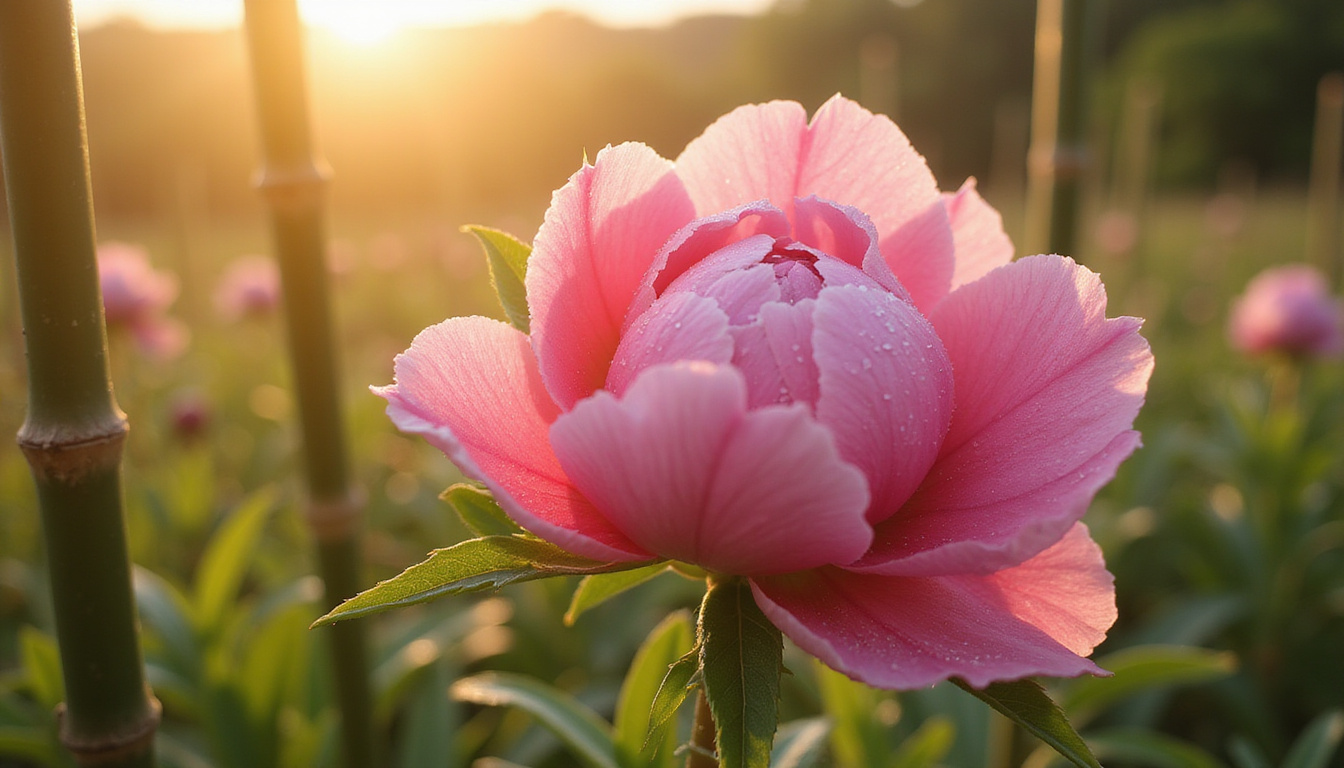
Hack #7: Support Stems Before They Flop
Many large-flowered peonies have heavy, double blooms that flop after rain or wind. Proper support keeps flowers upright and presentable.
- Install peony rings, grids, or cages in early spring, when shoots are just a few inches tall.
- As the plant grows, stems will hide the support.
If you wait until the plant is tall and floppy, tying it up will look messy and can break stems.
Hack: For a low-cost option, use three to four sturdy stakes around the plant and weave jute twine in a loose grid pattern about halfway up as the plant grows.
Hack #8: Smart Deadheading and Post-Bloom Care
How you treat your peony after blooming impacts next year’s flowers.
Deadheading
- Once petals start falling, cut off spent blooms, trimming the stem down to a strong leaf cluster.
- Don’t remove too much foliage; leaves are powering the plant and forming next year’s buds.
Foliage Maintenance
- Let foliage stand until it naturally declines in fall.
- In autumn, especially where disease is a concern, cut herbaceous peony foliage to the ground and dispose of it (do not compost if diseased).
Hack: Use clean, sharp pruners and disinfect between plants if you see signs of disease to prevent spreading pathogens.
Hack #9: Winter Prep for Bigger Blooms Next Year
Peonies need winter chill to bloom well. A little preparation helps them sail through the cold and emerge strong in spring.
- After the first hard frost, cut herbaceous peonies back to ground level.
- Remove and discard all stems and leaves from the garden bed to reduce disease pressure.
- In colder zones, add a 2–3 inch layer of loose mulch after the ground begins to freeze, then pull it back in early spring.
Tree peonies generally keep their woody stems; only remove clearly dead or diseased wood in late winter.
Hack #10: Divide and Transplant Correctly (Only When Necessary)
Peonies dislike being disturbed, but sometimes dividing or moving them is necessary—especially if they’re overcrowded or underperforming after many years.
When to Divide
- Best time: Fall, once foliage has died back.
- Signs division may help:
- Very few blooms on a mature clump
- Crowded centers with fewer stems
- Need to relocate due to shade or construction
How to Divide for Continued Blooms
- Dig up the entire clump carefully, keeping as many roots as possible.
- Rinse soil off to expose the crown and eyes.
- Slice clump into divisions, each with at least 3–5 eyes and healthy roots.
- Replant immediately at correct depth using the same planting steps outlined earlier.
Hack: Don’t rush to divide just because the plant is large. Many peonies bloom beautifully for decades without division if they’re happy where they are.
Common Peony Problems That Limit Blooming (and Fast Fixes)
Even when you’ve done most things right, a few issues can still reduce flowering.
-
Plant is too young
Peonies often take 2–3 years to reach full blooming potential. Be patient; the payoff is huge. -
Too much shade
If surrounding trees or shrubs have grown, consider thinning branches or relocating the peony in fall. -
Over-fertilizing with nitrogen
Cut way back and switch to balanced or low-nitrogen feeding. -
Bud blast (buds turn brown and fail to open)
Often from drought stress, poor soil, late frosts, or diseases. Improve watering and soil, protect from late freeze when possible, and remove affected buds. -
Fungal diseases (e.g., botrytis)
Encourage airflow: don’t overcrowd plants, water at soil level, remove affected stems promptly, and clean up all debris in fall.
Quick Peony Care Checklist
Use this as a seasonal reference:
-
Early spring
- Remove winter mulch from crowns
- Apply balanced fertilizer
- Install supports
-
Late spring / bloom time
- Water deeply in dry spells
- Deadhead spent blooms
-
Summer (after bloom)
- Light feeding (if needed) focused on root health
- Watch for disease; treat and clean up promptly
-
Fall
- Cut back herbaceous foliage after frost
- Divide and transplant if necessary
- Apply winter mulch once ground is cold
FAQ About Peonies and Big Blooms
Q1: Why is my peony not blooming at all?
Common causes include planting the peony too deep, insufficient sunlight, plant still being too young, or recent transplanting. Check crown depth first, then make sure the plant gets at least 4–6 hours of direct sun.
Q2: How do I make my peony flowers bigger and more abundant?
Provide full sun, well-drained but fertile soil, proper watering during bud formation, and balanced fertilization in early spring. Divide and replant only when the clump is overcrowded. Avoid high-nitrogen fertilizers that push leaf growth over bloom production.
Q3: Can I grow peonies in pots or containers and still get big blooms?
Yes, but containers must be large (ideally 18–24 inches wide and deep) with excellent drainage. Use a high-quality potting mix, ensure full sun, and protect the pot in winter so roots don’t freeze solid. Container-grown peonies may need more frequent watering and repotting every few years.
Turn Your Peony Patch into a Bloom Powerhouse
Lush, oversized peony blooms aren’t just for show gardens. By choosing a sunny, well-drained spot, planting at the precise depth, watering wisely, feeding moderately, and giving your plants support and seasonal clean-up, you set the stage for heavy, reliable flowering year after year.
Put these planting and care hacks into practice with your next peony—or revisit the ones you already have planted. A single afternoon spent fine-tuning depth, supports, and soil can transform your plants’ performance. Start now, and your next peony season could be your biggest, most spectacular bloom show yet.
Throughout history, many plants and herbs have been associated with luck, protection, and prosperity. To explore their deeper spiritual, psychological, and scientific significance, visit SpiritualMindScience.com.