Pectoral Cross Secrets: Why Bishops Wear It and What It Symbolizes
The pectoral cross is one of the most recognizable symbols worn by bishops and other high-ranking clergy in many Christian traditions. Hanging over the chest and often gleaming in liturgical processions or official portraits, it can seem like a simple ornament at first glance. In reality, it carries centuries of history, a deep spiritual meaning, and a surprisingly practical role in church life.
In this guide, you’ll discover where the pectoral cross comes from, why bishops wear it, what it symbolizes, how it differs among denominations, and what it means for everyday believers.
What Is a Pectoral Cross?
A pectoral cross is a cross worn on the chest (“pectoral” comes from the Latin pectus, meaning “breast” or “chest”). It is traditionally suspended from a chain or cord and rests near the heart of the wearer.
While many Christians wear small crosses around their necks, the pectoral cross is:
- Larger in size
- Reserved for certain clergy (typically bishops, abbots, abbesses, and some canons)
- Often richly decorated or symbolic in its design
It is part of official clerical dress rather than casual personal jewelry.
Historical Origins of the Pectoral Cross
The roots of the pectoral cross go back to the early centuries of Christianity.
Early Christian and Roman Background
- In the Roman world, important persons often wore medallions or pendants over the chest as signs of rank or honor.
- Early Christians began using cross-shaped pendants both as discretely coded symbols during times of persecution and as devotional objects.
By the Middle Ages, the pectoral cross had become more clearly associated with higher clergy:
- 11th–12th centuries: Bishops in Western Europe increasingly adopted the pectoral cross as part of their regular vesture.
- Later medieval period: It became standardized as a sign of episcopal office, especially in the Roman Catholic Church.
Over time, church law and custom defined exactly who could wear a pectoral cross and on what occasions.
Why Do Bishops Wear a Pectoral Cross?
There are three main reasons bishops wear a pectoral cross: to express their office, to show a visible sign of faith, and to remind them of the spiritual weight of their calling.
1. Sign of Episcopal Office and Authority
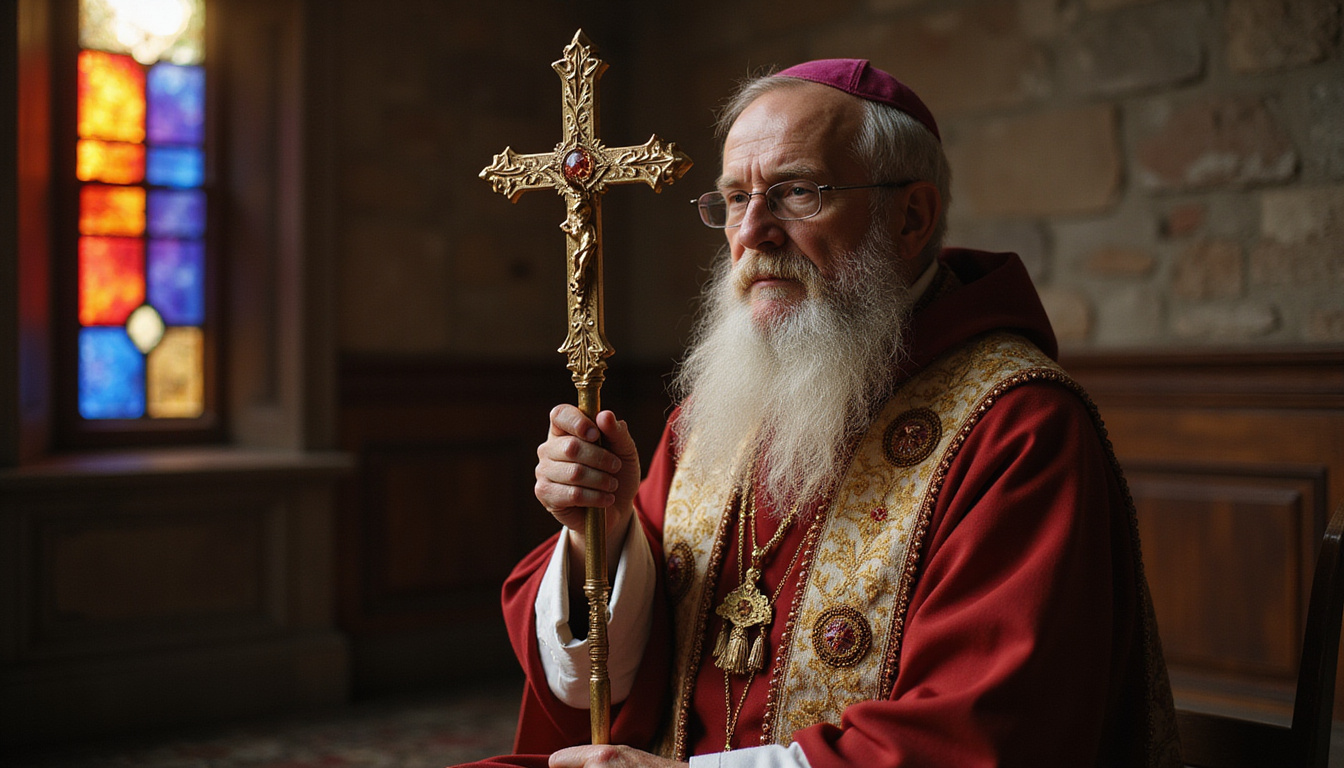
The pectoral cross is one of the classic “insignia” of a bishop, along with the miter, crosier (staff), and episcopal ring.
- It marks the bishop as a successor of the apostles.
- It visually distinguishes a bishop from priests and deacons.
- In processions and official ceremonies, it serves as part of the bishop’s “dress uniform,” indicating his role as chief shepherd of a diocese.
Church documents frequently mention the pectoral cross as part of the bishop’s required or customary insignia, reinforcing its official status (source: Vatican.va).
2. Public Witness to the Cross of Christ
The pectoral cross is also a proclamation in metal and stone:
- It publicly displays the bishop’s faith in the crucified and risen Christ.
- It reminds the faithful that the heart of Christian leadership is rooted in the self-giving love shown on the cross.
- It symbolizes that any true authority in the Church is meant to be sacrificial, not domineering.
In liturgical contexts, the pectoral cross aligns visually with the central cross of the altar and the processional cross, making the sign of redemption a focal point of worship.
3. Personal Reminder and Spiritual Protection
Traditionally, the pectoral cross is not only worn outwardly; it carries a strong inward message:
- It rests over the heart, reminding the bishop constantly of his duty to love and serve like Christ.
- Some older crosses held relics or Scripture texts, emphasizing spiritual protection and continual prayer.
- The weight and presence of the cross are meant to recall the “yoke” of Christ and the responsibility of pastoral care.
In some traditions, bishops even kiss their pectoral cross privately before liturgy as a sign of humility and dependence on God.
What Does the Pectoral Cross Symbolize?
Beyond being a sign of rank, the pectoral cross is rich in layered meaning.
Symbolism at a Glance
It traditionally symbolizes:
- Union with Christ’s Passion – Sharing in Christ’s suffering for the sake of the Church.
- Pastoral Charity – Love and service flowing from the heart of the shepherd.
- Teaching Authority – The cross as the central “message” the bishop is called to preach.
- Unity with the Universal Church – The same cross sign connects bishops around the world and across denominations.
- Hope in the Resurrection – Many designs incorporate gemstones or gold to reflect Easter glory emerging from Good Friday suffering.
Even small design choices—metal type, engraved symbols, included relics—are aimed at deepening these themes.
Design and Styles of Pectoral Crosses
Though they share the same purpose, pectoral crosses can look very different depending on tradition, culture, and personal choice.
Common Design Elements
Pectoral crosses often feature:
- Crucifix or plain cross – Some show the body of Christ; others are unadorned.
- Engraved symbols – Lamb of God, dove (Holy Spirit), alpha and omega, or episcopal coat of arms.
- Precious materials – Gold, silver, enamel, and occasionally precious stones.
- Relics or compartments – Some have a small cavity for a relic or a Scripture verse.
Chains, Cords, and Placement
- In many Western traditions, bishops and abbots wear the pectoral cross on a gold or silver chain for formal occasions.
- For more penitential seasons or simpler dress, a silk cord in a liturgical color (often green or purple) may be used.
- The cross typically hangs high on the chest, not low near the stomach, emphasizing its place near the heart.
Different churches and episcopal conferences may have detailed norms governing length, material, and when it is worn over vs. under certain vestments.
Pectoral Cross in Different Christian Traditions
Though the general idea is similar, various Christian traditions understand and use the pectoral cross in slightly different ways.
Roman Catholic Church
- The pectoral cross is standard for bishops, abbots, abbesses, and some canons.
- Cardinals and the pope also wear one, typically more elaborate.
- Generally worn over the cassock, choir dress, and liturgical vestments.
- Some bishops own several pectoral crosses—for everyday use, for formal events, and as historical or personal gifts.
Eastern Orthodox and Eastern Catholic Churches
- The pectoral cross is called a “engolpion” or “enkolpion” when it includes an icon (often of Christ or the Theotokos) and is worn by bishops.
- Many priests also receive a pectoral cross as a special honor.
- Eastern pectoral crosses often feature intricate iconography, enamel work, and sometimes are paired (cross on one side, icon medallion on the other).
Anglican and Some Protestant Traditions
- In many Anglican churches, bishops and some senior clergy wear a pectoral cross, especially in liturgical or formal settings.
- The style may be simpler, reflecting Reformation sensibilities, but the basic symbolism of episcopal office remains.
- Some Lutheran and other Protestant bishops also maintain this tradition, tailoring its use to their own church customs.
Who Is Allowed to Wear a Pectoral Cross?
Not every member of the clergy is entitled to wear a pectoral cross as an official insignia.
Typically, the following may wear a true pectoral cross:
- Bishops (including auxiliary and titular bishops)
- Abbesses and abbots (in certain religious orders)
- Some canons and prelates with special privileges
- Eastern Orthodox and Eastern Catholic priests with particular awards
Laypeople and other clergy may certainly wear cross necklaces for devotion, but these are not considered pectoral crosses in the strict, ceremonial sense. The distinction lies in:
- Function (insignia vs. private devotion)
- Context (liturgical vesture vs. everyday wear)
- Church law (who is granted the right to wear which insignia)
How a Pectoral Cross Is Used in Liturgy and Daily Life
The pectoral cross is woven into a bishop’s daily routine and worship life.
In Daily Wear
Bishops often wear their pectoral cross:
- Over the cassock or clerical shirt in formal settings
- Tucked into a pocket or under clothing in informal or secular contexts
- As a constant reminder of their vocation, whether visible or hidden
Some bishops keep the same cross for decades; others alternate depending on the liturgical season or pastoral circumstances.
In Liturgical Celebrations
During Mass or Divine Liturgy, the pectoral cross:
- Is worn under or over the chasuble or phelonion, depending on local custom
- May be kissed briefly by the bishop before or after vesting
- Is visible to the faithful during processions, blessings, and other key moments, reinforcing the centrality of the cross in worship
Practical and Spiritual “Secrets” Behind the Pectoral Cross
Beyond the obvious symbolism, several lesser-known aspects of the pectoral cross deepen its meaning.
-
Often a Personal Gift
Many bishops receive a pectoral cross from family, fellow clergy, or the pope, making it a deeply personal reminder of the community supporting their ministry. -
Connection to Saints and Tradition
Crosses containing relics unite the bishop’s ministry with the witness of past saints, suggesting that no bishop leads alone. -
A Source of Accountability
Knowing the cross is always there, visible to others, can encourage bishops to live consistently with the Gospel they preach. -
Teaching Tool
When people, especially children, ask about it, the pectoral cross becomes a natural entry point to explain the Christian faith and the meaning of Christ’s sacrifice.
Quick Reference: Key Facts About the Pectoral Cross
- Worn primarily by: bishops, abbots/abbesses, certain honored clergy
- Location: on the chest, near the heart
- Purpose: sign of office, public witness, personal spiritual reminder
- Variations: crucifix vs. plain cross, Western vs. Eastern styles, simple vs. ornate
- Usage: in daily clerical dress and during liturgical celebrations
FAQ: Common Questions About Pectoral Crosses
Q1: What is the difference between a pectoral cross and a regular cross necklace?
A pectoral cross is typically larger, worn by higher clergy as an official sign of office, and governed by church tradition or law. A regular cross necklace is a personal devotional item any Christian may wear, without special ecclesiastical significance.
Q2: Can laypeople wear a pectoral cross-style cross?
Laypeople may wear large crosses that look similar, but these do not carry the same canonical or ceremonial meaning as a bishop’s pectoral cross. In strict terminology, “pectoral cross” refers to the insignia of bishops and certain other clergy.
Q3: Why is the bishop’s pectoral cross sometimes hidden under vestments?
Depending on the vestments and local custom, the pectoral cross may be worn under the chasuble or outer garment. Even when not visible, it remains a spiritual reminder to the bishop of his duty to carry the cross of Christ in his heart.
Embracing the Meaning of the Pectoral Cross in Your Own Life
You may never wear a formal pectoral cross, but its message is for every Christian: to carry the cross of Christ close to the heart, to serve others in love, and to let faith be visible in daily life.
If this symbolism speaks to you, consider:
- Reflecting on the cross you already wear or display at home
- Learning more about your own church’s use of crosses and vestments
- Deepening your prayer life around the mystery of the cross and resurrection
Whether you are a student of church history, a member of the clergy, or an interested observer, let the pectoral cross inspire you to rediscover the power of the cross in your own journey of faith—and to live in a way that makes Christ’s love unmistakably visible to the world.
Sacred objects often carry deep cultural and spiritual meaning. Learn how these symbols relate to history, spirituality, and the human mind by exploring more articles at SpiritualMindScience.com.