Peace Lily Care Secrets to Keep Your Plant Thriving
If you’re looking for a graceful, low-maintenance houseplant that cleans the air and rewards you with elegant white blooms, the peace lily (Spathiphyllum) is hard to beat. But while it’s often labeled “easy,” there are a few peace lily care secrets that make the difference between a plant that just survives and one that truly thrives for years.
Below you’ll find a practical, people-first guide to understanding exactly what your peace lily needs—light, water, soil, humidity, and more—plus how to fix common problems before they get serious.
Understanding Your Peace Lily: Basics and Benefits
Peace lilies are tropical evergreens native to the rainforests of Central and South America and parts of Southeast Asia. In the wild, they grow on the forest floor, protected from direct sun but bathed in warmth and humidity. Re-creating a version of that environment indoors is the foundation of great peace lily care.
A few key benefits of growing a peace lily:
- Attractive, glossy green foliage year-round
- Distinctive white “flowers” (actually specialized leaves called spathes)
- Tolerant of lower light than many flowering plants
- Known for filtering certain indoor air pollutants (source: NASA Clean Air Study)
Understanding where peace lilies come from helps explain why they dislike harsh sun, cold drafts, and bone-dry conditions.
Light Requirements: Bright but Gentle
Peace lilies prefer bright, indirect light. Too little light and they get leggy, dark, and reluctant to bloom; too much and the leaves scorch.
Ideal Light Conditions
- A few feet back from an east- or north-facing window
- Filtered light through sheer curtains on a bright south or west window
- Bright room where you can comfortably read without artificial light during the day
If your peace lily is:
- Not blooming and growth is slow: It likely needs more light. Move it closer to a brighter window (but out of direct rays).
- Developing brown, crispy patches, especially on the side facing the window: It’s getting too much direct sun. Move it further back or add a sheer curtain.
Peace lilies can tolerate low light, but “tolerate” doesn’t mean “thrive.” For regular flowering, aim for medium-to-bright indirect light.
Watering Peace Lilies: The Most Important Habit
Most peace lily problems trace back to watering. These plants like consistently moist soil, but not waterlogged. The trick is a deep, thorough watering followed by partial drying—not a constantly soggy pot.
How Often to Water
There’s no one-size-fits-all schedule; it depends on your home’s light, temperature, and humidity. Instead of watering by the calendar, use cues:
- Check the top 1–2 inches of soil; if it’s dry, it’s time to water.
- The pot will feel noticeably lighter when lifted before watering.
- Some peace lily varieties famously “dramatically droop” when thirsty—this is a warning sign, not a routine strategy. Repeated severe wilting stresses the plant.
Proper Watering Technique
- Take the plant to a sink or bathtub.
- Water slowly and evenly over the entire soil surface until water drains out of the bottom.
- Let it drain completely (10–20 minutes).
- Empty any water left in the saucer or decorative cachepot.
Avoid small, frequent sips of water; they often leave dry pockets and encourage shallow roots.
Water Quality Matters
Peace lilies can be somewhat sensitive to:
- Very hard water
- High chlorine or fluoride levels
If you see brown tips even with good watering habits, try:
- Letting tap water sit out for 24 hours before use
- Using filtered or rainwater if available
Soil and Repotting: The Right Home for Roots
For a peace lily to thrive, it needs soil that stays moist but drains well and doesn’t compact around the roots.
Best Soil Mix for Peace Lilies
Use a high-quality houseplant potting mix and improve drainage and aeration by mixing in:
- Perlite or pumice (helps with drainage and air flow)
- A bit of orchid bark or coco coir for structure and moisture balance
A simple formula:
- 2 parts all-purpose houseplant mix
- 1 part perlite or pumice
- 1 part fine orchid bark or coco coir
When and How to Repot
Repot every 1–2 years or when you notice:
- Roots circling the surface or coming out of drainage holes
- The plant dries out very quickly after watering
- Growth has slowed and soil looks compacted
Choose a pot only 1–2 inches wider in diameter. Peace lilies bloom better when slightly root-bound than when placed in an oversized pot.
To repot:
- Gently ease the plant from its current pot.
- Loosen tightly bound roots and trim any mushy, rotten ones.
- Place in the new pot so the crown (where stems meet roots) sits at the same height as before.
- Fill around with fresh mix, firming lightly.
- Water thoroughly and keep out of harsh light for a few days.
Humidity and Temperature: Re-creating the Tropics (Within Reason)
As rainforest natives, peace lilies appreciate warmth and humidity.
Ideal Temperature Range
- Daytime: 68–80°F (20–27°C)
- Nighttime: Not below ~60°F (15°C)
Keep them away from:
- Drafty windows in winter
- Heaters and radiators
- Air conditioner vents that blow directly on them
Sudden chills or hot blasts can cause drooping, yellowing leaves, and poor growth.
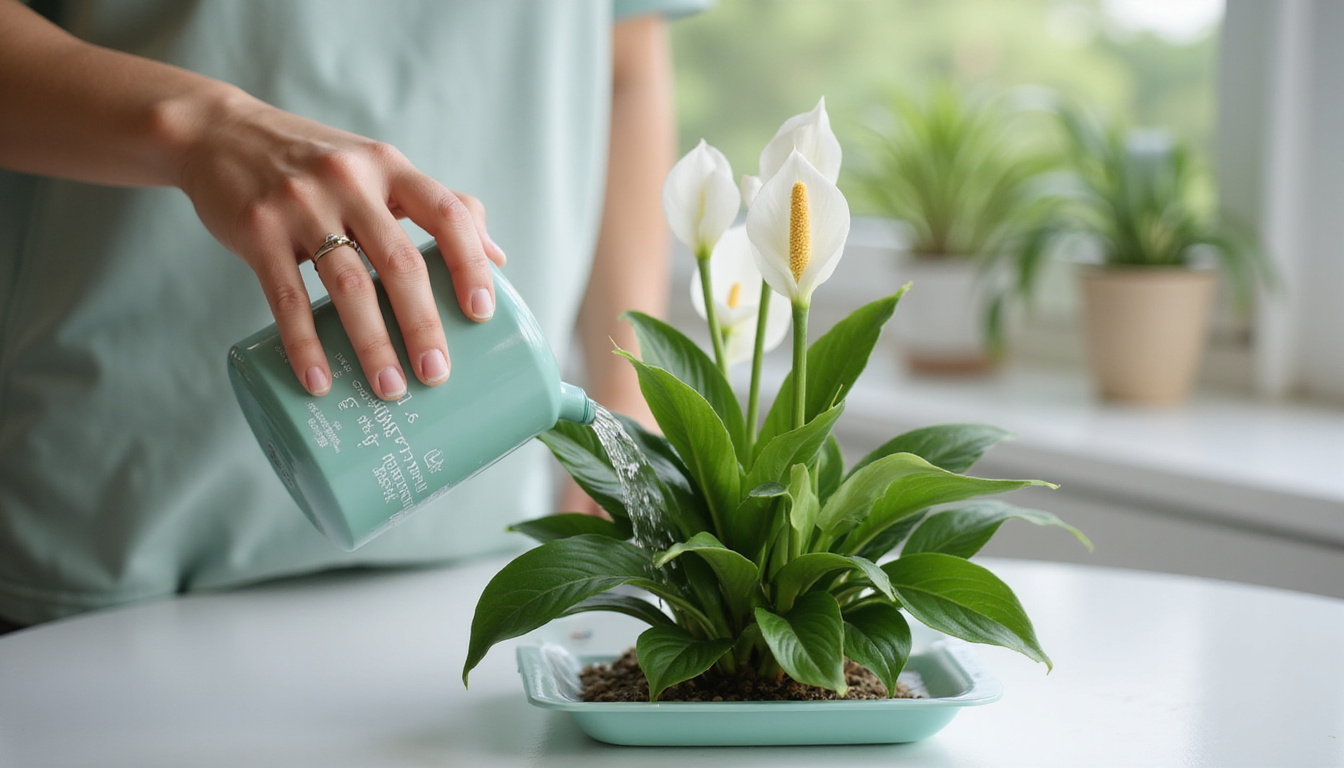
Humidity Tips
Peace lilies do fine in average home humidity but truly flourish at 50–60% or higher. To boost humidity:
- Place the pot on a tray filled with pebbles and a little water (pot above the water level).
- Group plants together to create a microclimate.
- Run a small humidifier nearby, especially in winter.
Misting is less effective and can sometimes encourage fungal issues if overdone, so treat it as a supplement, not the main strategy.
Fertilizing for Lush Growth and Blooms
Peace lilies are moderate feeders. Too little fertilizer leads to sparse growth; too much burns roots and causes leaf issues.
How to Feed Your Peace Lily
- Use a balanced, water-soluble houseplant fertilizer (e.g., 10-10-10 or 20-20-20).
- Dilute to half or quarter of the label’s recommended strength.
- Apply once a month during active growth (spring and summer).
- Reduce to every 6–8 weeks, or stop, in fall and winter when growth slows.
To avoid salt buildup:
- Once every couple of months, flush the soil thoroughly with plain water until it runs clear from the drainage holes.
If you notice crusty white deposits on the soil or pot surface, that’s a sign of excess fertilizer salts—flush and cut back.
Encouraging Blooms: Why Won’t My Peace Lily Flower?
A healthy peace lily can bloom several times a year, each spathe lasting weeks. If yours hasn’t flowered in a long time, consider:
- Light – Insufficient light is the top cause. Move it to a brighter (but indirect) spot.
- Age – Young plants may take a year or more to bloom.
- Nutrition – Chronic underfeeding can reduce flowering. Start a gentle fertilizer routine.
- Crowding – Slightly root-bound plants often bloom more than those in oversize pots.
Avoid “flower-boosting” fertilizers with very high phosphorus; they’re rarely necessary and can do more harm than good if overused.
Common Peace Lily Problems (And How to Fix Them)
Being able to read your plant’s symptoms is one of the real peace lily care secrets. Here are typical issues and solutions:
Yellow Leaves
- Old lower leaves yellowing: Normal aging. Trim them off with clean scissors.
- Many leaves yellowing at once: Likely overwatering or poor drainage. Check roots for rot; adjust watering and potting mix.
Brown Leaf Tips or Edges
Possible causes:
- Low humidity
- Fertilizer burn / salt buildup
- Hard or chemically treated tap water
- Inconsistent watering (too dry between waterings)
Respond by increasing humidity, checking your fertilizer routine, flushing the soil, and possibly changing your water source.
Drooping Leaves
- Drooping with dry soil: Underwatering. Water thoroughly; it should perk back up within hours.
- Drooping with wet soil: Overwatering or root rot. Let it dry out more between waterings, and repot if roots are mushy or smell foul.
Pests
Peace lilies are not pest magnets, but they can occasionally get:
- Spider mites
- Mealybugs
- Aphids or scale
Wipe leaves with a damp cloth regularly to keep dust and pests down. For infestations, use insecticidal soap or neem oil, following the label directions.
Safe Handling and Pet Considerations
Peace lilies are often described as “toxic to pets,” but more precisely, they contain calcium oxalate crystals, which can irritate the mouth and digestive tract of cats, dogs, and humans if chewed.
Symptoms in pets can include:
- Drooling
- Pawing at the mouth
- Vomiting or refusal to eat
They are not typically deadly, but it’s wise to:
- Keep peace lilies out of reach of pets and small children.
- Consult a vet if you suspect your pet has chewed on one.
Quick Care Checklist for a Thriving Peace Lily
Use this as a handy reference:
- Light: Bright, indirect; avoid harsh direct sun.
- Water: When top 1–2 inches of soil are dry; water thoroughly, then drain.
- Soil: Well-draining, rich houseplant mix with added perlite/bark.
- Pot: Drainage holes essential; slightly snug is better than oversized.
- Humidity: Average is okay; higher is better (50–60%+).
- Temperature: 68–80°F; protect from drafts and sudden chills.
- Fertilizer: Diluted balanced fertilizer every 4–6 weeks in growing season.
- Cleaning: Wipe leaves occasionally to remove dust and inspect for pests.
FAQ: Peace Lily Care Questions Answered
1. How do I take care of a peace lily indoors long-term?
To care for a peace lily indoors long-term, give it bright, indirect light, water when the top inch or two of soil feels dry, and maintain moderate humidity and warmth. Repot every 1–2 years in fresh, well-draining mix, and fertilize lightly during spring and summer. Consistency in these basics is what keeps a peace lily thriving for many years.
2. Why are the tips of my peace lily leaves turning brown?
Brown tips on peace lily leaves usually come from low humidity, over-fertilizing, or poor water quality (hard or heavily chlorinated water). Flush the soil to remove salt buildup, reduce fertilizer strength and frequency, increase humidity around the plant, and consider using filtered or dechlorinated water.
3. How can I get my peace lily plant to flower again?
To encourage your peace lily plant to flower again, ensure it receives enough light—medium to bright, indirect light is best. Feed it lightly with a balanced houseplant fertilizer in the growing season, keep the soil consistently moist (not soggy), and avoid placing it in a pot that’s far larger than its root ball. With proper light and steady care, new blooms should eventually appear.
Bring Peace (Lily) Into Your Space
A thriving peace lily doesn’t come from luck—it comes from understanding what this tropical plant truly needs and giving it consistency. With the right light, thoughtful watering, good soil, and a bit of seasonal feeding, your peace lily can reward you with glossy foliage and graceful white blooms year after year.
If you’re ready to see your peace lily transform from “just surviving” to genuinely flourishing, start adjusting one care habit at a time—move it to a better-lit spot, refine your watering routine, or refresh its soil. Apply these peace lily care secrets today, and in the weeks ahead you’ll see the difference every time you walk past your plant.
Throughout history, many plants and herbs have been associated with luck, protection, and prosperity. To explore their deeper spiritual, psychological, and scientific significance, visit SpiritualMindScience.com.