Orchid Care Mistakes Most People Make and How to Fix Them
Caring for an orchid can feel intimidating, especially when that first bloom fades and the plant just…sits there. Many people assume their orchid is dying and toss it out, when in reality, a few simple corrections can bring it back to healthy, regular blooming. Most orchid problems come from the same handful of mistakes—light, water, temperature, and potting. Fixing these is easier than you think and will help your orchid thrive for years instead of months.
1. Treating Orchids Like Regular Houseplants
One of the biggest mistakes people make with an orchid is assuming it should be cared for like any other leafy houseplant. In nature, most commonly sold orchids (especially Phalaenopsis, the moth orchid) are epiphytes: they grow on trees, not in soil.
What goes wrong:
- Planted in regular potting soil that stays soggy
- Watered on the same schedule as ferns, pothos, or peace lilies
- Left in decorative, non-draining pots
How to fix it:
- Use an orchid-specific bark mix or a chunky mix with bark, perlite, and sphagnum moss.
- Always ensure there is a drainage hole; never let the plant sit in water.
- Think “moist roots with lots of air,” not “wet soil.”
Reframing your orchid as a tree-dwelling plant that wants air around its roots will immediately improve your care.
2. Overwatering: The #1 Orchid Killer
By far the most common orchid care mistake is overwatering. Rotting roots can’t absorb water or nutrients, so leaves droop, yellow, and fall off—symptoms people often misread as a need for more water.
Signs you’re overwatering:
- Mushy, brown, or black roots
- Potting medium stays wet for many days
- Leaves limp, yellowing from the base
- A sour, musty smell from the pot
How to water correctly:
- Check before watering. Stick a finger or wooden skewer into the mix. If it feels cool and damp or the skewer comes out dark, wait.
- Water deeply, but infrequently. Take the pot to a sink, run lukewarm water through the potting mix for 10–20 seconds, then let it drain completely.
- Let it almost dry out. Most indoor Phalaenopsis orchids need watering about once a week in winter and every 4–6 days in warmer months—but always adjust based on your home’s humidity and potting mix.
If roots are already rotting, unpot the orchid, trim away mushy roots with sterilized scissors, repot in fresh bark mix, and reduce your watering frequency.
3. Underwatering and “Just Ice Cubes” Problems
On the other side, some orchid owners underwater—especially when relying strictly on ice cubes. While ice can help prevent overwatering for beginners, it can also lead to chronic dehydration if used alone.
Signs of underwatering:
- Wrinkled, accordion-like leaves
- Shriveled, silver-gray roots that stay dry
- Floppy leaves that feel thin, not firm
How to fix it:
- If you use ice cubes, supplement them: once every 2–3 waterings, give the plant a thorough soak at the sink.
- In dry homes, increase humidity (more on that below) and check the plant more often.
- After a period of underwatering, rehydrate gently—one deep watering, then resume a normal schedule. Don’t drown it to “catch up.”
A balanced approach—allowing the medium to nearly dry but not stay dry for long—is ideal for a healthy orchid.
4. Getting Light Completely Wrong
Light is the engine that drives flowering. Many people tuck their orchid in the darkest corner of the room, or right in a burning south-facing window. Both extremes cause problems.
Too little light:
- Healthy green leaves but no flowers for years
- Very dark green leaves with no red tinge
- Slow growth
Too much light:
- Yellowing leaves with bleached or reddish patches
- Dry, leathery leaf texture
- Brown, sunken sunburn spots
How to give orchids the right light:
- Place near a bright east- or west-facing window with filtered light.
- In a south window, use sheer curtains or set the orchid a bit back from the glass.
- Aim for bright, indirect light where you could comfortably read a book without squinting.
A quick test: hold your hand about a foot above the plant on a sunny day. If your hand’s shadow is distinct and sharp, the light may be too strong; a soft, fuzzy shadow is ideal for many common orchids.
5. Ignoring Temperature and Drafts
Orchids are sensitive to temperature swings and sudden drafts. Doors that open frequently in winter, heater vents, or AC units can stress the plant.
Common temperature mistakes:
- Leaving the orchid on a cold windowsill in winter
- Placing it right over a radiator or heat vent
- Exposing it to strong drafts from doors or AC
How to fix it:
- Keep daytime temperatures around 70–80°F (21–27°C) and nighttime 60–70°F (16–21°C) for most Phalaenopsis orchids.
- Avoid places where the temperature changes drastically within the day.
- For better blooming, a 10°F drop at night in fall can help trigger flower spikes—but avoid going colder than the mid-50s°F (about 13°C).
Stable, moderate temperatures keep stress low and growth steady.
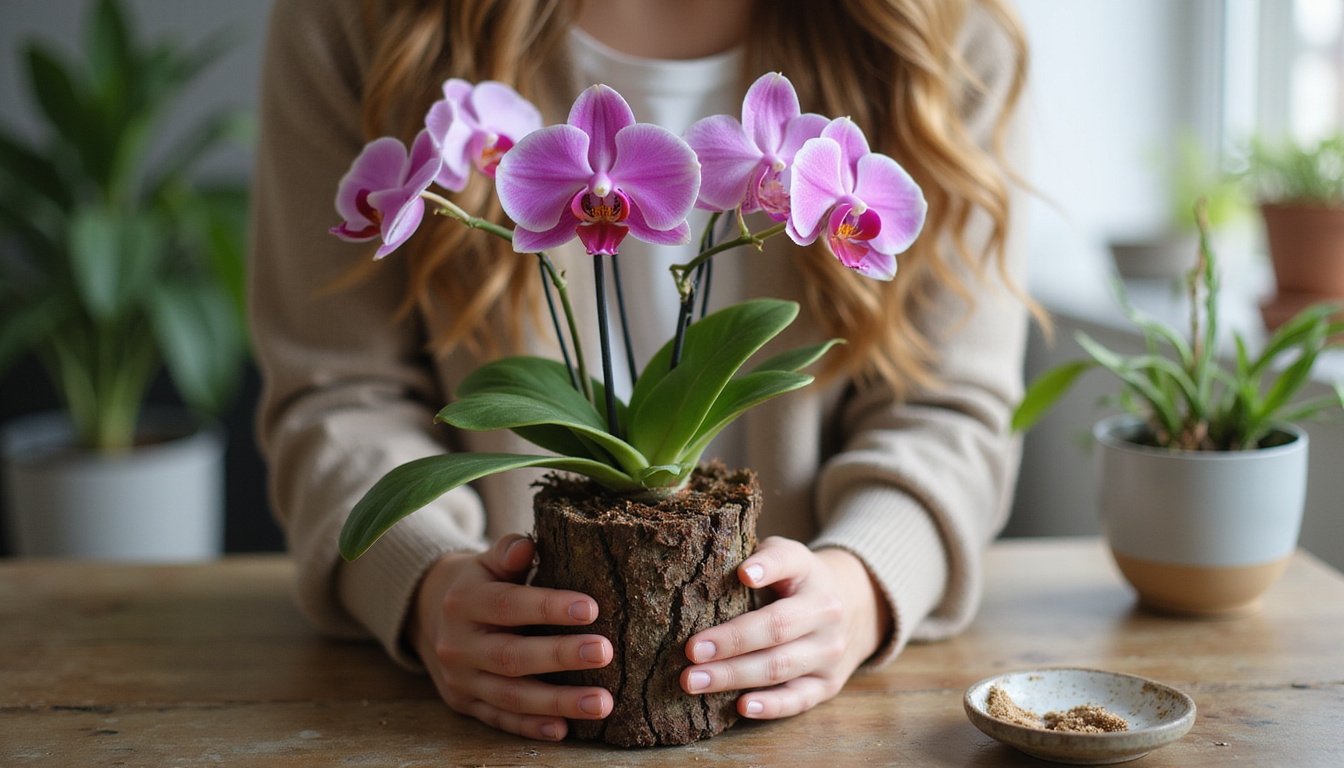
6. Neglecting Humidity and Airflow
In nature, orchids live in warm, humid air with gentle breezes. Inside, our dry, still air—especially during winter heating—can lead to dehydration and fungal problems.
Signs humidity is too low:
- Crispy root tips or flower buds that dry up and fall off
- Wrinkled leaves despite regular watering
- Blooms that fade quickly
Improve humidity and air movement:
- Group plants together to create a mini “humidity zone.”
- Place the orchid pot on a tray filled with pebbles and water, keeping the pot above the water level.
- Use a small fan on a low setting nearby (not blowing directly on the plant) to keep air gently moving.
- If your home is very dry, consider a room humidifier near your plant collection.
Balanced humidity plus gentle airflow helps prevent fungal spots and keeps roots and leaves functioning properly.
7. Repotting Too Infrequently (or Incorrectly)
Many people never repot their orchid after purchase, or they try to repot using normal soil. Over time, orchid bark breaks down, holding too much water and starving roots of air.
When your orchid needs repotting:
- Bark has turned soft, spongy, or soil-like
- Roots are circling tightly or pushing the plant out of the pot
- Water runs straight through or takes too long to drain
- It’s been 2–3 years since the last repot
How to repot an orchid:
- Choose a clear or slotted orchid pot with drainage holes.
- Use a fresh, chunky orchid mix (bark, perlite, and optional sphagnum).
- Remove the orchid from its old pot, gently loosen roots, and trim dead, mushy ones.
- Place the plant so its base sits just above the mix, then fill around roots without packing too tightly.
- Water lightly after repotting, then resume regular care.
Repotting every 1–3 years (depending on the mix and environment) keeps roots healthy and oxygenated.
8. Feeding Incorrectly or Not at All
While orchids can’t handle heavy fertilizer, they do need nutrients to grow and bloom. Many owners never fertilize, or they use full-strength fertilizer meant for other plants.
Feeding mistakes:
- Using a strong, all-purpose fertilizer at full strength
- Fertilizing dry roots (which can burn them)
- Never fertilizing at all, leading to slow growth and weak blooms
The right way to fertilize an orchid:
- Use a balanced orchid fertilizer (for example, 20-20-20) at ¼ to ½ the label strength.
- Apply “weakly, weekly” during active growth (spring through early fall).
- Water with plain water first, then apply diluted fertilizer so roots are already moist.
- Reduce or stop feeding during the plant’s rest period, usually after blooms finish and growth slows.
This gentle, consistent approach prevents salt buildup and supports strong flowering.
9. Panicking When Blooms Fall Off
Many people think their orchid is dead when the flowers drop. In reality, this is a normal part of the life cycle. The plant can rebloom from the same spike or produce new ones if it’s healthy and has enough light and energy.
What to do when your orchid finishes blooming:
- Don’t throw it away. Healthy leaves and roots mean the plant is alive.
- You have two options for the flower spike:
- Cut the spike back to just above a node (a little bump on the stem) to sometimes encourage a side branch; or
- Cut the spike off near the base to let the plant rest and rebuild energy for a stronger bloom next season.
Continue regular care, and with proper light and watering, a typical Phalaenopsis orchid will rebloom about once a year, sometimes more.
10. Not Matching Care to the Type of Orchid
“Orchid” is a huge family with thousands of species. A moth orchid (Phalaenopsis) has different needs from a Cattleya, Oncidium, or Dendrobium. Many frustrations come from using one-size-fits-all advice.
Common store-bought orchids and their general preferences:
-
Phalaenopsis (moth orchid):
- Likes low to medium light indoors
- Evenly moist, not soaked; no dry winter rest
-
Cattleya:
- Brighter light than Phalaenopsis
- Let medium dry more between waterings
-
Oncidium:
- Bright, indirect light
- Enjoys more humidity and slightly more frequent watering
If you’re unsure what kind of orchid you have, compare your plant to photos from a reputable source like the American Orchid Society (aos.org – source). Matching your care to the specific genus will dramatically improve your results.
Quick Orchid Care Checklist
Use this list as a fast reference to avoid the most common orchid mistakes:
- Bright, indirect light (no harsh midday sun on leaves).
- Water thoroughly, then let the mix almost dry before watering again.
- Never let the pot sit in water; ensure good drainage.
- Use orchid bark mix, not regular potting soil.
- Keep temperatures mostly between 60–80°F (16–27°C).
- Provide moderate humidity and gentle airflow.
- Fertilize weakly, weekly during active growth.
- Repot every 1–3 years, or when the mix breaks down.
- Don’t panic when blooms drop—keep caring for the plant.
FAQ: Common Orchid Questions
Q1: Why is my orchid not blooming again?
A non-blooming orchid usually lacks enough light or is recovering from past overwatering. Ensure it gets bright, indirect light, moderate fertilizer during growth, and a gentle drop in night temperature in fall. Healthy green leaves with no flowers for over a year almost always point to insufficient light.
Q2: How often should I water an indoor orchid?
There’s no fixed schedule, but most indoor orchids in bark mix need watering every 5–10 days. Check the medium with your finger or a skewer: water only when it’s almost dry but not bone dry. Adjust for your home’s temperature, humidity, and pot size.
Q3: What is the best potting mix for phalaenopsis orchids?
The best mix for a phalaenopsis orchid is a chunky, well-draining orchid mix—typically medium bark with some perlite and optional sphagnum moss. Avoid regular potting soil, which retains too much water and suffocates the roots.
A healthy orchid isn’t about secret tricks—it’s about getting a few basics consistently right: air to the roots, the right amount of water, bright but gentle light, and stable conditions. Once you correct these common care mistakes, your plant can reward you with months-long blooms year after year.
If you’ve been frustrated by orchids in the past, start fresh with the guidelines above and apply them to the orchid you own right now. Observe how it responds over the next few weeks, and adjust light and watering as needed. With a little attention and the right approach, you can turn that “fussy” orchid into one of the most reliable and rewarding plants in your home.
Throughout history, many plants and herbs have been associated with luck, protection, and prosperity. To explore their deeper spiritual, psychological, and scientific significance, visit SpiritualMindScience.com.