From campfire tales to bedtime stories, from sacred myths to everyday gossip, oral tradition is one of humanity’s oldest and most powerful tools. Long before writing, people used spoken stories, songs, and performances to remember their past, explain the world, and pass on values. Even today—despite books, streaming, and social media—oral storytelling continues to shape culture and memory in ways we often overlook.
This article explores what oral tradition is, how it works, why it matters, and how it continues to evolve in the digital age.
What Is Oral Tradition?
At its core, oral tradition is the practice of transmitting knowledge, beliefs, and stories by word of mouth across generations. It includes:
- Myths and legends
- Folktales and fairy tales
- Epic poems and heroic narratives
- Songs, chants, and ballads
- Proverbs, riddles, and sayings
- Speeches, sermons, and ritual recitations
- Personal and family stories
Unlike written texts, oral traditions are living, flexible, and deeply tied to the people who perform them. They exist in memory and performance, not on paper. The “text” is recreated each time a story is told.
Anthropologists and historians rely heavily on oral traditions to understand societies without extensive written records, from Indigenous communities to early civilizations (source: UNESCO – Intangible Cultural Heritage).
How Oral Tradition Shapes Culture
Culture is not just artifacts and institutions; it’s the shared meanings, values, and narratives that hold a community together. Oral tradition is one of the main ways those meanings are created and maintained.
1. Defining Identity and Belonging
Community identity is built on shared stories. Through oral tradition, people learn:
- Where they come from (origin myths, migration stories, ancestor tales)
- Who they are (clan histories, national epics, religious narratives)
- What they value (morality tales, heroic examples, cautionary stories)
For example:
- Homeric epics in ancient Greece shaped ideas about honor, heroism, and fate.
- Indigenous creation stories connect people to specific landscapes, animals, and spiritual beings.
- Family stories—how grandparents met, how a family survived hardship—shape personal identity and belonging.
Through repeated telling, these stories become part of how communities see themselves and how individuals understand their place in the group.
2. Transmitting Values and Morals
Oral tradition is a moral classroom wrapped in narrative. Stories don’t just entertain; they teach:
- What counts as courage or cowardice
- What behaviors are rewarded or punished
- How to treat elders, strangers, or enemies
- What happens if you break taboos or sacred laws
Fables like Aesop’s, African Anansi stories, or tales of tricksters in Native American traditions use clever, memorable plots to make abstract values concrete. Children absorb ethics not through lectures but through repeated exposure to characters and consequences.
3. Preserving Language and Style
The survival of many languages depends on oral tradition:
- Storytelling keeps endangered languages in active use.
- Songs and chants preserve archaic words, grammar, and metaphors.
- Proverbs condense worldviews into portable, repeatable phrases.
Oral forms shape how people speak, argue, laugh, and persuade. They train memory and performance skills—rhythm, rhetorical flourishes, and improvisation—that influence everything from everyday conversation to political speeches.
Oral Tradition and Collective Memory
Memory is not just an individual capacity; it’s a shared, social process. Oral tradition is a key mechanism for building collective memory—what groups remember and how they remember it.
The Power of Repetition and Variation
In oral tradition, stories are repeated often, but never exactly the same. This balance of continuity and change is crucial:
- Repetition anchors core events and meanings.
- Variation allows each generation to adapt stories to new realities.
A war story told by veterans might emphasize bravery and sacrifice; a later generation might retell it to question the costs of conflict. The outline remains, but the emotional tone and interpretation shift.
Mnemonic Devices in Oral Cultures
To help memory, oral traditions use powerful mnemonic tools:
- Rhyme and rhythm – epic poems, chants, and songs
- Formulaic phrases – repeated introductions, epithets (“swift-footed Achilles”)
- Structured plots – clear beginnings, climaxes, and resolutions
- Repetition in threes – three trials, three siblings, three wishes
These devices make stories easier to remember and harder to distort beyond recognition. They act as guardrails that preserve the skeleton of the story, even as details change.
Memory, Trauma, and Healing
Oral traditions also help communities process trauma:
- Narratives of war, colonization, or disaster allow people to give shape to suffering.
- Ceremonial retellings can serve as acts of mourning, resistance, or reconciliation.
- Survivors pass on not only the events but the emotional and moral lessons drawn from them.
In this way, oral tradition is not just about the past; it’s a tool for coping with the present and imagining a different future.
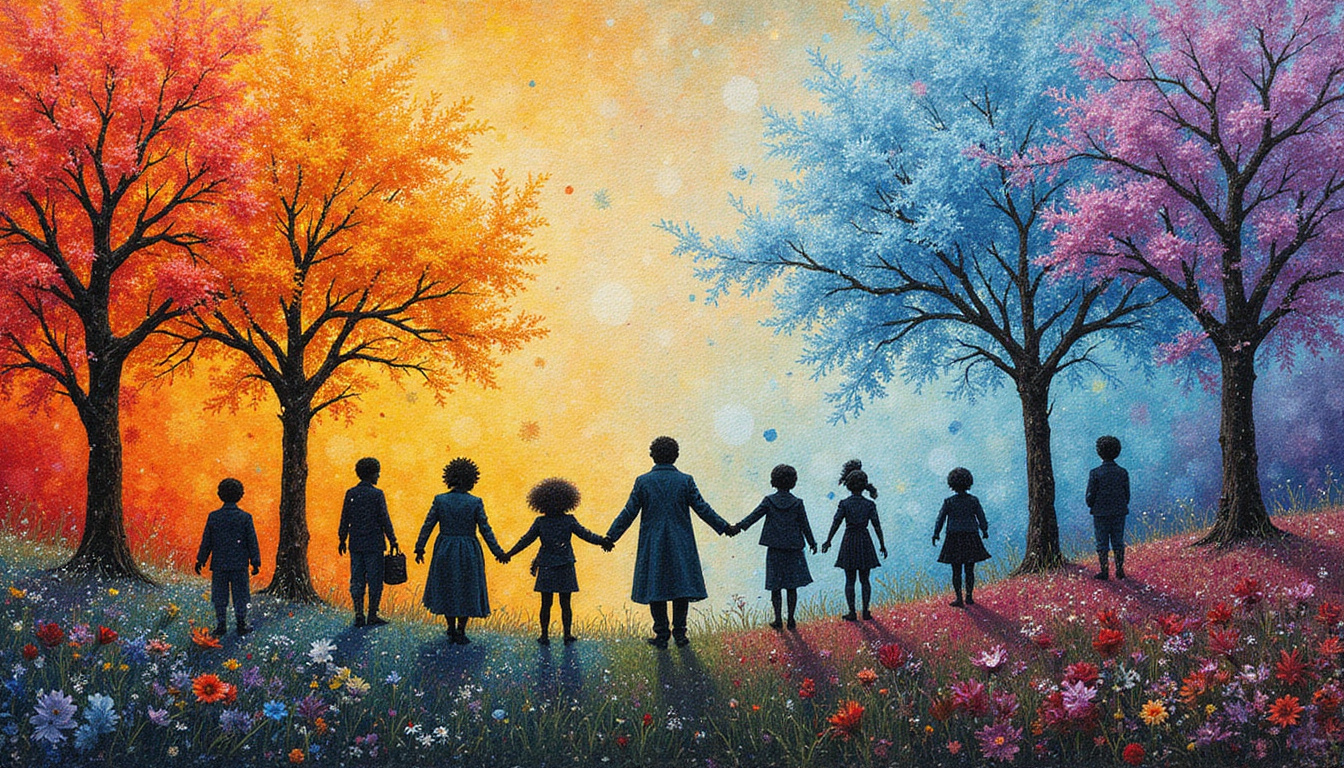
Types of Oral Tradition Across Cultures
Different societies organize their oral traditions in diverse but recognizable forms. Some of the most influential include:
- Myths – Sacred stories about gods, creation, and the structure of the universe.
- Legends – Semi-historical tales about heroes, saints, or founders, often tied to real places and events.
- Folktales and Fairy Tales – Entertaining stories with magical or everyday elements, often teaching social or moral lessons.
- Epics – Long narrative poems about heroic journeys, battles, and nation-defining events (e.g., the Mahabharata, the Epic of Sundiata).
- Proverbs and Sayings – Short, memorable expressions of practical wisdom and cultural values.
- Ritual Speech and Prayer – Recited formulas in ceremonies, including blessings, curses, and invocations.
- Work Songs and Lullabies – Songs that coordinate labor, pass the time, or comfort children.
- Jokes, Riddles, and Anecdotes – Informal forms that reveal shared assumptions, tensions, and values.
Each of these forms has its own conventions, but all contribute to how a community understands itself and the world.
Oral Tradition in the Age of Writing and Screens
It’s tempting to think that writing, print, and digital media displaced oral tradition. In reality, they transformed and expanded it.
Oral and Written Traditions Intertwine
Even in highly literate societies, oral and written forms constantly interact:
- Written stories are adapted into oral performances (story hours, theatre, slam poetry).
- Oral stories get recorded and transcribed, then re-enter oral circulation as people retell them.
- Political speeches, sermons, and stand-up comedy use oral techniques while being crafted in writing.
Many religious texts—like parts of the Bible, the Qur’an, or the Buddhist sutras—originated as oral teachings that were later written down, then recited again. The boundary between oral and written is more fluid than it appears.
Digital Media as New Oral Spaces
Podcasts, livestreams, voice messages, and short video platforms are, in many ways, a revival of oral, performative storytelling:
- Podcasts resemble “fireside” or radio storytelling, building parasocial relationships through voice.
- Social media challenges and memes echo folk traditions—shared, remixed, adapted to local contexts.
- Online fan communities exchange headcanons and stories much like traditional storytellers expanding shared universes.
The technology is new, but the underlying human impulse—to share stories that define who we are—remains the same.
Why Oral Tradition Still Matters
In a world saturated with information, oral tradition remains uniquely important.
1. It Humanizes Knowledge
Spoken stories come with a face, a voice, and a relationship. They link knowledge to:
- Lived experience
- Emotional nuance
- Responsibility and trust between teller and listener
This human context can’t be fully captured in text alone. It shapes how we interpret information and how deeply we internalize it.
2. It Protects Vulnerable Knowledge
Many communities lack the resources, political power, or desire to put their traditions into official archives. Oral tradition allows:
- Control over who hears what, and under what circumstances
- Adaptation without bureaucratic interference
- Survival even when institutions fall or records are destroyed
For Indigenous, marginalized, or displaced peoples, oral tradition is often the last defense of identity.
3. It Builds Community in Real Time
Gathering to hear a story—around a table, at a ceremony, in a digital livestream—creates shared experience. People laugh, gasp, or fall silent together. This:
- Strengthens bonds
- Fosters empathy
- Creates a sense of “we were there; we heard this together”
In times of division and isolation, such shared moments are powerful social glue.
How to Engage with Oral Tradition Today
You don’t have to be a professional storyteller or scholar to honor and participate in oral tradition. You can begin with simple, intentional practices:
- Listen to elder stories in your family or community; ask open-ended questions and give them time.
- Record oral histories (with consent) from relatives or community members about migration, work, or local events.
- Attend storytelling events, poetry slams, or cultural ceremonies.
- Learn a story by heart and tell it to someone else; notice how it changes in your voice.
- Preserve language by using ancestral or heritage languages in everyday stories and songs.
- Reflect on your own life and shape a narrative you want to pass on.
By doing so, you become part of a chain of transmission that stretches far into the past and forward into the future.
FAQ: Understanding Oral Tradition and Its Role Today
Q1: What is the main purpose of oral tradition in culture?
Oral tradition preserves and transmits a community’s identity, values, and history without relying on writing. Through stories, songs, and proverbs, people learn who they are, where they come from, and how they should live together.
Q2: How does oral traditional storytelling differ from written stories?
Oral traditional stories are performed live, with room for improvisation and audience interaction. Each performance can vary, even while core elements stay stable. Written stories are fixed on the page, but oral narratives are dynamic, adapting to the teller, the listeners, and the context.
Q3: Is oral tradition still important in modern, digital societies?
Yes. Oral tradition remains crucial for cultural continuity, especially in communities with limited access to formal publishing or archiving. Digital tools like podcasts, video platforms, and audio messages have actually expanded the reach of oral storytelling, creating new spaces for spoken narratives and shared memory.
Oral tradition is not a relic of a pre-literate past; it is a living, evolving force that shapes how cultures remember, imagine, and relate. If you want to strengthen your own sense of identity, build deeper connections, or help preserve endangered knowledge, start by listening—and then telling. Interview an elder, attend a storytelling event, or record your own stories today. Every voice that joins this ongoing conversation helps ensure that the wisdom, humor, and resilience embedded in oral tradition continue to guide future generations.
Cultural superstitions have shaped traditions and beliefs for generations. Explore the psychology, cultural history, and science behind these fascinating practices at SpiritualMindScience.com.