Mirror Superstitions That Reveal Hidden Fears and Strange Traditions
Mirrors have always been more than just practical tools for reflection. Across cultures and centuries, mirror superstitions have shaped how people decorate homes, grieve their dead, protect themselves from evil, and even handle everyday accidents like dropping or breaking a mirror. These strange beliefs are like little windows into our deepest anxieties about the soul, identity, death, and the unseen world.
In this article, you’ll discover where these superstitions come from, what they say about human psychology, and how different cultures have given mirrors a powerful, almost magical role.
Why Mirrors Became So Eerie in the First Place
Before we dive into specific mirror superstitions, it helps to understand why mirrors feel uncanny at all.
Historically, polished metal, obsidian, and later glass mirrors were rare, expensive, and technically impressive. They seemed almost supernatural for three key reasons:
- Perfect imitation of reality – A mirror shows your face, but reversed. That “other you” feels both familiar and wrong.
- Association with the soul – Many cultures believed a person’s reflection was tied to their life force or soul.
- Connection to divination – From scrying bowls to crystal balls, reflective surfaces were used to “see” beyond the physical world.
These ingredients made mirrors a perfect object for superstition: ordinary enough to be everywhere, but strange enough to feel charged with meaning.
The Classic: Breaking a Mirror and Seven Years’ Bad Luck
When people talk about mirror superstitions, the first thing that usually comes to mind is the belief that breaking a mirror brings seven years of bad luck.
Where Did “Seven Years” Come From?
Several traditions may have blended here:
- Roman belief in seven-year cycles: Ancient Romans thought life renewed itself every seven years. Damage to your reflected “self” meant bad luck until the cycle reset.
- Mirrors as soul-containers: If reflections were tied to the soul, shattering a mirror symbolized wounding that inner self.
- Rarity and cost: Early mirrors were expensive. Breaking one had real-world consequences, so scaring people into careful handling made sense.
“Cures” for Bad Luck from a Broken Mirror
Over time, people developed rituals to “reverse” the bad luck. Common folk remedies include:
- Grinding the broken pieces into dust and burying them
- Throwing the shards into running water
- Turning around three times while holding a piece of the mirror
- Touching a shard to a tombstone (to “transfer” the bad luck away)
While these vary by region, they share a purpose: turn a random accident into something that can be controlled through ritual. This reveals a core function of superstitions—managing anxiety and uncertainty.
Covering Mirrors After a Death: Mourning and the Soul
One of the most widespread mirror superstitions is the practice of covering mirrors in a house where someone has died.
Why Cover Mirrors During Mourning?
The specific reasons differ, but common explanations include:
- Protecting the soul of the deceased – Some traditions held that the soul, wandering after death, could become trapped in a mirror.
- Guarding the living from death’s reflection – Looking in a mirror after a death was thought to invite your own demise or shorten your lifespan.
- Discouraging vanity in grief – A more practical, religiously influenced take: people should focus on mourning, not on appearance.
This custom appears in Jewish shiva practices, parts of Victorian England, and folk beliefs in Eastern Europe, Latin America, and Asia. While the theological justifications change, the emotional theme is constant: death disrupts reality, and mirrors are too closely linked to identity and the soul to be left uncovered.
Mirrors as Portals: Ghosts, Spirits, and Other Worlds
Another major cluster of mirror superstitions casts mirrors as gateways to other realms.
Mirrors At Night: Doors for Spirits
In many folk beliefs, you shouldn’t:
- Sleep facing a mirror
- Keep a mirror opposite your bed
- Look into a mirror in a dark room
Reasons people give include:
- Your soul might wander into the mirror while you sleep
- Spirits can step through and disturb your dreams
- You might see an omen of your own death if you catch your reflection at night
Even today, plenty of people feel uneasy about seeing their reflection in a dark, quiet room. Psychology researchers have noted that staring into a mirror in low light can cause the brain to “fill in the gaps,” making your reflection appear distorted or unfamiliar, which may help explain why these beliefs persist (source: Scientific American).
Calling Spirits Through Mirrors
Various folk rituals use mirrors as tools for contacting the supernatural:
- Bloody Mary: Saying a name three times into a mirror in a dark bathroom to summon a ghostly figure.
- Candle and mirror rituals: Used for divining the future, contacting ancestors, or seeing one’s future spouse.
These practices reflect both fear and curiosity: mirrors become a safe (or not-so-safe) screen onto which we project our hopes and anxieties about the unseen.
Fortune-Telling and Love: Romantic Mirror Traditions
Not all mirror superstitions are sinister; some are strangely romantic.
Seeing Your Future Spouse
In European and American folk traditions, young women were told they could see their future husband by performing mirror rituals, especially on liminal nights like Halloween or New Year’s Eve:
- Eating an apple in front of a mirror at midnight and peering over one’s shoulder to see a future lover.
- Walking backward up stairs while looking into a hand mirror, hoping a future spouse would appear behind them.
- Gazing into a mirror in candlelight while reciting a rhyme.
These practices used the mirror as a gateway not just to the spirit world, but to the unknown future of love and marriage—again, a way of coping with uncertainty.
Cultural Variations: Mirror Beliefs Around the World
While certain mirror superstitions appear almost everywhere, each culture adds its own twist.
Western Traditions
Common Western themes include:
- Bad luck from breaking mirrors
- Mirrors and vampires – Vampires supposedly have no reflection because they lack a soul. This idea also related to older beliefs that silver (once used in mirrors) repelled evil.
- Mirrors in haunted houses – Ghosts appearing in mirrors, or mirrors capturing residual energy from traumatic events.
Eastern and Asian Beliefs
In Asia, mirrors often serve protective and symbolic roles:
-
China and Feng Shui
- Mirrors are used to redirect negative energy or “sha qi.”
- Bagua mirrors, with octagonal frames, are hung outside to deflect misfortune.
- However, placing a mirror facing the bed is discouraged, believed to invite third parties into a marriage or disturb the soul during sleep.
-
Japan
- Mirrors are sacred in Shinto; the Yata no Kagami, a divine mirror, is one of the Imperial Regalia.
- Yet Japanese ghost stories also feature haunted mirrors and spirits trapped in reflections.
African and Afro-Diasporic Traditions
In various African and Afro-Caribbean belief systems:
- Mirrors and reflective surfaces can repel or confuse evil spirits, who may be frightened by their own images.
- Practitioners sometimes use mirrors in ritual work for protection, divination, or spirit communication.
These examples highlight a recurring pattern: mirrors can either attract, reveal, or repel spiritual forces, depending on how they’re used.
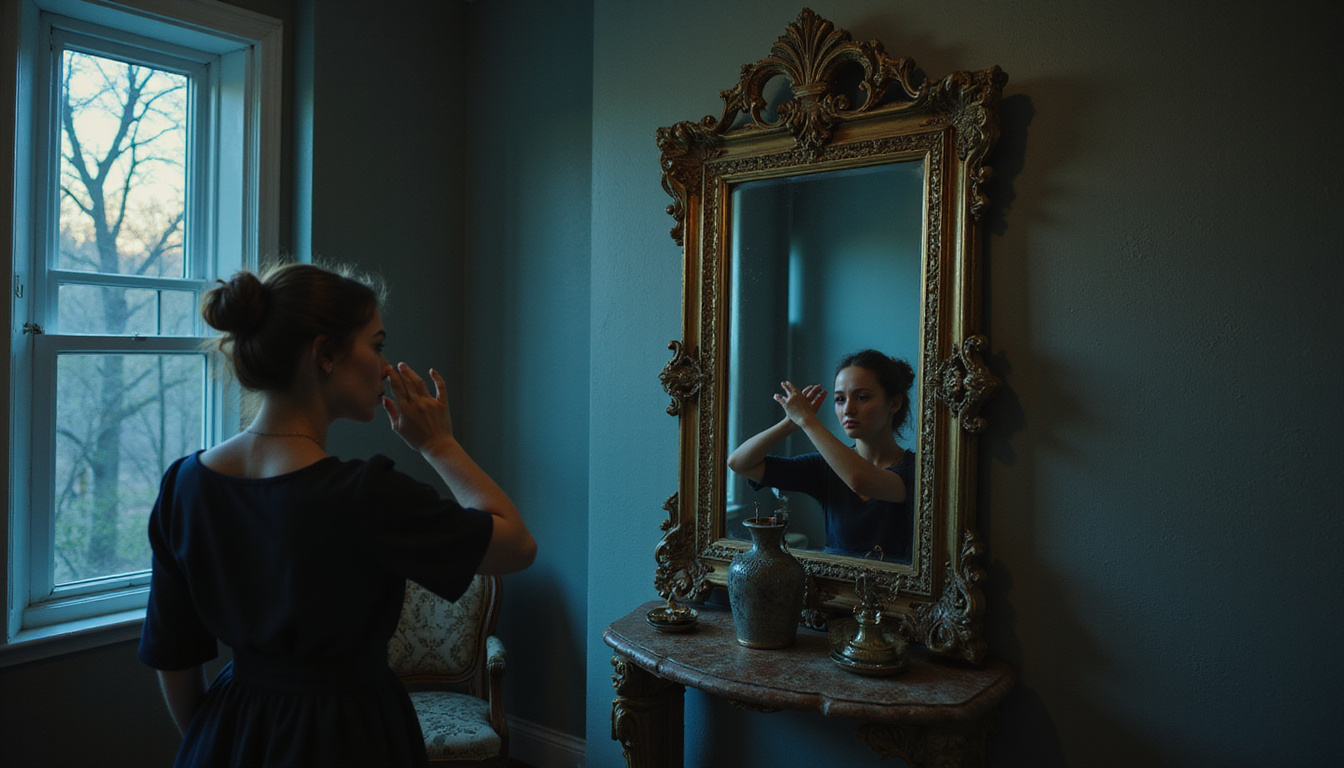
Everyday Mirror Taboos: Ordinary Acts, Extraordinary Beliefs
Beyond big events like death or divination, many smaller mirror superstitions governed daily life.
Here are some of the most common themes:
-
Don’t let a baby see itself too young
In some traditions, showing a baby its reflection too early would cause developmental delays or invite misfortune. -
Avoid talking to your reflection for too long
Prolonged “conversation” with your own reflection could invite possession, madness, or bad luck. -
Don’t have two mirrors facing each other
An infinite tunnel of reflections was seen as an open doorway for entities to pass through. -
Never look into a cracked mirror
A damaged reflection was thought to weaken your aura or signal upcoming illness. -
Don’t gift a mirror to a newlywed couple in some cultures
It might symbolize vanity, fragility, or instability in the marriage.
Though these rules differ in detail, they all treat mirrors as powerful objects that interact with the self in ways that must be handled carefully.
What Mirror Superstitions Reveal About Human Psychology
When you zoom out, mirror superstitions aren’t just about glass and reflections; they’re about how humans deal with fear and the unknown.
They reflect:
-
Fear of the double or “other self”
Seeing yourself from outside is inherently unsettling. Tales of doppelgängers, evil twins, and reflections with a mind of their own tap into this discomfort. -
Anxiety about the soul and mortality
If a reflection is connected to the soul, anything that distorts or destroys it becomes symbolic of harm, illness, or death. -
Need for control
Rituals around mirrors—covering them, using them in spells, protecting them—give people a sense of power over events that feel random or terrifying. -
Cultural attitudes about vanity and the body
Some mirror taboos warn against excessive self-regard, especially during sacred or solemn times (like mourning).
In other words, mirror superstitions are a kind of cultural Rorschach test: how we treat mirrors shows what we’re most afraid of and what we most wish to control.
A Quick List of Common Mirror Superstitions
To summarize, here are some widely known beliefs involving mirrors:
- Breaking a mirror = seven years of bad luck.
- Cover mirrors in a house where someone has died.
- Don’t sleep facing a mirror.
- Avoid having two mirrors directly facing each other.
- Never look into a mirror in a dark room for too long.
- Babies shouldn’t see themselves too early.
- Use mirrors to deflect bad energy or spirits.
- Perform love and fortune-telling rituals in front of mirrors on special nights.
While you may not believe in them, noticing which of these still make you a little uneasy can be revealing.
FAQ: Mirror Superstitions, Beliefs, and Folklore
Q1: Why are there so many mirror superstitions about death and the soul?
Many cultures historically believed that a reflection represented the soul or life force. Because of that, mirrors became symbolically linked to transitions between life and death. Covering mirrors during mourning or avoiding looking into them at night reflects fear that the soul could be trapped, stolen, or harmed through the reflective surface.
Q2: Are there any positive mirror beliefs or mirror good luck superstitions?
Yes. In some traditions, mirrors bring protection and good fortune. Feng shui uses mirrors strategically to expand space and deflect negative energy. Certain folk customs use small mirrors worn on clothing or jewelry to ward off the “evil eye,” reflecting harmful intentions back to their source.
Q3: What do mirror myths and legends say about how we see ourselves?
Mirror myths often revolve around distorted self-image, vanity, or hidden truths—think of fairy tales where magic mirrors reveal someone’s true nature. Modern psychology echoes this: our relationship with our reflection can affect self-esteem and identity. Mirror superstitions turn that fragile relationship into stories of curses, omens, and revelations.
Reflect on Your Own Beliefs About Mirrors
Even if you don’t consciously believe in mirror superstitions, you might still hesitate to look into a mirror in a dark room, or feel uneasy sleeping with a mirror facing your bed. These reactions are powerful reminders that our minds easily blur the line between symbol and reality.
Next time you walk past a mirror, pause and think about how many generations before you have stared into something similar, wondering:
- Is this really me?
- Is there something else looking back?
- What does this reflection say about my future, my soul, or my fate?
If you’re intrigued by how everyday objects carry centuries of hidden meaning, consider exploring more folklore, superstitions, and cultural traditions. Dive deeper into the stories behind the things you see every day—and start seeing your own world with fresh eyes.
And if you enjoyed uncovering the eerie history and psychology behind mirror superstitions, keep reading and researching. The more you learn about these beliefs, the more you’ll notice them quietly shaping art, film, literature, and even your own subtle habits around mirrors.
Cultural superstitions have shaped traditions and beliefs for generations. Explore the psychology, cultural history, and science behind these fascinating practices at SpiritualMindScience.com.