Liturgical vessels are far more than beautiful objects; they are functional tools at the heart of worship and carriers of deep spiritual and artistic heritage. Whether you are a clergy member, sacristan, collector, restorer, or simply a devotee of sacred art, understanding how to identify, care for, and, when necessary, restore liturgical vessels is essential to preserving their dignity and value.
This guide walks you through the fundamentals: types of vessels, what affects their value, how to authenticate them, how to clean and store them safely, and when to call in a professional conservator.
Understanding Liturgical Vessels: Types and Uses
Before you can care for or authenticate liturgical vessels, it helps to know what you’re looking at and how each piece is used.
Core Eucharistic Vessels
-
Chalice
The cup used to hold the wine consecrated during the Eucharist. Traditionally crafted from precious metals, often gilded inside to protect the wine from corrosion and to reflect the dignity of the sacrament. -
Paten
A small plate, usually matching the chalice, used to hold the bread/host. In many traditions the paten and chalice form a set and may share stylistic motifs, inscriptions, and maker’s marks. -
Ciborium
A lidded vessel, similar in form to a chalice but with a larger bowl and a fitted cover, used to hold the consecrated hosts for distribution and reservation.
Auxiliary Liturgical Vessels
-
Cruets
Small containers for wine and water, often in glass or silver, used at the preparation of the gifts. -
Monstrance (or Ostensorium)
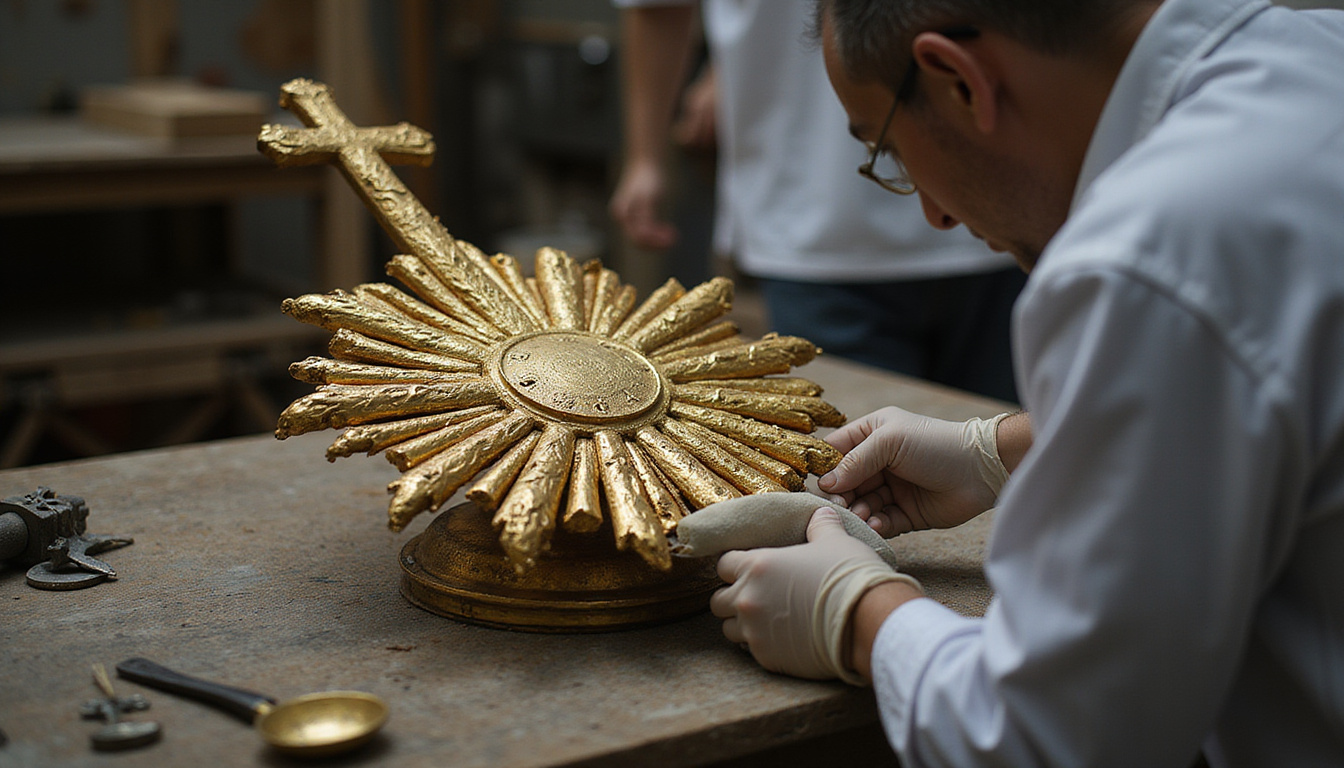
A vessel designed to display the consecrated host, usually with a glass luna at the center and radiating metalwork. Monstrances are typically the most elaborate of liturgical vessels. -
Thurible and Boat
The censer (thurible) holds burning charcoal and incense; the boat holds incense before it is spooned into the thurible. -
Holy Water Fonts and Sprinklers (Aspergilla)
Fonts hold holy water at church entrances; sprinklers are used to distribute it during certain rites.
Understanding function helps you evaluate wear, authenticity (a chalice should be food/contact safe on the interior), and appropriate restoration decisions.
Factors That Influence Value and Significance
Not every old chalice or ciborium is a museum piece, but many have historical, artistic, or devotional value. When assessing liturgical vessels, consider:
-
Age and Period
- Medieval and Renaissance pieces are rare and often museum-worthy.
- Baroque and Rococo vessels tend to be ornate and highly collectible.
- 19th–early 20th century “revival” styles can be significant, especially from known workshops.
Age alone doesn’t guarantee value, but it shapes expectations about style, materials, and construction.
-
Materials and Craftsmanship
- Precious metals (solid silver, gilt silver, gold, vermeil) and fine enamels, gemstones, and ivory (where legal) increase both value and liturgical dignity.
- Hand-chased decoration, fine engraving, filigree, and detailed casting point to skilled craftsmanship.
- Plated base metals can still be valuable when linked to a significant maker or parish history.
-
Maker’s Marks and Provenance
- Hallmarks, maker’s marks, and guild stamps help identify the workshop, metal quality, and place/date of manufacture.
- Documentation—donation plaques, parish archives, inventory books, and inscribed dedications—adds provenance and historical interest.
-
Condition and Past Restorations
- Original surfaces, even with minor wear, are generally more desirable than aggressively polished or heavily altered pieces.
- Poor-quality repairs (solder blobs, mismatched parts, over-polishing) can reduce value and may require professional correction.
-
Liturgical and Local Significance
- Vessels linked to notable clergy, historical events, or long-standing community use can have immense non-monetary value to a parish or institution.
Authenticating Liturgical Vessels: What to Look For
Authenticating liturgical vessels—especially older or high-value pieces—requires careful observation. When in doubt, consult a specialist, but start with these steps.
1. Examine Hallmarks, Maker’s Marks, and Inscriptions
-
Hallmarks
Look for metal purity marks (sterling, 800, 900, etc.), city marks, date letters, or assay stamps, especially on the underside of the base, rim, or lid. Different countries use distinct hallmark systems; national assay offices or museum resources can help decode them (source: many national hallmarking guides and museum catalogs). -
Maker’s Marks
Initials, logos, or full names of goldsmiths, liturgical workshops, or firms. Cross-reference with directories of ecclesiastical suppliers or silversmiths. -
Inscriptions
Dedications, dates, donor names, or parish names can pin the vessel to a place and period. Watch for anachronisms (a style purporting to be 17th century but with a 20th-century date).
2. Assess Style, Construction, and Wear
-
Stylistic Coherence
Does the decoration align with the claimed period? Neo-Gothic differs clearly from Baroque or Modernist designs. -
Construction Methods
Older chalices and ciboria may be hand-raised or cast with hand-assembled components, visible tool marks, and hand-cut threads for screws. Modern fakes sometimes use uniform machine-cut parts or low-quality castings. -
Wear Patterns
Genuine age shows gradual softening of sharp edges, fading of gilding in frequent contact areas, and minor surface marks. Artificial aging often looks patchy or inconsistent.
3. Beware of Common Red Flags
- Hallmarks that are blurred, inconsistent, or obviously stamped over previous marks.
- Decorative styles that mix centuries without good reason.
- Very thick layers of modern gold plating over poorly prepared base metal.
- Suspiciously “perfect” condition on an object claimed to be very old.
When authenticity matters (museums, serious collectors, high-value donations), seek written opinions from qualified appraisers, auction house specialists, or museum professionals.
Routine Care: Cleaning and Handling Liturgical Vessels
Proper care preserves both the beauty and dignity of liturgical vessels. Over-cleaning can be as damaging as neglect, so gentleness is key.
General Handling Guidelines
- Handle with clean, dry hands or cotton gloves when possible.
- Support vessels from the base, not the stem or handles, especially on heavy chalices and monstrances.
- Keep liquids away from joints and decorative crevices where residues can accumulate.
Cleaning Metal Liturgical Vessels
For silver, silver-gilt, and gold-plated surfaces:
-
Dust First
Use a soft, dry, lint-free cloth or a very soft natural-bristle brush to remove loose dust. -
Mild Cleaning Solution
- Mix a few drops of pH-neutral soap (like a gentle dish soap) in lukewarm distilled water.
- Lightly dampen a soft cloth; do not soak the piece.
- Wipe gently, then rinse with another cloth lightly dampened in pure distilled water.
-
Dry Thoroughly
Pat completely dry with a soft cloth to prevent water spots or corrosion, especially at joints and engraved areas. -
Polishing (Only When Necessary)
- Use a high-quality, non-abrasive metal polish designed for silver or gold, and test first in a discreet area.
- Apply sparingly and gently following the manufacturer’s instructions.
- Avoid polishing gilded areas unless absolutely necessary—gilding is thin and can wear through.
- Never use abrasive pads, steel wool, or harsh chemicals.
Caring for Gilded Interiors
The inner bowl of the chalice and ciborium is often gilded:
- Avoid abrasive cleaners, baking soda, or acidic solutions.
- Rinse promptly after contact with wine or hosts, using lukewarm water only.
- Dry immediately and thoroughly to prevent spotting and corrosion under the gilding.
Cleaning Glass, Crystal, and Enamel
- Glass and Crystal: Use a mild soap solution and soft cloth; avoid sudden temperature changes that can crack the glass or crystal receptacles of monstrances or cruets.
- Enamel: Clean only with a slightly damp, soft cloth; avoid soaking and never use abrasive cleaners.
Proper Storage and Display
How you store liturgical vessels directly affects how long they last.
Storage Best Practices
-
Environment
- Keep in a stable, moderate environment: avoid attics, basements, and places with high humidity or temperature swings.
- For silver, low humidity (around 40–50%) slows tarnish and corrosion.
-
Protection from Tarnish and Dust
- Store rarely used silver vessels in tarnish-resistant cloth or bags.
- Avoid direct contact with wood that off-gasses acids (e.g., fresh oak, pine) unless pieces rest on an inert barrier.
-
Physical Support
- Do not stack heavy objects on top of patens or thin pieces.
- Ensure shelved items cannot easily tip or roll.
Displaying Liturgical Vessels
- Avoid direct sunlight, which can fade enamels, fabrics, and gilding.
- Use secure display cases for especially valuable or fragile vessels.
- In sacristies with frequent movement, designate stable, padded shelves for daily-use items.
Restoration vs Conservation: Making the Right Choice
At some point, liturgical vessels may need more than routine cleaning. Deciding between restoration and conservation is critical to preserving heritage.
When Restoration Is Appropriate
- Severe dents, broken stems, missing decorative elements, or loose joints on pieces still in active liturgical use.
- Structural issues that risk further damage or make the vessel unsafe to use (e.g., unstable base, leaking chalice).
In restoration, the goal is to return the vessel to functional wholeness, sometimes involving:
- Structural repairs with soldering or micro-welding.
- Replacement or re-creation of missing parts.
- Selective re-gilding, especially of the interior of chalices and ciboria.
When to Prioritize Conservation
Conservation aims to stabilize and preserve existing material with minimal intervention, especially for historically important vessels:
- Significant age, rarity, or documented provenance.
- Intricate original surfaces where aggressive cleaning would remove patina or detail.
- Museum or archival environments where use is limited or ceremonial.
Conservators will focus on:
- Cleaning with the least intrusive methods.
- Stabilizing corrosion.
- Documenting all treatments for future reference.
Choosing a Qualified Professional
- Look for conservators or restorers with specialization in metalwork or religious objects.
- Ask to see examples of previous projects or references from churches or museums.
- Insist on reversible treatments wherever possible and written documentation of all work.
- For very significant objects, consult a professional conservator associated with a museum or recognized conservation body (e.g., the American Institute for Conservation provides guidelines and listings of qualified professionals; source).
Ethical Considerations for Sacred Objects
Liturgical vessels are not simply collectibles; they are sacred objects for many faith communities. Keep in mind:
-
Respect Canonical and Denominational Norms
Some churches have rules about how vessels may be used, sold, or disposed of. Before deaccessioning or purchasing former church property, verify that it has been lawfully released from sacred use. -
Avoid Questionable Provenance
Be cautious with items that may have been removed from churches during conflict, political upheaval, or under unclear circumstances. Ethical acquisition helps preserve trust and heritage. -
Balance Aesthetic and Spiritual Needs
A heavily worn chalice may be spiritually priceless to a parish; decisions about replacement, sale, or restoration should include pastoral as well as practical considerations.
Quick Checklist for Buyers and Custodians
When evaluating or caring for liturgical vessels, use this simple checklist:
- Identify the type of vessel and its intended liturgical function.
- Check for hallmarks, maker’s marks, and inscriptions.
- Evaluate age, style, and craftsmanship.
- Inspect condition: dents, repairs, lost gilding, tarnish, or corrosion.
- Decide if the goal is active use, display, or collection.
- Clean gently with appropriate materials; avoid harsh chemicals and abrasives.
- Store in a stable, dry environment with protection from dust and handling.
- For complex damage or important pieces, consult a professional conservator or restorer.
FAQ About liturgical vessels, Care, and Restoration
Q1: How should church liturgical vessels be cleaned on a regular basis?
For routine care, dust liturgical vessels with a soft cloth or brush and, if needed, use a mild soap solution with lukewarm water, followed by thorough drying. Reserve metal polishes for occasional use only, and avoid harsh chemicals or abrasives that remove gilding or patina.
Q2: How can I tell if antique liturgical vessels are genuine or reproductions?
Examine hallmarks, maker’s marks, inscriptions, style, and construction. Genuine antique liturgical vessels usually show consistent wear, coherent stylistic details, and authentic marks. When value or heritage is significant, have an independent expert, auction house, or museum professional assess them.
Q3: Is it safe to restore old liturgical vessels used in worship, or will it reduce their value?
Sensitive restoration by a qualified professional can make older liturgical vessels safe and dignified for use without destroying value. Avoid over-polishing, unnecessary re-gilding, or replacing original parts without documentation. For very important pieces, prioritize conservation and seek specialist advice before undertaking any major work.
Preserving liturgical vessels is ultimately about honoring both faith and history. With careful handling, informed authentication, and appropriate restoration, you can ensure that these sacred objects continue to serve with beauty and integrity for generations to come.
If you’re responsible for a parish collection, considering a purchase, or facing a difficult restoration decision, take the next step: document your vessels, consult a qualified expert, and create a simple care plan today. A few thoughtful choices now will protect the spiritual, artistic, and historical legacy entrusted to you.
Sacred objects often carry deep cultural and spiritual meaning. Learn how these symbols relate to history, spirituality, and the human mind by exploring more articles at SpiritualMindScience.com.