If you’ve fallen in love with the beauty and personality of koi fish, you’re not alone. These living jewels can thrive for decades, grow impressively large, and even recognize their owners—when their needs are met. Beneath their calm, gliding presence lies a surprisingly precise set of care requirements. Understanding those “hidden rules” is what separates a struggling pond from a healthy, vibrant koi ecosystem.
Below are the essential koi care secrets every pond owner should know, from pond design and water quality to nutrition, health, and seasonal care.
1. Start With the Right Pond: Size, Depth, and Design
The most important koi fish secret: your “tank” is the entire pond. If the pond is wrong, nothing else can fully fix it.
Minimum pond size and stocking levels
Koi grow large—often 18–24 inches, and some can exceed 30 inches. That requires space.
- Aim for at least 1,000 gallons for a small koi collection.
- A practical rule: 250–300 gallons per adult koi.
- Start with fewer koi than you think you want; you can always add more later.
Overstocking leads to poor water quality, stunted growth, and increased disease risk.
Ideal depth and shape
Depth matters for both health and safety:
- Minimum depth: 3 feet
- In colder climates: 4–5 feet helps koi overwinter safely under ice
- Avoid ponds that are very shallow in large areas; these heat and cool too quickly.
Design tips:
- Gently sloping sides with at least one deeper “well” area
- Rounded corners (sharp corners create dead zones for debris)
- Shelves for plants, but not too many flat shallow ledges where predators can stand
Predators and shelter
Herons, raccoons, and cats see koi fish as an easy meal.
Provide:
- Deeper zones where koi can retreat
- Floating plants or lily pads for cover
- Rock caves, tunnels, or overhangs
- Netting or wires if predators are common in your area
2. Water Quality: The Invisible Foundation of Koi Health
Most koi health problems trace back to water quality. Fish live in what they excrete; if the water isn’t right, nothing else will be.
Core water parameters for koi
Monitor these regularly with a reliable pond test kit:
- Ammonia: 0 ppm
- Nitrite: 0 ppm
- Nitrate: ideally under 40 ppm
- pH: stable between 7.0 and 8.5 (stability matters more than the exact number)
- KH (carbonate hardness): 100–200 ppm to buffer pH
- Temperature: 59–77°F (15–25°C) is ideal for growth and feeding
Never make sudden, large changes in water parameters; koi fish are more stressed by rapid swings than by slightly imperfect numbers.
The nitrogen cycle and filtration
Waste from koi fish and decaying food becomes toxic ammonia. Beneficial bacteria convert this to nitrite (also toxic), then to nitrate (less toxic, removed by water changes and plants). This is the nitrogen cycle.
Good filtration has two jobs:
- Mechanical filtration – physically removes debris and particles
- Biological filtration – houses beneficial bacteria to process ammonia and nitrite
A few keys:
- Choose a filter rated for at least double your pond volume.
- Allow 4–6 weeks (sometimes more) for a new pond to “cycle” and build bacteria.
- Rinse filter media in pond water, not tap water, to avoid killing beneficial bacteria.
For an in-depth overview of pond water quality and fish health, resources from organizations like the University of Florida IFAS Extension are helpful (source: UF/IFAS Extension – Water Quality & Fish Health).
Aeration: Don’t let koi run out of oxygen
Koi are big, active fish that need a lot of oxygen.
- Use a waterfall, fountain, or air pump with diffusers.
- Add extra aeration in summer (warm water holds less oxygen) and when treating the pond with some medications.
If you ever see koi gasping at the surface or crowding near waterfalls, treat it as an emergency: check aeration and test water immediately.
3. Feeding Koi Fish: Nutrition, Schedules, and Seasonal Adjustments
Feeding is where many owners show love—and unknowingly cause problems. Overfeeding and poor-quality food can wreck water quality and harm koi fish.
Choosing the right koi food
Look for:
- A dedicated koi or pond fish diet, not generic tropical flakes
- A primary protein source from fish, shrimp, or krill meal
- Added vitamins (C, E) and color enhancers (spirulina, astaxanthin) for health and coloration
- Floating pellets, which make it easier to see who’s eating and how much
Younger, growing koi need higher-protein foods; mature fish can have slightly lower protein.
How much and how often to feed
A simple guideline:
- Feed only what koi can eat in 3–5 minutes.
- In warm water (68–77°F / 20–25°C): 2–3 small feedings per day.
- In cooler water (below 60°F / 15°C): reduce frequency to once a day or every other day.
Uneaten food should be removed; letting it rot in the pond increases ammonia and fuels algae.
Seasonal feeding strategy
Koi are ectothermic; their metabolism slows in cold water:
- Above 60°F (15°C): Regular staple or growth food.
- 50–60°F (10–15°C): Switch to a wheat germ or “cold weather” formula that’s easier to digest.
- Below 50°F (10°C): Stop feeding. Koi can’t properly digest food and it may rot in their gut.
4. Plant Life, Algae, and a Balanced Pond Ecosystem
A healthy koi pond is more than water and fish—it’s a small ecosystem.
Using plants with koi fish
Plants help by absorbing nutrients, providing shade, and competing with algae.
Good choices:
- Hardy water lilies
- Lotus
- Marginal plants (iris, cattails, rushes) in shallow zones
- Floating plants like water hyacinth (where legal) or water lettuce
Be aware: koi fish may nibble soft plants and uproot them. Use planting baskets or protect roots with rocks.
Algae control without harming koi
A bit of algae is normal and even beneficial. Problems occur when you get:
- Thick green “pea soup” water (green water algae)
- Slimy string algae smothering surfaces
Control strategies:
- Avoid overfeeding and overstocking
- Increase shade (plants, pergolas, floating islands)
- Ensure strong filtration and adequate water movement
- Use beneficial bacteria products to compete with nuisance algae
Use algaecides cautiously and only those labeled safe for koi fish, following directions closely and boosting aeration.
5. Koi Health Secrets: Early Detection and Common Problems
Koi fish often show subtle signs before a major health issue appears. Learning these cues lets you intervene early.
Daily observation checklist
Spend a few minutes each day watching your koi:
- Are they swimming normally and actively?
- Any fish isolating, clamping fins, or flashing (rubbing against surfaces)?
- Visible sores, red streaks in fins, raised scales, or ulcers?
- Gasping at the surface or hanging near waterfalls?
Catching changes early usually leads to easier treatment and better outcomes.
Common koi fish health issues
Some frequent problems:
- Parasitic infections – cause flashing, fin clamping, lethargy
- Bacterial infections (ulcers, fin rot) – red sores, frayed fins, sluggish behavior
- Fungal infections – cottony white patches
- Ich (white spot disease) – small white grains on body and fins
- Swim bladder issues – trouble maintaining balance or floating/sinking
Underlying triggers are often:
- Poor water quality
- Sudden temperature swings
- New fish added without quarantine
The importance of quarantine
Any new koi should be quarantined in a separate, filtered tank or pond for 3–4 weeks:
- Observe for signs of disease
- Consider preventive parasite treatment if recommended by an experienced koi keeper or vet
- Only add healthy, active koi to your main pond
This single step can save your entire collection from outbreaks of parasites or viruses.
6. Seasonal Care: Summer, Winter, and Everything Between
Conditions in your pond change dramatically through the year. Adjusting care by season is a key koi fish secret.
Summer care tips
In hot weather:
- Increase aeration; warm water holds less oxygen.
- Provide shade to prevent overheating and excessive algae growth.
- Monitor for parasites and infections, which spread faster in warm water.
- Test water frequently; feeding and metabolism peak in summer, increasing waste.
Autumn preparation
As temperatures drop:
- Gradually reduce feeding and switch to wheat germ food.
- Net the pond to keep out falling leaves that would decompose and foul the water.
- Vacuum or remove built-up sludge at the bottom.
- Check that de-icers and aeration equipment for winter are working.
Winter care for koi fish
In cold climates:
- Koi can overwinter under ice if the pond is deep enough and healthy.
- Keep at least a small hole in the ice with a pond heater or de-icer to allow gas exchange.
- Maintain gentle aeration, but avoid placing air stones too deep; super-chilled water at the bottom should remain relatively stable.
- Do not break ice by force—it can shock and injure koi.
In milder climates where the pond rarely freezes, you may still reduce feeding or stop entirely depending on water temperature.
7. Handling, Netting, and Moving Koi Safely
Koi are hardy, but physical handling can be stressful and dangerous if done incorrectly.
Key points:
- Avoid catching or moving koi unless necessary (e.g., health checks, pond repairs).
- Use a soft, large koi net and, ideally, a koi sock net for transfers.
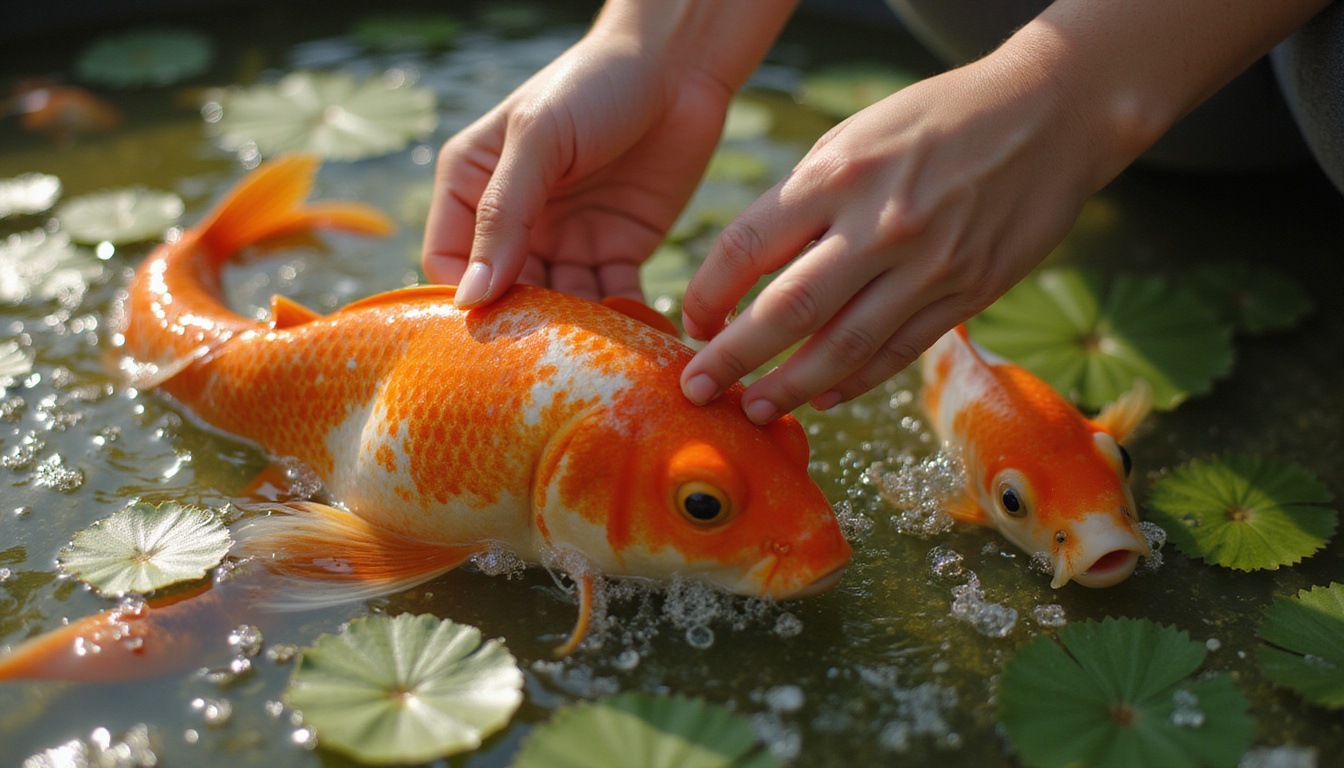
- Never lift large koi by the tail, gills, or a small hand net; support their body weight.
- Work slowly and calmly to reduce stress and avoid injuring scales or fins.
After handling or moving koi, monitor closely for a few days for signs of stress or infection.
8. Building a Long-Term Koi Care Routine
The best koi fish ponds aren’t driven by constant emergency fixes but by consistent routine.
A simple schedule:
- Daily
- Quick fish behavior check
- Quick visual clarity and equipment check
- Weekly
- Test water (ammonia, nitrite, nitrate, pH)
- Clean skimmer baskets and mechanical filter components as needed
- 10–20% water change if required, using dechlorinated water
- Monthly
- Inspect pumps, filters, aeration, and plumbing
- Prune or thin plants
- Remove debris and excess sludge where accessible
- Seasonally
- Adjust feeding and aeration by temperature
- Deep clean areas of the pond carefully, without over-disrupting beneficial bacteria
- Check for leaks, liner wear, and equipment issues
Consistency is one of the most powerful “secrets” behind clear water and thriving koi.
FAQs About Koi Fish Care
1. How long do koi fish live in a pond?
With proper care, koi fish can live 20–30 years, and some high-quality Japanese koi have been reported to live even longer. Lifespan depends on genetics, water quality, nutrition, and protection from disease and predators.
2. Can koi fish live with goldfish in the same pond?
Yes, koi and goldfish are generally compatible and can live together peacefully. However, koi grow much larger and produce more waste, so you must size your pond and filtration accordingly. Also, koi may outcompete fancy goldfish for food if the pond is crowded.
3. How many koi fish can I keep in my pond?
A safe guideline is one adult koi per 250–300 gallons of water, though lower stocking is always safer. For example, a 2,000-gallon pond can comfortably house around 6–8 adult koi. Consider future growth when planning your stocking level.
Bring Your Koi Pond to the Next Level
Koi fish aren’t just decorations—they’re living, growing companions that respond to the environment you create for them. When you give them ample space, clean and stable water, thoughtful nutrition, and attentive seasonal care, they reward you with vivid colors, graceful movement, and years—often decades—of enjoyment.
If you’re ready to elevate your pond, start by testing your water, reviewing your filtration and stocking levels, and fine-tuning your feeding and seasonal routine based on the guidance above. Apply even a few of these koi care secrets this week, and you’ll set the stage for a healthier, clearer, and more beautiful pond that both you and your koi can thrive in.
Now is the perfect time to commit to better koi fish care—your pond (and your koi) will show you the results every time you step outside.
Explore the Science Behind Spirituality
This guide explored the meaning and history of good luck symbols. To discover the psychology, consciousness, and scientific perspectives behind spiritual beliefs, visit SpiritualMindScience.com.