If you want year-round color, structure, and texture in your garden without endless upkeep, juniper might be your new best friend. These hardy evergreens work in rock gardens, slopes, borders, and containers—and they ask for surprisingly little in return. With a few smart planting hacks, you can grow stunning juniper shrubs that practically take care of themselves.
Below you’ll find practical tips on choosing, planting, and maintaining junipers so they stay healthy, dense, and beautiful with minimal effort.
Why Juniper Is the Ultimate Low-Maintenance Shrub
Before you start digging, it helps to understand why juniper is such a great choice for low-care landscapes.
Key advantages of juniper:
- Evergreen foliage for four-season interest
- Excellent drought tolerance once established
- Thrives in poor, sandy, or rocky soils
- Useful for erosion control on slopes
- Many sizes and shapes: groundcovers, shrubs, and small trees
- Deer- and rabbit-resistant in most areas
Because junipers are so tough, the main “hack” is actually not to over-care for them. They prefer lean conditions and good drainage over rich soils and frequent watering.
Choose the Right Juniper for the Right Spot
Getting the right plant in the right place is the biggest maintenance saver. Juniper comes in dozens of cultivars with different sizes and habits.
1. Match growth habit to your goal
-
Groundcovers (prostrate/spreading)
Ideal for slopes, rock gardens, and as living mulch.
Examples: ‘Blue Rug’, ‘Blue Chip’, ‘Blue Pacific’. -
Medium shrubs
Great for foundation plantings, borders, and mixed beds.
Examples: ‘Grey Owl’, ‘Sea Green’, ‘Skyrocket’ (narrow, upright). -
Tree-like forms
Use as focal points, windbreaks, or screens.
Examples: Eastern redcedar (Juniperus virginiana), Rocky Mountain juniper (Juniperus scopulorum).
2. Think mature size, not nursery size
A common mistake is planting juniper too close together or too near paths and buildings. These shrubs hate being constantly pruned back hard.
- Check the mature width on the plant tag.
- Space plants so they can reach full size without crowding.
- For groundcovers, allow extra room—they often spread more than expected.
Proper spacing reduces disease risk, eliminates heavy pruning, and keeps your juniper looking natural and full.
Site Selection: Sun and Soil Hacks
Junipers are adaptable, but they have a few non-negotiables if you want low maintenance.
Sun exposure: more is better
- Aim for full sun: at least 6 hours of direct light daily.
- In partial shade, foliage becomes thin, leggy, and prone to disease.
Plant your juniper where it won’t be shaded out by fast-growing trees or tall shrubs over time.
Soil: focus on drainage, not fertility
Juniper doesn’t need rich soil; in fact, overly fertile, wet soil can cause more problems than it solves.
Ideal soil conditions:
- Well-drained: no standing water after rain
- pH slightly acidic to neutral (about 6.0–7.0), though many tolerate a wider range
- Sandy or rocky soils are fine—often ideal
Drainage hack:
If your site stays wet, build a raised mound or berm 8–12 inches high and plant your juniper on top. This simple elevation greatly reduces root rot risk and future headaches.
Planting Juniper the Smart Way
How you plant your juniper sets the tone for years of low maintenance. The good news: the process is straightforward.
Step-by-step planting guide
-
Dig a wide, shallow hole
- Make the hole 2–3 times as wide as the root ball, but no deeper.
- Junipers spread roots sideways more than down.
-
Set the plant slightly high
- The top of the root ball should sit level with or 1 inch above the surrounding soil.
- Planting too deep is a common cause of decline.
-
Loosen roots gently
- If roots are circling, tease them apart lightly to encourage outward growth.
-
Backfill with native soil
- Avoid heavy amendments; use the soil you dug out.
- Firm gently to remove air pockets but don’t compact.
-
Water thoroughly once
- Soak the root zone, then let it drain.
- This helps settle the soil around roots.
-
Mulch lightly
- Apply 2–3 inches of mulch around (not on) the root ball.
- Keep mulch 2–3 inches away from the trunk or stems to prevent rot.
The “Do Less” planting philosophy
- No fertilizer at planting time
- No soil packed like concrete
- No piling mulch against the stems (“mulch volcanoes”)
This minimalistic approach supports strong roots and reduces future disease issues.
Watering Hacks: Deep, Infrequent, and Then… Mostly Ignore
Once established, juniper is famously drought-tolerant. Your main job is to get it through the first growing season.
Establishment watering schedule (general guide)
- Weeks 1–2: Water 2–3 times per week, depending on weather.
- Weeks 3–6: Water once per week.
- After 6 weeks: Water every 10–14 days during dry spells.
Always adjust based on rainfall and soil. Check moisture by digging a small hole or using your finger: water when the top 2–3 inches are dry for established plants.
Watering hacks for low-maintenance success
- Water deeply, not lightly: aim to moisten soil 6–8 inches down.
- Avoid overhead irrigation where possible—wet foliage can encourage fungal issues.
- After the first year, only water during extended droughts, especially in sandy soils.
By training roots to grow deep early on, you’ll drastically cut back on watering needs later.
Pruning and Shaping: Minimal but Strategic
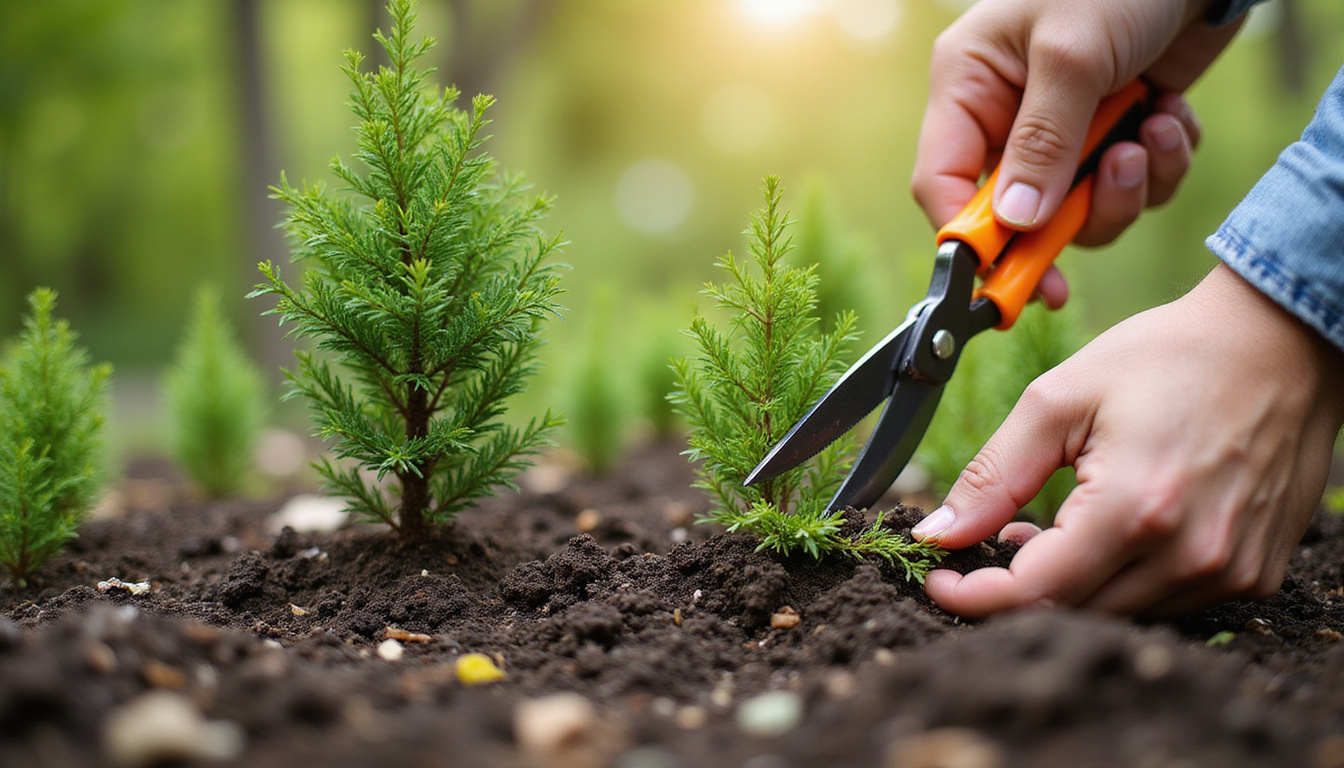
Juniper doesn’t need heavy pruning if planted with enough space. Still, a bit of strategic trimming keeps shrubs tidy and healthy.
When and how to prune juniper
- Best time: Late winter to early spring, before new growth starts.
- Light touch: Remove dead, damaged, or crossing branches.
- Shaping: Trim back the tips of long shoots to maintain form.
Important pruning rule: respect the “green zone”
Junipers don’t regenerate well from old, bare wood.
- Only cut back into green, leafy growth.
- Avoid shearing deeply into brown, leafless areas—those may never fill back in.
For hedges or formal shapes, plan to maintain them from a young age with small, regular trims instead of drastic cuts later.
Soil, Fertilizer, and Mulch: Less Is More
One of the biggest juniper hacks is simply resisting the urge to “improve” the soil too much.
Fertilizing juniper
Most junipers don’t need regular fertilization, especially in average garden soil.
- In very poor soil, apply a light, slow-release, balanced fertilizer once in early spring.
- Over-fertilizing encourages weak, overly lush growth that’s more disease-prone.
When in doubt, skip the fertilizer and observe your plant’s performance for a season.
Mulching smartly
Mulch brings several low-maintenance benefits:
- Suppresses weeds
- Keeps soil moisture more even
- Protects roots from temperature swings
Use shredded bark, wood chips, pine needles, or small gravel depending on your landscape style. Remember:
- Depth: 2–3 inches
- Keep a gap around stems/trunk
- Refresh lightly as it breaks down, rather than piling more on top
Juniper Design Hacks: High Impact, Low Effort
Juniper can be the backbone of a low-maintenance landscape when you design with intention.
Use contrast for visual interest
Pair juniper with plants that contrast in:
- Color: silver/blue junipers with gold or lime shrubs
- Texture: fine-needled juniper with broadleaf perennials or ornamental grasses
- Form: spreading junipers under upright conifers or small trees
Great companion ideas
- Ornamental grasses (e.g., feather reed grass, blue fescue)
- Drought-tolerant perennials (sedum, salvia, lavender, yarrow)
- Other conifers (dwarf pines, spruces) in different shapes
This mix gives you a layered, interesting planting that still requires little ongoing care.
Common Juniper Problems (and How to Avoid Them)
While junipers are tough, a few issues can creep in—usually when conditions aren’t ideal.
Fungal diseases
Problems like blights and rusts are more likely when:
- Plants are crowded with poor air circulation
- Soil stays wet or poorly drained
- Foliage is frequently wet from overhead watering
Prevention hacks:
- Choose disease-resistant varieties suited to your region (check local extension recommendations).
- Space plants properly and avoid dense, shaded corners.
- Water at the base rather than overhead when possible.
Insects
Bagworms, spider mites, and scale can occasionally show up.
- Inspect plants periodically, especially in hot, dry weather.
- Encourage beneficial insects and avoid unnecessary broad-spectrum pesticides.
- Address early signs promptly: hand-pick bagworms, hose off mites, or use targeted controls if needed.
For region-specific pest and disease guidance, local cooperative extension services and resources such as U.S. Cooperative Extension System provide detailed, research-based recommendations (source).
Quick Juniper Maintenance Checklist
Once your shrubs are established, ongoing care is minimal. Use this as a seasonal snapshot:
- Early spring
- Light pruning (dead or damaged branches)
- Optional light fertilizer in poor soils
- Late spring–summer
- Spot-check for pests or fungal issues
- Water only during extended drought
- Fall
- Remove debris around the base
- Check mulch depth and refresh if needed
- Winter
- In snowy climates, gently knock heavy snow off branches
- Avoid piling snow or ice melt directly on plants
FAQ: Growing Juniper with Confidence
1. How fast does a juniper bush grow?
Growth rate depends on the variety, but many junipers are moderate growers, adding 4–12 inches per year once established. Groundcover types often spread faster than they grow tall. Choosing a cultivar that naturally reaches your desired size reduces the need for pruning.
2. Can I grow juniper in pots or containers?
Yes, you can grow juniper plants in containers if you use a well-draining potting mix and a container with drainage holes. Dwarf or compact varieties work best. Place in full sun, water when the top inch of soil is dry, and protect the pot from extreme freeze-thaw cycles in very cold climates.
3. Why is my juniper turning brown?
Juniper turning brown may be caused by poor drainage, overwatering, winter injury, pests (like spider mites), or fungal disease. Check soil moisture first; if it’s consistently wet, improve drainage or water less. Examine foliage closely for webbing or spots, prune out dead sections, and ensure the plant has good air circulation and plenty of sun.
Turn Your Garden into a Low-Maintenance Evergreen Showcase
With the right variety, smart planting, and a “less is more” approach, juniper can give you dense, colorful, and reliable structure in your landscape for decades—without demanding constant attention.
If you’re planning a new bed, redoing a slope, or just tired of fussy plants, start by choosing two or three juniper varieties that match your space and climate. Follow the site, soil, and watering hacks above, and you’ll set them up to practically thrive on neglect.
Don’t wait for the next planting season to roll by. Sketch out your planting area, note sun patterns during the day, and head to your local nursery or trusted online supplier to pick out junipers that fit your design. Plant once, plant smart, and enjoy a beautiful, low-maintenance garden that looks good every month of the year.
Throughout history, many plants and herbs have been associated with luck, protection, and prosperity. To explore their deeper spiritual, psychological, and scientific significance, visit SpiritualMindScience.com.