There’s a quiet revolution happening in modern homes: more people are creating household altars as intentional spaces for reflection, prayer, and grounding. Whether you follow a specific religion, identify as spiritual-but-not-religious, or simply want a calming corner in a busy home, a thoughtfully designed altar can transform an ordinary room into a sacred sanctuary.
Below, you’ll learn how to create a personal altar that fits your beliefs, style, and space—no matter how small your home may be.
What Is a Household Altar?
A household altar is a dedicated spot in your home used for spiritual, religious, or reflective practices. It can be as simple as a candle and a photo on a shelf, or as elaborate as a full table with statues, crystals, and ritual tools.
Common purposes of household altars include:
- Daily prayer and meditation
- Honoring ancestors or loved ones
- Practicing manifestation or intention-setting
- Observing religious rituals and holidays
- Creating a visual reminder of your values and goals
The key element isn’t decoration—it’s intention. Your altar is a physical expression of what’s most meaningful to you.
Why Household Altars Belong in Modern Homes
Even in highly secular societies, people naturally create “sacred” spots: a favorite reading chair, a corner with plants and photos, a window seat where they think and journal. Formal household altars take that instinct and make it conscious.
Benefits of having an altar at home:
- Emotional grounding: Returning to the same place daily for reflection can reduce stress and anxiety.
- Spiritual focus: A dedicated space supports consistent spiritual or mindfulness practices.
- Ritual and rhythm: Lighting a candle, saying a prayer, or journaling in the same place gives structure to your day.
- Identity and belonging: Symbols of your heritage, faith, or values can foster a strong sense of self and continuity.
Research shows that regular spiritual or contemplative practices are associated with better mental health and resilience, especially during times of stress (source: American Psychological Association).
Step 1: Clarify the Intention of Your Altar
Before buying candles or rearranging furniture, decide what your household altar is for. A clear intention will guide every decision that follows.
Ask yourself:
- Do I want this altar for prayer, meditation, or both?
- Do I want to honor ancestors or deities, or keep it more universal/reflective?
- Will this be a private space, or shared with family members?
- Do I prefer a minimalist or richly symbolic style?
Some common altar intentions:
- Meditation altar: Calm, uncluttered, focused on serenity and breath.
- Ancestral altar: Photos, heirlooms, offerings, and candles for loved ones who have passed.
- Religious altar: Icons, scriptures, statues, or symbols central to your faith tradition.
- Manifestation altar: Objects representing your goals—vision boards, affirmations, symbols of abundance or healing.
Write your intention down and keep it nearby as you design your space.
Step 2: Choose the Perfect Location
Location can make or break the feeling of your altar. You don’t need a separate room—many powerful household altars live on small shelves or corners of existing furniture.
Consider:
- Privacy: Can you use the space without feeling self-conscious or interrupted?
- Noise level: Avoid spots directly next to TVs or loud appliances if you can.
- Natural light: A bit of daylight can make the space feel alive, but it doesn’t need full sun.
- Daily access: You’re more likely to use your altar if it’s easy to reach, not hidden in a closet.
Popular locations:
- A bedside table for morning and evening rituals
- A small console table in the living room
- A dedicated shelf on a bookcase
- A quiet corner of a home office
- A windowsill with plants and candles
If you share your home with others, especially children or pets, choose a stable, out-of-the-way area to keep fragile items safe.
Step 3: Select a Surface and Layout
The surface for your altar can be anything stable:
- Small table or nightstand
- Floating shelf
- Dresser top
- Window ledge
- Repurposed stool or crate with a cloth over it
Think about levels and layers. Having items at different heights (using boxes under cloths, small stands, or stacked books) adds depth and focus. Many people like a central focal point—such as a statue, candle, or framed image—surrounded by supporting objects.
A simple layout guideline:
- Center: Main symbol or focal object (candle, icon, statue)
- Left side: Items representing the past, ancestors, or letting go
- Right side: Items representing the future, goals, or growth
- Front: Offerings, small bowls, or items you handle regularly
This isn’t a strict rule—just a starting point. Adapt it to your tradition and taste.
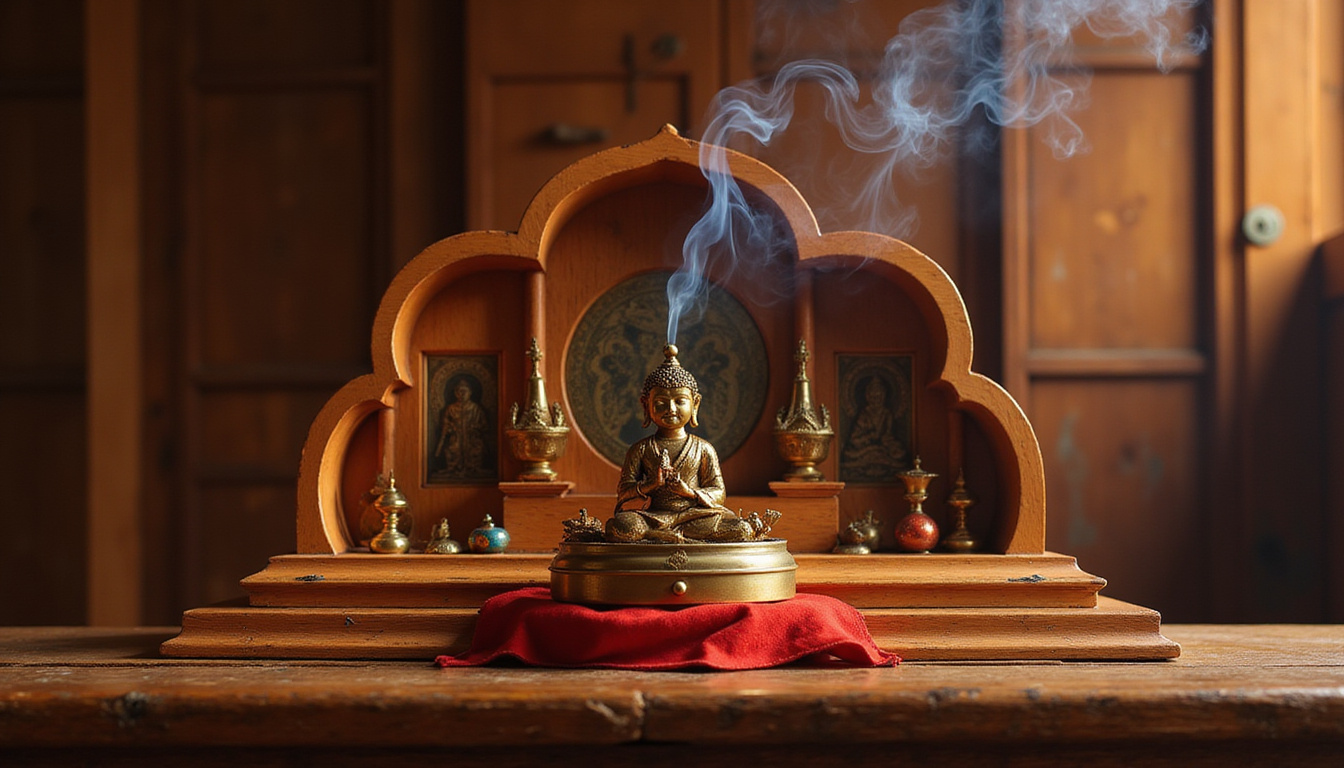
Step 4: Choose Meaningful Objects for Your Altar
The most powerful household altars are personal, not perfect. Choose objects that genuinely resonate with you, rather than what you think an altar “should” look like.
Common categories to consider:
- Light: Candles, fairy lights, or an oil lamp to symbolize clarity, guidance, and presence.
- Nature elements: Stones, crystals, shells, feathers, plants, or flowers to bring earth energy.
- Water: A small bowl or glass of water for purification, emotional flow, or offerings.
- Air: Incense, essential oils, or a feather for breath, thoughts, and inspiration.
- Symbols of faith or meaning:
- Religious icons, statues, or scriptures
- Photos of ancestors or spiritual teachers
- Cultural symbols from your heritage
- Items of intention:
- Journals, affirmations, or a list of goals
- Tools (tarot cards, mala beads, rosary, prayer rug)
- Objects related to what you’re calling in—e.g., a key for opportunity, a heart for love
A Sample Item Checklist
Here’s a quick list you can use when planning your altar:
- A stable surface (table, shelf, or dresser top)
- One or two candles (real or LED if safety is a concern)
- A primary symbol (icon, statue, or framed quote/photo)
- One natural element (plant, stone, shell, or flower)
- A small bowl or dish (for offerings or keepsakes)
- One item representing your intention (e.g., a journal, crystal, object of significance)
- Optional: Incense or diffuser, cloth to define the space, a small storage box for tools
You don’t need everything at once. Start with a few key items and allow your altar to evolve over time.
Step 5: Infuse Ritual into Your Household Altar
Objects alone are just decor. What turns household altars into living sanctuaries is ritual—consistent, mindful use.
Consider simple daily or weekly practices like:
- Lighting a candle and taking three deep breaths each morning.
- Saying a short prayer, mantra, or affirmation before leaving home.
- Placing offerings (flowers, water, a bit of food, or written notes of gratitude) for ancestors or deities.
- Journaling or meditating at the altar for 5–10 minutes.
- Touching or holding a particular object (beads, stone, cross, or talisman) during stressful moments.
Anchor your rituals to existing habits: right after your morning coffee, before bed, or when you return from work. The more consistent the practice, the more potent the space feels.
Step 6: Keep the Space Clean and Energetically Fresh
Over time, altars can accumulate dust and clutter. Regular care keeps your household altar feeling alive rather than stale.
Practical and energetic maintenance:
- Dust and wipe surfaces weekly.
- Replace wilted flowers and stale offerings promptly.
- Refresh the water daily or every few days.
- Rotate items seasonally or according to religious calendars.
- Open a window near your altar when possible for fresh air.
- If it fits your tradition, lightly cleanse with smoke, sound (bell, chime), or intention while tidying.
Think of maintenance as part of your practice, not a chore. As you care for the space, you’re also caring for your own inner life.
Adapting Household Altars to Different Traditions
Household altars appear in many cultures and religions worldwide, each with unique customs:
- Christianity: Crucifixes, icons, Bibles, rosaries, candles, and holy water.
- Buddhism: Buddha images, offering bowls, incense, flowers, and meditation cushions.
- Hinduism: Deity murtis (statues), incense, lamps (diyas), and offerings of fruit or sweets.
- Folk and ancestral traditions: Photos, heirlooms, favorite foods, and objects from the land or homeland.
- Secular/spiritual-but-not-religious: Inspirational quotes, nature objects, candles, and personal symbols.
If you’re exploring a specific tradition, seek guidance from community elders, religious leaders, or reputable books to ensure your altar is respectful and aligned with that path.
Creating an Altar in Small or Shared Spaces
Not everyone has a spare room or even a free corner. You can still create powerful household altars in small or shared environments.
Ideas for limited space:
- Portable altars: Use a box, basket, or tin that holds your items. Take them out when you practice and store them when finished.
- Hidden-in-plain-sight altars: A neatly arranged shelf of books, candles, and a plant can function spiritually while looking like decor.
- Wall-mounted mini-altars: Use a small floating shelf with a candle and one or two meaningful objects.
- Drawer altar: Keep your items in a dedicated drawer; open it for prayer or meditation.
The most important element is that the space feels special to you, even if others don’t immediately recognize it as an altar.
FAQs About Household Altars
1. How do I start a simple home altar without spending much money?
You can create simple home prayer altars using what you already own: a table, a candle, a glass of water, and a meaningful photo or object. Add a cloth or scarf to define the space. Over time, you can slowly add more items that feel right, rather than buying everything at once.
2. What should I put on a spiritual altar at home if I’m not religious?
For non-religious spiritual altars for the home, focus on symbols of your values and intentions: stones or shells from places you love, a plant, affirmations, a journal, and a candle. You can use this space for mindfulness, gratitude, and reflection without any formal religious imagery.
3. Is there a right direction for placing a household altar?
Different traditions have guidelines (for example, some prefer altars to face east). For most modern home altars, the “right” direction is the one that feels calm, accessible, and safe for candles or incense. If you follow a specific religious path, consult that tradition’s teachings; otherwise, prioritize practicality and personal resonance.
Create Your Own Sanctuary Today
A well-loved household altar isn’t about perfection, expensive items, or strict rules. It’s about carving out a small, steady refuge in the middle of everyday life—a place where you can breathe, listen, and reconnect with what matters most.
You don’t have to wait for the “right time” or the “right space.” Choose a surface, gather a few meaningful objects, and set your intention. As you return to this spot day after day, it will slowly transform from a few items on a table into a true sacred sanctuary.
Start today: clear a corner, light a candle, and let your home begin to reflect the inner life you’re ready to honor.
Cultural superstitions have shaped traditions and beliefs for generations. Explore the psychology, cultural history, and science behind these fascinating practices at SpiritualMindScience.com.