From proud lions to mysterious wyverns, heraldic animals have filled coats of arms, banners, and shields for centuries. These creatures are far more than decoration; each animal carries a specific meaning, communicating power, values, lineage, and identity at a glance. Whether you’re researching family heraldry, designing a fantasy world, or simply fascinated by medieval symbolism, understanding heraldic animals opens a window into history and culture.
This guide walks you through the origins, symbolism, and most important creatures in heraldry, and shows you how to interpret (and even create) your own animal-based arms.
What are heraldic animals?
Heraldic animals are real, mythical, or hybrid creatures used as symbols in heraldry—the system of coats of arms, crests, and badges developed in medieval Europe. These animals appear on shields, helmets, banners, seals, and official documents to identify individuals, families, nations, and organizations.
In heraldry, every image is called a charge, and animals are among the most common and meaningful charges. They’re used to represent:
- Personal traits (courage, wisdom, loyalty)
- Social status or profession
- Ancestral legends and heroic deeds
- Territorial claims or royal authority
Because many people in the Middle Ages were illiterate, heraldic animals helped people quickly recognize who a knight, messenger, or ruler was associated with on the battlefield and in daily life.
Origins: How heraldic animals came to power
The use of animal symbols predates heraldry by thousands of years—think of Egyptian falcons or Roman eagles. But heraldic animals as we know them became systematized in Western Europe in the 12th–13th centuries alongside the rise of knighthood and tournaments.
Several factors drove their popularity:
- Battlefield identification: Knights in full armor needed bold symbols on shields and surcoats to be recognized at a distance.
- Noble rivalry: Families competed to show prestige and virtue through striking, memorable creatures.
- Religious and classical influence: Biblical beasts (like the lion and lamb) and classical mythology (griffins, dragons) provided ready-made symbolic “language.”
- Legal codification: Over time, heralds (specialized officers of arms) recorded and regulated arms, turning animal use into a formal system with rules and standard meanings.
By the late Middle Ages, most European noble houses—and many cities and guilds—displayed one or more heraldic animals.
Reading animals in heraldry: The four big factors
To make sense of heraldic animals, you need to look at more than just the species. Heraldry is a coded language. Four main factors influence meaning:
1. The species itself
Each creature carries a core cluster of ideas. A lion almost always suggests courage and royalty; a dove suggests peace or the Holy Spirit. These meanings grew out of religious texts, folklore, and medieval bestiaries.
2. The posture (attitude)
The position of the animal often changes its meaning. For example:
- A lion standing upright on one hind leg, claws extended, is rampant (fierce, combative bravery).
- A lion walking with one paw raised and head facing the viewer is passant guardant (alert guardianship; famously used in English royal arms).
- A spread-wing eagle is displayed (dominance, authority, sovereignty).
Knowing these posture terms helps you decode subtle differences in intent and character.
3. Color (tincture)
Color in heraldry is symbolic too:
- Or (gold/yellow): generosity, elevation of mind
- Argent (silver/white): purity, truth
- Gules (red): warrior spirit, martyrdom, courage
- Azure (blue): loyalty, steadfastness
- Sable (black): constancy, sometimes grief
- Vert (green): hope, renewal, freedom
An argent (silver) wolf on sable (black) says something quite different from a gules (red) wolf on gold.
4. Combinations and context
Animals rarely appear alone. They may support a shield as supporters, sit atop a helmet as a crest, or accompany tools, plants, or geometric shapes. A lion with a sword tells a different story than a lion with a book or a cross.
The most important heraldic animals and their meanings
Below are some of the most influential and frequently used heraldic animals, along with their traditional meanings.
The lion: King of beasts and of heraldry
The lion is arguably the most iconic of all heraldic animals. It symbolizes:
- Courage and martial valor
- Royal authority and leadership
- Nobility of spirit
Lions appear on the arms of England, Scotland, Bohemia, Norway, and countless noble houses. Different lion attitudes slightly tweak the message:
- Lion rampant: Aggressive bravery, readiness to fight
- Lion passant: Calm strength, controlled power
- Lion passant guardant (“leopard” in older English heraldry): Watchfulness, public kingship
Multiple lions often suggest extensive conquests or multiple royal claims.
The eagle: Sovereignty and vision
The eagle rivals the lion in prestige. It’s commonly linked with:
- Imperial power and dominion
- Far-reaching vision and judgment
- Victory and divine favor
The double-headed eagle is especially important, symbolizing authority in both secular and spiritual realms, or East and West. It’s famously associated with the Holy Roman Empire and later Russia.
The griffin: Hybrid guardian
The griffin—half lion, half eagle—combines the two greatest animals of land and sky. In heraldry it represents:
- Vigilant guardianship
- Strength wedded to intelligence
- Protection of treasure or sacred things
As a composite creature, it also hints at “best of both worlds” lineage or exceptional, almost supernatural prowess.
The dragon and wyvern: Power, fear, and wisdom
Dragons and their cousin, the wyvern (a two-legged dragon), occupy a mixed symbolic space: sometimes demonic, sometimes heroic. On shields, they typically suggest:
- Ferocity and terrifying strength
- Victory over chaos (when vanquished by a saint or knight)
- Guarding of riches or hidden knowledge
A family that bears a dragon may be claiming either to destroy monsters—or to embody overwhelming, untamed power.
The wolf: Cunning, loyalty, and the outsider
Wolves in heraldry often stand for:
- Cunning and resourcefulness
- Loyalty to the pack or family
- Fierce independence
They can also symbolize a dangerous or exiled ancestor redeemed through bravery. Families on the borderlands of kingdoms or in wild regions frequently used wolves to express hardiness.
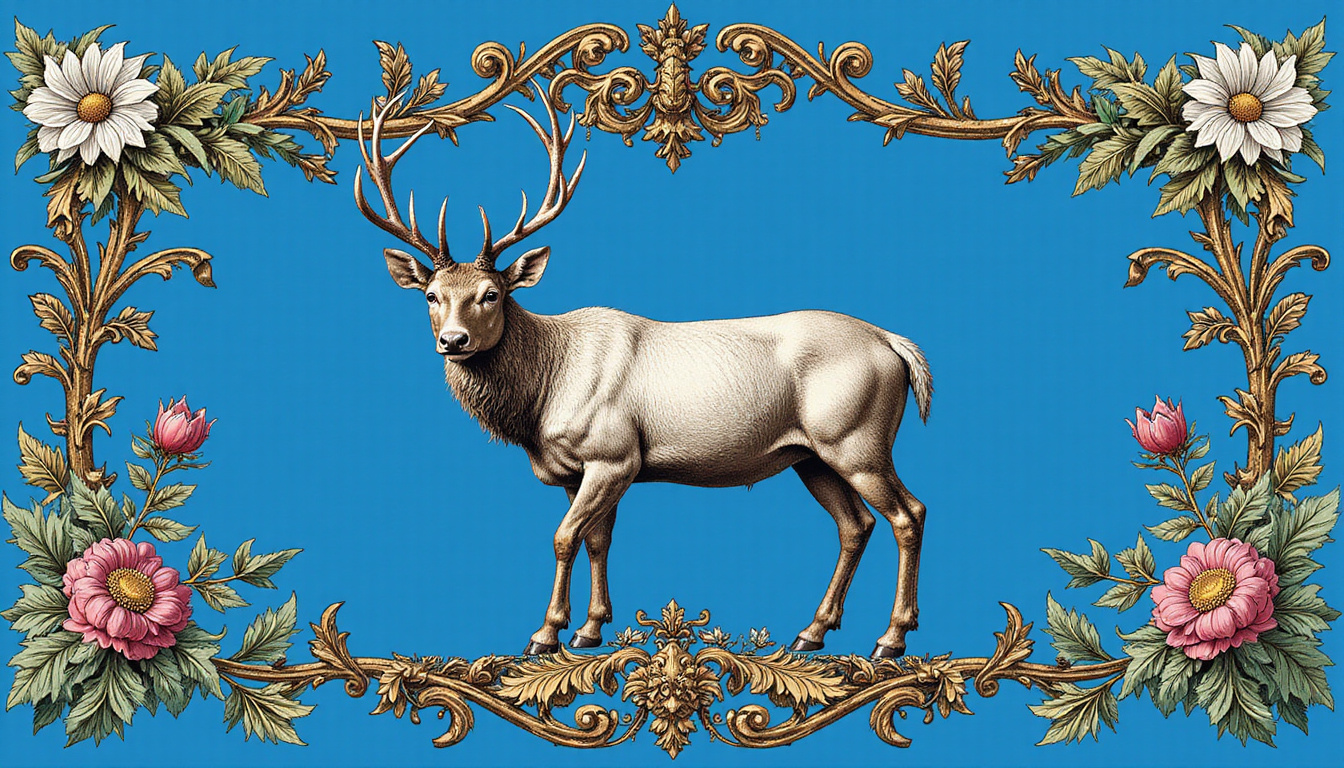
The stag or hart: Peace, purity, and nobility
Deer are elegant heraldic animals with softer, but still aristocratic, meanings:
- Purity and piety
- Harmony with nature
- Noble restraint and speed
A stag at gaze (standing still, looking forward) suggests calm dignity; at speed, it emphasizes quickness and the ability to elude enemies.
The bear: Strength and protection
Bears are powerful symbols of:
- Bodily strength and endurance
- Fierce protectiveness
- Rustic or northern ancestry
In some regions, the bear is connected with local saints or founding legends, making it both a territorial and moral emblem.
The boar: Ferocity and fearlessness
Boars were feared game animals in medieval hunts. They symbolized:
- Extreme courage, even recklessness
- Tenacity in battle (they fight to the end)
- Resilience against wounds
A boar’s head may represent a notable victory in the hunt or war, or a family that takes pride in its stubborn resistance.
The horse: Speed, service, and chivalry
Horses signify:
- Readiness for service and battle
- Swiftness and energy
- Knightly honor and mobility
A rearing horse (forcené) emphasizes explosive power, while a walking or trotting horse focuses on reliability and service.
Birds: Peace, faith, and communication
Beyond the eagle, other birds show up frequently as heraldic animals:
- Dove: peace, purity, the Holy Spirit
- Swan: grace, beauty, transformation
- Raven or crow: prophecy, survival, sometimes mourning
- Martlet (stylized footless bird): perpetual quest or pilgrimage, younger sons who must “fly” to make their fortunes
Birds are especially common on clerical arms and those of scholars, poets, and messengers.
Marine and fabulous creatures
Heraldry embraces the fantastic. Several mythic and marine heraldic animals carry distinct meanings:
- Sea-lion / sea-horse / sea-wolf: power over both land and sea; naval prowess
- Unicorn: purity, untamable freedom, chaste love and divine power
- Phoenix: rebirth, resurrection, survival after catastrophe
These figures appear often in national and civic heraldry, suggesting enduring identity in the face of history’s upheavals.
Common heraldic animal attitudes (postures)
To fully understand heraldic animals, you need to recognize the basic posture vocabulary. Here are some of the most common:
- Rampant – Standing on one hind leg, the other raised, forepaws in the air; dynamic, combative.
- Passant – Walking, one forepaw raised; steady progress.
- Statant – Standing on all four legs; calm readiness.
- Sejant – Sitting; peaceful but attentive.
- Couchant – Lying down with head raised; resting, but watchful.
- Dormant – Lying with head down; complete rest, trust, or death.
- Displayed (for eagles and some other birds) – Wings outstretched, body facing front; dominance, display of power.
Knowing these terms helps you read descriptions (blazons) of arms and visualize how the animal is meant to appear.
Real vs. mythical heraldic animals
Heraldry treats real and mythical creatures almost on equal footing, but they serve different narrative roles.
Real animals
Real animals—lion, wolf, boar, stag, bear, horse, dog—tend to emphasize human virtues and vices, anchored in observed behavior:
- Courage and ferocity (lion, boar)
- Loyalty and guardianship (dog, wolf)
- Endurance and strength (bear, ox)
- Swiftness and agility (horse, stag)
They connect the bearer to admired traits of the natural world.
Mythical and hybrid animals
Mythical creatures—dragon, griffin, unicorn, phoenix, sea-lion—enhance a coat of arms with:
- Supernatural sanction or destiny
- Complex ancestry, sometimes legendary or semi-divine
- Exceptional, almost impossible virtues (perfect purity, immortal resilience)
Using mythical heraldic animals often implies that the family or institution sees itself as out of the ordinary, beyond the merely human.
How to choose a heraldic animal today
Modern individuals, organizations, and even fictional worldbuilders still turn to heraldic animals to express identity. If you’re designing a new coat of arms or emblem, consider:
-
Core values and story
- Do you want to highlight courage (lion, boar), wisdom (owl, serpent), or perseverance (bear, phoenix)?
- Are you emphasizing peace and negotiation (dove, stag), or readiness for conflict (dragon, wolf)?
-
Cultural and historical resonance
- Does your region, family history, or profession suggest a particular creature (e.g., a maritime town using dolphins or sea-horses)?
- Are there local legends or folk animals that could make your arms unique?
-
Visual impact and simplicity
- Fewer, larger animals are usually clearer and stronger visually than many small ones.
- Distinctive, high-contrast colors make heraldic animals stand out.
-
Balance with other symbols
- Combine animals with tools, plants, or geometric charges that reinforce your message but don’t overcrowd the design.
If you’re interested in historically accurate practice, many heraldic authorities and societies offer guidance and registration, ensuring your arms are unique and properly blazoned (source: College of Arms).
FAQ about heraldic animals and symbols
Q1: What are the most common heraldic beasts and what do they mean?
The most common heraldic beasts are the lion, eagle, griffin, dragon, unicorn, and boar. The lion and eagle signify courage and sovereignty, griffins and dragons emphasize strength and guardianship, unicorns represent purity and divine power, and boars stand for fearless, stubborn bravery.
Q2: Can modern families and groups still use heraldic animal symbols?
Yes. Many modern families, clubs, and businesses adopt heraldic animal symbols to express identity and values. In some countries you can formally register arms; in others, you may simply design and use them, preferably respecting traditional rules of tincture and composition.
Q3: How do I interpret a coat of arms with multiple heraldic creatures?
Look at each of the heraldic creatures (species), their posture, colors, and placement. The shield’s central animal usually shows core character; supporters may suggest alliances, national ties, or secondary qualities. Together, they form a “sentence” describing the bearer’s origins, virtues, and aspirations.
Heraldic animals are a living symbolic language, not just relics on dusty shields. Understanding them gives you deeper insight into history, storytelling, and visual identity—and offers powerful tools for designing emblems that truly mean something.
If you’d like help decoding a specific coat of arms or choosing the perfect heraldic animal for your own design, share the details you have—colors, animals, and layout—and I can walk you through its symbolism or suggest a historically grounded new design.
Animals have inspired symbols and beliefs across cultures for centuries. Discover how these traditions connect with psychology, spirituality, and human consciousness at SpiritualMindScience.com.