In homes, offices, studios, and even car dashboards around the world, one gentle, elephant-headed presence shows up again and again: Ganesha. More than just a beloved deity of Hindu tradition, Ganesha is honored as the remover of obstacles, patron of new beginnings, and guardian of inner focus. Thoughtfully practiced, Ganesha rituals can become powerful tools to invite prosperity, sharpen your mind, and experience small, everyday “miracles” of synchronicity and support.
Below is a practical, people-centered guide to understanding Ganesha and integrating his rituals into your modern life—no matter where you’re starting from.
Who Is Ganesha and Why Is He Associated with Prosperity?
Ganesha, also known as Ganapati or Vinayaka, is one of the most widely worshipped deities in Hinduism. Depicted with an elephant’s head and a human body, he represents wisdom, intelligence, and the power to clear obstacles on both the outer and inner paths.
Key aspects associated with Ganesha:
- Remover of obstacles (Vighnaharta): Helps clear practical blocks—financial, professional, relational—as well as inner blocks like fear, confusion, and self-doubt.
- Lord of beginnings: Almost every auspicious activity in many Hindu traditions starts with a short Ganesha invocation to align the endeavor with clarity and success.
- Patron of learning and focus: Students, writers, artists, and entrepreneurs often turn to Ganesha to support concentration, memory, and creativity.
- Guardian of material and spiritual prosperity: Prosperity in Ganesha’s context is not just money—it’s stability, right effort, wise decisions, and the confidence to use resources well.
This is why even non-Hindus are increasingly drawn to Ganesha rituals: they combine symbolic beauty with practical psychological benefits—routine, intention, reflection, and calm.
Preparing Your Ganesha Space: The Foundation of Ritual
Before you begin specific Ganesha rituals, create a simple, clean, and intentional space. This doesn’t have to be elaborate or religiously perfect. What matters most is respect, sincerity, and consistency.
Step 1: Choose Your Ganesha Murti or Image
You can work with:
- A small statue (murti) of Ganesha
- A framed picture or artwork
- A simple printed image placed respectfully
Traditional suggestions (not strict rules):
- A seated Ganesha symbolizes stability and calm.
- A right-facing trunk is often associated with strong discipline and auspiciousness; a left-facing trunk with a more gentle, household energy.
Trust what resonates with you; the connection you feel matters more than technical details.
Step 2: Set Up a Clean, Calm Corner
Pick a spot that feels naturally peaceful:
- A corner of your bedroom or living room
- A dedicated shelf or desk area
- A small wall altar with a ledge
Ensure the space is:
- Clean and clutter-free
- Not directly on the floor (place the image on a small table or cloth)
- Free from loud disturbances, if possible
You may add:
- A small cloth or mat under the image
- A candle or diya (oil lamp)
- A small bowl for offerings (flowers, fruit, sweets, or even a glass of water)
A Simple Daily Ganesha Ritual for Focus and Calm
You don’t need long, complex ceremonies. A consistent 5–10 minute daily Ganesha ritual can anchor your day and sharpen your focus.
1. Begin with Cleanliness and Grounding
- Wash your hands and, if possible, your face.
- Sit comfortably with a straight spine.
- Take 5–7 slow breaths, consciously relaxing your jaw, shoulders, and belly.
Mentally invite Ganesha’s presence with a simple thought such as:
“Ganesha, please help me remove inner and outer obstacles and guide me with clarity today.”
2. Offer Light
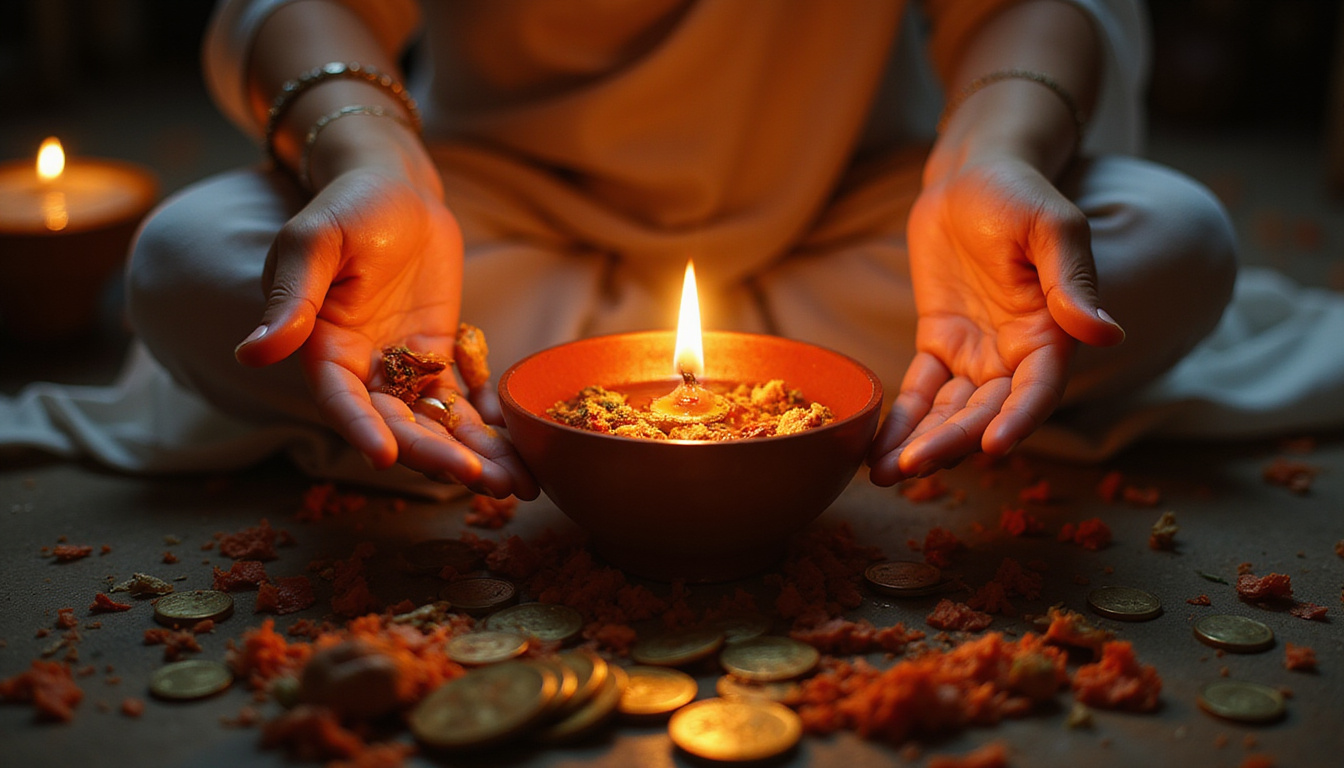
Light a candle, tea light, or diya in front of Ganesha.
As you do this, silently reflect:
“May this light illuminate my mind and path.”
This simple act engages your senses and signals to your nervous system that you’re entering a focused, sacred moment.
3. Offer Something Simple
Traditional offerings include:
- A flower or leaf
- A small piece of fruit
- A sweet (modak or any sweet you have)
If you have nothing else, even mentally offering your gratitude or a glass of water is fine. The inner feeling is more important than the outer form.
4. Chant a Ganesha Mantra (Optional but Powerful)
Even if you’re new to mantras, you can begin with one line. Two widely used options:
-
“Om Gam Ganapataye Namaha”
A general mantra to invoke Ganesha’s energy of clearing obstacles and granting wisdom. -
“Vakratunda Mahakaya…” (short Ganesha prayer)
“Vakratunda Mahakaya
Suryakoti Samaprabha
Nirvighnam Kuru Me Deva
Sarva-Kaaryeshu Sarvada”Rough meaning: “O curved-trunk, mighty-bodied one, with the radiance of a million suns, please remove obstacles from all my actions, always.”
Chant softly 11 or 21 times. Let your mind rest on the sound and meaning, not on perfection of pronunciation.
5. State Your Intention for the Day
After chanting, close your eyes and clearly articulate, in your own words, something like:
- “Help me focus deeply on my work today.”
- “Guide me to opportunities that support my prosperity.”li>
- “Help me handle this challenging conversation with wisdom.”
Imagine placing that request at Ganesha’s feet, then letting go of worry around it. This mental shift alone can reduce anxiety and improve decision-making.
6. Close with Gratitude
Bow your head or bring your palms together. Silently thank Ganesha and your own higher wisdom.
Blow out the candle if you must, or let it burn safely if circumstances permit.
Weekly Ganesha Ritual for Prosperity and New Beginnings
In many traditions, Mondays and Wednesdays are considered good for Ganesha worship, and the fourth day after the new moon (Chaturthi) is especially auspicious. You can choose one day a week for a slightly longer ritual focused specifically on prosperity.
Suggested Weekly Practice
-
Clean and refresh your altar
- Wipe the surface
- Replace flowers and offerings
- Clean the Ganesha image gently if needed
-
Write Down Obstacles and Goals
Take a notebook and jot down:- Current obstacles (debts, projects stuck, mental fog, conflicts)
- Clear, realistic prosperity goals (e.g., “Increase my income by X,” “Get three new clients,” “Pay down this loan,” “Save for an emergency fund”)
-
Offer Durva Grass or Leaves (Optional)
Traditionally, Ganesha is offered durva grass, but you can also offer:- Any clean, green leaf
- Fresh flowers
- A symbolic representation written on paper (“my work,” “my family,” etc.)
-
Chant with a Prosperity Focus
Use the same “Om Gam Ganapataye Namaha” mantra, but as you chant, visualize:- Debts slowly fading
- Doors of new opportunity opening
- Yourself working steadily and wisely with the resources you have
-
Visualize Practical Action
Ganesha rituals are most powerful when paired with grounded action. After the chanting:- Pick one or two concrete steps you’ll take that week toward prosperity (update a resume, call a potential client, review your budget).
- Mentally ask Ganesha to bless those actions and keep your path clear.
Weekly repetition of this cycle builds not only spiritual momentum but also psychological resilience and a bias toward action.
Ganesha Rituals for Study, Focus, and Creative Flow
Students, writers, coders, and artists often feel drawn to Ganesha for support with concentration and creativity.
Pre-Work or Pre-Study Ganesha Routine
Just before a study or work session:
- Sit for one minute in front of your Ganesha image (even if it’s on your desk).
- Take 3 slow, deep breaths.
- Mentally say: “Ganesha, help me stay focused and absorb what I’m learning.”
- Chant “Om Gam Ganapataye Namaha” 11 times.
- Open your laptop/book and immediately begin—no checking messages or social media.
This small ritual:
- Trains your brain to associate the mantra with deep work.
- Acts as a micro-transition from distraction to concentration.
- Over time, can become a powerful anchor habit to reduce procrastination.
Everyday “Miracles”: Seeing Ganesha in Daily Life
When people speak about “everyday miracles” with Ganesha, they often mean:
- Unexpected help appearing at the right time
- A problem resolving more easily than feared
- Meeting the right mentor or collaborator
- Sudden inner clarity about a decision
From a spiritual point of view, these are Ganesha’s blessings. From a psychological angle, consistent ritual plus clear intention increases awareness of opportunity, improves your emotional regulation, and sharpens judgment—leading to seemingly “lucky” outcomes.
The key is to:
- Keep your expectations humble but hopeful.
- Notice and acknowledge even small positive shifts.
- Continue grounding your spiritual practice in ethical, practical action.
A Sample Ganesha-Centered Day
To make all this more concrete, here’s how one day might look:
-
Morning (5–10 minutes):
- Cleanse, light a candle, offer a flower.
- Chant “Om Gam Ganapataye Namaha” 11 times.
- Set an intention: “Today, help me manage my money wisely and do quality work.”
-
Before Work/Study Sessions (1–2 minutes):
- Sit, breathe, repeat the mantra a few times.
- Start your most important task immediately.
-
Evening Check-In (3–5 minutes):
- Sit before Ganesha, mentally review your day.
- Acknowledge where you stayed focused and where you drifted.
- Offer gratitude for any small wins or help you felt.
- Ask for guidance to improve tomorrow.
Over weeks, this rhythm becomes a gentle discipline that supports both your outer endeavors and inner peace.
Common Elements of Ganesha Rituals (At a Glance)
Here’s a quick list of elements often used in Ganesha puja and how you might adapt them:
- Image or murti of Ganesha – Focal point of your intention.
- Light (candle/diya) – Symbolizes knowledge and clarity.
- Incense (optional) – Engages the senses, fosters calm.
- Flowers or leaves – Symbolic offering of beauty and respect.
- Sweets or fruit – Gratitude and a sharing of abundance.
- Mantra or prayer – Aligns your mind; strengthens focus.
- Intention or sankalpa – Bridges spiritual practice and practical life.
- Gratitude – Keeps the heart open and receptive.
You can start with just one or two of these and add more over time if you wish.
Respectful Practice and Cultural Sensitivity
If you weren’t raised in a Hindu context, honoring Ganesha can still be meaningful—provided you approach with respect:
- Avoid using Ganesha images on the floor, in bathrooms, or in contexts that feel trivial or mocking.
- Learn at least a little about his symbolism and stories from reliable sources (for instance, general overviews from the Encyclopaedia Britannica (source)).
- When in doubt, keep your practice simple, sincere, and free from commercialization.
Remember that, within Hindu thought, Ganesha ultimately symbolizes the intelligence of the universe and your own inner wisdom. You are not “borrowing” someone else’s god so much as reverently engaging with a universal principle through this sacred, time-tested form.
FAQ About Ganesha Rituals and Practice
Q1: How do I start praying to Ganesha at home if I’m a beginner?
Begin by placing a clean image or statue of Ganesha in a respectful spot. Once a day, sit quietly for a few minutes, light a candle, offer a flower or simple mental gratitude, and repeat “Om Gam Ganapataye Namaha” 11 times. End by plainly speaking your intention—such as help with focus, studies, or overcoming a specific obstacle.
Q2: Which Ganesha mantra is best for wealth and success in work?
A widely used mantra for success and prosperity is “Om Gam Ganapataye Namaha.” Chant it regularly—ideally daily—while visualizing your goals and the obstacles between you and those goals dissolving. Combine this with practical efforts like improving skills, networking, and managing money wisely for the fullest effect.
Q3: What is the right way to perform a simple Ganesha puja for removing obstacles?
A basic Ganesha puja can be:
- Clean the space and your hands;
- Place Ganesha’s image, light a candle, and offer a flower or fruit;
- Chant a Ganesha prayer like “Vakratunda Mahakaya” or “Om Gam Ganapataye Namaha” 11–108 times;
- Clearly ask Ganesha to remove specific obstacles (fear, confusion, financial hardship);
- Close with gratitude and a commitment to take one or two practical steps in alignment with your request.
Inviting Ganesha into your daily life through simple, grounded rituals is less about magical thinking and more about forming a living partnership with clarity, courage, and wise action. As you practice, you may find that obstacles feel less overwhelming, focus comes more easily, and moments of timely support appear just when you need them most.
If you feel drawn to deepen this connection, choose a day to begin. Set up a small Ganesha corner, light a candle, learn a short mantra, and dedicate the coming weeks to consistent practice. Let Ganesha’s presence guide your efforts—toward prosperity that’s stable, focus that’s reliable, and everyday miracles that remind you you’re not walking your path alone.
Explore the Science Behind Spirituality
This guide explored the meaning and history of good luck symbols. To discover the psychology, consciousness, and scientific perspectives behind spiritual beliefs, visit SpiritualMindScience.com.