Choosing a funerary urn is one of those quiet, deeply personal decisions most people don’t think about until they have to. Yet the right funerary urn can become a beautiful, lasting tribute—something that reflects your loved one’s story, values, and spirit. This guide walks you through the key “secrets” to selecting an urn that feels right, both emotionally and practically.
1. Start with purpose: how will the funerary urn be used?
Before you look at colors, materials, or designs, clarify how the urn will be used. This will narrow down your choices quickly and prevent overwhelm.
Ask yourself:
- Will the urn be kept at home, or placed in a columbarium niche?
- Will there be burial in a cemetery?
- Are you planning to scatter some or all of the ashes?
- Do multiple family members want a portion of the remains?
Common intended uses
-
Display at home
You may want a decorative urn that blends with home décor and feels comforting to see every day. -
Columbarium niche
Many cemeteries have size and material rules for urns stored in niches. Check their regulations first, then choose an urn that fits both the dimensions and any policy on metal, glass, or wood. -
Ground burial
Some cemeteries require a burial vault or a specific type of urn (often biodegradable or durable metal). Always verify cemetery rules before purchasing. -
Scattering ashes
For scattering, a dedicated scattering urn or tube makes the process more manageable and dignified, especially outdoors. Some people use a temporary container for scattering and a smaller permanent funerary urn for a portion of the ashes. -
Sharing among family
If several relatives want to keep ashes, consider:- One main urn plus keepsake urns
- Jewelry urns (small pieces holding a pinch of ashes)
- A combination of scattering and keepsake urns
Knowing the purpose keeps your selection focused and avoids expensive or impractical choices.
2. Understand size: choosing the right urn capacity
Urn sizing can feel confusing, but there is a simple rule of thumb often used by funeral professionals (source: Funeral Consumers Alliance):
One pound of body weight ≈ one cubic inch of urn capacity.
So, for example:
- A person who weighed 180 lb will typically require an urn of about 180 cubic inches.
- Many standard adult urns are around 180–220 cubic inches, which suits most adults.
Special situations
- Larger individuals: If your loved one had a higher body weight, choose a larger-capacity funerary urn or a companion urn (which holds the ashes of two people but can be used for one).
- Children and infants: There are smaller urns designed specifically for children and infants; the funeral home can often guide you on capacity.
- Dividing ashes: If ashes will be divided among several people, you might get:
- One full-size urn
- Several smaller keepsake urns (often 3–20 cubic inches each)
When shopping online or in person, always confirm the capacity in cubic inches, not just the height or width.
3. Material matters: what your choice says—and how long it lasts
The material of a funerary urn influences its appearance, durability, cost, and suitability for burial or display. Each option carries its own symbolism and feel.
Metal urns
Common metals: brass, bronze, stainless steel, aluminum
- Pros
- Very durable and long-lasting
- Wide range of finishes (brushed, polished, colored, engraved)
- Good for display or columbarium niches
- Cons
- Heavier than some materials
- May not be accepted in “green” or natural cemeteries
Wood urns
Common woods: oak, cherry, walnut, maple, bamboo
- Pros
- Warm, natural appearance
- Takes engraving beautifully (names, dates, quotes, images)
- Works well for home display
- Cons
- Less suited for long-term burial without a vault
- Sensitive to moisture and extreme temperatures
Ceramic and glass urns
- Pros
- Artistic and unique; many feel like fine art pieces
- Wide design variety: hand-painted, blown glass, raku-fired ceramics
- Cons
- Fragile; best for secure display areas
- Might not be allowed in some cemetery settings
Biodegradable urns
Materials: paper, salt, sand, cornstarch, natural fibers
- Pros
- Ideal for eco-conscious families
- Designed to break down naturally in water or soil
- Required in some green burial cemeteries
- Cons
- Not suited to long-term display
- Less durable; must be handled with some care before burial or scattering
When selecting material, think about:
- Your loved one’s values (eco-friendly, traditional, artistic)
- The planned location (home, niche, ground, water)
- Your budget and how permanent you want the urn to be
4. Style and symbolism: making the funerary urn truly personal
This is where the urn becomes more than a container—it becomes a tribute. Consider your loved one’s personality, hobbies, beliefs, and aesthetics.
Visual style
You might choose:
- Classic and understated – simple shapes, neutral colors, minimal decoration.
- Ornate and traditional – engraved patterns, religious symbols, metallic finishes.
- Modern and minimalist – clean lines, monochrome tones, geometric shapes.
- Artistic and unique – hand-thrown ceramics, artisanal glass, sculptural urns.
Themes and motifs
Ideas that can guide you:
- Nature lovers: Trees, leaves, mountains, birds, butterflies, sunsets.
- Religious or spiritual: Crosses, angels, doves, sacred geometry, Om symbols.
- Military or service roles: Flags, service emblems, badges, regimental insignias.
- Hobbies and passions: Music notes, sports motifs, books, travel icons, tools.
- Cultural heritage: Celtic knotwork, Native designs (when culturally appropriate), cultural colors and symbols.
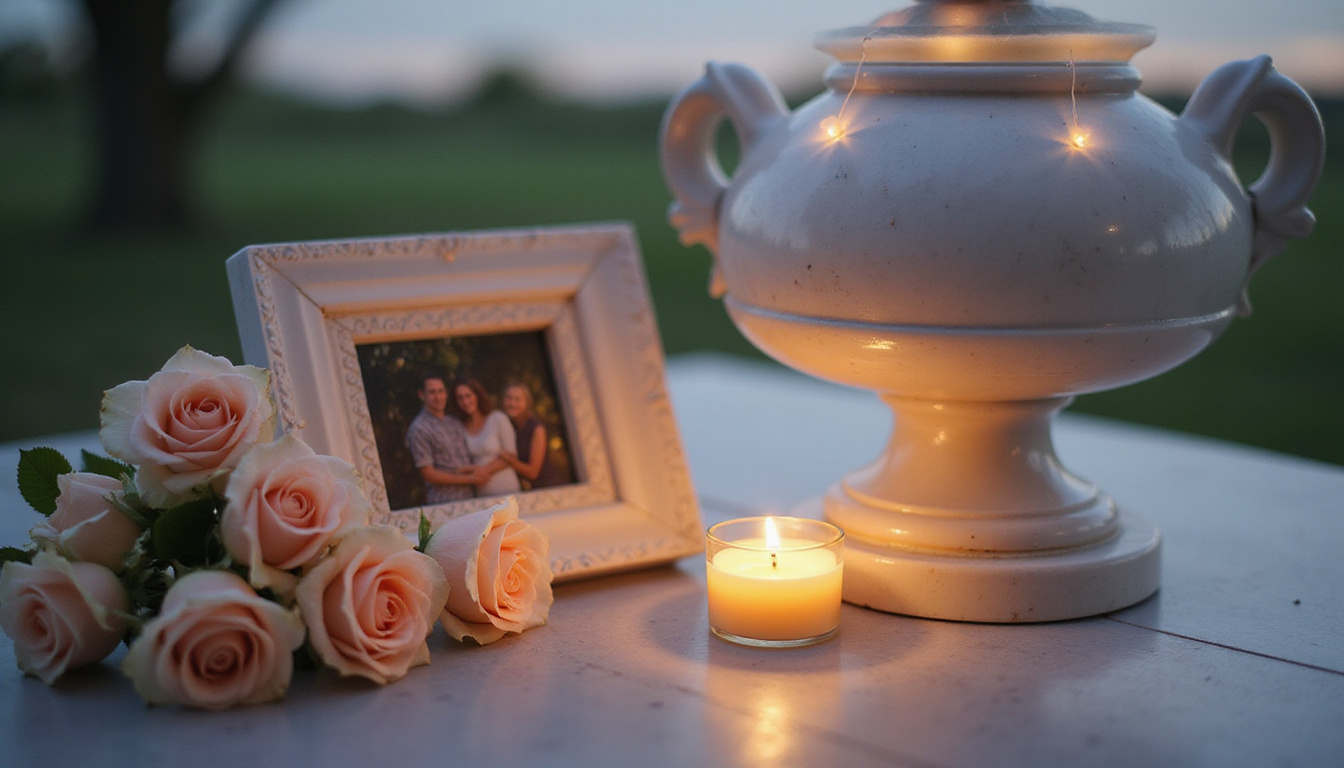
A funerary urn that reflects favorite colors, a beloved flower, or a lifelong passion can feel deeply comforting to family members.
5. Personalization options that add meaning
Many families find comfort in adding custom touches that transform a standard urn into something unmistakably “them.”
Common personalization options include:
- Name and dates – Full name, birth and death dates.
- Short inscriptions – “Forever in our hearts,” “Beloved Mother,” or a meaningful quote.
- Engraved images – Religious symbols, nature scenes, military or club emblems.
- Photo urns – Frames built into the front, or printed images on the urn itself.
- Handwriting or signatures – Laser-engraved scans of your loved one’s actual handwriting.
- Custom colors or patterns – Matching favorite sports team colors, alma mater colors, or meaningful palettes.
Many online retailers and funeral homes allow you to preview engraving layouts before finalizing, which can help you feel confident in your selection.
6. Balancing emotion and budget when choosing a funerary urn
Costs vary widely, from modest to high-end artisanal pieces. There is no “right” amount to spend. What matters is how meaningful the urn is to you and your family.
Typical price ranges
- Simple temporary containers: Minimal or included with cremation.
- Basic metal or wood urns: Often in an affordable range.
- Artistic or handcrafted urns: Higher cost, reflecting artistry and uniqueness.
- Custom-designed or commissioned pieces: Can be significantly more, depending on the artist.
Ways to choose wisely
- Set a budget range before shopping.
- Remember that price ≠ love. A simple, heartfelt funerary urn can be every bit as honoring as a costly one.
- Consider mixing:
- A modest main urn
- Beautiful but small keepsake urns or jewelry for multiple family members
If you feel pressured (by a salesperson or by emotion) to overspend, pause and revisit what truly matters: personal meaning, appropriateness for your plans, and family comfort.
7. Practical considerations: regulations, shipping, and timing
Check cemetery and columbarium rules
Before ordering, always verify:
- Permitted materials (metal vs. biodegradable, etc.)
- Maximum dimensions for niches
- Whether vaults are required for burial
- Any restrictions on designs or religious symbols
Re-confirm these details in writing when possible.
Shipping and timing
If you’re purchasing online:
- Look for estimated delivery dates, especially if you have a service date.
- Factor in engraving time—personalization can add a few days.
- Confirm that the urn is suitable for air travel if you will be flying with ashes; some urn materials (like metal) may need special handling at security.
Your funeral home can also temporarily hold ashes and transfer them into the chosen urn once it arrives.
8. Keepsake urns and memorial alternatives
A funerary urn isn’t the only way to honor someone. Many families now combine a primary urn with creative memorial options.
Keepsake choices
- Mini urns: Small versions of a larger urn for siblings or children.
- Cremation jewelry: Necklaces, rings, or bracelets that hold a pinch of ashes.
- Memorial candles or tealight urns: Contain some ashes with a place to light a small candle.
- Photo frames with ash compartment: Discreet and comforting for display.
Alternative memorials
Some households choose to place ashes into:
- Memorial trees or plantings using biodegradable urns.
- Memorial reefs created from ashes and placed in the ocean.
- Art pieces, such as glass or ceramics infused with cremation ash.
- Vinyl records or keepsake stones that incorporate remains.
These options can complement a traditional funerary urn, offering each family member a personal connection.
9. Emotional “fit”: how to know you’ve chosen the right urn
Beyond rules and logistics, choosing an urn is an emotional decision. Pay attention to:
- Your first reaction: Does it feel like them?
- Family responses: Do key family members feel comforted by the choice?
- Your comfort level: Can you imagine seeing this urn in the intended space and feeling peace, not regret?
If you hesitate, it may be worth taking an extra day to look again. Many people report a quiet sense of “this is right” when they find the funerary urn that truly reflects their loved one.
FAQ about choosing a funerary urn
1. How do I know what size cremation urn I need?
As a general guideline, plan on one cubic inch of capacity for each pound of body weight. Most adult cremation urns are designed to hold the remains of an average adult. If your loved one was larger, ask the cremation provider for an estimated volume of ashes and choose a slightly larger urn or a companion urn.
2. What is the difference between a cremation urn and a funerary urn?
The terms cremation urn and funerary urn are often used interchangeably. Both refer to a container designed to hold cremated remains. “Funerary urn” is a broader term that can include decorative, burial, or memorial urns used in funeral and memorial settings.
3. Can I travel by air with a funerary urn?
Yes, airlines typically allow cremated remains, but there are rules. The urn must usually be scannable (wood or plastic is better than opaque metal) for TSA security. Keep a copy of the death certificate and cremation certificate, and check your airline’s specific guidelines well before travel.
Choosing a funerary urn that truly honors your loved one
The right funerary urn does more than hold ashes; it holds memories, stories, and love. By considering purpose, size, material, style, and personalization—and by listening to your emotions as you browse—you can find an urn that feels like a genuine tribute.
If you’re ready to take the next step, start by writing down how you’d describe your loved one in three words, then look for urns that match those qualities. When you find the one that makes you say, “Yes, that’s them,” you’ll know you’ve created a beautiful, lasting way to honor their life.
Sacred objects often carry deep cultural and spiritual meaning. Learn how these symbols relate to history, spirituality, and the human mind by exploring more articles at SpiritualMindScience.com.