Face reading has fascinated people for centuries, from ancient Chinese mien shiang to modern microexpression research. While it’s not a magical mind-reading tool, face reading can give you quick, useful clues about personality, hidden emotions, potential lies, and attraction—especially when you combine it with context and good judgment.
This guide breaks down practical, science-informed face reading hacks you can start using right away, without needing to memorize complicated charts.
What Is Face Reading (and What It Isn’t)?
Face reading is the practice of interpreting facial features and expressions to gain insight into a person’s character, emotional state, and intentions. It spans:
- Traditional systems (like Chinese face reading, or mien shiang)
- Modern psychology (microexpressions, body language, nonverbal communication)
Important realities:
- It’s probabilistic, not absolute: Strong jaw ≠ guaranteed stubbornness; it’s just a hint to consider.
- Context is everything: Culture, environment, and mood all affect signals.
- Ethics matter: Use face reading to understand and connect, not manipulate or label.
When you approach face reading as a way to enhance empathy instead of “judge a book by its cover,” it becomes far more accurate and helpful.
The Three Pillars of Practical Face Reading
A useful way to think about face reading:
- Static features – Bone structure and long-term lines (personality tendencies, life patterns)
- Dynamic expressions – Microexpressions and fleeting signals (current emotions)
- Context & congruence – Matching words, tone, body language, and situation
You usually get the best insight when all three align.
Static Features: Personality Clues in Facial Structure
Static features hint at long-term tendencies, not absolute truths. Use them as soft signals, not verdicts.
1. Eyes: Openness, Focus, and Emotional Style
-
Large, open eyes
- Tendencies: Emotionally expressive; more reactive and sensitive; curious.
- Social clue: May show feelings more openly—easy to read, easy to connect with.
-
Smaller, narrow-set or deep-set eyes
- Tendencies: More guarded; observant; slower to trust or reveal emotions.
- Social clue: May think before they speak; harder to read at first.
-
Strong eye contact
- Can signal confidence, interest, or even dominance.
- Too intense: Could be aggression, control, or overcompensation.
- Very brief or avoided: Could be shyness, respect (in some cultures), anxiety—or concealment.
Hack: Notice how their eye contact changes. A shift from normal eye contact to sudden avoidance during a specific question is often more meaningful than their baseline style.
2. Eyebrows: Willpower, Focus, and Engagement
-
Thick, prominent brows
- Often associated with strong will, drive, and intensity.
- These people may press their views more firmly.
-
Soft, lighter brows
- Suggest a gentler approach; may be more accommodating or adaptable.
-
Straight brows
- Linked to a more logical, analytical style.
- They might prefer facts over feelings.
-
Highly arched brows
- Can indicate expressiveness and emotional responsiveness.
- Often show surprise or shock clearly.
Hack: When someone raises one eyebrow subtly, it often signals skepticism or doubt—even if they’re verbally agreeing.
3. Nose and Mouth: Drive, Communication, and Pleasure
-
Strong, prominent nose
- Traditional interpretations: ambition, self-drive, independence.
- They may prefer leading rather than following.
-
Full lips
- Tendencies: Warmth, sensuality, comfort with affection and pleasure.
- Often more verbally and physically expressive.
-
Thinner lips
- Tendencies: Reserved communication style, less overt emotional display.
- Not “cold,” just less showy with feelings.
Hack: Look at how the corners of the mouth rest. Slightly upturned at rest can suggest an optimistic baseline; downturned may signal a more serious or critical baseline mindset.
4. Jawline and Chin: Resilience and Determination
-
Strong jawline, prominent chin
- Often read as determination, persistence, and strong opinions.
- Can be great for leadership—if paired with empathy.
-
Softer jawline
- May signal flexibility, adaptability, and a more cooperative style.
- Might avoid conflict or direct confrontation.
Hack: Combine jawline with voice and posture. Strong jaw + firm voice + upright stance usually means more assertiveness than jaw alone.
Dynamic Face Reading: How to Spot Hidden Emotions
Dynamic face reading is where modern research shines—especially through microexpressions, the tiny, involuntary facial movements that reveal how someone really feels, often in under half a second (source: Paul Ekman Group).
The Big Seven Microexpressions
These core expressions appear similarly across many cultures:
- Happiness – Eyes crinkle (crow’s feet), cheeks raise, mouth corners lift.
- Sadness – Inner eyebrows pull up, eyelids droop, corners of the mouth turn down.
- Anger – Brows pull down and together, eyes harden, lips tighten or press.
- Fear – Brows raised and drawn together, eyes wide, lips stretched horizontally.
- Surprise – Brows arch high, eyes wide, jaw drops slightly.
- Disgust – Nose wrinkles, upper lip raises, cheeks lift.
- Contempt – One corner of the mouth lifts in a half-smirk on one side.
Hack: When someone says “I’m fine” but flashes a microexpression of disgust or contempt for a split second, they’re almost certainly not fine.
Face Reading for Lies: What to Actually Look For
There is no single facial expression that guarantees lying. However, lies are hard to maintain, and inconsistency shows up on the face.
Key Signs of Possible Deception
Look for clusters, not one-offs:
-
Mismatch between words and face
- Saying “I’m excited” with a tight jaw and no real eye smile.
- Saying “I don’t mind” while flashing a quick microexpression of anger or disgust.
-
Timing issues
- Smile appearing after the statement, not naturally with it.
- Emotion that lingers too long or feels “performed.”
-
Asymmetrical expressions
- A smile on just one side that looks more like contempt than joy.
-
Eye and blink changes
- Sudden increase or decrease in blinking after a sensitive question.
- Quick eye dart away right as they answer (especially if this differs from their normal style).
-
Mouth behaviors
- Lip biting, lip pressing, or tongue pushing against the inside of the cheek when answering.
Hack: Ask a neutral baseline question (“What did you do last weekend?”) and notice their natural face. Then move to more sensitive topics. Sudden, sharp changes in their facial behavior are what matter most.
Face Reading for Attraction: Subtle Signs Someone Likes You
Attraction often leaks through microexpressions and small facial behaviors, even when someone tries to play it cool.
Common Facial Signs of Attraction
-
Prolonged or repeated glances
- Looking at you, looking away, then looking back again.
- Pupils may dilate in warm, low-stress contexts.
-
Real smile (Duchenne smile)
- Eyes crinkle, cheeks raise, and the smile looks “full.”
- Happens more often around someone they genuinely enjoy.
-
Lip and mouth cues
- Brief lip biting or lip licking when you’re talking.
- Subtle parting of lips when making eye contact.
-
Eyebrow flashes
- Quick up-and-down movement of eyebrows when they first see you; a universal sign of recognition and interest.
Hack: Watch for mirroring. If they subconsciously mirror your facial expressions—smiling when you smile, relaxing when you relax—it’s often a strong sign of comfort and attraction.
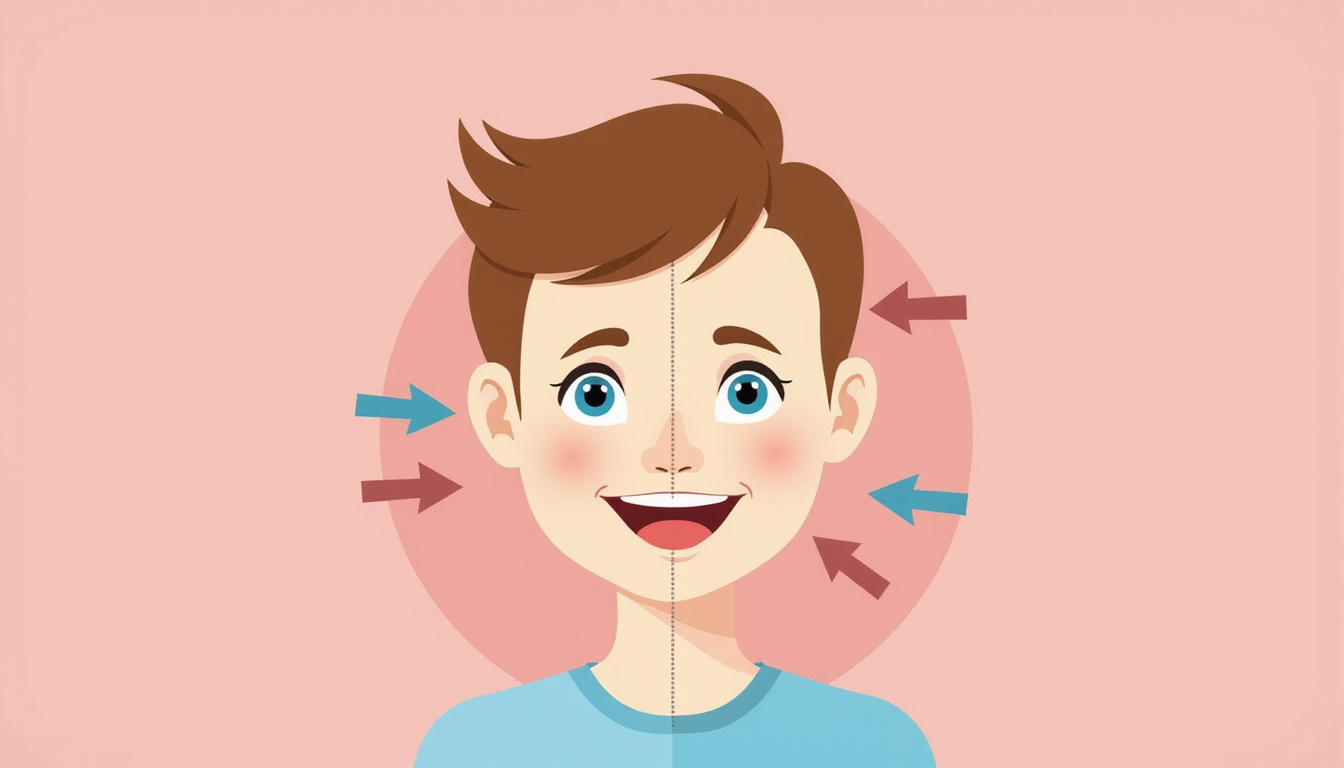
Fast Face Reading: A 5-Second Scan You Can Use Anywhere
When you meet someone, you can quickly apply a simple, ethical face reading routine:
-
Eyes (1 second)
- Are they open and expressive or guarded?
- Comfortable or tense eye contact?
-
Mouth (1 second)
- Resting expression: neutral, slightly upturned, or tense?
- Any micro-twitches when they first speak?
-
Brows and forehead (1 second)
- Relaxed or frequently furrowed?
- Raised brows when you speak (interest) or flat (bored)?
-
Overall tension (1 second)
- Jaw clenching, lip pressing, or rigid face = tension or stress.
- Soft, moving, responsive face = comfort.
-
Congruence check (1 second)
- Do their facial expressions match their words, tone, and body language?
Use this as a quick calibration, then continue reading them in real time as you talk.
One Powerful Rule: Congruence Beats Any Feature
The single most reliable principle in face reading:
When words and face disagree, investigate the face.
Examples:
-
They say: “It’s no big deal.”
Face: tight jaw, small flash of anger or sadness.
Interpretation: It is a big deal to them. -
They say: “I’m really happy for you.”
Face: microexpression of contempt or jealousy, forced smile.
Interpretation: Mixed feelings—part happy, part threatened.
Use this not to accuse people, but to adjust how you respond: more empathy, clearer questions, or slower pacing.
Ethical Face Reading: Avoid These Common Mistakes
Face reading can easily be misused. Protect yourself and others by avoiding:
-
Snap judgments
- “He has a strong jaw, so he’s arrogant.”
- “She avoided eye contact, so she’s lying.”
Instead: Treat signals as hypotheses to test, not instant conclusions.
-
Ignoring cultural differences
- Eye contact, smiles, and emotional display vary widely by culture.
- What looks “shy” in one culture may be “polite” in another.
-
Overconfidence
- Even experts are not 100% accurate.
- Combine face reading with facts, conversation, and context.
-
Manipulation
- Reading emotions to push someone where they don’t want to go is unethical.
- Aim to build trust, not control.
Quick Reference: Face Reading Hacks Checklist
Use this simple checklist as a mental cheat sheet:
- Notice eyes: engagement, avoidance, or tension?
- Watch the mouth: does the smile reach the eyes?
- Scan the brows and forehead: relaxed, surprised, angry, or sad?
- Look for microexpressions during sensitive topics.
- Check congruence: do facial cues match words and tone?
- Observe changes over time: what shifts when certain topics come up?
- Always factor in context and culture before interpreting.
FAQ: Face Reading and Personality, Lies, and Attraction
1. Is face reading accurate for understanding personality?
Face reading can suggest tendencies, not fixed traits. Static features like eyes, jawline, and mouth shape can align with certain personality patterns, but they should never be used alone to judge someone. The most accurate personality insights come from facial behavior over time, not just bone structure.
2. Can face reading really detect lies?
Face reading cannot tell you “This person is lying” with certainty. What it can reveal is emotional leakage and inconsistency—microexpressions of fear, guilt, anger, or contempt when someone claims to feel nothing. Use these as prompts to ask better questions, not as courtroom-level proof.
3. How can I use face reading to know if someone is attracted to me?
Look for clusters of signals: genuine smiling that reaches the eyes, longer-than-normal eye contact, repeated glances, subtle lip biting or licking, and mirroring your facial expressions. Any one cue could mean many things; when several appear together and stay consistent over time, attraction becomes more likely.
Turn Face Reading into a Real-Life Superpower
Face reading isn’t about becoming a human lie detector; it’s about upgrading your emotional radar so you can connect more deeply, avoid misunderstandings, and sense what people often struggle to say out loud.
If you start today by:
- Watching for microexpressions in everyday conversations
- Comparing people’s words with their facial congruence
- Using facial cues to respond with more empathy and precision
you’ll quickly notice how your relationships, negotiations, and first impressions improve.
Take these face reading hacks out into your next meeting, date, or social event. Pay quiet attention, test what you see, and refine your intuition. The more you practice, the more naturally you’ll decode personality, spot hidden emotions, and sense attraction—often in just a few seconds.
Now is the perfect time to sharpen this underrated skill. Start observing, experimenting, and using face reading to build stronger, more honest, and more meaningful connections in every area of your life.
Cultural superstitions have shaped traditions and beliefs for generations. Explore the psychology, cultural history, and science behind these fascinating practices at SpiritualMindScience.com.