The ceremonial pipe is one of the most recognized sacred objects in many Indigenous cultures of North America, yet it is also one of the most misunderstood. Often oversimplified as merely a “peace pipe,” the ceremonial pipe is in fact a complex spiritual tool, a living symbol of prayer, relationship, and responsibility. Understanding its origins, meanings, and traditions requires respect, accuracy, and a willingness to look beyond stereotypes.
What is a ceremonial pipe?
At its core, a ceremonial pipe is a sacred object used in prayer, ceremony, and treaty-making by numerous Native American and First Nations peoples. It is not a recreational smoking device. Rather, the pipe is:
- A mediator between humans and the spirit world
- A symbol of agreements, covenants, and promises
- A ceremonial focal point for community, healing, and thanksgiving
The ceremonial pipe is typically composed of two main parts:
- A carved bowl (often made of stone, such as catlinite, also called pipestone)
- A wooden stem (frequently made from a local, spiritually significant wood)
Bringing stem and bowl together is itself a sacred act, representing the joining of different forces—earth and sky, feminine and masculine, people and spirits, prayer and breath.
Origins and early history of the ceremonial pipe
Ancient roots across the continent
Archaeological evidence shows that pipe traditions in North America date back thousands of years. Pipes have been found in burial mounds and village sites spanning from the Eastern Woodlands to the Great Plains and the Southwest. While not all were “ceremonial pipes” in the sense used today, they reveal a deep, ancient tradition of tobacco and herb use in ritual contexts.
Key historical points include:
-
Pre-contact use
Long before European contact, many Indigenous nations used pipes in ceremony, diplomacy, and healing. Pipes were often placed in graves as offerings, symbolizing prayers and connection with ancestors. -
Regional diversity
The symbolism, materials, and specific rituals associated with pipes vary widely. For example, Lakota, Dakota, and Nakota peoples have the Chanunpa; among other Plains nations, the pipe may take different forms and carry distinct stories and responsibilities. -
Trade networks and shared practices
Certain pipestone quarries, such as those in present-day Minnesota, were neutral zones where multiple nations gathered peacefully to obtain stone for sacred pipes. This further elevated the symbolic role of the pipe in peace-making and shared spiritual ground (source: National Park Service).
The symbolism and meaning of the ceremonial pipe
While each nation has its own teachings, a few common themes help explain the deep meaning of the ceremonial pipe.
Connection between worlds
When a ceremonial pipe is filled with tobacco or a traditional herbal mixture and raised in prayer, the smoke is seen as carrying those prayers upward. This act forms a bridge between:
- The people and the Creator or Great Mystery
- The physical world and the spirit world
- Human concerns and the broader web of life
The pipe is thus a communication tool—not for casual conversation, but for heartfelt petitions, gratitude, and commitments.
Unity and relationship
The bringing together of the stem and the bowl is rich with symbolism, often understood as:
- The union of earth (stone bowl) and sky (wooden stem reaching upward)
- The balancing of feminine and masculine energies
- The coming together of nations, families, or individuals in peace
In many teachings, the ceremonial pipe embodies relationship, reminding participants that every agreement and every prayer ties them to others—people, land, waters, animals, and spirits.
Responsibility and truth
To hold or smoke a ceremonial pipe is to take on responsibility. Many teachings emphasize that:
- One must speak truthfully when in the presence of the pipe
- Commitments made under the pipe are not to be broken lightly
- Misusing or abusing the ceremonial pipe can bring spiritual consequences
Because of this, the pipe is handled with great care, often by designated pipe carriers who have undergone years of learning and preparation.
Sacred smoking traditions: how ceremonial pipes are used
The specific ways a ceremonial pipe is used vary widely among tribes and communities. However, some common ceremonial contexts include:
1. Prayer and personal ceremony
Individuals or families may use a ceremonial pipe in their homes, lodges, or outdoor spaces to:
- Offer daily prayers
- Seek guidance for difficult decisions
- Honor ancestors and the land
- Express gratitude for life and blessings
The act of filling, lighting, and smoking the pipe follows prescribed protocols that have been passed down through generations.
2. Community and seasonal ceremonies
Pipes are central to many communal ceremonies, such as:
- Seasonal feasts and dances
- Healing or recovery ceremonies
- Naming or adoption ceremonies
- Ceremonies connected to the harvest, the buffalo, or other life-giving beings
In such gatherings, the pipe may be passed clockwise around the circle, with each person offering silent or spoken prayers before taking a puff and handing it on in a respectful way.
3. Diplomacy, peace-making, and agreements
The non-Indigenous term “peace pipe” likely arose because Europeans often saw pipes used in treaty ceremonies and diplomatic encounters. In these contexts, ceremonial pipes:
- Sanctified agreements between nations
- Marked commitments to peace, trade, or mutual aid
- Served as a witness to promises, calling on spiritual forces to uphold the covenant
Importantly, not all pipe ceremonies were—or are—about peace with outsiders; many are about internal community harmony, reconciliation, and moral obligations.
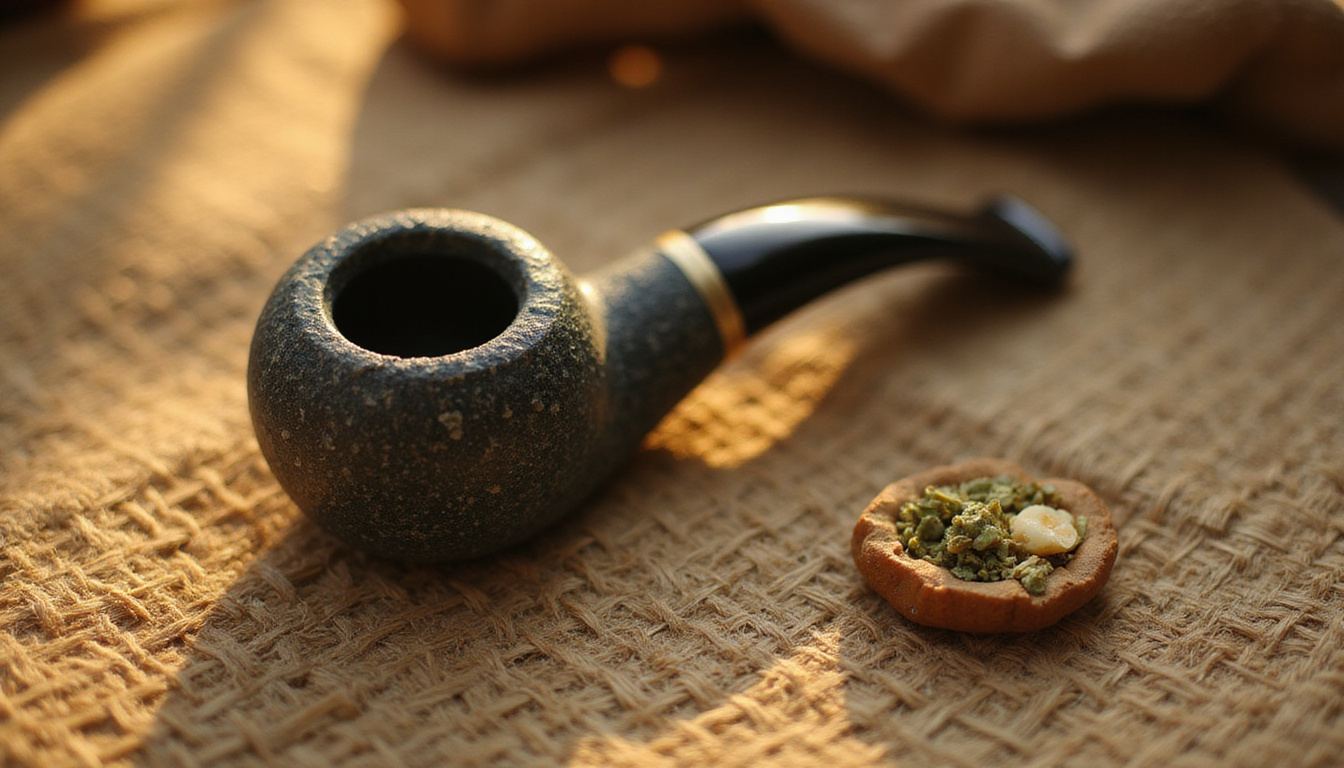
Components and materials: more than craft
A ceremonial pipe is not just a beautiful object; each component and material can hold spiritual meaning.
The stone bowl
The bowl is often carved from sacred stone. In many Plains traditions, catlinite or pipestone is preferred because of its softness and rich red color, sometimes associated with:
- The blood or lifeforce of the earth
- Sacrifice and transformation
- The living memory of ancestors
Quarrying and carving the bowl are considered spiritual tasks, accompanied by offerings, prayers, and protocols.
The wooden stem
The stem, frequently made from woods like ash, sumac, or other local trees, may represent:
- The tree of life or the world tree
- Growth, direction, and breath
- The people or community as a living, growing body
Feathers, beadwork, fur, or cloth might be attached to the stem, each carrying teachings and stories.
The sacred blends
Contrary to modern commercial tobacco use, traditional smoking in ceremonies often involves:
- Natural tobacco (Nicotiana rustica or other native varieties)
- Blends with sage, sweetgrass, cedar, bearberry (kinnikinnick), or other local plants
These blends are offerings, not commodities. Quantity is modest; the aim is prayerful use, not intoxication.
Protocols and respect around ceremonial pipes
Because the ceremonial pipe is so sacred, there are many protocols around its handling and presence.
Common principles include:
- Do not touch without permission. Even admirers should never handle a pipe unless explicitly invited.
- Follow the host’s lead. When attending a ceremony, watch and listen. Each community and leader has specific ways of filling, lighting, and passing the pipe.
- Avoid casual photography or display. Many communities prohibit photographing sacred objects or posting them on social media.
- Separate from recreational or addictive use. Sacred smoking is intentional and limited, grounded in prayer, not habit or commercial products.
For non-Indigenous people, it is especially important not to copy, commercialize, or “invent” ceremonies involving pipes. Authentic pipe teachings come from recognized cultural knowledge holders, not from books or online instructions alone.
Contemporary challenges and revitalization
Misrepresentation and commercialization
The image of the “peace pipe” has been widely commodified—from tourist souvenirs to movie clichés. These misrepresentations:
- Flatten vast cultural diversity into one stereotype
- Ignore the deep responsibilities and teachings of pipe carriers
- Often involve the sale of cheaply made “pipes” with no ceremonial legitimacy
Such misuse can be harmful, contributing to cultural appropriation and disrespect of living traditions.
Revival and protection of traditions
Despite centuries of oppression, bans on ceremonies, and forced assimilation, many Indigenous nations are actively revitalizing their ceremonial pipe traditions:
- Elders are passing on teachings to younger generations in their own languages.
- Community-led cultural programs support learning proper protocols.
- Legal and cultural protections are being asserted to defend sacred sites, including historic pipestone quarries and burial grounds.
The resilience of these practices underscores the enduring power of the pipe as a symbol of life, relationship, and sovereignty.
How non-Indigenous people can show respect
If you are not from a culture that uses a ceremonial pipe, you can still support and honor these traditions in meaningful ways.
Here are some respectful approaches:
- Learn from reputable Indigenous-led sources (tribal websites, community-authored books, cultural centers).
- Avoid buying or selling “Native-style pipes” if you do not know their origin and cultural context.
- Support Indigenous sovereignty over sacred sites, including traditional quarries and burial areas.
- When invited to a ceremony, ask quietly about expectations (dress, behavior, phones, photos) and follow guidance.
- Recognize that some knowledge is not meant for public sharing and accept boundaries without pressure or entitlement.
FAQ: ceremonial pipe traditions and questions
1. What is the purpose of a Native American ceremonial pipe?
A Native American ceremonial pipe is used primarily for prayer, ceremony, and making or witnessing agreements. Its purpose is to connect participants with the Creator and the spirit world, to sanctify relationships, and to carry prayers through the rising smoke. It is not meant for casual or recreational smoking, but for focused, respectful spiritual practice.
2. Is it appropriate for anyone to use a sacred ceremonial pipe?
Generally, no. A sacred ceremonial pipe is tied to a specific tradition, community, and lineage of teachings. Pipe carriers are usually recognized and prepared through long-term cultural and spiritual training. Non-Indigenous people, or those outside a given tradition, should not independently adopt or perform sacred pipe ceremonies without legitimate guidance and permission from qualified cultural authorities.
3. What do Indigenous ceremonial smoking traditions teach about tobacco?
Indigenous ceremonial smoking traditions teach that tobacco is a powerful, sacred plant and should be used sparingly and respectfully as an offering, not as a product of addiction or profit. When used in a ceremonial pipe, tobacco—or herbal mixtures—are understood as carriers of prayers. This sacred view of tobacco contrasts with commercial tobacco, which is mass-produced, heavily processed, and linked to exploitative industries and significant health risks.
Honoring the living legacy of the ceremonial pipe
The ceremonial pipe is far more than a historical curiosity or a romantic symbol of the “Old West.” It is a living, evolving center of spiritual life for many Indigenous nations—a way to speak to the Creator, to acknowledge responsibilities, and to bring people together in truth and humility.
If this subject speaks to you, the most meaningful next step is to listen to Indigenous voices directly: visit tribally run museums and cultural centers, read works by Indigenous authors, and support community-led cultural preservation. When you encounter the image or mention of a ceremonial pipe in media, ask whose story is being told—and whose voice is missing.
By choosing respect over curiosity and relationship over appropriation, you can play a small but real part in honoring the sacred pipe traditions that continue to sustain communities today.
Sacred objects often carry deep cultural and spiritual meaning. Learn how these symbols relate to history, spirituality, and the human mind by exploring more articles at SpiritualMindScience.com.