Across ancient myths, sacred texts, dreams, and even corporate logos, bull symbolism appears again and again. Few animals carry as much weight in the human imagination as the bull: strength, virility, stubbornness, rage, wealth, sacrifice, and divine power all live inside this single image. Understanding what the bull means—spiritually, psychologically, and in daily life—can give you a powerful lens for interpreting your own experiences and inner world.
Below, we’ll explore the bull’s hidden meanings across cultures and religions, its spiritual energy in astrology and dreams, and the everyday signs that may show this powerful archetype is at work in your life.
The core meaning of bull symbolism
At its heart, bull symbolism sits at the intersection of raw power and grounded stability. The bull is not just “strong”; it is:
- Embodied strength – physical, material, and practical
- Life-force and fertility – linked to reproduction, abundance, and growth
- Stubborn will – persistence that can become either loyalty or inflexibility
- Protective force – a guardian of land, family, or values
- Sacrificial energy – power willingly given up or transformed
The bull’s energy is earthy and tangible. While some spiritual symbols are ethereal or abstract, the bull reminds us of the power of the body, the importance of resources, and the reality of the physical world.
Bull symbolism in ancient cultures and myth
Nearly every ancient civilization that knew cattle developed deep symbolic stories around the bull. These myths give us a map of what the bull has meant to human beings across time.
Mesopotamia and the Bull of Heaven
In Sumerian and later Mesopotamian mythology, the Bull of Heaven appears in the Epic of Gilgamesh. Sent by the goddess Ishtar to punish Gilgamesh, this celestial bull represents:
- Devastating power of the gods
- Famine and chaos when nature’s balance is disturbed
- The struggle between human pride and divine forces
Here, the bull becomes a cosmic enforcer—a reminder that unchecked ego can provoke forces greater than ourselves.
Egypt: Apis bull and divine embodiment
In ancient Egypt, the Apis bull was worshiped as a living manifestation of the god Ptah (and later associated with Osiris). Selected bulls were treated as sacred, housed in temples, and given elaborate burials.
Key meanings of bull symbolism in Egypt:
- Divine presence in physical form
- Link between earthly life and the afterlife
- Fertility, kingship, and royal authority
The bull wasn’t just symbolic; it was literally understood as a vessel of divine power.
Greece and Rome: Zeus, Minotaur, and virile strength
In Greek myth, the bull frequently connects with the god Zeus, who transforms into a white bull to abduct Europa. The Minotaur, a bull-headed monster, lives in the Labyrinth and devours sacrifices.
These myths show:
- The bull as irresistible desire and sexual power
- The bull as uncontrolled instinct that must be faced and integrated
- The bull as test or trial in the hero’s journey (defeating or outsmarting the bull)
In Roman culture, bull sacrifices (taurobolium) were sometimes linked with purification and rebirth, deepening the theme of the bull as a bridge between death and renewal.
Celtic and Indo-European traditions
In Celtic lore, bulls appear in epic tales such as the Táin Bó Cúailnge (“The Cattle Raid of Cooley”), where a prized bull becomes the object of war. As in many Indo-European traditions, the bull represents:
- Wealth and status (owning cattle = prosperity)
- War power and martial strength
- Territorial protection
Here, bull symbolism fuses economic power with warrior energy.
Religious and spiritual meanings of the bull
Beyond myth, bulls carry deep religious and spiritual significance.
The bull in Hinduism and Eastern traditions
In Hinduism, the most recognizable bull figure is Nandi, the sacred white bull and mount (vahana) of Lord Shiva. Nandi is not just Shiva’s vehicle; he is also a gatekeeper and devotee.
Nandi’s symbolism includes:
- Devotion and loyalty to the divine
- Guardian of sacred space (temples and inner truth)
- Control of instincts through spiritual discipline
Many temples depict Nandi calmly facing the main shrine, signifying the focused, grounded mind turned toward God.
Judaic and Christian references
In the Hebrew Bible and early Judaism, bulls and oxen frequently appear in the context of sacrifice and covenant. Burnt offerings of bulls symbolized:
- Atonement and reconciliation with the divine
- Gratitude and dedication
- Surrender of something valuable to a higher purpose
In Christianity, the ox (closely related symbolically to the bull) is associated with the Gospel writer Luke, often symbolizing:
- Service, sacrifice, and endurance
- Steady, faithful work in the spiritual field
Here, bull symbolism softens from wild strength into devoted service.
Modern pagan and earth-based paths
Contemporary paganism and earth-based spirituality often view bull symbolism as:
- Embodied masculine energy (not strictly male, but active and outward)
- Connection to the Earth element – soil, food, money, stability
- Ritual power – harnessing primal force respectfully
Rituals and visualizations may call on bull energy to strengthen personal boundaries, courage, or willpower.
Astrological bull symbolism: Taurus energy
In Western astrology, the bull represents the sign of Taurus (April 20 – May 20). Even if you’re not a Taurus, this archetype shows up somewhere in your birth chart.
Taurus and its bull symbolism emphasize:
- Stability and security – building solid foundations
- Sensuality and pleasure – food, touch, beauty, nature
- Patience and persistence – slow, steady progress
- Possessiveness and stubbornness as shadow traits
When Taurus energy is balanced, the bull becomes a patient builder and keeper of resources. When unbalanced, it can become rigid, materialistic, or resistant to necessary change.
Bull symbolism in dreams
Seeing a bull in your dreams can feel intense. The meaning depends heavily on the bull’s behavior—and yours.
Common dream scenarios and meanings
-
Being chased by a bull
- You may be running from strong emotions—anger, desire, or ambition.
- A powerful part of you (or a person in your life) feels threatening because it’s uncontrolled or unacknowledged.
-
Calmly observing a bull
- Indicates you’re becoming aware of your own strength or latent potential.
- May signal a period of financial stability or groundedness.
-
Riding or controlling a bull
- Symbolizes mastering your instincts, passions, or drive.
- Suggests leadership and the ability to direct powerful forces in your life.
-
Injured, sacrificed, or dead bull
- Points to burnout, loss of strength, or giving up your power.
- May signal a major transformation in your relationship to work, money, or sexuality.
-
Multiple bulls or a herd
- Emphasizes community wealth, shared resources, or group power.
- Could also show social pressure or competitive environments.
The emotional tone of the dream—fear, awe, excitement, peace—helps clarify how bull symbolism is playing out in your psyche.
Everyday signs of bull energy in your life
You don’t have to see an actual bull to be influenced by its symbolism. This archetype appears in subtler ways.
You may be experiencing bull energy if:
- You feel a strong pull toward financial security and building long-term stability.
- You’re dealing with issues of stubbornness, either in yourself or in someone close.
- You’ve started lifting weights, changing your diet, or focusing on physical strength.
- Themes of protection, territory, or boundary-setting are front and center.
- You keep noticing bull-related imagery—logos, art, movies, social media posts—repeating in a short period.
These repeating signs can act like symbolic “echoes,” pointing to an area of life where grounded power, persistence, and embodiment need attention.
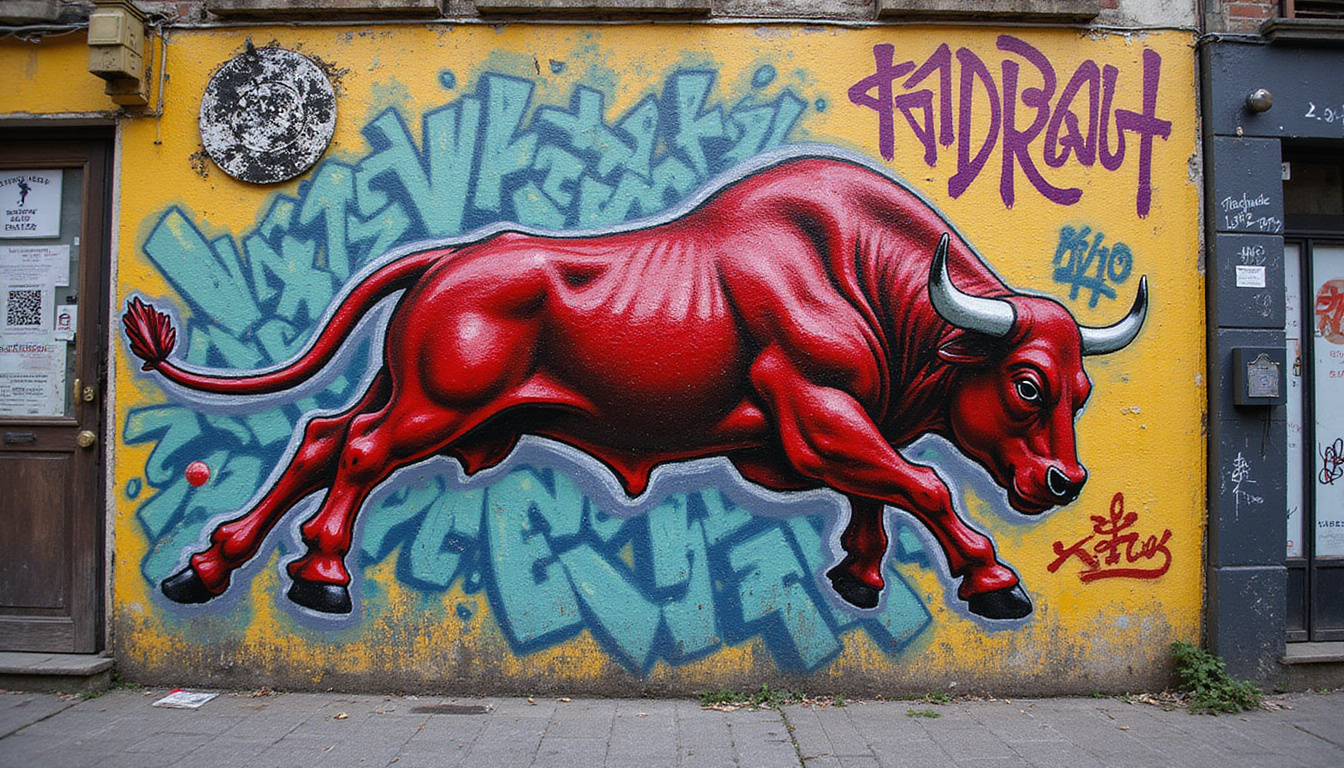
Positive and shadow sides of bull symbolism
Like any powerful symbol, the bull has both light and shadow expressions. Integrating bull energy involves recognizing both.
Positive expressions
- Courage and strength in the face of difficulty
- Reliability – showing up consistently for work, loved ones, and commitments
- Grounded presence – living in the body, savoring life’s simple pleasures
- Healthy boundaries – protecting what matters without unnecessary aggression
- Abundance and prosperity – building wealth through steady effort
Shadow expressions
- Aggression and rage – charging at perceived threats without reflection
- Stubbornness – refusing to grow, evolve, or compromise
- Possessiveness and jealousy – treating people or things as property
- Over-identification with material success – self-worth based only on money, status, or productivity
- Resistance to necessary change – clinging to comfort over growth
The goal is not to reject bull energy when it turns dark, but to tame and channel it—much like a skilled matador or cattle handler works with the animal’s nature rather than denying it exists.
How to consciously work with bull symbolism
If this symbol resonates with you, you can intentionally invite and balance its energy.
Practical ways to engage with bull energy
-
Ground in your body
- Prioritize sleep, nourishing food, and physical movement.
- Practice slow, mindful walking or yoga to strengthen your connection with the Earth.
-
Build something stable
- Create a savings plan, start a consistent project, or commit to a long-term goal.
- Use the bull’s patience to avoid quick-fix thinking.
-
Practice healthy boundaries
- Say no when necessary.
- Protect your time, energy, and values without overreacting.
-
Channel anger constructively
- Instead of explosions or suppression, use anger as fuel for change—advocacy, assertive communication, or focused action.
-
Balance strength with softness
- Remember that true power includes gentleness, listening, and flexibility.
- Complement bull energy with practices that cultivate empathy and openness.
Psychologists have long recognized that working with powerful symbols can support personal growth and integration, especially in Jungian and depth-psychology approaches (source: APA Dictionary of Psychology).
Quick reference: what the bull can symbolize
Use this list as a snapshot guide to bull symbolism:
- Physical strength and stamina
- Fertility, sexuality, and life-force
- Wealth, property, and material resources
- Stability, patience, and reliability
- Stubbornness and resistance to change
- Anger, aggression, and raw instinct
- Protection and guardianship
- Sacrifice, transformation, and ritual power
- Devotion and loyal service (e.g., Nandi, the sacred bull)
- Earth-based, sensual enjoyment of life
FAQ: common questions about bull symbolism
What does a bull symbolize spiritually?
Spiritually, a bull often symbolizes grounded power, fertility, and sacrifice. It embodies our life-force energy and the capacity to manifest things in the physical world. In many traditions, working with bull symbolism helps people cultivate strength, persistence in spiritual practice, and a balanced relationship with material life.
What does seeing a bull in a dream mean?
Seeing a bull in a dream usually points to strong emotions or powerful drives that are active in your life. A calm bull can signal stability, financial security, or healthy strength; an aggressive bull may reveal repressed anger, sexual energy, or ambition that feels overwhelming. The context and your feelings in the dream are key to interpreting this bull symbolism.
What does the bull represent in astrology and personality?
In astrology, the bull represents Taurus, associated with reliability, sensuality, and a love of comfort. As a personality symbol, the bull describes someone who is steady, loyal, and hardworking—but who may also be stubborn or slow to accept change. Integrating this aspect means honoring your need for security while staying open to growth.
Bringing bull symbolism into your own story
Bull symbolism runs deep: from temples and myths to dreams and daily life, it carries messages about strength, security, and the wild forces we hold inside. When you recognize the bull at work in your experiences—whether it appears as steady reliability or explosive frustration—you gain a chance to consciously shape that power instead of being ruled by it.
If the bull is showing up for you right now, take it as an invitation:
Where do you need more grounded strength, clearer boundaries, or patient building?
Where might stubbornness or fear of change be holding you back?
Explore these questions in your journal, meditation, or conversations with trusted friends or guides. Let the bull be your teacher—reminding you that real power isn’t just about charging forward, but about standing firmly in who you are, protecting what matters, and building a life that can weather any storm.
Now is a powerful time to work with this energy. Start by noticing where bull symbolism appears in your dreams, media, or daily interactions—and let it guide you toward a stronger, more stable, and more fully embodied version of yourself.
Animals have inspired symbols and beliefs across cultures for centuries. Discover how these traditions connect with psychology, spirituality, and human consciousness at SpiritualMindScience.com.