The humble black cat has carried more superstition on its shoulders than almost any other animal. From symbols of bad luck to witchy sidekicks, the black cat has been misunderstood for centuries. In reality, these sleek, stunning felines are just cats—loving, playful, and deserving of the same respect and care as any other companion animal.
In this guide, you’ll learn where the myths came from, what science and history really say, and how to give a black cat the happiest, healthiest life possible.
A brief history of black cat superstition
Black cat folklore didn’t appear out of nowhere. It was shaped over centuries by culture, religion, and fear.
Ancient times: symbols of power and protection
Long before they were feared, black cats were revered.
- Ancient Egypt: Cats of all colors, including black, were connected to the goddess Bastet, protector of home, fertility, and joy. Harming a cat was punishable by law, and some families even mummified their cats as honored companions in the afterlife.
- Other cultures: In parts of the Middle East and Asia, cats were seen as guardians against pests and bad spirits, appreciated more for their usefulness than their color.
Color was largely irrelevant—what mattered was the cat’s role in society.
Middle Ages: the rise of fear and witchcraft myths
In medieval Europe, fear and religion reshaped the black cat’s image:
- Cats were associated with independent women, widows, and healers—groups already mistrusted.
- During witch hunts, people began to claim witches could transform into black cats or use them as “familiars.”
- At night, a black cat’s coat made it nearly invisible, adding to the eerie stories that spread by word of mouth.
This is where the modern “evil black cat” stereotype started to take hold.
Mixed luck: from bad omens to good fortune
The myth isn’t universally negative:
- Scotland & England: A black cat arriving at your doorstep could mean prosperity or good luck in love.
- Sailors: Many sailors believed a black cat on board brought safe passage; fishermen’s wives sometimes kept black cats at home for protection of their husbands at sea.
So even within Europe, the black cat was both feared and treasured, depending on where you stood.
Myth vs reality: what black cats actually are
Let’s sort superstition from fact.
Myth 1: Black cats bring bad luck
Reality: There is zero scientific or statistical evidence that a black cat influences luck in any direction.
Bad luck events are often:
- Coincidental
- The result of human choices
- Noticeable because we’re primed to look for them after hearing a superstition
This is a textbook example of confirmation bias: we remember the times a black cat crossed our path and something went wrong, and forget all the times nothing happened at all.
Myth 2: Black cats are more aggressive or mysterious
Reality: Coat color doesn’t determine personality. Genetics, early socialization, and environment do.
- A black kitten raised with gentle handling, positive experiences, and routine will be as affectionate and social as any other.
- Studies into feline behavior find no consistent connection between coat color and temperament. Any differences that owners report are often due to perception or bias, not biology.
The “mysterious” vibe is mostly aesthetics and storytelling—not science.
Myth 3: Black cats are less healthy
Reality: Black cats are not inherently sicker than other cats. In some ways, they might even have certain advantages.
Research suggests the genes involved in black pigmentation may offer protection from some diseases, including viral infections—though this is still being studied (source: National Institutes of Health).
What really impacts a cat’s health:
- Diet quality
- Veterinary care
- Indoor vs outdoor lifestyle
- Genetics unrelated to color (such as breed tendencies)
Why black cats are often overlooked in shelters
One of the saddest consequences of these myths is how they affect adoption.
The “black cat syndrome” problem
Shelter workers often talk about “black cat syndrome,” the observation that black cats:
- Sit in shelters longer
- Are adopted less frequently
- Are more at risk of euthanasia in overcrowded facilities
Why it happens:
- Superstition and stigma – Some people still hesitate to bring a black cat into the home.
- Visibility – In cages with poor lighting or busy environments, darker cats can be harder to notice at a glance.
- Photos and social media – Black coats are tougher to photograph well, so online adoption listings might not show their personality as vividly.
Many shelters now run special campaigns to highlight black cats, especially around Halloween, to counteract these biases.
The unique beauty of a black cat
When you take a moment to truly look, black cats are stunning.
Subtle variations in shade
Not all black coats are identical:
- Jet black: Deep, glossy fur with a mirror-like sheen.
- Brownish black: In sunlight, some coats look chocolate or reddish. This can be natural or indicate mild sun bleaching or diet-related coat changes.
- Tabby “ghost” stripes: Some black cats carry the tabby gene, and you can see faint stripes or patterns in strong light or on their belly.
Golden eyes and striking contrast
Because of the contrast with their dark fur, a black cat’s:
- Amber or gold eyes can appear almost luminous
- Green eyes look especially bright and intense
- White whiskers or a tiny white patch on the chest (“locket”) stand out beautifully
Far from “plain,” black cats often look like they walked out of a fantasy illustration or a fashion shoot.
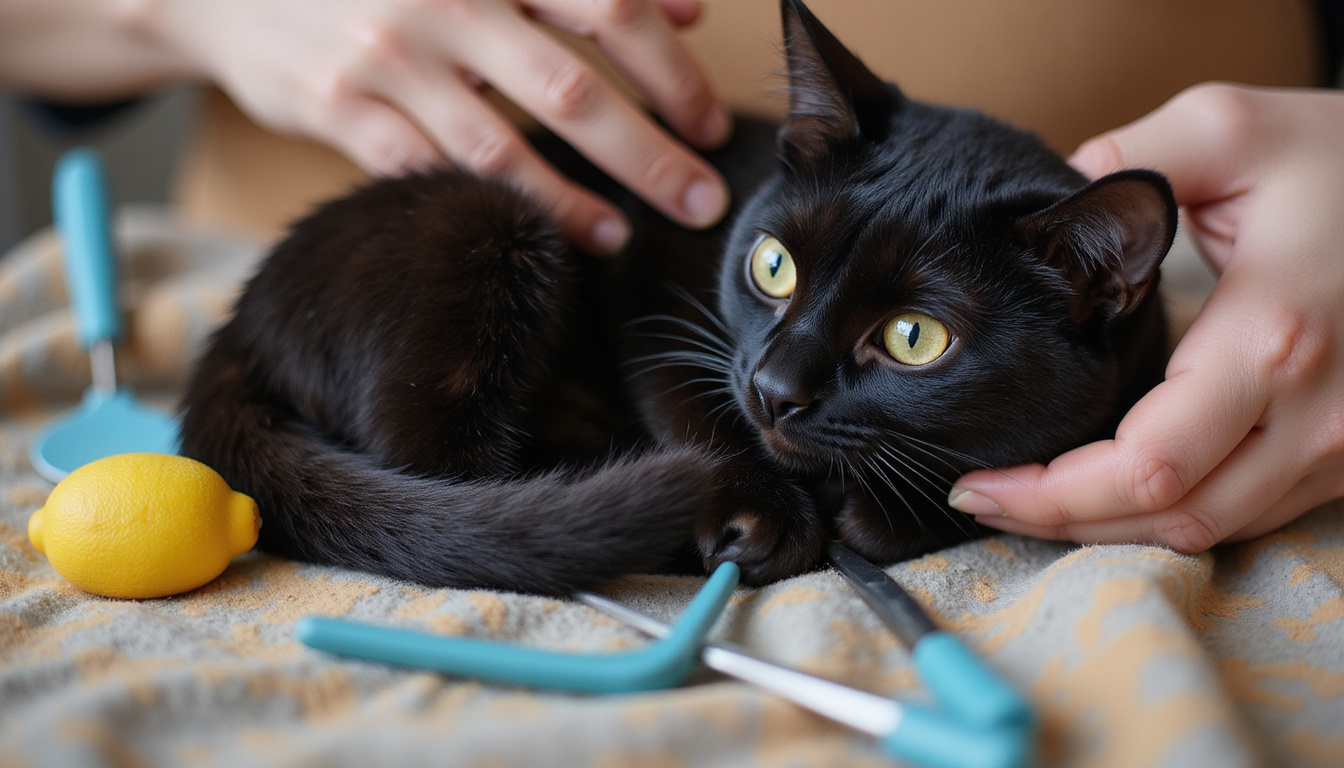
Essential care tips for black cat owners
Caring for a black cat is similar to caring for any cat, but there are a few color-specific considerations.
1. Grooming and coat maintenance
- Regular brushing: Even short-haired black cats benefit from brushing 1–2 times a week to reduce shedding and hairballs, and to keep their coat shiny.
- Check for flakes: Dandruff and dry skin can be more visible on dark fur. If you see white flakes, consider:
- Improving diet quality
- Adding a vet-approved omega-3 supplement
- Checking for parasites or skin conditions with your vet
- Monitor for bald spots: These are easier to overlook on darker coats. Part the fur occasionally, especially around the neck, base of tail, and belly.
2. Sun exposure and fading
Black fur absorbs more heat and sunlight:
- Indoors, sunbathing is usually fine, but prolonged exposure in very hot environments can lead to overheating.
- Some black cats “rust” or fade in strong sun, showing a brownish tone. This is usually cosmetic, but:
- Ensure they have shaded, cool areas to rest.
- Avoid allowing a black cat to be confined in sun-exposed spaces like cars or unshaded porches.
3. Safety: indoor vs outdoor living
Dark coats are harder to see at night, increasing the risk of accidents outdoors.
Safer options:
- Indoor-only lifestyle with:
- Scratching posts
- Climbing trees
- Puzzle toys for enrichment
- Supervised outdoor time using:
- A secure catio or enclosed yard
- A harness and leash (if your cat is safely trained and comfortable)
If your black cat does go outside:
- Use a reflective or brightly colored breakaway collar with ID tags.
- Microchip your cat and keep the registration up to date.
4. Nutrition for a glossy black coat
Diet shows in the coat:
- Choose a high-quality cat food with:
- Named animal proteins (e.g., chicken, salmon, turkey)
- Balanced fats and essential fatty acids
- Ask your vet about:
- Fish oil or omega-3 supplements
- Additional support for skin and coat if your cat has allergies or sensitivities
A well-fed black cat often has a coat that literally shines.
5. Routine veterinary care
Regardless of color, every cat needs:
- Annual (or veterinarian-recommended) wellness exams
- Vaccinations appropriate to lifestyle
- Regular dental checks and cleaning as needed
- Parasite prevention (fleas, ticks, intestinal worms, heartworm where applicable)
Because first signs of disease (like weight loss or subtle changes in coat) can be harder to see on a black cat, it’s helpful to:
- Weigh your cat monthly at home.
- Gently check for lumps, bumps, or sore spots by running your hands along their body.
Helping your black cat feel secure and loved
Beyond physical care, emotional well-being matters.
- Respect their personality: Some black cats are bold and outgoing; others are shy. Let them approach at their own pace.
- Create safe spaces: Hideaways like covered beds, cardboard boxes, or quiet perches help them retreat when stressed.
- Play daily: Short interactive sessions (with wands, feathers, or laser pointers) keep them mentally stimulated and fit.
- Positive reinforcement: Use treats, praise, and gentle affection to build trust. Never punish or scare your cat; it damages the bond and can cause long-term anxiety.
Over time, you’ll get to know your black cat’s unique quirks—favorite toys, preferred napping spots, and communication style.
How to celebrate and advocate for black cats
You can help shift the narrative around black cats in your community.
Simple ways to make a difference:
-
Adopt without bias
When you’re ready for a cat, consider the black cats who are often overlooked in shelters. -
Share their stories
Post flattering photos and fun facts about your black cat on social media to counteract negative stereotypes. -
Support shelters
Donate time, money, or supplies to shelters and rescues, especially those running black cat adoption campaigns. -
Educate gently
If friends or family repeat black cat myths, share what you’ve learned—respectfully, and backed by facts rather than judgment.
Small actions add up to a cultural shift in how these cats are seen.
FAQ: common questions about black cats
Are black cats good pets?
Absolutely. Black cats make wonderful pets. Their coat color has no bearing on affection, intelligence, or trainability. Many owners describe their black cat as especially loyal, playful, or people-oriented—traits that come from personality and upbringing, not color.
Are black kittens harder to train or socialize?
No. Black kittens are just as trainable and socializable as any other kittens. The critical factors are:
- Early, gentle handling
- Positive experiences with people and other animals
- Consistent routines and rewards-based training
Start socializing a black kitten as soon as your vet says it’s safe, and you’ll likely end up with a confident, friendly adult cat.
Why are black cats less likely to be adopted?
Several factors contribute:
- Lingering superstitions about black cats
- Lower visibility in crowded shelters or poor lighting
- Less eye-catching photos in online adoption listings
You can counter this by considering black cats first when adopting and encouraging others to look beyond coat color.
Bring home the truth behind the myth
Black cats aren’t omens, curses, or magical objects—they’re living, feeling companions who, for too long, have carried the weight of human superstition. When you look past the myths, you’ll find a cat that’s as capable of love, playfulness, and deep connection as any other, wrapped in a coat that’s strikingly elegant.
If you’re thinking about adding a feline friend to your life, visit your local shelter or rescue and give the black cats a second, longer look. The sleek shadow in the back of the kennel might be the most affectionate, devoted companion you’ll ever meet. Open your home—and your mind—and let a black cat show you how wrong the myths really are.
Cultural superstitions have shaped traditions and beliefs for generations. Explore the psychology, cultural history, and science behind these fascinating practices at SpiritualMindScience.com.