The ancient Egyptian ankh is one of the most recognizable symbols in the world, yet its full meaning is often misunderstood. More than just a “cool hieroglyph,” the ankh carries layers of spiritual, philosophical, and practical significance that have echoed across thousands of years. From temple walls and royal tombs to modern jewelry and tattoos, this symbol of life and power continues to fascinate—and for good reason.
In this guide, you’ll discover the deeper ankh meaning, what it represented to the ancient Egyptians, how it’s used today, and what it might symbolize for you personally.
What Is the Ankh? A Quick Overview
The ankh is an ancient Egyptian symbol that looks like a cross with a loop at the top. It’s often called:
- The “key of life”
- The “cross of life”
- The “Egyptian cross”
In hieroglyphic writing, the ankh stands for the word “life.” But that simple translation barely scratches the surface. To the Egyptians, “life” wasn’t just breathing and existing—it meant a divine, eternal, and interconnected state of being that linked gods, humans, and the afterlife.
You’ll see the ankh constantly in Egyptian art: gods holding it to a pharaoh’s lips, deities grasping it by the loop, and the symbol appearing near water, the sun, and other powerful elements. All of these give us clues to the deeper layers of ankh meaning.
The Shape of the Ankh: Form and Symbolism
The design of the ankh is simple yet packed with symbolism. It consists of three main parts:
- The Loop (Top Oval)
- The Vertical Bar (Stem)
- The Horizontal Bar (Arms)
Over the centuries, scholars and spiritual seekers have proposed several interpretations of this structure.
The Loop: Eternal Soul and the Divine
The loop at the top is often seen as:
- The eternal soul or spirit
- The rising sun
- The womb or source of creation
- A portal between worlds
Because it’s a closed, unbroken shape, the loop suggests continuity and infinity—life that doesn’t end with physical death.
The Crossbars: The World of Form
The horizontal bar can represent:
- The horizon, where earth and sky meet
- The balance between opposing forces (masculine/feminine, life/death, heaven/earth)
The vertical stem then links the above and below, suggesting that life flows between both realms.
Combined: A Map of Existence
Put together, many interpret the ankh as:
- The union of male and female energies, creating life
- The bridge between physical and spiritual worlds
- A diagram of life’s journey, from material existence to spiritual transcendence
This layered structure is one reason the ankh is still used in modern spiritual practices. It’s not just decorative—it’s a compact philosophy in symbolic form.
The Ankh in Ancient Egypt: More Than “Life”
In its original context, the ankh meaning was practical, religious, and political all at once.
Symbol of Life and Vitality
On the most direct level, the ankh means “life” in the Egyptian language. You’ll see it:
- In funerary texts, referring to eternal life
- Paired with the words for strength and health
- In blessings given by gods to the king
Deities are often shown holding an ankh to the nose or lips of a pharaoh, as if breathing life into them. This stressed that the king’s life, power, and legitimacy came directly from the gods.
Key to the Afterlife
The ankh was also closely linked with the afterlife. On tomb walls, gods and goddesses hold ankhs as they:
- Welcome the deceased into the next world
- Offer “life” in the realm beyond death
- Stand in judgment scenes, reinforcing the promise of continued existence
In this sense, the ankh isn’t just about being alive now; it’s about surviving death and living again in another state of being.
Associated with Water, Air, and the Nile
Some depictions show ankhs being poured over the king like water, or represented alongside streams and canals. This suggests that Egyptians also connected the ankh with:
- Water, the source of physical life
- The Nile, the lifeblood of Egypt
- Air, the breath that sustains us
These natural elements deepened the idea that the ankh was the symbol of all forms of life-giving energy.
For more on Egyptian symbolism and writing, see the British Museum’s overview of hieroglyphs and religious symbols (source).
Hidden Power: Esoteric and Metaphysical Ankh Meaning
Beyond its historical role, the ankh has taken on a rich life in esoteric, metaphysical, and spiritual traditions.
A Tool for Channeling Energy
In modern energy work and some occult systems, the ankh is used as:
- A symbolic key to unlock higher states of consciousness
- A channel for life-force energy (similar to concepts like prana or qi)
- A protection symbol, guarding the aura or energy field
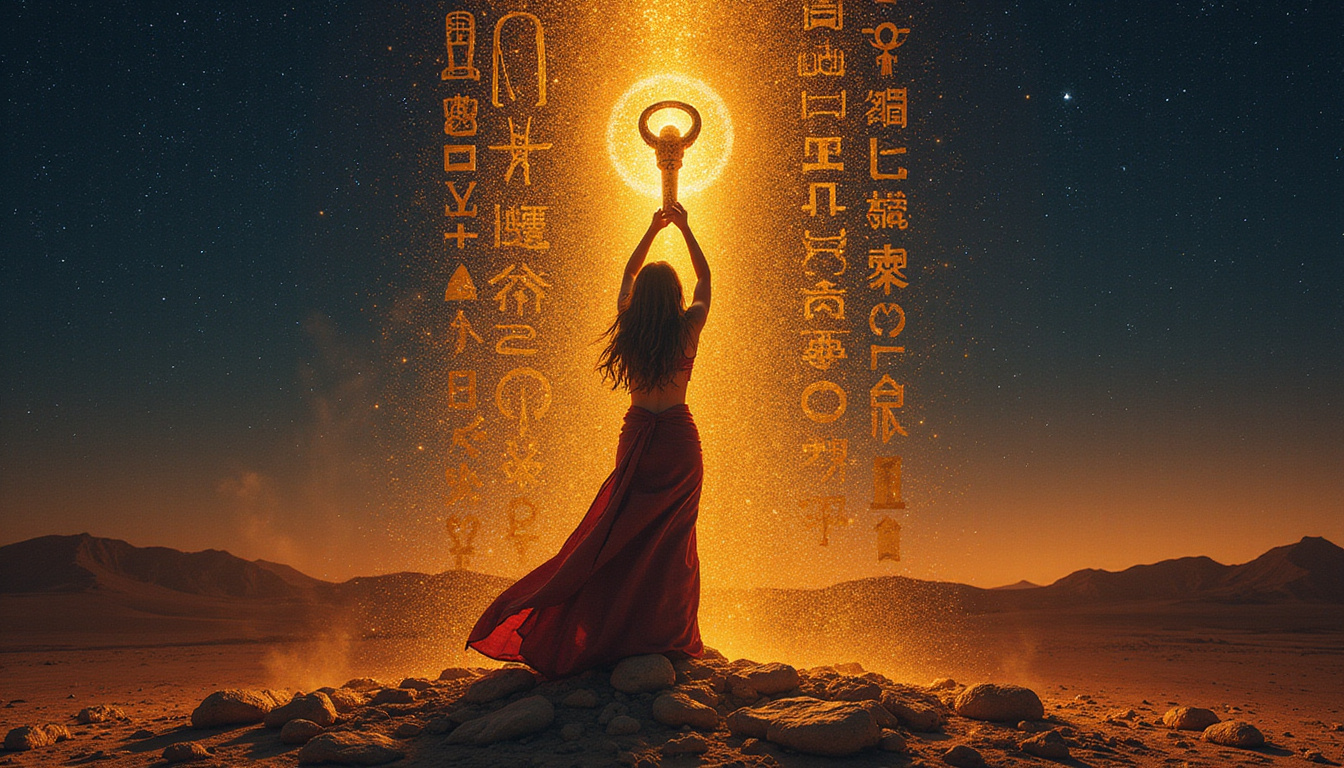
Practitioners may visualize light flowing through the loop and down the stem, or use the ankh as a focus point during meditation.
Union of Masculine and Feminine
Many modern interpretations view the ankh as a sacred union of polarities:
- The loop as feminine (womb, receptivity, creation)
- The cross and stem as masculine (direction, structure, action)
Their merging creates life—symbolically echoing both physical conception and the interplay of yin/yang-like energies.
For people who work with divine feminine and divine masculine concepts, the ankh is a powerful emblem of wholeness and balance.
A Key Between Worlds
The ankh is often called the “key of the Nile” or “key of life.” Symbolically, keys open doors; in this case, doors between:
- Conscious and subconscious
- Material and spiritual
- Life and death
In ritual and spiritual practice, this makes the ankh a sign of access, suggesting your ability to move between inner and outer worlds with awareness.
Why the Ankh Endures: Modern Uses and Personal Symbolism
The ankh is more popular now than at many points in history since ancient Egypt. Its survival is not an accident—it speaks to universal human concerns.
Fashion, Identity, and Heritage
You’ll find the ankh in:
- Jewelry (necklaces, rings, earrings)
- Clothing, prints, and accessories
- Tattoos and body art
For some, it’s a nod to ancient Egypt’s mystery and beauty. For others, especially within African and African diaspora communities, the ankh represents:
- Cultural pride and reconnection with African heritage
- A reminder of African contributions to world civilization
- A symbol of resilience and continuity of life despite historical trauma
Spiritual and Personal Growth
For those on a spiritual or self-development path, the ankh meaning can be adapted in personal ways, such as:
- Commitment to growth: Always choosing transformation over stagnation
- Respect for life: A personal ethic to honor living beings and the planet
- Inner rebirth: Reminding yourself you can “die” to old habits and be “reborn” into new ways of living
In meditation or journaling, you might reflect on how the ankh’s loop (spirit), cross (balance), and stem (path) show up in your own life.
Pop Culture: From Ancient Temples to Screens
The ankh appears in:
- Fantasy and adventure films and games
- Comic books and graphic novels
- Music videos and album art
While pop culture uses can be superficial, they keep the symbol in public awareness—and can inspire people to research its deeper origins.
How to Work with the Ankh in Daily Life
If the ankh meaning resonates with you, there are simple, respectful ways to bring it into your life.
1. Wear It with Intention
An ankh pendant or ring can serve as:
- A personal reminder of your values (growth, balance, reverence for life)
- A protection symbol in challenging environments
- A subtle spiritual anchor throughout your day
Before wearing it, you might take a moment to set a clear intention: “May this ankh remind me to live fully and consciously.”
2. Use It in Meditation or Prayer
You can:
- Visualize an ankh of light over your chest or between your brows
- Imagine breathing through the loop at the top, exhaling down the stem
- Focus on the symbol while reflecting on questions like:
- Where is new life trying to emerge in me?
- What old pattern needs to “die” so something better can be born?
3. Place It in Your Space
An ankh symbol in your home or workspace can represent:
- Protection and harmony for the space
- A dedication to learning, healing, or creativity
- A focal point on an altar or reflection corner
Place it where you’ll see it often and let it prompt small moments of awareness.
Common Misunderstandings About the Ankh
Because the ankh is so widely used, it’s easy for misconceptions to spread. Clarifying these helps deepen your understanding.
-
“The ankh is just a Christian cross with a loop.”
Historically, the ankh predates Christianity by thousands of years. Some early Coptic Christian symbols may have merged cross and ankh imagery, but the ankh’s roots are firmly Egyptian. -
“It’s only a fashion symbol.”
While many use it purely for aesthetics, its original context is rich with spiritual and philosophical meaning. -
“Using the ankh is cultural appropriation.”
This is a nuanced topic. The key is respect and education. Learn its history, avoid trivializing its meaning, and acknowledge its African and Egyptian origins. Many people of all backgrounds engage with ancient symbols in a spirit of reverence rather than exploitation.
Quick Reference: Ankh Symbol Meanings at a Glance
- Life (physical, spiritual, eternal)
- Union of opposites (masculine/feminine, above/below)
- Key to hidden knowledge and other realms
- Protection and vitality
- Continuity, rebirth, and transformation
- Connection to natural life forces (water, air, sun)
FAQ: Ankh Symbol, Spiritual Meaning, and Modern Use
Q1: What does the ankh symbolize spiritually today?
Spiritually, the ankh symbolizes eternal life, protection, and the connection between physical and spiritual realms. Many people use it as a reminder to live consciously, honor their soul’s journey, and stay open to transformation.
Q2: Is it okay to wear an ankh symbol if I’m not Egyptian or African?
Yes, many people from diverse backgrounds wear the ankh respectfully. The key is to understand its origins and meaning, avoid mocking or trivial uses, and recognize its deep roots in ancient African and Egyptian culture.
Q3: What is the difference between an ankh and a cross of life?
They are actually the same symbol—“cross of life” is simply another name for the ankh. Both terms refer to the looped cross used by ancient Egyptians to represent life, especially eternal and divine life.
Let the Ankh Meaning Guide Your Next Step
The ankh has survived for millennia because it speaks to something timeless in us: the desire to live fully, survive hardship, and connect with something greater than ourselves. Whether you’re drawn to it for spiritual growth, cultural reconnection, or personal inspiration, understanding its deeper layers transforms it from a mere ornament into a living symbol.
If the ankh resonates with you, don’t just admire it—engage with it. Study its history, reflect on its message, and let it shape the way you move through the world. Consider choosing an ankh piece, starting a small practice or meditation with the symbol, or exploring more about ancient Egyptian wisdom. Let this key of life open a new door in your own journey toward meaning, balance, and awakened living.
Explore the Science Behind Spirituality
This guide explored the meaning and history of good luck symbols. To discover the psychology, consciousness, and scientific perspectives behind spiritual beliefs, visit SpiritualMindScience.com.