Altar Stone Secrets: Transform Your Space with Sacred Rituals
An altar stone can be so much more than a decorative object. Used with intention, it becomes the stable heart of your spiritual practice, a focal point for energy, reflection, and transformation. Whether you follow an established tradition or a personal, eclectic path, learning how to choose, cleanse, and work with an altar stone can dramatically deepen the feeling of sacredness in your home or ritual space.
Below, you’ll discover how to unlock the secrets of altar stones and use them to transform any corner of your space into a living, breathing sanctuary.
What Is an Altar Stone, Really?
An altar stone is any stone or crystal specifically dedicated as the centerpiece of an altar or sacred setup. It can be:
- A single, significant stone on a small household altar
- The main slab or surface of a ritual table
- A special rock collected from nature and set apart for ceremony
- A consecrated stone embedded in a permanent altar structure
In many traditions, the altar stone acts as the “anchor” that grounds your intention. It holds and radiates the energy of your prayers, spells, meditations, or offerings. Historically, cultures around the world used special stones as focal points of worship—from ancient Celtic standing stones to temple foundation stones in various religions (source: Encyclopedia Britannica).
Today, you don’t need a temple or dedicated ritual chamber. A single, thoughtfully chosen altar stone can convert a nightstand, bookshelf, or garden corner into a powerful spiritual hub.
Choosing the Right Altar Stone for Your Path
Selecting an altar stone is both a practical and intuitive process. You’re looking for a stone that feels like “home” for your practice.
1. Natural vs. Polished Stones
- Raw/natural stones: Feel earthy, primal, and grounding. Great for nature-based, ancestral, or shamanic paths.
- Polished or carved stones: Provide a more refined, focused energy, often used in ceremonial magic or structured ritual work.
- Crystal clusters or geodes: Amplify and radiate energy outward, ideal for altars meant to bless your entire space.
Neither is inherently better; the right altar stone is the one that resonates with your purpose.
2. Size and Practical Considerations
- Small stones (pocket-sized) are portable, easy to hide, and perfect for travel altars.
- Medium stones (fits easily in your hand) suit most home altars and are easy to handle in ritual.
- Large or slab-like stones can serve as the actual base or tabletop of your altar.
Make sure your altar stone fits securely where you’ll place it, and consider how often you’ll move or handle it.
3. Stone Types and Their Traditional Associations
While your intuition is the ultimate guide, certain stones carry widely recognized symbolic qualities:
- Clear quartz – Amplification, clarity, general-purpose altar stone
- Amethyst – Spiritual protection, intuition, dreamwork
- Black tourmaline or obsidian – Grounding, banishing negativity, psychic shielding
- Rose quartz – Love, compassion, emotional healing
- Selenite – Purification, angelic connection, gentle clearing
- Labradorite – Magical work, transition, protective mystery
- Granite or river stones – Stability, earth connection, practical strength
If you’re unsure where to start, clear quartz makes an excellent all-purpose altar stone for most practices.
Cleansing and Consecrating Your Altar Stone
Before becoming the heart of your sacred space, your altar stone should be ritually prepared. This clears old energies and dedicates it to your spiritual work.
Step 1: Physical Cleaning
Gently wash your stone if it’s water-safe (avoid water for soft or soluble stones like selenite). Use:
- Lukewarm water
- A soft cloth or brush
- Optional: a pinch of natural salt in the water (not for delicate crystals)
As you clean, imagine any stagnant or foreign energies rinsing away.
Step 2: Energetic Cleansing Methods
Pick one or more methods according to your tradition and the stone’s properties:
- Smoke cleansing: Pass the altar stone through incense, sage, palo santo, or herbal smoke.
- Sound: Use a singing bowl, chime, or bell to bathe the stone in sound vibrations.
- Light or moonlight: Place it in sunlight (if it won’t fade) or moonlight overnight to recharge.
- Earth burial: Wrap it in natural cloth and bury for 24 hours to ground and purify.
As you cleanse, hold a clear intention: “I purify this altar stone of all that does not serve my highest good.”
Step 3: Consecration Ritual
Consecration formally dedicates your altar stone to spiritual use. A simple ritual:
- Sit quietly with the stone in your hands.
- State your purpose aloud:
- “I consecrate this altar stone as the heart of my sacred space.”
- Touch it to the four directions (or elements) if that’s part of your path.
- Offer a small gift: a pinch of herbs, a drop of water, a candle flame lit in its honor, or a spoken vow.
- Visualize your stone glowing softly, anchored to both Earth below and sky above.
From this point forward, treat your altar stone as a dedicated sacred object.
Designing a Sacred Space Around Your Altar Stone
Once consecrated, your altar stone becomes the anchor around which your spiritual ecosystem grows.
Placing the Altar Stone
- Center position: Place the altar stone centrally on your altar; everything else orbits around it.
- Directional position: Align it with your tradition’s primary direction (e.g., East for air, West for water, etc.).
- Layered height: Elevate it slightly on a small stand or cloth to signify importance.
Trust your eyes and your body; when the placement is right, the whole setup will “click.”
Building the Surrounding Layout
Use your altar stone as the compass for what else belongs there:
- Place candles or a small lamp near it to represent illumination.
- Add symbols of the elements: a feather, bowl of water, small dish of salt, or a plant.
- Include personal items: photos of ancestors, meaningful objects, talismans.
- Keep a journal or notebook nearby for insights that arise during ritual.
Over time, your altar will become a living reflection of your evolving inner world.
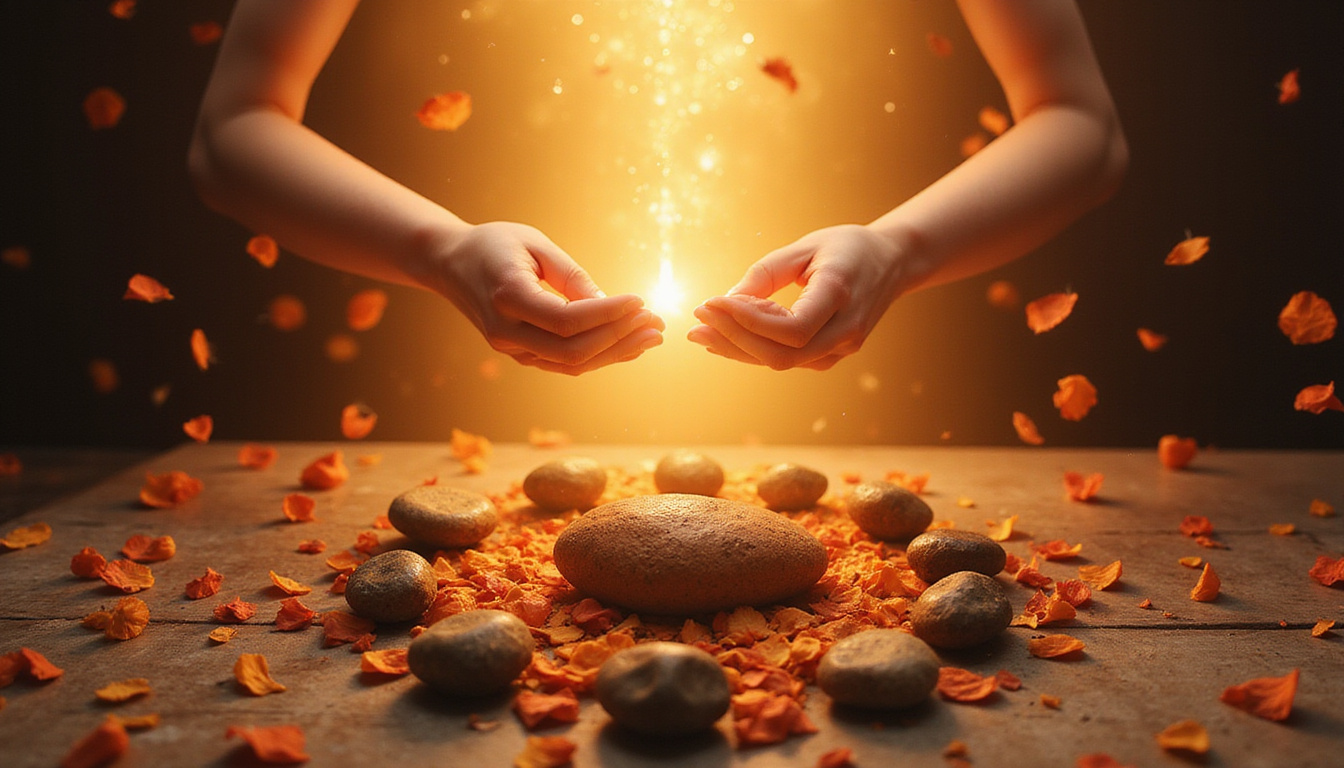
Working with Your Altar Stone in Daily Rituals
You don’t need elaborate ceremonies to benefit from your altar stone. Simple, consistent contact can be deeply transformative.
Morning Connection Practice
- Sit in front of your altar.
- Place your hands lightly on the altar stone.
- Take 5–10 slow breaths, imagining energy rising from the stone into your body.
- Set one clear intention for your day and silently “place” it into the stone.
This anchors your day in clarity and calm.
Intention-Setting or Spell Work
For manifestation or spell work, use your altar stone as the focal point:
- Write your intention on a small piece of paper.
- Fold and place it beneath or beside the stone.
- Surround the altar stone with relevant herbs, crystals, or symbols.
- Light a candle and visualize the altar stone absorbing and radiating your intention.
Return periodically to reinforce the intention with touch and visualization.
Meditation and Emotional Processing
Your altar stone can also be a stable friend in times of emotional turbulence:
- Hold it during meditation as a grounding anchor.
- Rest your hands on it while journaling difficult emotions.
- Imagine pouring stress into the stone, then ask it to transmute that energy into wisdom and strength.
Always close sessions by thanking the stone, even silently. This reinforces a respectful, reciprocal relationship.
Seasonal and Life-Phase Transformations
As seasons shift and your life changes, allow your altar stone’s role to evolve.
- Seasonal altars: Keep the same altar stone but change the supporting decorations (leaves in autumn, flowers in spring, etc.).
- Life milestones: Invite your altar stone into big transitions—new home blessings, births, losses, career changes.
- Deep rest periods: If you feel spiritually burned out, cover the altar stone with a cloth for a set time, signaling a cycle of rest and renewal.
Instead of constantly replacing tools, let your altar stone accumulate layers of memory and meaning. Over years, it becomes a tangible chronicle of your spiritual journey.
Caring for Your Altar Stone Over Time
Like any relationship, your bond with your altar stone needs occasional tending.
Regular Maintenance
- Light dusting: Keep it clean; dust can feel like energetic stagnation.
- Periodic cleansing: Especially after intense emotional work or conflict in the home.
- Energetic check-ins: If your altar starts feeling “flat,” it might be time for a re-consecration or simple recharge (moonlight, sound, or breath).
Boundaries and Respect
- Minimize casual handling by others if that feels right to you.
- Store respectfully if you must put it away—wrapped in natural cloth, kept in a quiet place.
- Avoid using your altar stone as a mundane paperweight or décor; let it retain its dedicated role.
These small acts signal—to yourself and your unconscious—that your spiritual life is important and worthy of care.
Simple Beginner Ritual: Activating a New Altar Stone
If you’re just starting, here’s a straightforward ritual that combines many of the ideas above:
-
Prepare the space
- Tidy the surface where your altar will live.
- Light a candle.
-
Cleanse the altar stone
- Pass it through incense or gently ring a bell over it.
-
State your intention
- “This altar stone is the center of my sacred space, for healing, clarity, and peace.”
-
Anchor with breath
- Hold the stone and take 9 slow, deep breaths.
- With each exhale, imagine filling it with light.
-
Place it on your altar
- Set it in the middle of your chosen surface.
- Add one or two meaningful objects around it.
-
Seal the ritual
- Touch the stone and say, “So it is,” or any closing phrase that fits your path.
- Sit quietly for a minute, noticing how the space feels.
Repeat a brief version of this ritual whenever you upgrade or significantly change your altar.
FAQ About Altar Stones and Sacred Spaces
1. What makes a good crystal altar stone for beginners?
Any stable, comfortable-to-hold stone can work, but clear quartz is often recommended as a beginner-friendly crystal altar stone. It’s versatile, amplifies intention, and pairs well with nearly any spiritual or magical practice.
2. Can I use a river rock or found stone as a spiritual altar rock?
Yes. A simple river rock or stone found on a meaningful walk can be a powerful spiritual altar rock. Cleanse it thoroughly (physically and energetically), then consecrate it with a clear intention. Found stones often carry strong earth and ancestral connections.
3. How do I know if my sacred altar stone needs cleansing or recharging?
Signs your sacred altar stone may need attention include feeling “off” around your altar, noticing more distraction in ritual, or a sense that the stone feels dull or heavy. A quick smoke cleansing, sound bath, or night in moonlight can usually restore its clarity and presence.
Your altar stone is more than a tool; it’s a patient witness to your growth, struggle, and transformation. By choosing it with care, consecrating it with intention, and returning to it in daily practice, you create a stable sanctuary you can access any time—no matter how chaotic life becomes.
If you’re ready to transform an ordinary corner into a powerful living altar, start by choosing your first (or next) altar stone today. Dedicate a quiet hour to cleanse, consecrate, and place it, then commit to just a few minutes of contact each day. Those small, consistent rituals will slowly reshape your space—and your inner world—into something sacred, grounded, and deeply your own.
Sacred objects often carry deep cultural and spiritual meaning. Learn how these symbols relate to history, spirituality, and the human mind by exploring more articles at SpiritualMindScience.com.