African animal symbolism is woven deeply into the continent’s stories, rituals, and spiritual philosophies. For thousands of years, African cultures have looked to animals as teachers, protectors, messengers, and mirrors of human character. Today, spiritual seekers around the world draw on this ancient wisdom to find guidance, identity, and meaning in modern life.
This article explores the roots of African animal symbolism, the meanings of some of the most important animals, and how you can respectfully integrate these symbols into your own spiritual practice.
The roots of African animal symbolism
Across Africa’s diverse cultures—Yoruba, Zulu, Ashanti, Dogon, San, Maasai, and many more—animals play central roles in:
- Creation myths
- Clan totems and family lineages
- Initiation rites and coming-of-age ceremonies
- Kingship and political power
- Healing, divination, and protective magic
Before written records, stories about animals carried encoded knowledge: how to live together, when to plant and harvest, how to act with courage and humility. African animal symbolism emerged naturally from close observation of wildlife, combined with spiritual beliefs that saw no hard boundary between humans, animals, ancestors, and the divine.
Many African spiritual systems are animistic—recognizing that all living beings carry spirit or life force. Animals, therefore, are not just metaphors. They are partners and messengers, sometimes manifestations of deities, ancestors, or nature spirits.
Animal symbolism across African regions and cultures
While every ethnic group has its own stories, there are striking patterns in African animal symbolism:
- West Africa often emphasizes trickster animals (like the spider and hare), royal animals (lions, leopards), and sacred birds.
- Central and Southern Africa highlight totemism—clans and lineages linked spiritually to specific animals.
- East Africa features animals central to pastoral and hunter traditions, such as cattle, lions, elephants, and birds of prey.
- North Africa blends Berber, Nubian, and Islamic influences, where desert animals like camels and falcons gain symbolic meaning.
It’s important to remember: meanings are not rigid or universal. The same animal can symbolize very different things depending on culture and context. Still, there are common threads that show up across the continent.
The lion: Royalty, courage, and spiritual authority
The lion is one of the most widespread and powerful symbols in African animal symbolism.
Traditional meanings
Across many African societies, the lion stands for:
- Kingship and authority – In regions from West to East Africa, the lion is associated with chiefs and rulers. Its mane and roar symbolize power and command.
- Courage and protection – Stories portray lions as both dangerous predators and protective guardians.
- Nobility and honor – The lion’s bearing and strength set the standard for leadership and honorable behavior.
Among the Ashanti of Ghana, for example, the lion can represent a powerful warrior or chief. In parts of East Africa, lion hunts were historically part of certain initiation traditions, symbolizing the passage into manhood and responsibility to the community.
Modern spiritual meanings
Today, spiritual practitioners and artists draw on lion symbolism for:
- Inner strength and confidence
- Leadership grounded in integrity
- Protection in times of conflict or challenge
Meditation or visualization on the lion can be used to cultivate courageous decisions while staying rooted in compassion instead of domination.
The elephant: Memory, abundance, and ancestral wisdom
Elephants are central to African myth and art, especially in regions where they live or once roamed.
Traditional meanings
In African animal symbolism, elephants often represent:
- Ancient wisdom and memory – Their long lives and strong social bonds connect them to ancestors and lineage.
- Abundance and prosperity – Their great size and presence suggest plenty and generosity.
- Patience and stability – Elephants move slowly and deliberately, embodying grounded power.
In some West and Central African traditions, tusks and elephant imagery were associated with kingship, prestige, and the ability to “carry” the community’s burdens.
Modern spiritual meanings
In contemporary practice, the elephant may be invoked for:
- Long-term plans and stable growth
- Deep healing of family and ancestral patterns
- Patience in the face of slow progress
For many people, the elephant serves as a reminder that true power can be gentle, steady, and community-oriented.
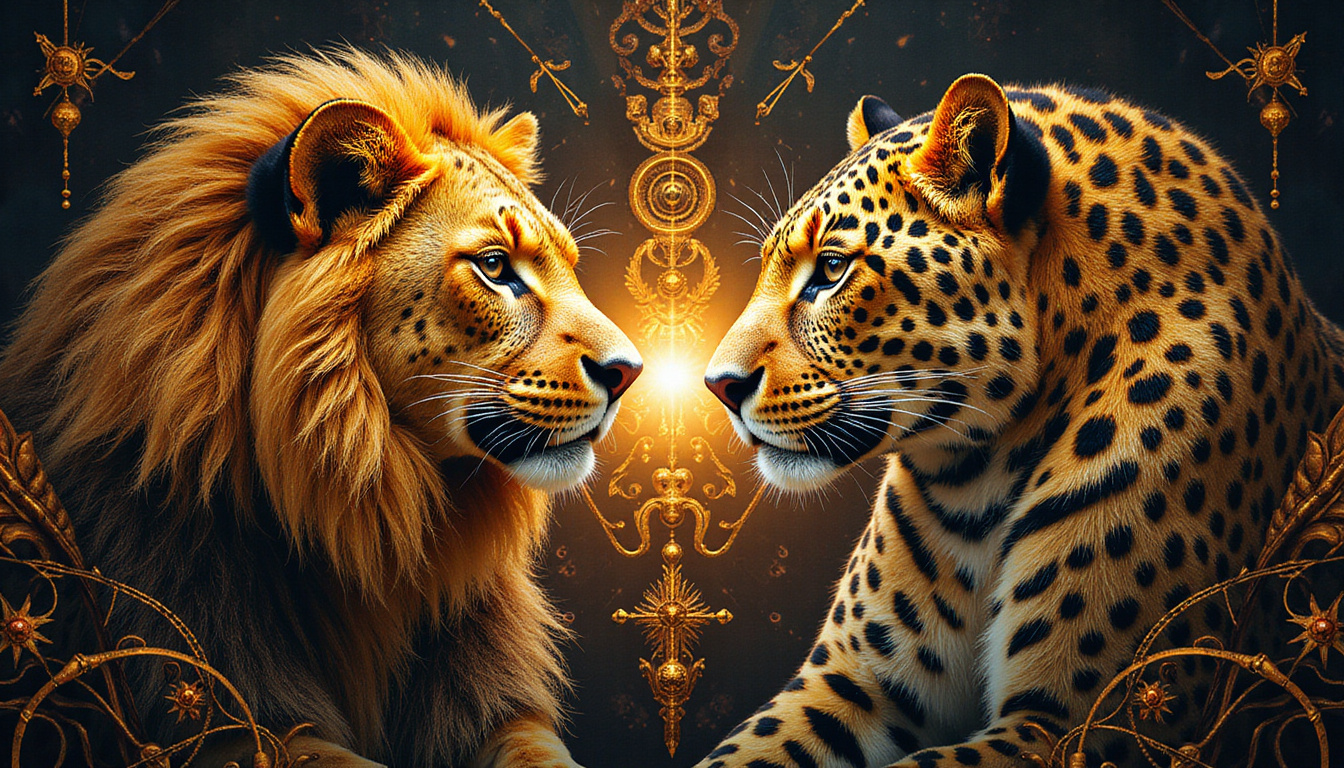
The leopard: Mystery, mastery, and spiritual protection
The leopard appears frequently in masks, royal regalia, and spiritual narratives.
Traditional meanings
Leopard symbolism often includes:
- Stealth and strategy – Its ability to move silently and strike with precision inspires respect and fear.
- Esoteric knowledge – In some cultures, leopards are linked to secret societies and spiritual initiates.
- Protection and ferocity – Leopard skins and motifs were reserved for rulers, priests, or warriors.
Among the Kingdom of Benin (in present-day Nigeria), leopards were associated with the Oba (king), embodying both political power and mystical authority.
Modern spiritual meanings
Today, people call on leopard energy for:
- Sharpened intuition and discernment
- Boundaries and psychic protection
- Mastery of skills through disciplined practice
Leopard symbolism reminds us that not all power is visible; some of the most potent work is done quietly, in the shadows and in the inner world.
The crocodile: Duality, survival, and liminal spaces
Crocodiles, living both in water and on land, occupy threshold zones—rivers, marshes, and shorelines.
Traditional meanings
In African animal symbolism, crocodiles may signify:
- Survival and adaptability – They have existed since ancient times, enduring massive changes.
- Liminality – As creatures of water and land, they bridge worlds: seen/unseen, life/death, human/spirit realms.
- Danger and respect – Their sudden attacks and immense jaws inspire caution and ritual appeasement.
In parts of West and Central Africa, crocodiles are linked to water spirits or river deities who demand offerings and proper behavior near sacred waters.
Modern spiritual meanings
For contemporary seekers, crocodile symbolism can represent:
- The need to navigate “in-between” states—like major life transitions
- The power of emotional depths (water) combined with grounded action (land)
- Respect for forces we cannot fully control
Working with crocodile imagery can be a way of exploring shadow work and emotional resilience.
The snake: Transformation, healing, and spiritual power
Snakes are among the most complex and misunderstood symbols in Africa and beyond.
Traditional meanings
In many African societies, snakes symbolize:
- Regeneration and transformation – Shedding their skin links them to rebirth and cycles.
- Healing and medicine – Some African healers associate serpents with herbal knowledge and spiritual medicine.
- Ambiguity and danger – Because some species are venomous, snakes are also linked with taboo, secrecy, and the need for respectful caution.
In the Vodun traditions of West Africa, serpent deities like Dan (or Dambala in the diaspora) embody cosmic balance and the link between heaven and earth.
Modern spiritual meanings
Today, snakes in African animal symbolism can be a powerful focus for:
- Personal transformation and spiritual awakening
- Releasing old identities or limitations
- Embodying life force (similar to “kundalini” in other traditions)
Snakes remind us that growth often requires shedding what no longer fits—even when it feels vulnerable.
The bird: Messages, freedom, and the voice of spirit
Birds, with their ability to move between earth and sky, are potent messengers in African spiritual thought.
Traditional meanings
Various birds symbolize:
- Communication with the divine – Their songs and flight are seen as messages from ancestors or deities.
- Freedom and perspective – Viewing the world from above brings clarity.
- Omen and guidance – The appearance, call, or behavior of a bird can be interpreted in divination.
The Sankofa bird in Akan symbolism (often depicted looking backward while holding an egg) teaches the importance of returning to the past to retrieve what is valuable for the future.
Modern spiritual meanings
Bird symbolism can support:
- Prayer, song, and honest self-expression
- Seeing “the big picture” before acting
- Trust in guidance from dreams, signs, and synchronicities
For many, bird energy invites us to stay light enough to change direction when spirit calls.
Totems, clans, and personal animal guides
One of the most distinctive aspects of African animal symbolism is totemism—the spiritual connection between a group of people and an animal.
Clan and family totems
In several African cultures, clans are associated with specific animals—lion, antelope, crocodile, fish, and many others. These animals:
- Serve as protectors and spiritual kin
- Shape taboos (e.g., not eating that animal)
- Provide a sense of identity and responsibility
Your totem might indicate the traits you are meant to cultivate: bravery, patience, cooperation, agility, or insight.
Personal animal guides in modern practice
In contemporary spirituality, people sometimes speak of “spirit animals” or animal guides. When working with African traditions, it’s important to proceed respectfully:
- Learn from credible African scholars, elders, or practitioners.
- Understand that many totem systems are communal, not individualistic.
- Avoid cultural appropriation by claiming titles or roles from traditions you haven’t been initiated into.
Still, you can thoughtfully engage with African animal symbolism by:
- Meditating on an animal that repeatedly appears in your dreams or daily life
- Studying how that animal actually behaves in nature
- Reflecting on what lessons it may hold for your current life challenges
This approach honors the animal as a teacher while acknowledging the cultural context from which the symbolism comes.
How to respectfully use African animal symbolism today
If you feel drawn to African animal symbolism, you can integrate it into your life with care and integrity.
Here are some practical steps:
-
Start with genuine learning
Read books and articles by African historians, anthropologists, and spiritual practitioners. Museums and university collections often host high-quality resources and exhibitions (for example, see materials through the Smithsonian National Museum of African Art – source). -
Honor cultural origins
When you use an animal symbol from a specific culture (e.g., the Sankofa bird, Adinkra symbols, or a leopard mask style), learn its origin and name that culture rather than treating it as generic “African.” -
Observe the living animal
Watch documentaries, read field guides, or visit sanctuaries. True symbolism is never separate from the real behavior and ecology of animals. -
Use symbolism as a mirror, not a costume
Let the animal’s traits challenge you to grow, rather than simply wearing the image as decoration or identity. -
Support conservation and local communities
Many of the animals central to African symbolism—lions, elephants, leopards, rhinos—are endangered. Supporting conservation efforts and community-based wildlife programs is a concrete way to honor these beings. -
Stay open and humble
African spiritual systems are rich, complex, and living. Approach them with humility, acknowledging what you don’t know and being willing to be corrected.
FAQ: African animal symbolism and spiritual meanings
1. What does African animal symbolism teach about life and character?
African animal symbolism often teaches that every quality—courage, patience, cleverness, strength—has a place in the community. Animals model how to balance individual needs with collective survival, reminding humans to live in right relationship with nature, ancestors, and each other.
2. How is African animal totem meaning different from “spirit animals” in pop culture?
In many African societies, animal totems are clan or family-based, passed down through generations and tied to real social duties and taboos. Pop-culture “spirit animal” language is usually individualistic and casual, lacking this depth of responsibility. Respectful engagement means acknowledging these differences and not trivializing sacred systems.
3. Can I work with African animal symbolism if I’m not from an African culture?
Yes, you can learn from and be inspired by African animal symbolism, provided you do so respectfully: credit specific cultures, avoid claiming roles or rituals that belong to initiated practitioners, and make space for African voices and leadership in conversations about these traditions.
African animal symbolism carries a powerful message for our time: humans are not separate from the animal world. We learn who we are by watching how lions protect, elephants remember, leopards move in silence, crocodiles endure, snakes transform, and birds carry songs across great distances.
If these symbols speak to your spirit, let this be the beginning of deeper study, reflection, and action. Seek out African authors, artists, and elders. Listen to the land and its creatures. And consider how you might embody the wisdom of these animals in the decisions you make, the communities you build, and the future you help create.
Now is the moment to step further into this living tradition—explore, learn, and let African animal symbolism guide you toward a more connected, spiritually grounded way of life.
Animals have inspired symbols and beliefs across cultures for centuries. Discover how these traditions connect with psychology, spirituality, and human consciousness at SpiritualMindScience.com.