Across cultures and centuries, the sacred thread has symbolized identity, duty, and a living link with the divine. From Hindu upanayana ceremonies to Buddhist, Jain, and even cross-cultural parallels, a simple strand of fiber or silk has carried astonishing depth of meaning. Today, this ancient emblem is finding renewed relevance in spiritual practice, mindfulness, and even ethical fashion.
This guide explores the origins, symbolism, rituals, and evolving modern uses of the sacred thread—so you can understand not just what it is, but why it still matters.
What Is the Sacred Thread?
In its simplest form, a sacred thread is a consecrated cord worn on the body as a sign of spiritual commitment. While the concept appears in several traditions, it is most widely known through:
- The Hindu yajnopavita or janeyu
- The Jain jinwara
- Parallel items like the Buddhist protection cord and various spiritual bracelets or amulets
Though materials and rituals differ, the core idea is similar: the sacred thread marks a transition into a life guided by dharma (righteousness), discipline, and conscious awareness.
Historical Roots: Where Did the Sacred Thread Come From?
Vedic Origins in Hinduism
The most influential lineage of the sacred thread comes from the Vedic tradition of ancient India. References to a holy cord or upavita appear in early texts and are formalized in the upanayana rite—often called the “sacred thread ceremony.”
Key points in the Hindu context:
- Ancient rite of passage: Upanayana was originally a formal admission into Vedic studentship (brahmacharya), typically for boys of the Brahmin, Kshatriya, and Vaishya varnas.
- Connection to Vedic learning: The sacred thread symbolized eligibility to study and chant Vedic mantras, especially the Gayatri Mantra.
- Continuity over millennia: While practices have evolved, the essential idea of marking spiritual and social responsibility has remained intact for thousands of years (source: Encyclopedia Britannica – Upanayana).
Beyond Hinduism: Jain and Buddhist Traditions
The sacred thread is not exclusive to Hinduism.
- Jainism: Some Jain communities use a thread called jinwara in initiation or special rituals, symbolizing commitment to the teachings (Jina) and vows like ahimsa (nonviolence).
- Buddhism: In several Buddhist cultures, monks, nuns, and laypeople may use blessed threads or cords—often tied around the wrist or neck—as a symbol of protection, refuge, and connection to the Three Jewels (Buddha, Dharma, Sangha).
While the theology differs, the common thread (literally) is the visible sign of an inner spiritual disposition.
The Sacred Thread Ceremony: Rites and Rituals
The Upanayana (Hindu Sacred Thread Ceremony)
In Hinduism, the sacred thread ceremony is a samskara, a sacrament marking a major life transition.
Typical components include:
- Purification rites: The child bathes and participates in cleansing rituals to prepare body and mind.
- Donning the sacred thread: The guru or priest places the yajnopavita over the left shoulder and across the chest.
- Initiation into the Gayatri Mantra: The initiate is taught the mantra and how to chant it correctly.
- Vows of discipline: Commitments may include daily prayers (sandhya vandana), respect for elders, and moral conduct.
- Symbolic begging or alms: Traditionally, the student symbolically begs alms to signify humility and the start of discipleship.
Though the age and details vary by region and family tradition, the central message is: you are entering a responsible, spiritually conscious stage of life.
How the Sacred Thread Is Worn
Traditionally, the Hindu sacred thread is:
- Worn over the left shoulder, draped across the chest, and resting near the right hip
- Made of cotton (for Brahmins), hemp (for Kshatriyas), or wool (for Vaishyas) in classical texts, though today cotton is most common
- Composed of three strands, often interpreted symbolically
In Buddhist contexts, the blessed cord may be:
- Tied around the wrist, neck, or waist
- Often made of simple cotton, sometimes colored (e.g., white, red, yellow)
- Empowered through chanting, blessings, and rituals by monks or practitioners
Symbolism: What Does the Sacred Thread Actually Mean?
The power of the sacred thread lies in its symbolic richness. While interpretations differ, some of the most common meanings include:
Three-Strand Symbolism
In many Hindu traditions, the three strands of the yajnopavita stand for:
- The three debts: To the gods, to the sages, and to the ancestors
- The three gunas: Sattva (purity), Rajas (activity), Tamas (inertia)
- The three aspects of time: Past, present, future
Wearing the sacred thread is a reminder that your life is woven from multiple dimensions, and you are responsible in each.
A Visible Reminder of Dharma
For both Hindus and Jains, the sacred thread is a daily, physical reminder to align with:
- Truthfulness
- Nonviolence
- Self-control
- Compassion
- Duty to family and society
Similarly, Buddhist blessed threads remind practitioners of refuge in the Buddha, Dharma, and Sangha, and the commitment to the path.
Connection, Not Superstition
At its best, the sacred thread is not a talisman of blind superstition, but a tool for mindfulness:
- Each time you notice it on your body, you remember your values.
- Putting it on or replacing it can mark renewed intention.
- It anchors abstract spiritual ideals in something tactile and real.
Sacred Thread in Different Traditions: A Quick Comparison
While details vary, you can see the common themes:
- Hindu yajnopavita: Rite of passage, access to Vedic learning, personal and social dharma.
- Jain jinwara: Commitment to Jain ethics, especially nonviolence and austerity.
- Buddhist blessing cords: Protection, connection to teachings, reminder of mindfulness.
- Cross-cultural parallels: Items like Christian scapulars, Jewish tzitzit, or Muslim prayer bracelets. Though not literally the same as the sacred thread, they serve a similar function as wearable devotion.
Modern Uses: How the Sacred Thread Is Evolving Today
Beyond Caste and Gender Boundaries
In contemporary practice, many families and communities are reinterpreting who can wear a sacred thread and why:
- Women and girls: Some Hindu and Jain communities perform upanayana-like ceremonies for daughters, signifying equality in spiritual education.
- Non-traditional wearers: Spiritual seekers outside hereditary lines may adopt a sacred thread as a personal vow or part of initiation into a guru’s lineage.
- Reframing caste: Progressive practitioners emphasize the sacred thread as a marker of responsibility and service rather than social hierarchy.
The Sacred Thread as Mindfulness Tool
For many modern spiritual seekers, the sacred thread serves as:
- A daily reminder of meditation, mantra, or prayer practice
- A symbol of commitment to ethical living (e.g., vegetarianism, minimalism, nonviolence)
- A personal ritual: putting it on each morning with a brief intention-setting
This shifts the focus from mere tradition to conscious, lived spirituality.
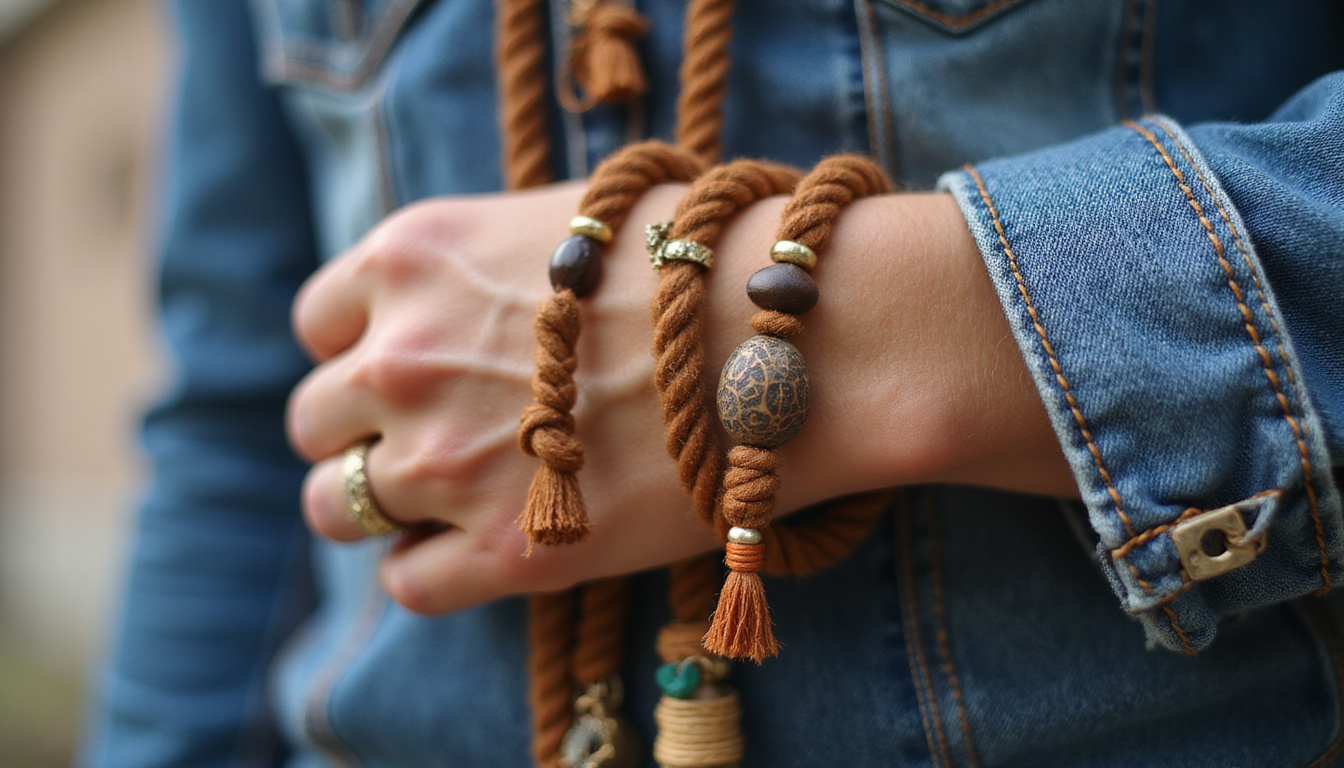
Fashion, Identity, and Ethics
The sacred thread also intersects with contemporary ideas of:
- Ethical materials: Use of organic cotton, hand-spun yarn, or fair-trade items to align outer symbols with inner values.
- Cultural pride: For many in the diaspora, wearing a sacred thread discreetly or visibly affirms heritage and continuity.
- Minimalist spirituality: A simple thread can replace more elaborate or expensive symbols, resonating with those who prefer simplicity.
How to Choose and Wear a Sacred Thread Today
If you are considering wearing a sacred thread—whether from within the tradition or as a respectful spiritual seeker—it helps to be intentional.
1. Clarify Your Intention
Ask yourself:
- What inner commitment do I want this to symbolize?
- Am I honoring the tradition it comes from?
- How will I incorporate it into daily practice (e.g., mantra, prayer, ethical vow)?
2. Consult Tradition Where Possible
If you belong to a Hindu, Jain, or Buddhist community:
- Speak to a priest, monk, nun, or teacher about appropriate rites.
- Learn any associated mantras or prayers.
- Understand community etiquette (when to wear, when to remove, how to replace).
If you are outside the tradition:
- Seek guidance from a qualified teacher or spiritual mentor.
- Consider whether a more universal blessed cord or bracelet may be more appropriate than a culture-specific sacred thread like the yajnopavita.
- Approach with humility, not as a fashion trend.
3. Choose Materials Consciously
Depending on your values:
- Opt for natural fibers (cotton, silk, wool) and avoid synthetic materials if you want traditional alignment.
- Consider ethically sourced threads—supporting artisans or fair-trade sellers.
- If vegan, avoid silk or wool and choose plant-based fibers.
4. Create a Simple Personal Ritual
You can give deeper meaning to your sacred thread with a small, consistent ritual:
- Sit quietly and hold the thread in your hands.
- Reflect on your intentions (e.g., kindness, discipline, devotion).
- Whisper or think a short affirmation or mantra as you put it on.
- Periodically (e.g., monthly or yearly), replace it with gratitude, acknowledging how you have grown.
Common Misunderstandings About the Sacred Thread
“It’s Just a Social Marker”
Historically, the sacred thread did correlate with social status, especially in certain regions and periods. However, reducing it to caste misses its spiritual core:
- It originated as a student’s thread, tied to learning and discipline.
- Many reformers and teachers have emphasized universal spiritual access beyond birth status.
“It Works Like Magic Protection”
While some traditions do attribute protective power to a sacred thread, responsible teachers stress that:
- The real protection comes from living ethically and practicing sincerely.
- The thread is a support, not a substitute, for inner transformation.
“Anyone Can Wear Any Sacred Symbol Without Context”
In a globalized world, cross-cultural spiritual exploration is normal, but:
- Understanding and respecting the origins of a sacred thread is crucial.
- It is better to adopt symbols with guidance rather than treating them as decorative accessories.
At-a-Glance: Key Meanings of the Sacred Thread
- Rite of passage into spiritual awareness and responsibility
- Daily reminder of dharma, mindfulness, and ethical conduct
- Symbol of connection to a lineage, teacher, or set of teachings
- Physical anchor for intention and devotion in a busy life
FAQ: Common Questions About Sacred Threads
Q1. What is the sacred thread in Hinduism and why is it important?
In Hinduism, the sacred thread (yajnopavita or janeyu) is given during the upanayana ceremony as a sign of entering a disciplined, spiritually oriented life. It traditionally marks eligibility to learn Vedic mantras and serves as a constant reminder of one’s duties to the divine, teachers, and ancestors.
Q2. Can anyone wear a sacred thread for spiritual purposes?
Anyone can use a sacred thread-like symbol as a personal spiritual reminder, but specific forms—like the Hindu yajnopavita or Jain jinwara—belong to particular traditions. The respectful approach is to learn the background, seek guidance from a qualified teacher, and avoid using sacred items purely as fashion.
Q3. How long should a spiritual or sacred thread be worn?
It varies by tradition. Some Hindu practitioners wear the sacred thread for life, replacing it yearly or during specific rituals. Buddhist blessing cords are often worn until they naturally break, symbolizing the completion of their protective function. For personal practice, you might choose to wear a sacred thread for a set period (e.g., 40 days, one year) tied to a specific vow or intention.
The sacred thread may look like a simple cord, but it carries centuries of wisdom about commitment, responsibility, and inner growth. If you feel called to deepen your spiritual life—or reconnect with your roots—consider how a sacred thread might serve you as a daily reminder of who you want to be.
If you’d like to explore this further, speak with a trusted teacher in your tradition or begin designing a simple, meaningful ritual of your own. Let the sacred thread you choose—literal or symbolic—help you weave a life of clarity, compassion, and purpose.
Sacred objects often carry deep cultural and spiritual meaning. Learn how these symbols relate to history, spirituality, and the human mind by exploring more articles at SpiritualMindScience.com.