The Hamsa has quietly become one of the most recognizable amulets in the world—appearing on jewelry, wall hangings, clothing, and even tattoos. Yet despite its popularity, many people don’t fully understand where the Hamsa comes from, what it symbolizes, or how to use it meaningfully. This guide breaks down the history, cultural significance, and modern uses of the Hamsa, and shows how it can bring luck, protection, and style into your life.
What Is the Hamsa?
The Hamsa is a palm-shaped symbol, often depicted with five fingers spread and an eye in the center. You’ll also see it spelled as “Khamsa,” “Hamesh Hand,” or referred to as the “Hand of Fatima” or “Hand of Miriam,” depending on the culture.
Key features usually include:
- A symmetrical hand with three extended middle fingers
- Two outer fingers that may be curved or straight
- An eye motif (often called the “evil eye”) in the palm
- Decorative symbols like fish, stars, pomegranates, or floral patterns
At its core, the Hamsa is believed to offer protection, ward off negative energy, and invite blessings such as luck, health, and prosperity.
Ancient Roots: The History of the Hamsa
The origins of the Hamsa trace back thousands of years and span multiple civilizations.
Early Symbolism in the Ancient World
Archaeologists and historians link hand-shaped amulets to ancient Mesopotamia, Carthage, and other early Mediterranean cultures. The open hand was often associated with divine protection and fertility, symbolizing the power of a deity reaching out to guard or bless.
Over time, this hand motif evolved into the more stylized Hamsa recognizable today.
Jewish Tradition: The Hand of Miriam
In Jewish culture, the Hamsa is sometimes called the “Hand of Miriam,” in honor of Miriam, the sister of Moses and Aaron. The five fingers can represent:
- The Five Books of the Torah
- The hand of God offering protection
- A reminder to use the five senses to serve and connect with the divine
Many Jewish households display a Hamsa near the entrance as a symbol of protection and blessing for everyone who enters.
Islamic Tradition: The Hand of Fatima
In Islamic culture, the Hamsa is known as the “Hand of Fatima,” after Fatima Zahra, daughter of the Prophet Muhammad. It’s commonly connected to:
- Faith, prayer, charity, fasting, and pilgrimage (the Five Pillars of Islam)
- Patience, fidelity, and spiritual strength, reflecting Fatima’s character
While Islamic art often avoids figurative representation, the stylized Hamsa hand is widely accepted and used as a talisman.
A Shared Cultural Bridge
Today, the Hamsa serves as a powerful symbol that crosses religious and cultural lines. It’s worn by Jews, Muslims, Christians, and people of no particular faith as a shared emblem of protection, peace, and coexistence. This multi-faith adoption makes it one of the most unifying spiritual symbols in the modern world.
For a deeper cultural overview of protective symbols in the Mediterranean and Middle East, resources such as the Metropolitan Museum of Art’s Heilbrunn Timeline of Art History provide useful context (source).
The Meaning Behind the Hamsa Symbol
Although interpretations differ, certain core themes repeat across traditions.
Protection From the “Evil Eye”
One of the strongest associations of the Hamsa is with protection from the “evil eye” — a harmful glare born of envy or ill will. The central eye on the Hamsa is believed to:
- “Watch over” the wearer
- Deflect jealousy and negativity
- Create a spiritual “shield” against misfortune
This is why you’ll often see the Hamsa combined with the Nazar (blue evil-eye bead) in jewelry and decor.
Luck, Blessings, and Abundance
Beyond protection, the Hamsa is seen as a magnet for good fortune. Many believe it can:
- Attract positive opportunities
- Support financial and professional success
- Invite harmony and well-being into the home
The open hand is a symbol of receiving: blessings, luck, and love.
Spiritual Centering and Mindfulness
In a modern spiritual context, the Hamsa also represents:
- Awareness (the all-seeing eye as inner intuition)
- Balance between giving and receiving
- A reminder to approach life with an open hand, not a clenched fist
For many, simply seeing or touching a Hamsa charm serves as a daily nudge toward calm, grounded presence.
Up or Down? The Direction of the Hamsa
You’ll find the Hamsa used in two main orientations, and many people wonder if the direction changes the meaning.
-
Hamsa facing up (fingers pointing up):
Often associated with protection, blocking negative energy, and setting boundaries. It can symbolize spiritual defense and strength. -
Hamsa facing down (fingers pointing down):
Commonly associated with welcoming blessings, abundance, fertility, and creativity. It represents an outpouring of good fortunes.
There’s no rigid rule; cultural interpretations vary. Choose the orientation that aligns with your personal intention: defense (up) or receiving (down).
How to Wear a Hamsa for Luck and Protection
Wearing a Hamsa as jewelry is one of the most popular and practical ways to tap into its symbolism throughout your day.
Necklaces
Hamsa necklaces sit close to the heart and throat, making them ideal for people who want a constant, discreet reminder of protection and positive energy.
Tips:
- Choose metals or stones that resonate with you (e.g., gold for warmth, silver for clarity, lapis for calm).
- Layer with other meaningful pendants (like a small gemstone or religious symbol) for a personalized, spiritual stack.
Bracelets
A Hamsa bracelet keeps the symbol close to your hands, which are associated with action and creation. This can serve as a reminder to move through the world with mindful intention and to attract success in your daily work.
Consider:
- Adjustable cords or chains for comfortable daily wear
- Combining with other protective charms like the evil eye or beads with spiritual significance
Earrings and Rings
Earrings and rings with a Hamsa motif can add subtle or bold flair, depending on the size and design. Rings, especially, can represent personal commitment to a goal or affirmation—each time you see the Hamsa on your hand, it can remind you of your deeper values.
Bringing the Hamsa Into Your Home
The Hamsa isn’t just for wearing; it can play a powerful role in shaping the atmosphere of your space.
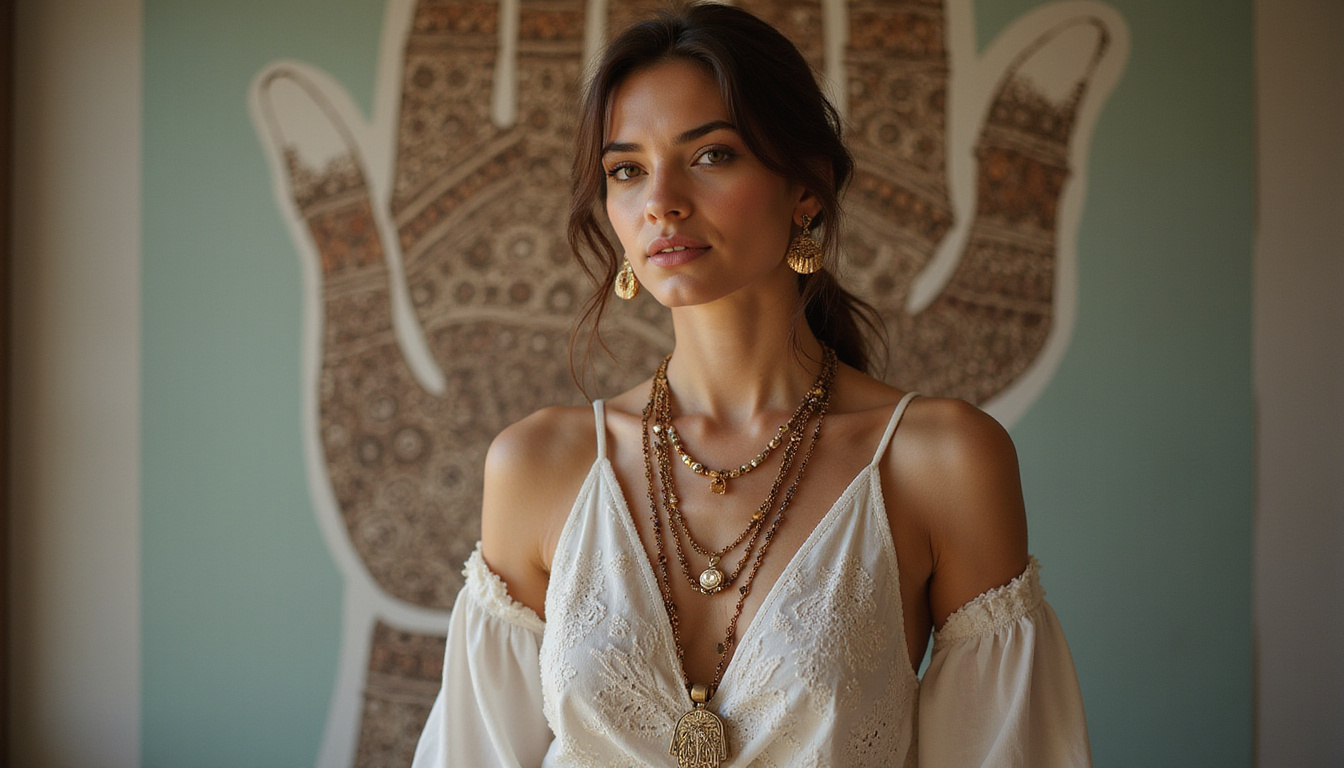
Entrance Protection
Many people hang a Hamsa near their front door to “guard” the home and welcome only positive energy. Popular formats include:
- Ceramic or metal wall plaques
- Wooden carved signs
- Hamsa key hooks or door hangers
Positioning the charm where it’s visible as you enter and exit can create a subtle ritual of blessing your day.
Living Room and Gathering Spaces
A Hamsa artwork, pillow, or decor piece in shared spaces can symbolize:
- Harmony among family members and guests
- A safe, inviting environment
- A home that values peace and spiritual connection
Choose colors that align with your intentions—blues for calm and protection, greens for growth and prosperity, gold for warmth and joy.
Personal Altars or Meditation Corners
If you maintain a small altar or spiritual corner, placing a Hamsa there can help:
- Focus your intention on protection and clarity
- Create a sense of sacred space for reflection
- Anchor your personal practices in a positive symbol
Combine it with candles, crystals, or religious texts in a way that feels authentic to you.
Style Guide: Making the Hamsa Your Own
The Hamsa’s versatility makes it easy to blend tradition with modern style.
Minimalist and Modern
- Clean metal outlines of the Hamsa without ornate detail
- Tiny pendants layered with delicate chains
- Simple line art prints in neutral tones for your wall
This approach works well if you want subtle spiritual symbolism that still feels contemporary.
Bohemian and Eclectic
- Colorful enamel or gemstone-encrusted Hamsa charms
- Beaded bracelets with mixed symbols (moon, stars, feathers)
- Tapestries, throw pillows, and patterned blankets featuring the motif
Ideal for people who enjoy expressive, layered aesthetics and global influences.
Fine Jewelry and Elevated Design
- Solid gold or silver Hamsa with diamonds or precious stones
- Designer pieces with intricate filigree work
- Understated, high-quality charms meant for everyday wear
This style suits those who prefer fewer, more meaningful pieces they can keep for years.
Respectful Use of the Hamsa Symbol
Because the Hamsa is sacred in several traditions, it’s important to approach it with respect—even if you’re drawn to it mainly for its beauty.
Guidelines for mindful use:
- Learn the basics. Understanding its cultural and spiritual roots honors the people who have used it for centuries.
- Avoid trivialization. Think twice before placing the Hamsa on items that may be seen as disrespectful (e.g., the soles of shoes, disposable packaging).
- Honor your intention. Whether you use it for protection, luck, or aesthetics, hold a sincere, positive intention when you wear or display it.
- Be open to conversation. If someone asks about your Hamsa, be willing to share what it means to you and acknowledge its broader cultural significance.
Simple Ways to Work With the Hamsa Each Day
If you want to go beyond wearing the symbol and build a small daily ritual around your Hamsa, try:
- Morning moment: Touch your Hamsa necklace or bracelet and repeat a short affirmation (e.g., “I am protected and open to blessings today”).
- Doorway blessing: As you pass the Hamsa at your entrance, mentally release stress and invite in peace.
- Focus anchor: During stressful moments, look at or hold your Hamsa to center your breathing and thoughts.
- Gratitude cue: Let the symbol remind you to notice small moments of “luck” or kindness throughout your day.
These small practices can deepen your connection to the symbol and enhance its emotional and spiritual impact.
FAQ About the Hamsa
Is the Hamsa a religious symbol or can anyone wear it?
The Hamsa appears in Jewish, Islamic, and Middle Eastern traditions, but it has grown into a broadly spiritual and cultural symbol of protection and good fortune. Many people with no particular religious affiliation wear or display a Hamsa respectfully. The key is to understand its meaning and treat it with consideration, not as a trend with no context.
Does a Hamsa hand need to face up or down to work?
Both orientations are widely used. A Hamsa hand facing up is commonly linked to protection and blocking negativity, while a Hamsa hand facing down is often associated with receiving blessings and abundance. There is no “wrong” direction; choose the one that aligns with your personal intention.
Can I combine the Hamsa with other symbols like the evil eye?
Yes. Many designs pair the Hamsa with the blue evil-eye charm, stars, crosses, Stars of David, or other spiritual motifs. Combining symbols can create a unique, personalized talisman that reflects your beliefs and values. Just be mindful of the meanings behind each symbol and avoid combinations that might feel contradictory or disrespectful in your cultural context.
Let the Hamsa Bring Protection, Luck, and Style Into Your Life
The Hamsa is far more than a decorative trend—it’s a centuries-old symbol that carries stories of protection, resilience, and hope across cultures. Whether you’re drawn to it for its spiritual power, its artistic beauty, or both, embracing the Hamsa can bring intention into the way you dress, decorate, and move through your day.
If you feel called to this timeless symbol, take the next step: choose a Hamsa piece—jewelry for everyday wear or decor for your home—that reflects your personal style and purpose. Let it serve as a daily reminder that you are watched over, capable of inviting good fortune, and fully free to express your unique spirit with meaning and grace.
Sacred objects often carry deep cultural and spiritual meaning. Learn how these symbols relate to history, spirituality, and the human mind by exploring more articles at SpiritualMindScience.com.