The peacock feather has captivated people for centuries with its iridescent colors and intricate eye pattern. Whether you use them for decor, crafts, spiritual practices, or fashion, understanding how to choose, clean, and display peacock feathers will help you keep them beautiful for years.
In this guide, you’ll learn how to work with peacock feathers confidently—from buying and caring for them to styling them in your home.
Why Peacock Feathers Are So Special
Peacock feathers are more than just pretty decorations. They carry cultural, aesthetic, and symbolic significance across many traditions:
- Symbolism: Often associated with beauty, immortality, royalty, and protection in various cultures.
- Design value: Their natural gradient of blues, greens, coppers, and golds is hard to replicate with synthetic materials.
- Structure: The “eye” pattern comes from microscopic structures that reflect light (structural coloration), not just pigment alone (source: National Geographic).
Because they’re naturally shed as part of the peacock’s molting process, many suppliers can offer feathers ethically, making them an appealing sustainable decor material.
Types of Peacock Feathers and How to Choose Them
Not all peacock feathers are the same. Picking the right type will depend on how you plan to use them.
1. Eye Tail Feathers
These are the classic long feathers with the distinctive “eye” at the end.
Best for:
- Vases and tall arrangements
- Wall art
- Centerpieces
- Fashion accessories (hats, fascinators)
What to look for:
- Intact, symmetrical eye pattern
- Minimal bending or broken barbs
- Rich, even color without dull patches
2. Sword Feathers
Sword feathers are long, narrow, and largely lack the eye pattern. They curve slightly and have a sleek look.
Best for:
- Modern minimalist decor
- Mixed floral arrangements
- Costume design and headdresses
Choose ones that are:
- Straight or gracefully curved (not kinked)
- Evenly colored with few gaps
3. Flue / Body Feathers
These are shorter, fluffier feathers from the peacock’s body or near the base of the tail.
Best for:
- Bouquets and small arrangements
- Craft projects and jewelry
- Hair accessories
Look for:
- Soft, full flues
- Little shedding when lightly shaken
- Consistent size if you need a matching set
Ethical and Quality Considerations
When buying peacock feathers:
- Look for mention of naturally molted feathers (collected after the bird sheds).
- Check reviews and photos for consistency.
- Avoid heavily dyed feathers for long-term decor; natural colors tend to age better.
How to Clean Peacock Feathers Safely
Peacock feathers are delicate. Cleaning them incorrectly can cause fraying, color loss, or breakage. Here’s how to refresh them without damage.
Step 1: Dust Regularly
For routine care, dusting alone can keep your feathers looking fresh.
- Use a soft makeup brush, small feather duster, or clean, dry paintbrush.
- Support the feather by holding the stem (rachis) near the area you’re brushing.
- Brush gently with the direction of the barbs, from base to tip.
Do this every few weeks, or more often in dusty environments.
Step 2: Light Surface Cleaning
If your peacock feather looks slightly dull or has minor residue:
- Fill a bowl with lukewarm water.
- Add a drop of mild dish soap or baby shampoo and mix gently.
- Dip a soft cloth or sponge in the solution and dab very lightly along the barbs, always in the feather’s natural direction.
- Avoid soaking the entire feather unless absolutely necessary.
Step 3: Deeper Cleaning (If Heavily Soiled)
Use this only when truly needed:
- Prepare lukewarm soapy water as above.
- Swish the feather briefly through the water—do not let it soak.
- Rinse quickly in a second bowl of clean lukewarm water.
- Gently shake off excess water while supporting the stem.
- Lay the feather flat on a towel to air-dry or hang it eye-side down so water doesn’t pool.
Step 4: Reshape After Drying
Water can cause barbs to cling together, making the feather look stringy. Once fully dry:
- Gently run your fingers along the feather in the direction of growth to separate barbs.
- For stubborn clumps, use a clean, dry toothbrush or fine comb, very carefully, moving from base to tip.
Important Don’ts
- Don’t use hot water or harsh detergents.
- Don’t use a hairdryer on high heat (cool or no-heat only, from a distance).
- Don’t scrub against the feather’s natural direction.
- Don’t leave feathers in direct sunlight to “dry faster”—this can fade colors over time.
How to Store Peacock Feathers to Prevent Damage
Proper storage keeps your peacock feather collection safe from dust, pests, and bending.
Basic storage tips:
- Keep feathers in a cool, dry place, away from direct sunlight.
- Store them flat between sheets of acid-free tissue paper or in long, narrow boxes.
- Alternatively, stand them upright in a tall container, but not so packed that they bend.
To protect from pests (like moths):
- Place natural repellents—such as cedar blocks or small sachets of dried lavender—in the storage area.
- Avoid mothballs in enclosed spaces where you’ll later display the feathers; they smell strong and can be toxic.
Travel and transport:
- Use mailing tubes or rolled cardboard to keep long feathers straight.
- Wrap each feather lightly in tissue paper to prevent friction and fraying.
Elegant Ways to Decorate with Peacock Feathers
Using peacock feathers in decor is about balance. They’re visually strong, so a few thoughtfully placed feathers often have more impact than a large cluster.
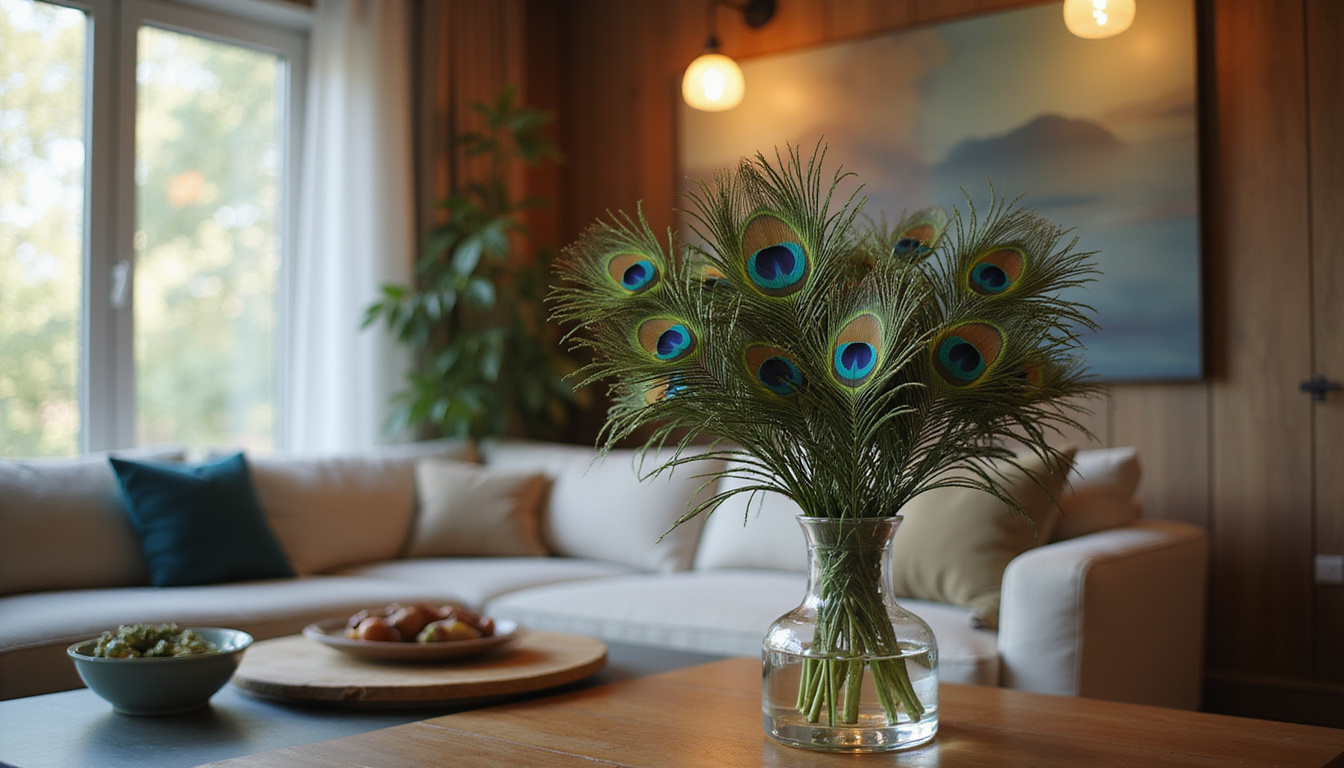
1. Statement Vases and Centerpieces
Place long eye tail or sword feathers in tall vases for instant height and drama.
Tips:
- Pair with neutral vases (clear glass, white ceramic, black metal) to let the colors pop.
- Mix with dried grasses (like pampas) for a boho look, or with white flowers for a luxe, formal feel.
- Vary heights: cut some stems shorter so the arrangement looks layered.
2. Wall Art and Frames
Turn a single peacock feather into art:
- Mount one feather on contrasting backing (black, cream, or kraft paper) and frame it.
- Create a triptych with three feathers of slightly different lengths, each in its own narrow frame.
- Arrange multiple small feathers in a radial pattern and frame the whole design.
3. Seasonal and Event Decor
Peacock feathers work beautifully in:
- Wedding bouquets and boutonnieres
- Holiday wreaths (especially in jewel-tone themes)
- Table runners and napkin rings for dinner parties
Stick to a coordinated color palette—deep blues, greens, golds, and rich neutrals complement the feathers best.
4. Fashion and Accessories
Incorporate peacock feathers into personal style:
- Hair clips and fascinators
- Statement earrings (with smaller flue or trimmed eye feathers)
- Hat bands and lapel pins
Seal stems in small metal findings or use jewelry wire and glue for durability.
Using Peacock Feathers in Spiritual or Symbolic Ways
Many people use peacock feathers in ritual, altar, or meditation spaces.
Common uses:
- Protection and cleansing: Some traditions use a peacock feather fan to waft incense or smoke in cleansing rituals.
- Symbol of watchfulness: The “eye” is seen as a protective gaze in various cultures.
- Connection to deities: In Hinduism, peacock feathers are associated with Lord Krishna and used in worship and decoration.
If using in spiritual practice:
- Keep a dedicated feather for sacred use only.
- Clean it physically and—if it aligns with your belief system—energetically (through intention, smoke, sound, etc.).
Simple DIY Projects with Peacock Feathers
For crafters, peacock feathers are versatile, lightweight, and impactful.
Easy project ideas
- Bookmarks: Attach a trimmed feather to a ribbon or card strip.
- Gift wrapping: Slide one feather under the ribbon on a wrapped box.
- Candles and jars: Glue feathers onto jars or candle holders (on the outside) then seal with clear varnish or Mod Podge.
- Boho wall hanging: Tie several feathers to a wooden dowel with twine, mixing in beads or driftwood.
When gluing:
- Use a small amount of glue on the stem only.
- Avoid saturating the barbs, which makes them look clumpy.
Troubleshooting Common Peacock Feather Problems
Feathers Look Dull
- Lightly dust and consider a very quick dip in lukewarm soapy water, then dry flat.
- Check if they’ve been in direct sunlight—fading from UV is permanent, so reposition future displays.
Feathers Are Bent or Creased
- Light bends: Gently straighten by hand and store flat under a light weight (like a large book with tissue paper) for a few days.
- Severe creases: Sometimes can be eased by very light steaming—hold the feather in humid air (not touching the steamer nozzle) and gently reshape.
Feathers Are Shedding
- Some minimal shedding is normal.
- If many barbs fall off with a light shake, the feather may be old or poor quality—best used in crafts where you can trim and stabilize it.
Quick Care Checklist for Peacock Feathers
Use this list as a simple reference:
- Store in a cool, dry, dark place.
- Dust gently with a soft brush every few weeks.
- Avoid direct sunlight and high humidity.
- Clean only with mild soap and lukewarm water when necessary.
- Always handle by the stem and move in the direction of the barbs.
- Frame or enclose especially delicate or treasured feathers for protection.
FAQ About Peacock Feathers
Q1: Are peacock feathers good luck?
Beliefs vary by culture. In some traditions, a peacock feather is considered a symbol of protection, good fortune, and prosperity, especially because of its “all-seeing” eye pattern. In others, it’s seen more neutrally—as a sign of beauty and vanity. If they feel lucky to you, you can absolutely use them as a personal good-luck charm.
Q2: How long do real peacock feathers last in home decor?
With gentle handling and proper care, real peacock feathers can last many years, even a decade or more. Keep them out of direct sunlight, dust them occasionally, and avoid high humidity. Over time, some natural fading or slight fraying may occur, but they generally remain attractive for a long period.
Q3: What’s the best way to display a single peacock feather?
A single peacock feather can look elegant in a slim bud vase, a narrow test tube holder, or framed behind glass. For a minimalist look, place one long feather in a tall, simple vase on a console table or mantel. For a more preserved, artful display, mount it on contrasting paper and frame it to protect it from dust and handling.
Peacock feathers are one of nature’s most eye-catching designs, and with the right care and creativity, they can elevate your space for years. If you’re ready to bring their iridescent beauty into your home, start by choosing a few quality feathers, cleaning and storing them properly, and experimenting with one or two display ideas from this guide.
Begin with a simple project—a framed feather, a vase arrangement, or a small accessory—and see how easily a single peacock feather can transform the feel of a room or outfit. Then build your collection and refine your style as your confidence grows.
Explore the Science Behind Spirituality
This guide explored the meaning and history of good luck symbols. To discover the psychology, consciousness, and scientific perspectives behind spiritual beliefs, visit SpiritualMindScience.com.