The Saint Benedict medal is one of the most beloved and powerful sacramentals in Christian tradition. For over a thousand years, Christians have worn, carried, and displayed this medal as a sign of faith, a shield against evil, and a reminder of God’s presence. But what do all the symbols actually mean? Why do so many people report miracles associated with it? And how are you supposed to wear or use it correctly?
This guide explains the hidden meanings of the Saint Benedict medal, the stories of protection and miracles around it, and practical tips for wearing it today.
Who Was Saint Benedict and Why a Medal?
To understand the Saint Benedict medal, it helps to know the man behind it.
Saint Benedict of Nursia (c. 480–547 AD) is known as the father of Western monasticism. He founded the Benedictine Order and wrote the Rule of Saint Benedict, a guide to community life centered on prayer, work, and humility. His name has long been associated with:
- Protection from evil and temptation
- Spiritual discipline and inner peace
- Stability and fidelity to God
The medal is not just a decorative token; it’s a visual summary of Benedict’s spiritual legacy—especially his strong rejection of evil and reliance on the power of the Cross.
The Hidden Meanings: Front and Back of the Saint Benedict Medal
A genuine Saint Benedict medal is full of symbols and letters that carry deep spiritual meaning. Here’s what they represent.
The Front of the Medal
The front usually depicts Saint Benedict standing, with several key elements around him:
- Saint Benedict holding a cross: This symbolizes faith in Christ’s victory over sin and death. For Benedict, the cross was the central weapon in spiritual battle.
- The Rule of Saint Benedict in his other hand: Represents discipline, obedience, and the way of life that leads to holiness.
- “Crux S. Patris Benedicti” (often abbreviated): “The Cross of our Holy Father Benedict” – a reminder that his entire life points to Christ.
- A broken cup (at his feet): In Benedictine tradition, enemies tried to poison him. When he blessed the cup, it shattered, and he was saved.
- A raven holding bread: Another poisoning attempt was thwarted when a raven carried away poisoned bread after Benedict made the sign of the cross over it.
Around the edge you often see the Latin words:
- “Eius in obitu nostro praesentia muniamur” – “May we be strengthened by his presence in the hour of our death.”
This line reflects a traditional prayer asking Saint Benedict to intercede and be spiritually present at the moment of death.
The Back of the Medal
The back of the Saint Benedict medal is dominated by the cross and several mysterious-looking letters. Each letter stands for Latin words forming a powerful prayer of exorcism and protection.
At the center of the cross:
- C S S M L – Crux Sacra Sit Mihi Lux
- “May the Holy Cross be my light.”
- N D S M D – Non Draco Sit Mihi Dux
- “Let not the dragon be my guide.”
Around the edge of the medal:
- V R S – Vade Retro Satana
- “Begone, Satan.”
- N S M V – Numquam Suade Mihi Vana
- “Never tempt me with your vanities.”
- S M Q L – Sunt Mala Quae Libas
- “What you offer me is evil.”
- I V B – Ipse Venena Bibas
- “Drink the poison yourself.”
At the top and bottom:
- PAX – “Peace” (a Benedictine motto), or sometimes IHS, a Christogram for Jesus.
Taken together, the reverse of the medal is like an armored prayer against spiritual attacks, rooted in Christ’s cross and in Saint Benedict’s authority as a spiritual father.
Is the Saint Benedict Medal Superstitious?
The Church is careful to distinguish between faith and superstition. The Saint Benedict medal is what Catholics call a sacramental—a blessed object meant to dispose us to receive God’s grace, not a magic charm that works on its own.
Key points:
- The power is not in the metal itself, but in Christ, in the prayers of the Church, and in the faith of the person using it.
- When used with trust in God and a desire to resist evil, it can be a powerful help in spiritual life.
- When treated like a good-luck charm or a “spell” to control events, it becomes superstition—something the Church clearly rejects (source: Catechism of the Catholic Church, 2110–2111).
Used rightly, it’s a sign that you rely on God’s protection and want to live a life of holiness, like Saint Benedict.
Stories of Protection and Miracles
For centuries, Christians have reported remarkable experiences connected with the Saint Benedict medal. While not every story is officially recognized as a miracle, they show how many people have found this medal to be a concrete sign of God’s help.
Common Types of Reported Favors
People often testify to:
- Protection from physical harm
- Stories of accidents avoided, homes preserved in storms or fires, and unexpected escapes from danger.
- Deliverance from evil and temptation
- Many believers say the medal helped them resist addictions, recurring temptations, or oppressive spiritual experiences.
- Peace in the home
- Some families notice less tension and conflict after placing a blessed medal in the house and praying together.
- Help during illness
- The medal is sometimes placed near the sick as a sign of trust, asking God, through Saint Benedict’s intercession, for healing or a peaceful death.
The Church does not guarantee miraculous results; instead, it encourages faithful use of sacramentals with humility, prayer, and a willingness to accept God’s will.
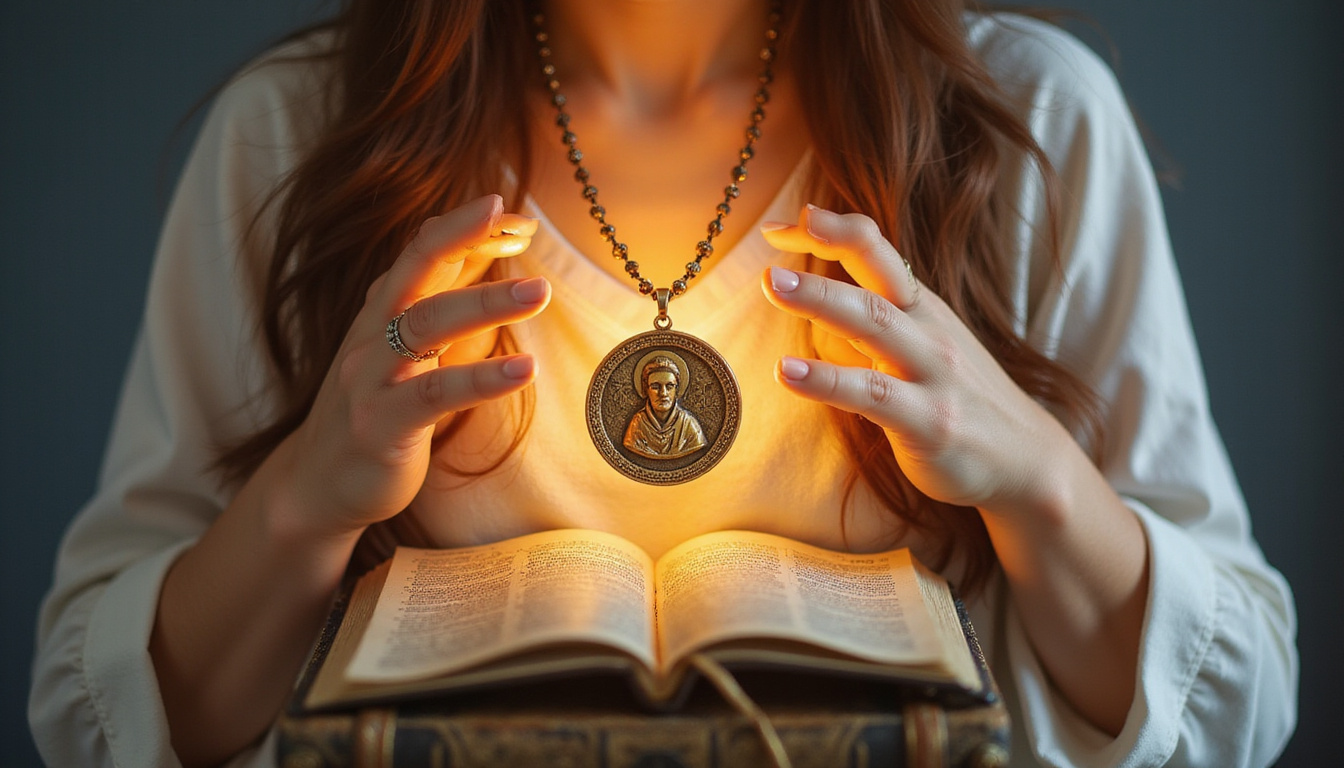
How to Have a Saint Benedict Medal Blessed
The Saint Benedict medal has a special place among sacramentals because it includes a specific blessing with elements of exorcism.
Who Can Bless It?
According to current Church practice:
- Any priest or deacon can bless the Saint Benedict medal.
- In some places, Benedictine monks and nuns have a particular tradition of blessing these medals.
The Blessing Itself
The traditional blessing invokes God’s protection and asks that, through the intercession of Saint Benedict, the medal may drive away evil, protect the wearer, and strengthen them in faith. Many parishes or monasteries will gladly perform the blessing if you ask.
You can bring your medals:
- After Mass
- To a scheduled appointment with a priest
- On a retreat or visit to a monastery or shrine
The blessing only needs to be done once. If the medal is damaged or broken beyond use, a new one should be obtained and blessed.
How to Wear the Saint Benedict Medal
One of the most common questions is how exactly to wear the Saint Benedict medal. There is no single “mandatory” way, but there are time-tested practices.
Wearing It as Jewelry
You can wear the medal:
- On a necklace or chain around your neck
- On a bracelet
- Attached to a scapular or Rosary
Best practices:
- Have it blessed before wearing.
- Wear it with faith, not as a fashion accessory alone.
- Use it as a reminder to pray—when you feel it or see it, say a short prayer like, “May the Holy Cross be my light.”
Incorporating It into Daily Prayer
You might:
- Touch the medal when you pray in moments of stress or temptation.
- Use the Latin phrases on the back as part of your spiritual warfare prayers: “Crux sacra sit mihi lux, non draco sit mihi dux” (“May the Holy Cross be my light, let not the dragon be my guide.”)
- Add a short daily prayer such as: “Saint Benedict, help me reject all evil and cling to Christ.”
Wearing the medal should lead you more deeply into prayer, not replace it.
Other Ways to Use the Saint Benedict Medal
Beyond wearing it, many people bring the Saint Benedict medal into different spaces and situations.
Common uses include:
- In the home
- Placing a blessed medal above doors, near windows, or in living areas as a sign of protection and blessing.
- On keychains or in vehicles
- Many drivers attach it to their car keys or keep one in the car, praying for safe travel.
- Buried in foundations or placed in buildings
- Some families place a medal in the foundation of a new home or at the four corners of a property while asking God’s protection and peace.
- With the sick or dying
- A small medal near the bed, or sewn into a pillow, can be a source of comfort and a reminder of God’s presence.
Always remember: the goal is not to “seal” places magically, but to invite God’s reign and peace into every part of life through faith and prayer.
Simple Devotional Practices with the Saint Benedict Medal
If you’re new to this sacramental, you can start with small, concrete habits. For example:
- Morning consecration: Touch the medal and pray, “Through the intercession of Saint Benedict, Lord, protect me today from all evil and temptation.”
- Before travel or work: Say, “Holy Cross be my light,” while holding the medal.
- In temptation or fear: Quietly pray, “Begone, Satan. Never tempt me with your vanities. What you offer me is evil; drink the poison yourself.”
These short prayers keep you spiritually alert and rooted in God’s presence.
FAQ About the Saint Benedict Medal
1. What is the Saint Benedict medal used for?
The Saint Benedict medal is used as a sacramental for spiritual protection, especially against evil and temptation. Believers wear it, carry it, or place it in homes and workplaces as a sign of trust in God, drawing on the intercession of Saint Benedict and the power of the Cross. It’s not a magic object; its value lies in the prayers and faith it expresses.
2. How do you properly wear a St Benedict medal?
To wear a St Benedict medal properly:
- Have it blessed by a priest or deacon.
- Wear it on a chain, bracelet, or attached to a scapular or Rosary.
- Treat it as a reminder to pray and resist evil—especially by recalling the Latin exorcism prayers inscribed on it. There is no official rule about which side must face out; choose what helps you pray.
3. Is there a special St Benedict medal prayer?
Yes. The back of the St Benedict medal is itself a prayer: “Crux sacra sit mihi lux, non draco sit mihi dux… Vade retro Satana…” Many people add their own words, such as, “Saint Benedict, defend me today from every evil, visible and invisible. Help me to follow Christ with courage and peace.” You can pray these words whenever you touch or see the medal.
The Saint Benedict medal is a small object with a big message: cling to Christ, reject evil, and live with peace and courage. Whether you’re facing daily temptations, spiritual struggles, or simply want a deeper reminder of God’s protection, this ancient sacramental can be a powerful companion on your journey.
If you feel drawn to this devotion, consider getting a Saint Benedict medal, having it blessed, and making it part of your daily prayer. Let it be more than an accessory—let it be a sign of your decision to stand with Christ, under the shelter of the Cross, following the path of holiness opened by Saint Benedict.
Explore the Science Behind Spirituality
This guide explored the meaning and history of good luck symbols. To discover the psychology, consciousness, and scientific perspectives behind spiritual beliefs, visit SpiritualMindScience.com.