Spirit House Rituals Everyone Should Know to Attract Protection
Inviting powerful protection into your home or business doesn’t have to be mysterious or complicated. For millions of people across Southeast Asia, the spirit house is a simple but sacred way to build a relationship with unseen guardians. When approached with respect and consistency, spirit house rituals can help attract protection, harmony, and good fortune into your daily life.
Below you’ll find a practical, people-first guide to understanding spirit houses, setting one up correctly, and performing rituals that are meaningful—even if you’re learning about this tradition for the first time.
What Is a Spirit House?
A spirit house is a small shrine placed outside homes, buildings, or land to provide a dwelling for spirits. Popular in Thailand, Cambodia, Laos, and other parts of Southeast Asia, it reflects the belief that spirits (or “phi” in Thai) inhabit the land, and that humans should live in respectful cooperation with them.
Key points about spirit houses:
- They are usually placed on a pedestal or pillar.
- They often resemble miniature houses or temples.
- They serve as a home for guardian spirits or the spirits of the land.
- Daily or regular offerings maintain a positive relationship with these spirits.
You don’t have to be Buddhist, animist, or follow any specific religion to appreciate the intention behind a spirit house: honoring the unseen forces of a place in order to invite protection, peace, and balance.
Types of Spirit Houses and Their Meanings
Not all spirit houses are the same. Understanding what you’re working with helps you choose the right rituals.
1. San Phra Phum (Guardian Spirit House)
Common in Thailand, San Phra Phum is dedicated to the guardian spirit of the land.
- Usually decorated with a small human-like figure.
- Often placed higher than eye level.
- Associated with strong protection and blessings for those living or working nearby.
2. San Chao Thi (House of the Landlord Spirit)
This type is dedicated to the “landlord” or owner spirit of the property.
- Traditionally simpler in design than San Phra Phum.
- Linked with everyday prosperity, peace, and smooth business.
3. Ancestral or Family Spirit House
In some regions, a spirit house may honor ancestors.
- Used to maintain a bond with family spirits.
- Focused on guidance, gratitude, and family protection.
When considering rituals, it helps to know whether you’re addressing a guardian of the land, a landlord spirit, or family spirits, as offerings and prayers might be slightly adjusted in tone.
Choosing the Right Location for Your Spirit House
The location of a spirit house is as important as the rituals themselves. Traditional practitioners often consult a specialist, but you can follow these widely respected guidelines:
-
High and Clean Area
- Place the spirit house on a raised pillar or platform.
- Keep the surrounding area clean, free of trash, and well-swept.
-
Away from Direct Obstructions
- Avoid placing it directly against walls or under staircases.
- Give the spirits an unobstructed “view” and a clear path.
-
Separate from Bathrooms and Bedrooms
- In many traditions, spirit houses should not directly face toilets or bedrooms out of respect.
- If possible, choose a spot in the yard, balcony, or a designated outdoor area.
-
Respect the Sun’s Path
- Many people avoid facing the spirit house west (associated with decline or endings).
- East or northeast is often considered favorable, but consult local customs where possible.
-
Safe and Stable
- Ensure the base is sturdy and won’t tilt.
- A spirit house that looks neglected can symbolically reflect neglected spiritual relationships.
How to Install a Spirit House with Respect
Installing a spirit house marks the beginning of your relationship with the spirits. If possible, seek guidance from a local spiritual leader, monk, or experienced elder, but if that’s not available, follow these respectful steps.
Step 1: Choose an Auspicious Day
Many people select:
- Days considered lucky in local calendars.
- Mornings rather than evenings.
- A time when all family members or key people in the business can be present.
Step 2: Prepare Basic Offerings
For installation day, prepare:
- Flowers (marigolds, jasmine, or local blossoms)
- Incense sticks or natural-smoke alternatives
- Candles or oil lamps
- Fresh fruit (bananas, oranges, apples, coconuts)
- Drinks (water, tea, or traditional colored sodas, depending on custom)
Step 3: Cleanse the Area
Before setting the spirit house in place:
- Sweep and wash the area.
- Remove clutter, broken objects, or anything sharp and aggressive-looking.
- Some people sprinkle water infused with flowers or herbs as a cleansing ritual.
Step 4: Raise and Fix the Spirit House
Once the area is prepared:
- Place the pedestal securely.
- Fix the spirit house on top.
- Ensure it’s level and firmly attached.
As you do this, maintain a calm, respectful mindset. In many cultures, the attitude you bring to the ritual is as important as the actions themselves.
Step 5: Make the First Offering and Invitation
- Light candles and incense.
- Place flowers and fruit on the spirit house tray or altar.
- In your own words (or a traditional prayer if you know one), invite the guardian or land spirits to dwell there peacefully and protect the home or business.
You might say silently or aloud:
“Spirits of this land, with respect I offer you this house.
May you be comfortable here, and may we live together in peace.
Please protect this place, those who live and work here,
and help us avoid harm and misfortune.”
Intentional, sincere speech matters more than perfect wording.
Daily and Weekly Spirit House Rituals for Protection
A spirit house is a relationship, not a one-time installation. Consistency in your rituals is what invites ongoing protection.
Daily Rituals
Aim for once a day, or at least a few times a week:
-
Refresh water
Replace any water offerings with fresh, clean water. -
Offer simple food or fruit
A banana, a piece of seasonal fruit, or a small portion of what you’re eating is enough. -
Light incense or a candle
Even one stick of incense or a brief moment of quiet intention can be powerful. -
Short prayer or thanks
Thank the spirits for their protection and ask for continued safety and harmony.
Weekly or Special Day Rituals
Once a week (or on a chosen auspicious day):
- Clean the spirit house (wipe dust, remove wilted flowers).
- Offer fresh garlands or more elaborate flowers.
- Place more generous offerings: fruit platters, sweets, traditional desserts.
- Spend a few extra minutes in meditation or silent gratitude.
Consistency shows the spirits you value their presence, reinforcing a protective energy around your home or business.
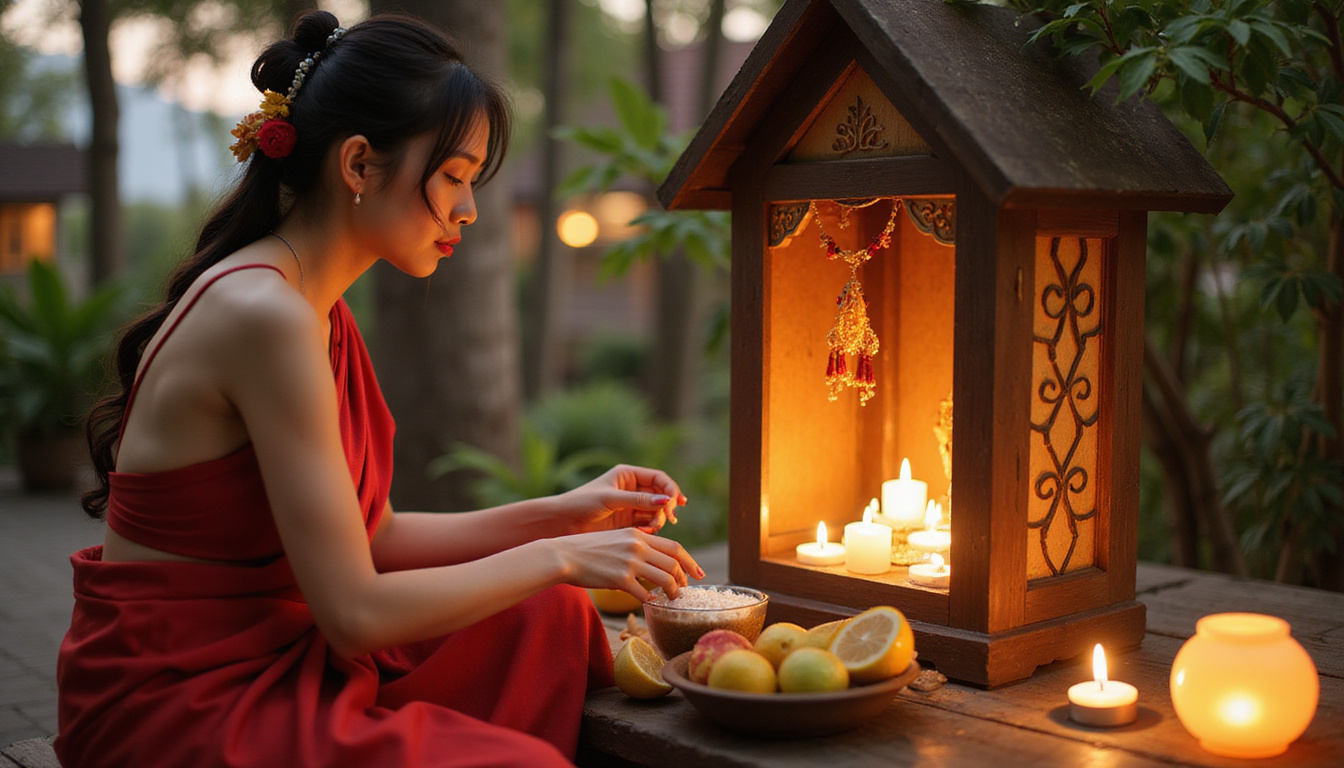
Offerings for a Spirit House: What to Give and Why It Matters
Offerings are a symbolic exchange of respect and goodwill. You don’t need expensive items; what matters is sincerity, cleanliness, and regularity.
Here are common offerings people make to a spirit house:
-
Flowers and Garlands
- Symbolize beauty, honor, and impermanence.
- Freshness signals care; avoid leaving rotten or dried-out flowers too long.
-
Food
- Fresh fruit, sweets, rice, or small meals.
- Avoid overly processed or messy foods that attract pests.
-
Drinks
- Water is essential.
- Some traditions offer tea, coffee, or even brightly colored sodas; alcohol may be offered in certain cultures, but do so mindfully and respectfully.
-
Incense and Candles
- Incense smoke is seen as carrying prayers upward.
- Candles or lamps represent light, awareness, and guidance.
-
Symbolic Objects
- Small statues (guardians, dancers, animals, horses, elephants).
- Miniature furniture, vehicles, or items that imply comfort and status for the spirits.
Always remove spoiled offerings promptly. Neglecting old food at a spirit house can symbolically weaken the protection you’re asking for and physically attract insects or animals.
Rules and Etiquette: What Not to Do with a Spirit House
Respectful behavior is crucial when you maintain a spirit house. Common guidelines include:
- Do not place trash, cigarette butts, or dirty items nearby.
- Do not lean on, sit on, or place feet on the pedestal.
- Avoid pointing your feet directly toward the spirit house (where this is culturally relevant).
- Don’t move the spirit house casually; relocation should be treated as a special ritual.
- Do not make demands. Make requests politely and express gratitude.
If a spirit house becomes significantly damaged, traditional advice is to conduct a respectful relocation or closing ritual rather than simply throwing it away.
How Spirit House Rituals Attract Protection
From a spiritual perspective, the logic is straightforward: when you honor guardian spirits, they are more likely to look kindly on you, shielding your space from harm, conflict, and misfortune.
From a psychological and social perspective, researchers suggest that rituals, even when symbolic, can:
- Reduce anxiety.
- Enhance a sense of control and safety.
- Build shared meaning among families and communities.
This can indirectly lead to more cooperative behavior, better decision-making, and a calmer environment (source: Harvard Business Review – “The Power of Ritual”).
Whether you see a spirit house as a literal home for spirits or as a powerful symbol of respect for the unseen, the effect is similar: you create a focal point for intention, gratitude, and mindfulness—energies strongly associated with protection and well-being.
Simple Spirit House Ritual for Extra Protection in Difficult Times
During stressful periods—illness, job changes, legal issues, or major renovations—you can perform a slightly more focused ritual:
- Clean the spirit house thoroughly.
- Prepare stronger offerings, such as:
- A larger variety of fruits.
- A favorite local dessert.
- New flower garlands or fresh marigold chains.
- Light three incense sticks and a candle.
- State your situation clearly and humbly, for example:
“Honored spirits of this place, I come to you with respect.
Please help protect my family/business during this time of change.
May danger be kept far away, and may good opportunities come near.” - Spend a few minutes in silence, focusing on calm, protective energy surrounding your home, family, or workspace.
- Thank the spirits and commit to ongoing offerings in gratitude.
This type of focused ritual can become a grounding practice in moments when you feel uncertain or vulnerable.
FAQ: Spirit House Practices and Protection
Q1: How often should I make offerings at a spirit house for protection?
Ideally, make small offerings at your spirit house daily or a few times a week (fresh water, simple food, incense), and perform more elaborate rituals weekly or on special days. Regular attention signals ongoing respect, which is believed to strengthen protective energy.
Q2: Can I set up a spirit house if I’m not from a Southeast Asian culture?
Yes—if you approach the spirit house tradition with genuine respect, cultural sensitivity, and a willingness to learn. Study local customs, avoid commercializing or trivializing the practice, and treat your rituals as a sincere relationship with the spirit of the land or your home.
Q3: What are good offerings to attract stronger protection from a spirit house?
Fresh flowers, fruit, and water are fundamental. For stronger protection, you can add items like jasmine garlands, traditional sweets, extra incense, and small guardian statues (such as protective animals or warrior figures), always offered with sincere intention and gratitude.
A well-cared-for spirit house is much more than decoration. It’s a living symbol of your commitment to harmony with the unseen world around you. By choosing a respectful location, installing it thoughtfully, and maintaining simple, consistent rituals, you invite a field of protection to grow around your home, your family, and your work.
If you feel called to deepen the protection in your life, start by creating—or revitalizing—your spirit house rituals this week. Clean the space, offer fresh flowers and water, speak from the heart, and see how your environment begins to feel calmer and more supported. Over time, this daily dialogue with the spirits of your place can become one of your strongest anchors of safety and peace.
Sacred objects often carry deep cultural and spiritual meaning. Learn how these symbols relate to history, spirituality, and the human mind by exploring more articles at SpiritualMindScience.com.