Runes are far more than mysterious markings from a distant past; they are living symbols that can deepen your self-knowledge, guide your intuition, and transform your spiritual practice. Whether you’re brand new to runes or looking to expand beyond basic divination, these ancient letters of the Norse and Germanic peoples offer a powerful framework for reflection, magic, and personal growth.
In this guide, you’ll learn what runes are, how to use them, and how to build a rune practice that genuinely supports your spiritual path.
What Are Runes? A Brief History and Meaning
At their simplest, runes are characters from early Germanic alphabets, most famously the Elder Futhark, which contains 24 symbols. These were used historically for writing, carving inscriptions, and marking important objects.
But runes are not just letters:
- Each rune carries a sound, like a letter of the alphabet.
- Each symbol also holds a name and meaning, often tied to forces of nature, archetypes, or everyday life (like “wealth,” “ice,” “horse,” “joy,” “protection”).
- Runes were historically associated with magic, divination, and protection, appearing on amulets, weapons, and memorial stones.
Our primary knowledge of runes and their cultural context comes from archaeological finds, historical texts, and rune poems preserved in medieval manuscripts (source: Encyclopedia Britannica).
Today, runes are most commonly used for:
- Divination and self-reflection
- Meditation and manifestation
- Protection and blessing rituals
- Spiritual journaling and symbolism in art or personal items
Why Work With Runes in Your Spiritual Practice?
Integrating runes into your spiritual life can be transformative because they provide:
1. Clear Symbolic Language
Each rune offers a compact symbol rich with layered meanings: material, emotional, and spiritual. Learning them gives you a consistent language to interpret your inner world and your life’s patterns.
2. A Tool for Intuition, Not Fortune-Telling
Runes aren’t about predicting fixed fates. They shine as tools for intuition and perspective. Drawing a rune for guidance reframes your situation through an archetypal lens, helping you see options and lessons you might be missing.
3. Grounded, Earthy Spirituality
Unlike some abstract systems, rune meanings are grounded in landscape and lifestyle: storms, cattle, harvest, need, journeys, ice. This makes them feel earthy and practical, ideal for those who want spirituality that’s rooted in the physical world.
4. Flexible Use Across Traditions
You don’t have to follow Norse paganism to work with runes. They can integrate into:
- Mindfulness or meditation practices
- Witchcraft or eclectic magical paths
- Christian or interfaith contemplative practices (as symbols, not deities)
- Secular self-development and journaling
The Elder Futhark: The Core Rune System
The most widely used rune set today is the Elder Futhark, consisting of 24 runes arranged in three groups (called ættir). You don’t need to memorize all 24 to begin, but knowing a few foundational runes can help you get started with practice.
Some commonly used Elder Futhark runes:
- Fehu (ᚠ) – Wealth, resources, flow, starting energy
- Uruz (ᚢ) – Strength, vitality, raw power, endurance
- Thurisaz (ᚦ) – Challenge, disruption, boundaries, protection
- Ansuz (ᚨ) – Communication, inspiration, insight, divine message
- Raido (ᚱ) – Journey, movement, path, right timing
- Kenaz (ᚲ) – Torch, illumination, learning, revelation
- Gebo (ᚷ) – Gift, exchange, relationship, reciprocity
- Wunjo (ᚹ) – Joy, harmony, alignment, community
Over time, you’ll develop your own nuanced relationship with each rune. The “book” meanings are just a starting point; your lived experience with the symbols matters just as much.
Getting Started: How to Choose and Cleanse Your Runes
You can begin your rune practice with almost any set:
- Wood, stone, bone, clay, or resin runes
- Hand-carved or store-bought
- Even paper cutouts, if you’re experimenting before investing
What matters most is your relationship with the set, not the material. When you first bring your runes home, consider a simple cleansing and consecration process:
-
Physical cleansing
Gently wipe them clean. You can pass them through incense smoke or near a candle flame (safely) to symbolically clear old energies. -
Intentional introduction
Hold the bag or box in your hands. Speak aloud or silently: why you’ve chosen to work with runes, and how you hope they’ll support your spiritual practice. -
Charge with presence
Keep your runes near you for a few days—on your altar, desk, or nightstand—so they absorb your energy and environment. -
Set boundaries
Decide: Are others allowed to handle your rune set? Will you share them for readings? Be clear from the beginning.
Simple Daily Practices with Runes
You don’t need complex spreads or rituals to benefit from runes. Start small and consistent.
1. One-Rune Daily Draw
Once a day, ask a focused question such as:
- “What energy is most helpful for me to embody today?”
- “What do I need to pay attention to right now?”
- “What mindset best supports my next step?”
Draw one rune from the bag. Sit with it for a few minutes:
- Look at the shape. What does it remind you of?
- Recall or look up its basic meaning.
- Notice your first emotional reaction.
Then, carry that rune’s theme through your day. Reflect in the evening: Where did its message show up?
2. Rune Journaling
After your daily draw:
- Write the date and the rune.
- Add key words associated with it.
- Note what’s happening in your life.
- At day’s end, jot down how the rune’s themes played out.
Over weeks, patterns emerge. You’ll see which runes tend to appear around certain issues, helping you refine your interpretations.
3. Meditation with a Single Rune
Choose a rune that aligns with what you’re working on: protection, courage, creativity, healing.
- Sit comfortably and hold or visualize the rune.
- Breathe slowly, letting its shape fill your inner vision.
- Silently repeat its name or a short phrase (e.g., “Kenaz – bring clarity and insight”).
Let thoughts come and go. Notice any feelings, memories, or images that arise. This is how a personal connection forms.
Using Runes for Divination: Ethical and Practical Tips
Rune divination is about perspective, not prophecy. Here’s how to make your readings grounded and ethical.
Ask Empowering Questions
Instead of:
- “Will I get the job?”
Try:
- “What do I need to understand about this job opportunity?”
- “What energy can I cultivate to improve my chances or find the right role?”
This keeps your focus on your agency and growth.
Start With Simple Spreads
You don’t need elaborate layouts. Some beginner-friendly options:
- One Rune – Core message or energy.
- Two Runes – Challenge and support; problem and advice.
- Three Runes –
- Past influence
- Present situation
- Likely trajectory or guidance
Interpretations should blend:
- Traditional rune meanings
- Your intuition
- The context of the question
Stay Grounded and Respectful
- Avoid making absolute predictions about health, life-and-death matters, or other people’s choices.
- If a reading feels confusing or emotionally charged, pause and revisit later.
- Remember that runes offer mirrors, not mandates. They reveal patterns and possibilities, not unchangeable fates.
Runes in Magic and Ritual: Symbol as Action
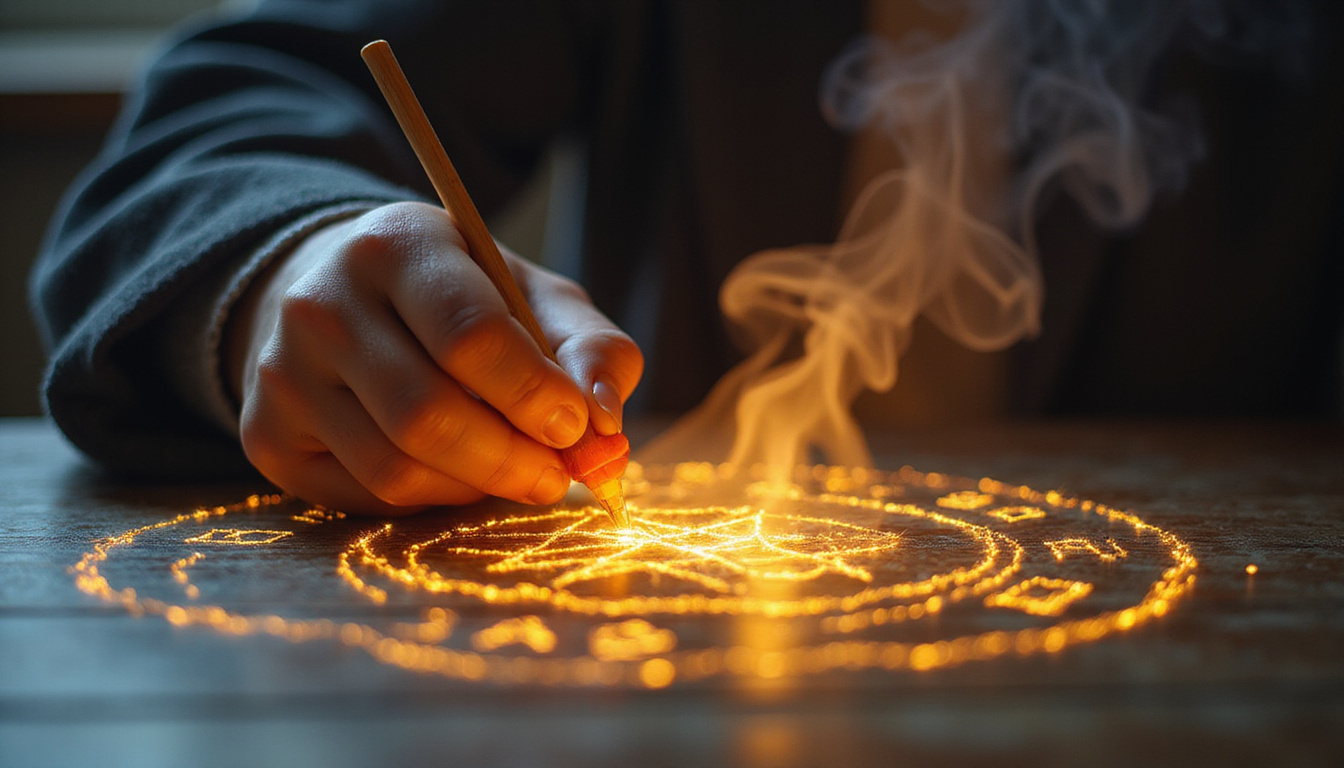
Many spiritual practitioners use runes in magic—working with them as symbols to focus intention and energy.
Here are some common approaches:
1. Rune Scripts and Bind Runes
- Rune script: A series of runes written in a line to represent an intention (e.g., Fehu + Wunjo + Raido for prosperous, joyful journeys).
- Bind rune: Two or more runes overlapped and fused into a single symbol.
These can be:
- Drawn in a journal or grimoire
- Carved into candles, wood, or talismans
- Visualized in meditation
Always understand each rune you include; mixed or contradictory energies can confuse the intention.
2. Protective and Blessing Runes
Some runes often used for protection or support:
- Algiz (ᛉ) – Protection, guardianship, boundaries
- Tiwaz (ᛏ) – Justice, courage, honorable combat
- Eihwaz (ᛇ) – Endurance, transformation, resilience
You can:
- Trace a rune over your door with your finger or incense.
- Draw it (discreetly) on personal items.
- Visualize it on your energetic field as a shield.
3. Seasonal and Ancestral Work
Runes are rooted in cycles of nature and older cultural traditions. You might:
- Draw runes for guidance at solstices or equinoxes.
- Honor ancestors by learning the historical context of runes in their regions.
- Work with harvest or winter-themed runes when aligning your practice to the time of year.
Common Mistakes to Avoid When Working With Runes
As you deepen your practice, keep an eye out for these pitfalls:
-
Over-reliance on “book meanings”
Use them as scaffolding, but refine them through your own experience and cultural awareness. -
Asking the same question repeatedly
This muddies the water and can create anxiety. If you’re tempted to repeat a question, focus instead on what’s hard to accept. -
Treating runes as infallible or fear-based omens
“Difficult” runes (like Hagalaz, Nauthiz, Isa) aren’t punishments; they highlight pressure, limitation, or necessary change. -
Cultural insensitivity
Be aware that Norse symbols, including some runes, have been misappropriated by extremist groups. Learn the history and use them in ways aligned with inclusivity and respect.
How to Deepen Your Relationship with Runes Over Time
To move from beginner to meaningful practitioner:
-
Study slowly and steadily
Take one rune a week or month. Research it, meditate on it, and observe how it appears in your life. -
Create art with runes
Draw, paint, carve, or stitch them. The physical act of creating the symbol anchors it in your body memory. -
Teach what you’ve learned
Share your experiences with a friend or in a study group. Explaining your understanding helps clarify and deepen it. -
Keep an evolving rune journal
Track every reading, insight, and shift in your interpretations. Over a year, you’ll have a deeply personal rune handbook.
FAQ About Runes and Spiritual Practice
Q1: How do I know if runes are right for my spiritual path?
If you’re drawn to symbolic systems, earthy archetypes, and intuitive self-reflection, working with runes can be a natural fit. You don’t need Norse ancestry or a specific belief system; respect, curiosity, and consistency are the only requirements.
Q2: Can I use rune symbols for protection even if I don’t do full rune readings?
Yes. Many people use individual rune symbols (like Algiz for protection or Wunjo for joy) in art, talismans, or visualizations. It’s wise to learn the core meaning of each rune you use, but you don’t need to be a full-time diviner to work with rune symbols.
Q3: What’s the difference between rune casting and tarot for spiritual guidance?
Both runes and tarot offer symbolic guidance, but runes are an alphabet of individual archetypal signs, while tarot is a structured deck with suits and major arcana. Rune readings tend to be more minimal and direct, with fewer cards (or symbols) but deep, layered meanings that connect to nature and everyday life.
Start Working with Runes Today
Runes are not relics locked in stone; they are a living language of symbols that can illuminate your path, sharpen your intuition, and bring depth to your spiritual practice. By approaching them with respect, curiosity, and a willingness to learn, you invite a powerful, grounded tool for transformation into your life.
If you feel drawn to these ancient symbols, don’t wait for the “perfect” moment. Choose or craft a simple rune set, commit to a short daily practice, and begin a conversation with the runes today. Over time, they can become trusted allies—mirrors that help you see yourself clearly and guides that support you in creating a more intentional, spiritually aligned life.
Explore the Science Behind Spirituality
This guide explored the meaning and history of good luck symbols. To discover the psychology, consciousness, and scientific perspectives behind spiritual beliefs, visit SpiritualMindScience.com.