Tzedakah Box: Creative Ways to Teach Kids Generosity at Home
Introducing a Tzedakah box into your home is one of the simplest, most meaningful ways to teach kids about generosity, empathy, and responsibility. More than just a place to put coins, a Tzedakah box can become a powerful hands-on tool for learning Jewish values, cultivating gratitude, and making kindness a visible part of everyday family life.
Below are practical, age-appropriate, and creative ideas to turn your family’s Tzedakah practice into something your children will understand, enjoy, and remember.
What Is a Tzedakah Box and Why It Matters for Kids
A Tzedakah box (often called a pushke) is a container set aside for collecting money to give to people or causes in need. The word tzedakah comes from the Hebrew root for “justice” or “righteousness,” reminding us that giving is not just charity, but a responsibility.
For children, a Tzedakah box:
- Makes an abstract value (generosity) concrete and visible
- Offers a daily or weekly ritual that anchors Jewish identity
- Gives them real ownership over making a difference
- Encourages conversations about fairness, kindness, and community
When kids see coins dropping into a box, watch it fill up, and help decide where it goes, they gain a tangible sense of impact.
Step One: Create a Kid-Friendly Tzedakah Corner at Home
Before you dive into activities, set the stage.
1. Choose a central spot
Pick a place kids pass regularly—near the front door, on a low shelf in the kitchen, or in a family “mitzvah corner.” The more visible the Tzedakah box, the more it becomes part of the family’s rhythm.
2. Make it accessible
Ensure little hands can reach the box and any coins or stickers used. If it’s out of reach or “adults only,” kids will see it as decoration instead of something they own.
3. Add visual cues
Consider including:
- A simple sign with the word “Tzedakah” in English and Hebrew
- A picture of people helping others
- A chart or calendar for tracking giving days
This transforms the space into a mini “giving station,” not just a shelf with a box.
Crafting a Tzedakah Box: Turn It into a Creative Project
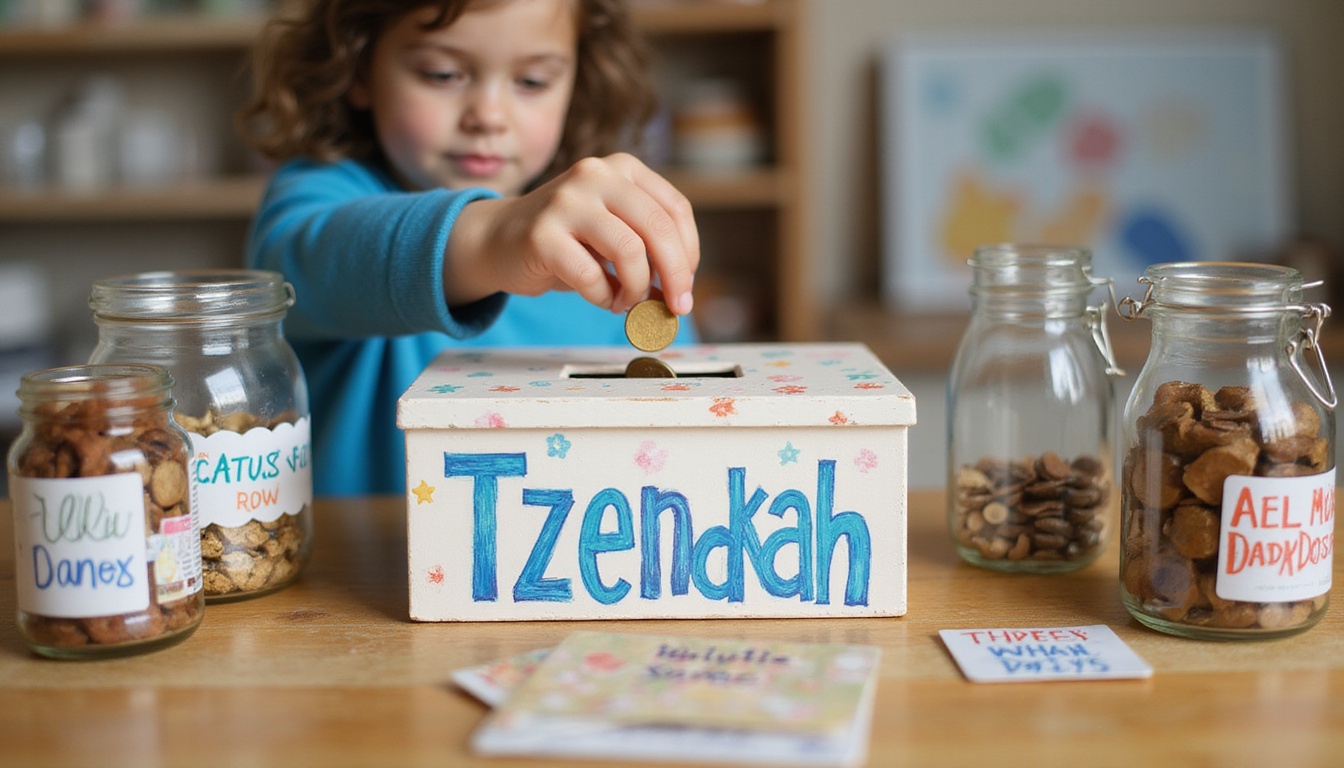
Making the Tzedakah box itself is a powerful first step. When kids build it, they feel it belongs to them.
DIY Tzedakah Box Ideas by Age
For preschoolers (3–5 years)
- Use a small cardboard box, tissue box, or oatmeal container.
- Let them paint it or cover it with colorful paper.
- Add simple stickers: hearts, stars, or pictures of people sharing.
For early elementary (6–8 years)
- Provide markers and labels so they can write “Tzedakah” on the box.
- Invite them to draw what they care about—animals, the earth, other kids—to show where they might want the money to go.
- Use a shoebox with sections (using cardboard dividers) to separate different causes.
For older kids (9–12+ years)
- Decorate a sturdy wooden or metal box.
- Add a small lock if they like the idea of being “guardian” of the family Tzedakah.
- Let them design printed labels or use collage from magazines highlighting issues they care about (hunger, environment, education).
Build a Family Ritual Around the Tzedakah Box
The real impact comes from consistency. Turning Tzedakah into a routine ensures it doesn’t get lost in the shuffle of busy family life.
Weekly or Daily Tzedakah Moments
A few options:
-
Before Shabbat:
Place coins in the Tzedakah box before lighting candles on Friday night. Ask each child: “Who do you want to help this week?” and let them dedicate their gift. -
After Allowance Day:
When kids receive their allowance or birthday money, invite them to put a portion—often 10%, but any amount works—into their own or the family Tzedakah box. -
Morning or Bedtime Ritual:
Keep a small dish of coins nearby and let a different child place a coin in the box each day, saying something simple like, “May this help someone who needs it.” -
Holiday Connections:
Before Purim, Passover, Rosh Hashanah, or Hanukkah, set a special time to add to the box and discuss holiday themes like freedom, renewal, and miracles through the lens of helping others.
Use Stories to Bring Tzedakah to Life
Children grasp values best through stories and examples that feel real and relatable.
Story Ideas and Discussion Prompts
-
Traditional Jewish tales:
Share stories about wise rabbis, hidden charity, or communities caring for their poorest members. Afterward ask, “How was Tzedakah shown in this story?” -
Modern stories and picture books:
Look for children’s books about sharing, fairness, and kindness, even if they don’t mention the word Tzedakah explicitly. Connect the story back: “What if we used our Tzedakah box to help someone like the character in the book?” -
Family stories:
Tell your kids about grandparents or relatives who gave quietly to others, helped neighbors, or welcomed guests. This creates a sense of continuity and pride.
Organizations like PJ Library curate books on Jewish values and Tzedakah that you can read with your children (source: PJ Library).
Let Kids Help Choose Where the Tzedakah Money Goes
Empowerment is key. Children are more invested when they help decide how to use the money in the Tzedakah box.
How to Involve Kids in Giving Decisions
-
Brainstorm causes together
Sit down as a family and ask:- Who do we want to help?
- What problems in the world make us sad or worried?
- What makes us feel hopeful?
-
Narrow it down
Help them choose one or two focuses, such as:- Food and hunger
- Animals and the environment
- Other children who are sick or in need
- Local community needs (shelters, libraries, schools)
-
Research organizations
With older kids, look up charities’ websites, read their stories, and watch short videos together. Let kids compare and discuss which feel most aligned with their values. -
Set a giving schedule
Decide in advance: Will you empty the Tzedakah box monthly? Before a holiday? When it’s physically full? Each “emptying day” becomes a celebration of impact. -
Involve them in the actual donation
- Let them click the “donate” button online (with your supervision).
- Write a short note together to include with a check.
- If possible, visit the organization in person so they see where the money goes.
Make It Hands-On: Activities That Bring Tzedakah to Life
Use the Tzedakah box as a launchpad for broader acts of giving and kindness.
Activity Ideas by Age and Interest
-
Coin Hunt for Tzedakah (younger kids)
Hide coins around the living room and let kids find them and put them directly into the Tzedakah box. While they hunt, talk about “treasures” we can share with others. -
Chore-for-Tzedakah Challenge (elementary)
Create a list of extra chores kids can choose to do. The reward is not for them to keep, but to put into the Tzedakah box. This shifts the mindset from “I earn for me” to “I can earn to help others.” -
Cause-of-the-Month Project (older kids)
Each month, an older child picks a cause, researches it, presents it to the family, and leads that month’s Tzedakah focus. -
Matching Gifts
Occasionally, offer to “match” what they choose to put in the Tzedakah box—doubling their impact and showing they’re part of something bigger.
Connect the Tzedakah Box to Other Jewish Values
A Tzedakah box doesn’t stand alone; it connects to many core Jewish concepts.
Values to Highlight
-
Chesed (lovingkindness):
Explain that giving money is one form of chesed, but so is giving time, a smile, or friendship. Tzedakah can inspire broader acts of kindness. -
Hakarat Hatov (gratitude):
When kids place coins in the box, invite them to name one thing they feel grateful for. This shows the link between feeling blessed and wanting to bless others. -
Bal Tashchit (not wasting):
Collect spare change instead of letting it sit unused. Teach that resources, even small ones, are meant to be used responsibly for good.
Teach Budgeting with a Three-Box System
For older children, the Tzedakah box can be part of early financial education.
Give your child three clearly labeled containers:
- Spend – for small things they want now
- Save – for bigger goals later
- Tzedakah – for giving to others
Whenever they receive money, they decide how much goes into each. This:
- Normalizes Tzedakah as a permanent “line item” in their life
- Reinforces that giving is just as important as spending and saving
- Builds lifelong habits of financial responsibility and generosity
One Family, Many Tzedakah Boxes
You can use multiple Tzedakah boxes to deepen the learning experience.
Ways to Use More Than One Box
-
Family box + personal boxes
Keep one central Tzedakah box in a common area, and allow each child to have their own smaller box in their room. The family box funds joint decisions; personal boxes let kids support causes they pick themselves. -
Themed boxes
Create different boxes labeled “Local,” “Israel,” “Environment,” or “Emergencies.” Kids learn that needs exist at many levels and that we can respond in different ways. -
Project-based boxes
For a limited time—say, a month or a season—make a special Tzedakah box dedicated to a specific crisis or project, like helping victims of a natural disaster.
Troubleshooting: When Kids Resist or Lose Interest
It’s normal for enthusiasm to ebb and flow. A few gentle adjustments can help.
-
Keep explanations simple
Young children don’t need heavy discussions about poverty. Focus on “helping people who need help” and adjust depth as they grow. -
Avoid guilt or shame
Instead of “You have to give,” try “In our family, we get to help others. How would you like to help today?” -
Use positive reinforcement
Notice their efforts: “I saw you put your birthday money into the Tzedakah box. That was a thoughtful choice.” -
Refresh your routine
Change the time of day, try a new project, or let kids redesign the box when interest dips.
FAQ: Tzedakah Boxes and Teaching Generosity
1. How do I introduce a Tzedakah box to my child for the first time?
Start with a simple explanation: “This is our Tzedakah box. We use it to save money to help other people.” Let them decorate it, put in the first coin themselves, and explain that little by little, these coins will become something powerful that can help someone else.
2. How much should kids put into a Tzedakah box from their allowance?
There’s no single rule. Many families aim for about 10%, but you can start with any small, consistent amount. The goal is to create the habit, not to hit a specific number. Ask your child what feels right, and let them participate in deciding.
3. What’s the difference between a charity box and a Tzedakah box in Jewish tradition?
While a charity box can be any container for donations, a Tzedakah box in Jewish tradition is rooted in the idea of justice and responsibility, not optional generosity. Using a Tzedakah box at home weaves this value into everyday Jewish life, reminding children that helping others is a regular, joyful obligation.
Make Your Tzedakah Box the Heart of Your Home
A Tzedakah box may look simple, but the lessons it carries are profound. With a bit of creativity, consistency, and conversation, that small container can teach your children:
- To notice others’ needs
- To feel empowered, not helpless, in the face of problems
- To see generosity as part of who they are and who your family is
Begin this week: choose or create a Tzedakah box, find a visible spot, and start a small, meaningful ritual. As your children’s coins—and their compassion—accumulate, you’ll see how this humble practice can shape kinder hearts and a more caring home.
Sacred objects often carry deep cultural and spiritual meaning. Learn how these symbols relate to history, spirituality, and the human mind by exploring more articles at SpiritualMindScience.com.