For centuries, mandrake has occupied a strange space between medicine, magic, and myth. From blood-curdling screams to love potions and witchcraft, this unassuming root has inspired more fear and fascination than almost any other plant. But what’s fact, what’s fiction, and what should modern gardeners and herbal enthusiasts really know?
This guide pulls back the curtain on mandrake’s legends, practical uses, serious risks, and how—if you’re cautious and prepared—you might even grow it in your own garden.
What Is Mandrake, Really?
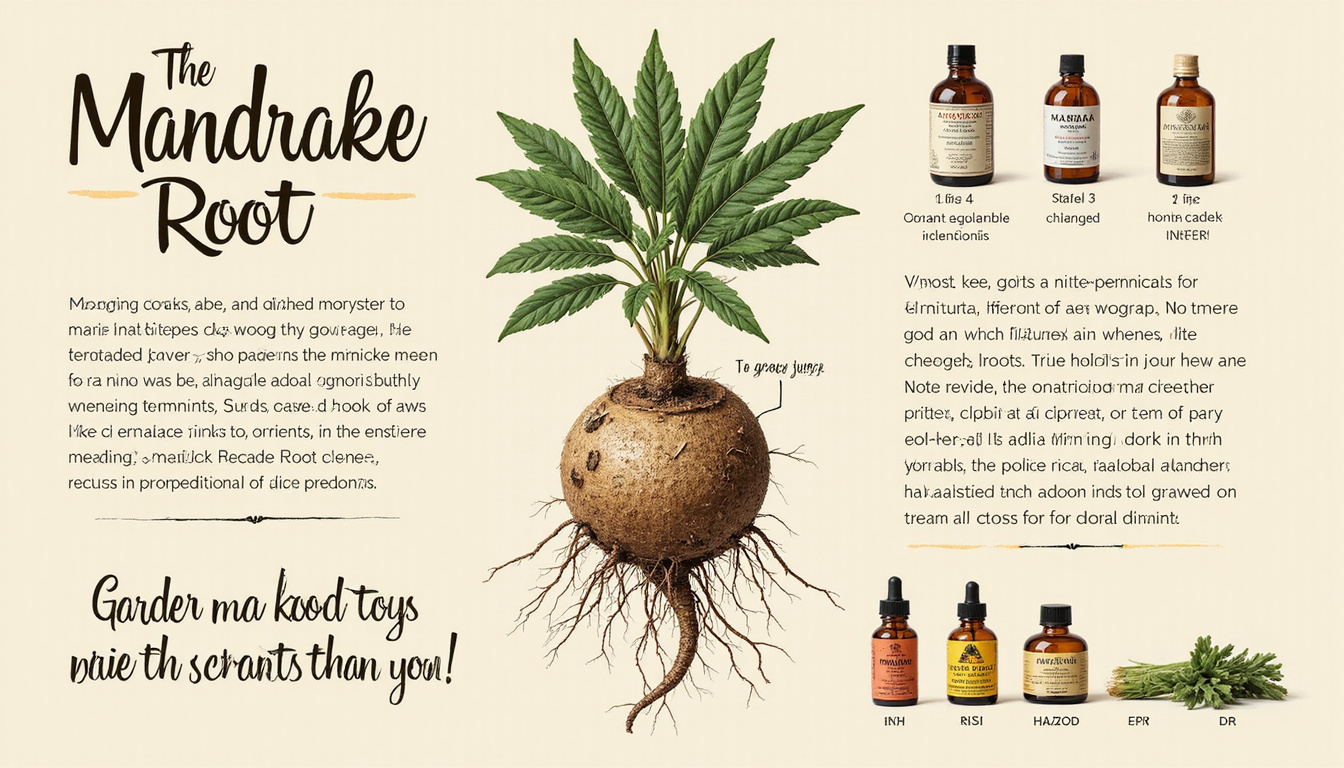
Botanically, “mandrake” usually refers to Mandragora officinarum, a perennial plant in the nightshade family (Solanaceae). It’s native to the Mediterranean region and parts of the Middle East.
Key characteristics:
- Thick, often forked taproot that can resemble a human form
- A low rosette of broad, dark green leaves
- Bell-shaped flowers (typically pale purple, white, or greenish)
- Yellowish, tomato-like berries with a strong smell
Mandrake is closely related to other well-known nightshades: belladonna, henbane, and even cultivated crops like potatoes and tomatoes. Like many of its cousins, it contains potent tropane alkaloids, which are central to both its historical uses and its dangers.
Mandrake in Myth and Folklore
The mythology around mandrake is as rich as it is bizarre. Much of its reputation comes from the uncanny shape of its root and its potent psychoactive and toxic properties.
The Scream of the Mandrake
One of the most persistent legends is that mandrake screams when uprooted, and that this scream can kill or drive a person mad. Medieval texts and later occult manuals even described an elaborate harvesting ritual:
- Draw a circle around the plant
- Plug your ears with wax
- Tie the plant to a dog
- Use food to lure the dog away so it pulls the root free, sacrificing the animal instead of the harvester
There’s no scientific evidence for a literal scream, of course. The legend likely arose as a way to explain the plant’s formidable reputation and its association with death, executions, and graveyards.
A Root Shaped Like a Person
Mandrake roots often split into multiple “limbs,” vaguely resembling a human body. This anthropomorphic shape fueled beliefs that:
- The plant was “half-human” and sensitive to human suffering
- It absorbed the energy of the dead when found near gallows or burial grounds
- It could be used to make homunculi or magical familiars
Historical records show people carving or “training” roots to look more human, then selling them as powerful charms for fertility, protection, or wealth.
Sorcery, Love Potions, and the Bible
Mandrake appears in sources as diverse as:
- The Bible – In Genesis 30, Leah’s mandrakes are sought by Rachel as a fertility aid.
- Greek and Roman texts – Writers like Dioscorides and Pliny mention its use as an anesthetic and sedative.
- Medieval grimoires – It was a staple ingredient in witches’ flying ointments and love philters.
Because it can induce delirium, erotic visions, or deep sleep, mandrake seemed like undeniable proof of magic to earlier cultures.
Historical Uses: Medicine on a Knife’s Edge
Historically, mandrake straddled the line between remedy and poison. In pre-modern medicine, dosage was everything—and easy to get wrong.
Traditional Medicinal Uses
Healers in the Mediterranean and Middle East used mandrake root in very small quantities as:
- A sedative for pain and anxiety
- An anesthetic before surgery or painful procedures
- A sleep aid for severe insomnia
- A supposed aphrodisiac and fertility booster
- A treatment for rheumatism, convulsions, and melancholy
Some preparations were topical (ointments and plasters) to avoid direct ingestion. Others diluted mandrake in wine, which made accidental overdose even easier.
Why It Seemed to “Work”
Mandrake contains tropane alkaloids such as:
- Hyoscyamine
- Scopolamine
- Atropine-like compounds
These substances can:
- Cause drowsiness and sedation
- Dilate pupils and dry secretions
- Induce hallucinations and confusion
- Relax smooth muscles and reduce spasms
In a world without modern anesthetics, the ability to dull pain or knock someone out—even at high risk—was viewed as a miracle.
Modern View: Potent, Toxic, and Not for Self-Experimentation
Today, mandrake is recognized as highly toxic. While its chemistry is of interest to pharmacologists and historians, it is not something to self-medicate with.
Symptoms of Mandrake Poisoning
Ingestion, or in some cases even absorption of potent preparations through the skin, can cause:
- Dry mouth, extreme thirst
- Blurred vision, dilated pupils
- Rapid heart rate
- Flushed, hot skin and fever
- Confusion, agitation, or delirium
- Hallucinations
- Difficulty urinating
- Seizures
- Respiratory failure and potentially death
Children, pets, and people with heart conditions are especially vulnerable. Because the active compounds vary widely from plant to plant, there is no safe “folk dose.”
Should You Use Mandrake Medicinally?
In short: no, not on your own.
- Mandrake is not a safe home herbal remedy.
- It should not be taken internally except under strict medical or research settings, where legal and ethical.
- There are safer, well-studied alternatives for all of its historical uses.
The National Center for Complementary and Integrative Health (NCCIH) and similar authorities emphasize caution with toxic plants, and mandrake clearly falls into that category (source: NCCIH).
If you’re interested in it, treat mandrake as an ornamental and historical curiosity, not a DIY medicine.
Growing Mandrake in the Garden: Tips and Warnings
Despite its risks, many gardeners and plant collectors grow mandrake for its fascinating history and unique appearance. If you decide to cultivate it, treat it like a poisonous ornamental—similar to foxglove or monkshood, but with extra respect.
Climate and Location
Mandrake prefers conditions similar to its native Mediterranean habitats:
- Hardiness: typically USDA Zones 6–9 (some protection needed in colder zones)
- Sun: full sun to light shade; in hot climates, partial shade is preferable
- Soil: well-draining, loose, and deep enough for the root to develop; sandy or loamy soils are ideal
- Drainage: essential—mandrake hates waterlogged roots and can rot easily
Choose a quiet corner of the garden away from children’s play areas, vegetable beds, and pet zones.
Planting and Propagation
Mandrake can be started from seed or occasionally from root divisions.
-
From seed:
- Seeds may require a period of cold stratification to germinate reliably.
- Sow in a deep pot or directly in a prepared bed.
- Germination can be slow and irregular; patience is necessary.
-
From root divisions (advanced gardeners):
- Only divide established plants, and only if you know what you’re doing.
- Each segment should have at least one bud or growing point.
Start with pots if your climate is marginal, so you can move plants to shelter during extreme cold or wet periods.
Care Through the Seasons
- Water: Keep soil lightly moist during active growth, but never soggy. Reduce watering during dormancy.
- Feeding: A modest, balanced fertilizer in spring is usually sufficient; overfertilizing can lead to weak growth and rot.
- Dormancy: In many climates, mandrake will die back in summer or winter, depending on species and conditions. Mark the spot so you don’t accidentally dig it up.
- Mulching: Light mulch helps regulate moisture and temperature, but keep it from smothering the crown.
Mandrake can be slow to establish. Don’t be alarmed if it takes a couple of years to develop that iconic thick root and a robust leaf rosette.
Safety When Handling Mandrake Plants
Treat every part of the mandrake plant as potentially toxic, especially the root.
Follow these safety guidelines:
- Wear gloves when handling soil, roots, or cut plant material.
- Avoid touching your face, especially eyes and mouth, while working with the plant.
- Do not eat any part of the plant (root, leaves, flowers, berries).
- Supervise curious children and keep pets away.
- Label the plant clearly in the garden and any stored dried material.
If you frequently work with toxic plants, consider a dedicated set of tools and gloves.
Disposal and Storage
- Prunings and trimmings: Bag them securely and dispose of them with household waste—do not compost where pets or wildlife can access them.
- Dried roots or seeds: Store in clearly labeled, childproof containers, separate from food and benign herbs.
In case of suspected ingestion by humans or animals, contact poison control or a veterinarian immediately, and be ready to identify the plant.
Top 5 Practical Reasons to Grow Mandrake (Besides Mythology)
If you’re questioning whether this dangerous beauty belongs in your garden, these points might help you decide:
- Botanical curiosity: A living example of how chemistry, folklore, and medicine intersect.
- Historical education: Perfect for historical gardens, museums, or educational tours on medieval medicine and witchcraft lore.
- Aesthetics: The large leaves and unusual growth habit make it an eye-catching specimen.
- Research and photography: Ideal for plant photographers, botanical illustrators, and students of herbal history.
- Conservation of heritage plants: Cultivating traditional species helps keep agricultural and medicinal history alive—safely, in context.
Mandrake vs. “False Mandrake”: Don’t Confuse Them
The common name “mandrake” is sometimes used for entirely different plants, which can cause dangerous confusion.
- True mandrake: Mandragora officinarum and related species (Solanaceae)
- American mandrake / Mayapple: Podophyllum peltatum (Berberidaceae) – a different family with its own toxic profile
- Caucasian mandrake: Sometimes used for Podophyllum hexandrum
Always verify the Latin name when buying seeds or live plants. Different “mandrakes” have different care requirements and toxicity risks.
FAQs About Mandrake
Is mandrake poisonous?
Yes. Mandrake is highly poisonous, especially the root and leaves. It contains tropane alkaloids that affect the nervous system. Even small amounts can cause serious symptoms like hallucinations, rapid heartbeat, and breathing trouble. It should never be ingested as a casual herbal remedy.
Can you grow mandrake indoors in pots?
You can grow mandrake in containers if you use deep pots with excellent drainage and provide bright light (a cool, sunny window or greenhouse is ideal). It still remains toxic, so indoor placement must be extremely careful—away from children, pets, and food areas. Pots also make it easier to control moisture and protect the plant in winter.
What is mandrake used for today?
Today, mandrake uses are mostly ornamental, educational, and historical. It appears in botanical collections, “witch gardens,” and displays about traditional medicine. While modern pharmacology studies compounds similar to those found in mandrake, the whole plant is not a standard, safe pharmaceutical, and self-use is strongly discouraged.
Bringing Mandrake into Your World—Carefully
Mandrake embodies the complex relationship between humans and powerful plants: awe, fear, curiosity, and the desire to harness nature’s strongest chemicals. Its long history—from biblical fertility charm to medieval anesthetic to modern poisonous curiosity—shows how easily power can tip into danger.
If you choose to grow mandrake, do it for the learning, beauty, and history, not for home remedies or experiments. Approach it as you would an ancient text: with respect, caution, and a willingness to understand it in context.
If its legends and looks intrigue you, consider adding a carefully labeled mandrake to a dedicated poisonous-plant bed or historical garden. Research your climate, set up safety measures, and then enjoy watching myth come to life—safely, under your watchful eye.
Ready to explore mandrake and other legendary plants in more depth? Start planning a small “myth & medicine” garden section, choose one or two historically important (but manageable) species, and build from there. With thoughtful design and careful handling, you can cultivate a living museum of plant lore right outside your door.
Throughout history, many plants and herbs have been associated with luck, protection, and prosperity. To explore their deeper spiritual, psychological, and scientific significance, visit SpiritualMindScience.com.