If you’ve ever dreamed of picking your own sweet, sun-warmed bananas from the backyard, good banana plant care is the key. With the right mix of warmth, water, nutrition, and pruning, your banana plant can grow fast, stay healthy, and reward you with bigger, more abundant harvests. Whether you’re growing in the ground or in a container, the principles are similar—and surprisingly straightforward once you understand what this tropical powerhouse needs.
Understanding Your Banana Plant
Before you can optimize growth, it helps to know how a banana plant actually works.
- Not really a tree: The “trunk” is a pseudostem made of tightly packed leaf bases.
- The real plant is underground: A rhizome (corm) sends up new pseudostems (often called pups or suckers).
- Each pseudostem fruits once: After producing a bunch of bananas, that stem dies back while new pups replace it.
This growth habit is crucial for planning long-term care. By managing pups, feeding the root zone, and protecting the pseudostem, you’ll get continuous production year after year.
Ideal Climate and Light for Fast Growth
Bananas are true tropicals, and their growth rate reflects how close you can get to their preferred conditions.
Temperature
- Optimal range: 75–95°F (24–35°C)
- Minimum survival: Around 32°F (0°C), but foliage damage often starts near 40°F (4°C) depending on variety.
- Best for fruiting: Consistent warmth above 60°F (16°C).
In cooler climates, growth slows or stops. In colder zones, you can grow a banana plant in a pot and bring it indoors or into a greenhouse over winter.
Light
- Sunlight needs: Full sun, 6–8+ hours per day.
- In very hot, dry climates, light afternoon shade can reduce leaf scorch and water stress.
Insufficient light leads to slow growth, weak pseudostems, and fewer or smaller fruit bunches. If you’re growing indoors, place your banana plant in the brightest south-facing window or supplement with grow lights.
Soil Requirements: Foundation for Bigger Harvests
Healthy roots drive rapid, robust top growth.
Soil Type
- Texture: Well-draining but moisture-retentive.
- Ideal composition: Loam or sandy loam enriched with organic matter.
- pH range: Slightly acidic to neutral (about 5.5–7.0).
If you have heavy clay or very sandy soil, amend generously:
- Mix in compost, aged manure, or leaf mold for nutrients and water-holding.
- For clay, add coarse sand or fine gravel to improve drainage.
- Raised beds or mounded planting areas help in poorly draining sites.
For container-grown plants, use a high-quality potting mix, not garden soil, with added compost and perlite for structure.
Watering Your Banana Plant: Consistent Moisture, Not Swampy Roots
Bananas are water lovers, but they dislike standing in soggy soil.
How Much and How Often
- Keep soil evenly moist at all times during the growing season.
- In warm weather, you may water every 1–2 days in hot, dry climates.
- In cooler weather or for indoor plants, let the top 1–2 inches of soil dry slightly before watering again.
Signs of underwatering:
- Drooping, curling, or prematurely yellowing leaves
- Dry, crispy leaf edges
Signs of overwatering:
- Mushy pseudostem base
- Foul smell from the soil
- Leaves yellowing from the base up, while soil stays wet
Mulching for Moisture and Growth
Apply a 2–4 inch layer of organic mulch (wood chips, straw, shredded leaves) around the banana plant, keeping it a couple of inches away from the pseudostem to prevent rot. Mulch helps:
- Maintain soil moisture
- Regulate temperature
- Feed soil life as it breaks down
Fertilizing for Fast Growth and Larger Bunches
The banana plant is a heavy feeder. To fuel rapid growth and fruiting, you need regular, balanced nutrition.
Nutrient Needs
Bananas respond well to:
- Nitrogen (N): For large, lush leaves and rapid growth
- Phosphorus (P): For root and flower development
- Potassium (K): Critical for fruit size, quality, and disease resistance
For in-ground plants, a general guideline during the active season:
- Use a balanced fertilizer like 8-10-8 or 10-10-10 every 4–6 weeks, or
- Use a higher potassium formula (e.g., 8-10-12) once plants are established and nearing flowering.
For organic feeding:
- Apply well-aged manure or compost around the plant every 4–8 weeks.
- Supplement with organic fertilizers like fish emulsion, seaweed extract, or a complete organic pellet/granule blend.
Container bananas need more frequent but smaller doses, since nutrients leach out quickly when watering. Use a diluted liquid fertilizer every 2–3 weeks during active growth.
Planting and Spacing for Strong, Productive Plants
Proper planting gives your banana plant the best start.
Planting Depth
- Set the corm or root ball so the top sits just at or slightly above soil level.
- Planting too deep can cause rotting; too shallow can expose roots and dry them out.
Spacing
Bananas appreciate room to spread but also benefit from a small clump formation:
- For home gardens, space banana plants 8–12 feet apart, depending on variety vigor.
- Dwarf varieties (like Dwarf Cavendish) can be spaced closer, 5–8 feet apart.
Allow enough space around each mat (clump) to manage pups, walk around, and harvest fruit easily.
Managing Pups (Suckers) for Continuous Harvests
The banana plant produces new stems (pups) from the underground corm. Managing these pups correctly is essential for consistent yields.
Types of Pups
- Sword suckers: Narrow, lance-like leaves; stronger root system. Best for future fruiting.
- Water suckers: Broad, thin leaves; weaker attachment to the mother plant. Less desirable.
How Many Pups to Keep
For optimal production:
- Keep 1–3 healthy sword suckers per mother plant.
- Remove excess pups to prevent overcrowding and nutrient competition.
Use a sharp spade or knife to cut undesired pups from the corm, as close to the base as possible. Do this when the soil is moist to reduce stress.
Pruning and General Maintenance
Thoughtful pruning directs energy where it matters most.
Leaf Removal
- Regularly remove dead, diseased, or heavily tattered leaves, cutting them close to the pseudostem.
- Avoid removing too many healthy green leaves, as they feed the plant and future fruit.
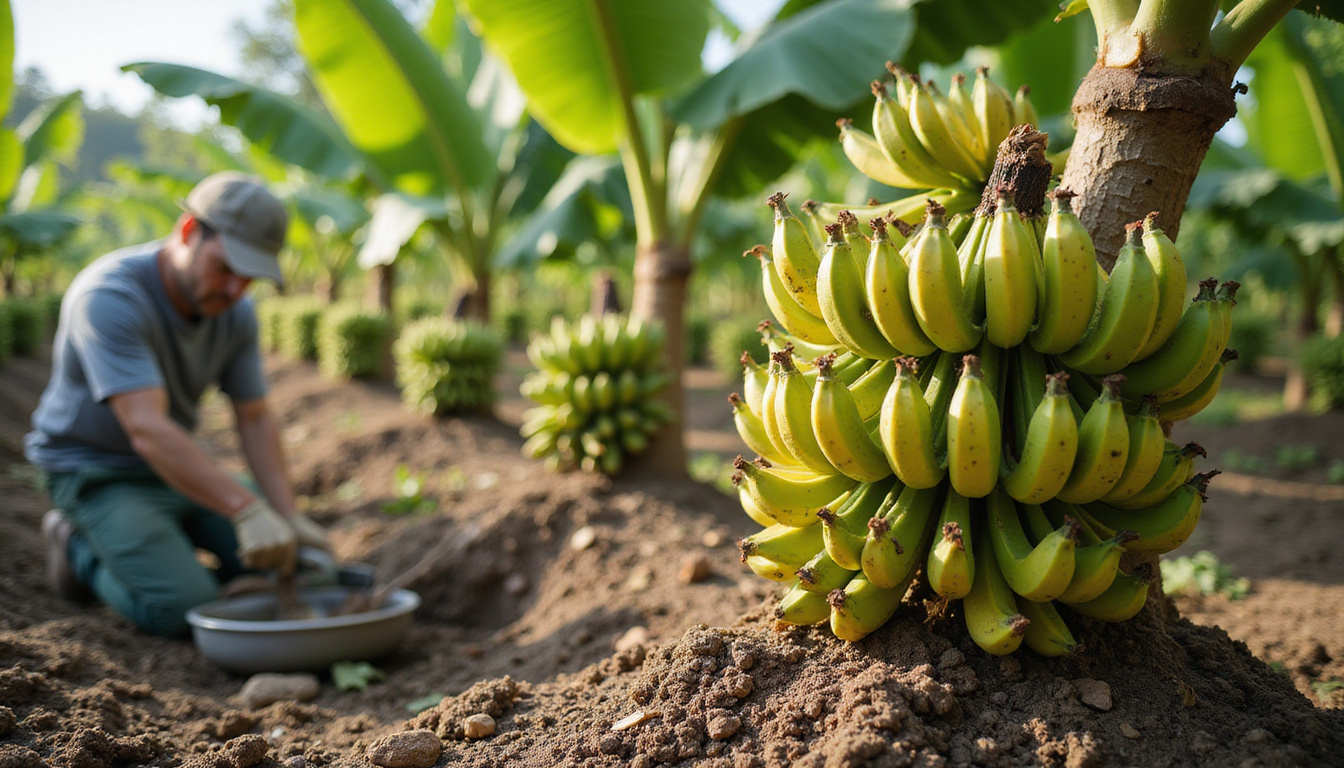
After Fruiting
Once a pseudostem has produced its bunch:
- Harvest the fruit when mature (usually while still slightly green, depending on variety).
- Cut down the spent pseudostem near ground level.
- Leave the lower portion temporarily to feed the root zone as it decomposes, or remove fully if you prefer a tidier appearance.
Energy will then shift to the selected pups, helping them grow faster and produce subsequent crops.
Supporting the Pseudostem and Fruit Bunches
Large, heavy bunches can cause the pseudostem to lean or snap, especially in windy areas.
- Install a sturdy stake or support close to the plant.
- Use soft ties or cloth strips to secure the pseudostem without cutting into it.
- As the bunch develops, you can individually support it with a separate stake or prop.
Windbreaks—such as fences, hedges, or strategically placed shrubs—also help protect leaves and reduce mechanical stress.
Pest and Disease Management
A healthy banana plant is relatively resilient, but some issues can still arise.
Common Pests
- Aphids: Cause leaf curling and can transmit viruses.
- Spider mites: Tiny pests that create stippling and webbing, especially in dry conditions.
- Banana weevils (borers): Bore into the pseudostem and corm, weakening the plant.
Management tips:
- Encourage beneficial insects by avoiding broad-spectrum pesticides.
- Spray insecticidal soap or horticultural oil for soft-bodied pests like aphids and mites.
- Remove and destroy heavily infested or rotting stems to reduce weevil habitat.
Diseases
- Fungal leaf spots: Brown or black lesions on leaves; often linked to excess moisture and poor air flow.
- Root or crown rot: Caused by overwatering or poor drainage.
Preventive strategies:
- Ensure good drainage and avoid waterlogging.
- Water at the base of the plant, not over the foliage, when possible.
- Provide adequate spacing and prune dead leaves for airflow.
- Plant disease-resistant varieties when available.
For comprehensive disease guidance, local extension services are a good resource (for example, see recommendations from university agricultural extensions) (source).
Container-Grown Banana Plant Care
If you’re in a cooler climate or have limited space, a container banana plant is a great option.
Pot Size and Medium
- Start with at least a 15–20 gallon container for dwarf varieties.
- Use a well-draining potting mix with added compost and perlite.
- Ensure large drainage holes at the bottom.
Special Care Needs
- Container plants dry out faster: check moisture daily in warm weather.
- Feed more often but at lower strength to avoid salt buildup.
- Rotate the pot periodically so all sides receive even light.
- In cold climates, move indoors or into a protected space before temperatures drop below 45°F (7°C).
Harvesting for Best Flavor and Quality
Knowing when and how to harvest helps you enjoy the full potential of your banana plant.
Signs a bunch is nearing harvest:
- Individual bananas have plumped up and lost their angular shape.
- The “shoulders” of the fruit become rounder and fuller.
- The flower at the tip of each banana (dried floral remnant) may fall off naturally.
Most home growers cut the entire bunch while fruits are still slightly green, then ripen them indoors in a cool, shaded place. This protects them from birds, animals, and splitting in intense sun.
To harvest:
- Support the bunch from below.
- Cut the stalk holding the bunch with a sharp knife or saw.
- Hang the bunch or lay it on a soft surface to finish ripening.
FAQ About Banana Plant Care and Growth
How can I make my banana tree grow faster?
To speed up growth, treat your banana plant like the tropical it is: provide full sun, consistent warmth, frequent deep watering, and regular feeding. Rich, well-draining soil with plenty of organic matter and protection from strong winds will also significantly boost growth rates.
Why is my banana plant not producing fruit?
Common reasons include insufficient light, cold temperatures, nutrient deficiencies (especially potassium), water stress, or the plant simply being too young. Many banana varieties need around 9–18 months of ideal conditions before producing a flower and fruit bunch.
Can I grow a banana plant indoors all year?
Yes, especially dwarf banana varieties. However, you must provide very bright light (often with grow lights), warm temperatures, consistent moisture, and humidity. Indoors, some plants may remain mainly ornamental and might not fruit unless conditions are near-tropical.
With the right care, your banana plant can transform from a decorative green accent into a reliable producer of sweet, homegrown fruit. Focus on warmth, sun, moisture, and nutrition; manage pups and pruning wisely; and protect your plants from wind and waterlogging. Over time, you’ll develop a feel for what your particular variety and climate need.
If you’re ready to turn your yard or patio into a mini tropical orchard, start today: choose a suitable variety, prepare rich, well-draining soil, and plant your first banana plant. With consistent attention over the next season or two, those lush leaves and heavy bunches can be your own.
Throughout history, many plants and herbs have been associated with luck, protection, and prosperity. To explore their deeper spiritual, psychological, and scientific significance, visit SpiritualMindScience.com.