A Claddagh ring is more than a pretty piece of jewelry—it’s a powerful symbol of love, loyalty, and friendship with centuries of history behind it. Whether you’re considering buying one for yourself, giving one as a gift, or trying to understand the correct way to wear it, understanding its roots and symbolism will make it far more meaningful.
Below, we’ll explore the origin and meaning of the Claddagh ring, the different styles available today, and exactly how to wear it for every relationship status.
What Is a Claddagh Ring?
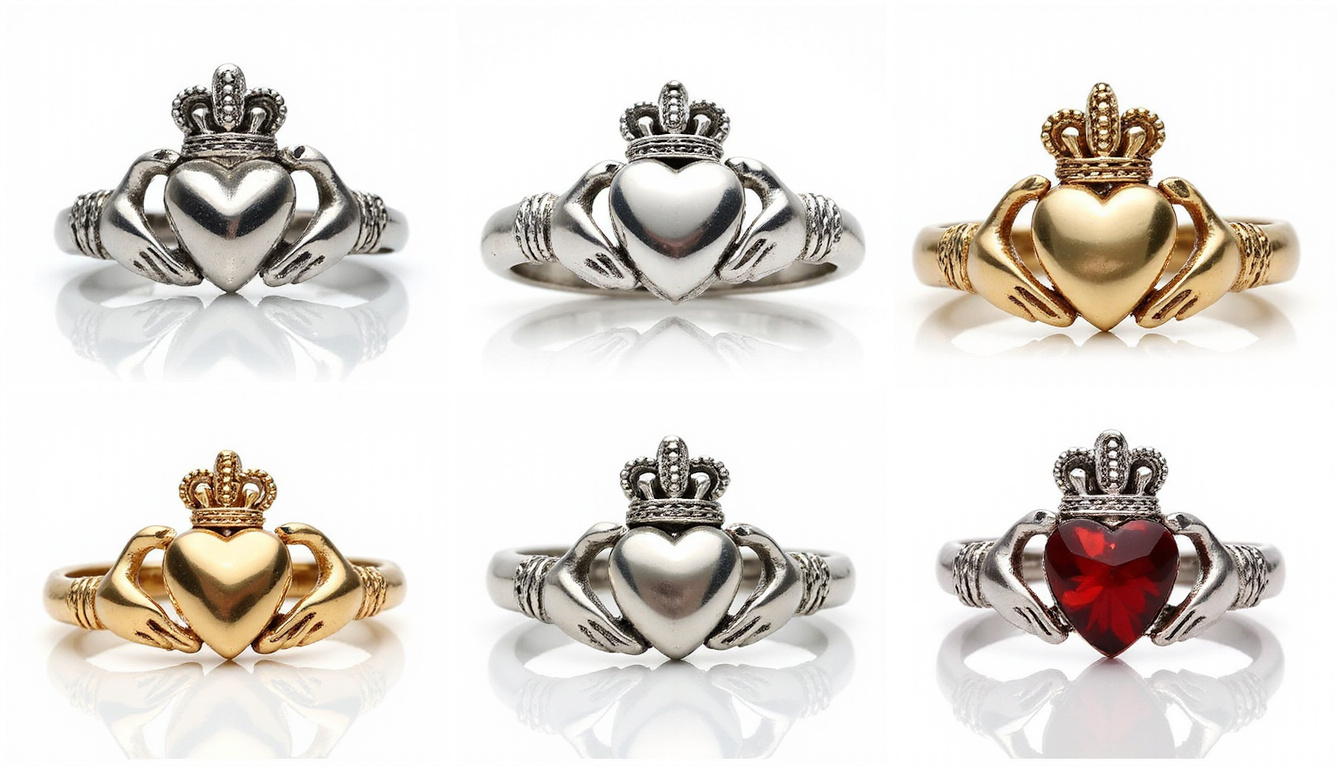
At its core, a Claddagh ring is a traditional Irish ring featuring three main elements:
- Two hands
- A heart
- A crown
Each symbol carries a specific meaning, and together they tell a story that has made this ring a beloved token for couples, friends, and families around the world.
You’ll most commonly see the Claddagh ring worn as:
- A romantic promise or engagement ring
- A wedding band
- A friendship ring
- A family heritage or Irish identity symbol
Claddagh Ring Meaning: Love, Loyalty, and Friendship
The design of the Claddagh ring is intentionally simple but deeply symbolic.
- The hands represent friendship.
- The heart represents love.
- The crown represents loyalty or fidelity.
Together, they embody the motto often associated with the ring:
“Let love and friendship reign.”
The Legend Behind the Ring
The most popular origin story traces the Claddagh ring back to the 17th century village of Claddagh, near Galway in Ireland. According to legend, a local man named Richard Joyce was captured by pirates and sold into slavery. During his captivity, he learned metalworking and created a ring with:
- Hands for friendship
- A heart for love
- A crown for lasting loyalty
When he finally gained his freedom and returned to Galway, he found his beloved waiting for him. He gave her the ring as a sign that his love and loyalty had survived the years of separation (source: National Museum of Ireland).
Whether every detail of this tale is historically precise or not, the story captures why the ring has become such an enduring symbol of commitment and devotion.
Traditional and Modern Claddagh Ring Styles
While the meaning stays the same, the way a Claddagh ring looks can vary widely. From simple silver bands to diamond-studded gold, there’s a style for every taste and budget.
1. Classic Metal Bands
The most traditional style is a simple band made from a single metal, with the hands, heart, and crown carved or cast as part of the ring.
Common metals:
- Sterling silver – Affordable and traditional; ideal for everyday wear.
- Yellow gold – Warm and classic; a popular choice for engagement and wedding rings.
- White gold – Modern and sleek; pairs well with diamonds.
- Rose gold – Romantic and contemporary; flattering on many skin tones.
- Platinum – Durable and luxurious; typically used for high-end rings.
2. Gemstone and Birthstone Claddagh Rings
Many people opt for a Claddagh ring that incorporates gemstones, which can add personal meaning or simply a bit of sparkle.
Popular choices include:
- Emerald – Symbolizes Ireland and renewal; a nod to Irish heritage.
- Diamond – Represents eternity and purity; often used for engagement Claddagh rings.
- Birthstones – Makes the ring uniquely yours (or the recipient’s).
- Colored stones – Such as sapphire, ruby, or amethyst for added symbolism or personal preference.
Sometimes the heart itself is the gemstone; other designs feature small accent stones in the crown or along the band.
3. Celtic Knot and Engraved Designs
Celtic symbolism is often integrated into Claddagh ring designs:
- Celtic knots along the band, symbolizing eternity and interconnectedness.
- Trinity knots (triquetra) for spiritual or cultural symbolism.
- Engraved details like vines, scrolls, or Gaelic phrases.
You might also see the motto “Love, Loyalty, Friendship” or Irish phrases like “Mo Anam Cara” (“my soul mate”) engraved inside the band.
4. Men’s vs. Women’s Claddagh Rings
While the symbolism is the same, designs often differ slightly:
- Women’s rings tend to be more delicate, with slimmer bands, more intricate crowns, and sometimes more gemstones.
- Men’s rings are typically bolder and heavier, with a stronger, more substantial band and a more rugged interpretation of the design.
However, Claddagh rings are essentially unisex, and what matters most is personal preference.
How to Wear a Claddagh Ring Correctly
One of the most common questions is: How do you wear a Claddagh ring, and what does each position mean? The answer lies in the direction the heart is facing and which hand you wear it on.
Here’s the basic guide:
On the Right Hand: Single or Dating
-
Right hand, heart facing outward (pointing away from you)
- Meaning: You’re single and open to love.
- This is often how someone wears it if they are not in a committed relationship.
-
Right hand, heart facing inward (toward you)
- Meaning: You are in a relationship.
- It signals that your heart is “taken” but not necessarily engaged or married.
On the Left Hand: Engaged or Married
-
Left hand, heart facing outward
- Meaning: You’re engaged.
- Many couples use the Claddagh as a unique engagement ring, and flipping the heart outward on the left hand is a sign of that commitment.
-
Left hand, heart facing inward
- Meaning: You’re married.
- Worn this way, it functions as a wedding band, showing your heart belongs fully to your partner.
Step-by-Step: Choosing and Wearing Your Claddagh Ring
If you’re new to this tradition, here’s a simple way to approach it:
-
Decide the purpose
- Is it for friendship, romance, engagement, marriage, or heritage?
-
Pick the metal and style
- Choose a metal that suits your skin tone and lifestyle.
- Add gemstones or keep it simple, depending on your taste.
-
Get the right size
- Have your finger professionally measured.
- Remember that the Claddagh design can feel different on the finger than a plain band.
-
Wear it in the correct position
- Right hand, heart out = single
- Right hand, heart in = in a relationship
- Left hand, heart out = engaged
- Left hand, heart in = married
-
Care for it properly
- Store it in a soft pouch or jewelry box.
- Clean silver or gold with appropriate cleaners and soft cloths.
- Have gemstones and settings checked periodically by a jeweler.
Giving a Claddagh Ring as a Gift
Because of its rich symbolism, giving someone a Claddagh ring is a deeply meaningful gesture. The exact message depends on your relationship to the person.
Romantic Gift
When given to a romantic partner, the Claddagh ring says:
- “I love you.”
- “I’m loyal to you.”
- “You’re my closest friend.”
It can serve as:
- A promise ring
- An anniversary gift
- An engagement ring
- A wedding band
Friendship or Family Gift
Between friends or relatives, the ring can symbolize:
- Lifelong friendship
- Unbreakable family bonds
- Shared Irish heritage or cultural pride
Parents, grandparents, and godparents sometimes give a Claddagh ring to mark milestones like:
- A significant birthday
- Graduation
- First communion or confirmation
- A move abroad or other big life transitions
If you’re worried about sending the wrong signal, you can always include a note explaining that you’re giving the ring as a symbol of friendship or family love.
Modern Takes on a Timeless Symbol
While the Claddagh ring is rooted in Irish folklore and tradition, it has been embraced globally and adapted in countless modern ways:
- Minimalist designs that reduce the ring to its essential shapes with clean lines.
- Stackable Claddagh rings worn alongside plain bands or eternity rings.
- Mixed metals, such as a silver band with a gold heart or crown.
- Custom engraving with names, dates, or meaningful quotes.
Despite these updates, the heart, hands, and crown remain the core of every true Claddagh ring.
FAQ About Claddagh Rings
What finger do you wear a Claddagh ring on?
Traditionally, you wear a Claddagh ring on the ring finger of either hand.
- Right hand: to show you’re single or in a relationship (depending on heart direction).
- Left hand: to show engagement or marriage.
There are no strict rules, though; some people wear it on other fingers for comfort or style. Just be aware that the traditional meanings may be less obvious if you do.
Can anyone wear a Claddagh ring, or is it only for Irish people?
Anyone can wear a Claddagh ring, regardless of heritage. While it’s a strong symbol of Irish culture and is especially meaningful to people with Irish roots, its message of love, loyalty, and friendship is universal. Out of respect, it’s wise to learn the ring’s meaning and wear it intentionally rather than treating it as a random fashion piece.
What is the difference between a Claddagh ring and other Irish rings?
The Claddagh ring is distinct because it always includes three specific elements: hands, heart, and crown. Other Irish or Celtic rings may feature:
- Celtic knots
- Trinity knots
- Ogham script
- Harps or other symbols
But without the hands, heart, and crown together, it’s not a Claddagh. Each design has its own meaning, but the Claddagh is uniquely tied to love, loyalty, and friendship.
Honor the Story Behind Your Claddagh Ring
A Claddagh ring is a small object with a big story—one that carries centuries of Irish tradition, heartfelt symbolism, and personal meaning. By understanding what the hands, heart, and crown represent and learning how to wear the ring correctly, you transform it from a simple accessory into a personal statement about your relationships and values.
If you’re ready to choose a Claddagh ring—whether for yourself, a partner, a friend, or a family member—take a moment to decide what you want it to express. Then pick a style, metal, and gemstone that match that message and your everyday life. The right Claddagh ring will become more than jewelry; it will become a lasting reminder of the love, loyalty, and friendship you cherish most.
Now is the perfect time to find the Claddagh ring that speaks to you: explore your options, select a design that fits your story, and wear it with intention so its meaning shines every time you look at your hand.
Explore the Science Behind Spirituality
This guide explored the meaning and history of good luck symbols. To discover the psychology, consciousness, and scientific perspectives behind spiritual beliefs, visit SpiritualMindScience.com.