The ankh is one of the most recognizable and enduring symbols from ancient Egypt. Often called the “key of life” or “cross of life,” it appears in temple carvings, tomb paintings, and jewelry spanning thousands of years. But what does this enigmatic sign really mean, and why does it still captivate people who seek spiritual power and protection today?
In this guide, you’ll discover the deeper secrets of the ankh, its origins, spiritual interpretations, and how people now use it for personal empowerment, healing, and energetic protection.
What Is the Ankh?
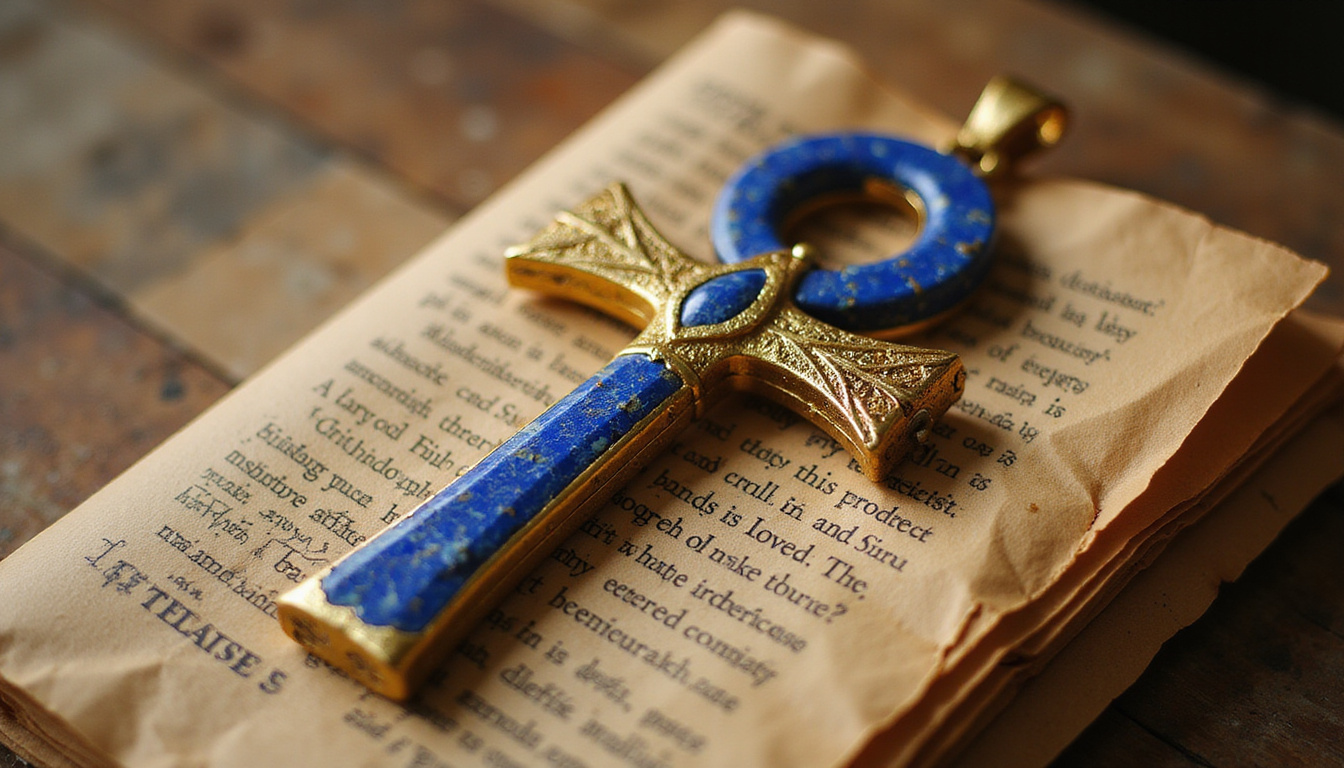
At first glance, the ankh looks like a cross with a loop instead of a top bar. Its shape is simple yet loaded with layered symbolism:
- An oval or loop at the top
- A vertical stem descending from the loop
- A horizontal bar crossing the stem just below the loop
In ancient Egyptian art, the ankh is often held by gods and goddesses, pharaohs, and revered figures. It frequently appears near the nose or mouth of a person or deity, as if it’s being offered like a breath or essence. This visual clue points to its primary meaning: life.
Egyptologists generally agree that the ankh symbol stands for:
- Life
- Vitality and health
- Eternal existence or immortality
- The life-giving power of the gods
The hieroglyph itself is a word sign meaning “life” (ꜥnḫ), and it appears in countless inscriptions related to divine blessings and royal power (source: The British Museum).
Origins and History of the Ankh
The exact origin of the ankh is still debated, but several theories offer compelling possibilities:
1. Key of the Nile Theory
Some scholars suggest the ankh may represent the Nile River and its life-giving floods:
- The loop: the Nile Delta
- The vertical bar: the Nile flowing south to north
- The crossbar: the junction of river and land
Because the Nile’s annual flooding literally meant life or death for Egypt, a symbol connected to it would naturally be associated with life, fertility, and prosperity.
2. Knot or Sandal Strap Theory
Another theory proposes that the ankh began as a stylized knot or sandal strap. In hieroglyphs, a very similar sign represents a sandal strap and carries ideas of binding, connection, and movement. Over time, this could have evolved into a more abstract symbol of the bond between the physical and spiritual worlds.
3. Union of Masculine and Feminine
Esoteric traditions and later spiritual interpretations often see the ankh as a union of masculine and feminine energies:
- The loop: the womb or feminine principle
- The vertical bar: the masculine principle
- The crossbar: the meeting point, balance, or union
From this perspective, the ankh becomes a symbol not just of biological life, but of creative power, balance, and wholeness.
The Ankh in Ancient Egyptian Spirituality
To the ancient Egyptians, life was not limited to physical existence. It extended into the afterlife, where the soul could thrive if properly prepared and protected.
Ankh as Breath of Life
In temple and tomb art, gods are frequently shown holding the ankh to:
- The mouth or nose of a pharaoh or deceased person
- Their own lips, symbolically “drinking” or “breathing” life
This gesture suggests the ankh is a kind of spiritual key or channel through which divine life-force flows. It symbolized:
- Receiving divine energy
- Being sustained by the gods
- The transfer of power and vitality
Ankh, Djed, and Was: The Sacred Trio
The ankh often appears alongside two other powerful symbols:
- Djed pillar – stability and endurance
- Was scepter – power and dominion
Together, these three created a kind of sacred triad:
- Ankh – life
- Djed – stability of that life
- Was – authority and direction of life
This combination reinforced the idea that true power included not just control or force, but enduring life and balance.
Symbol of Eternal Life and Afterlife
Placed in tombs, painted on sarcophagi, or carved into walls, the ankh served as a promise: life would continue beyond death. It was a visual assurance of:
- Rebirth in the afterlife
- Protection on the journey through the underworld
- Connection to the gods who could grant immortality
The Ankh as a Symbol of Protection
While the ankh primarily signified life, it was also deeply tied to protection. In Egypt’s worldview, life and protection were inseparable—what is truly alive must be guarded and preserved.
Protective Amulets
Ancient Egyptians wore ankhs as amulets made from:
- Gold and silver
- Carnelian, lapis lazuli, and other stones
- Faience (a type of glazed ceramic)
These were believed to:
- Ward off harmful forces
- Strengthen the life force of the wearer
- Attract divine favor and guidance
Priests, priestesses, and royalty especially used ankh amulets for spiritual and physical safeguarding.
Symbolic Shield in Art
In temple reliefs, deities like Isis, Osiris, and Ra gift the ankh to pharaohs, symbolizing that:
- The gods guard the ruler
- The king’s authority is divinely protected
- The kingdom itself is under divine watch
In this sense, the ankh acts as a cosmic shield, not by blocking attacks, but by infusing the person or place with higher-order life energy that disorder and darkness cannot easily penetrate.
Modern Spiritual Uses of the Ankh
Today, the ankh has been embraced across cultures, faiths, and spiritual paths as a powerful emblem of life, healing, and protection.
1. Personal Empowerment and Energy Work
People who practice meditation, energy work, or metaphysical traditions often use the ankh to:
- Focus on life-force energy (similar to prana or chi)
- Visualize themselves “breathing in” vitality and clarity
- Anchor a sense of spiritual resilience and protection
Some visualize a glowing ankh at the heart center or above the head, imagining it radiating protective light around the aura.
2. Affirmation of Life and Rebirth
The ankh can serve as a daily reminder that:
- Change is a form of rebirth
- Difficult cycles can lead to new life
- Your inner power is tied to your willingness to grow
People may keep an ankh symbol on an altar, desk, or home entrance as a sign that their space is dedicated to growth, healing, and conscious living.
3. Cultural and Ancestral Connection
For many in the African diaspora and those honoring African spiritual heritage, the ankh symbolizes:
- Connection to ancient African wisdom
- Reclaiming suppressed or overlooked histories
- Pride in a lineage of advanced spiritual and philosophical thought
In this context, wearing or displaying an ankh can be a powerful act of cultural affirmation and remembrance.
How to Use the Ankh in Your Spiritual Practice
You don’t have to follow any specific belief system to draw inspiration from the ankh. You can incorporate it in ways that feel authentic and respectful.
Here are some ideas:
-
Wear an Ankh Pendant or Ring
Use it as a living reminder of your commitment to vitality, protection, and conscious living. Before wearing, you might set a simple intention like: “May this symbol connect me to my highest life force and protect my energy.” -
Meditate with the Ankh
Sit quietly, hold or gaze at an ankh image, and visualize its loop at your crown, its stem aligning with your spine. Imagine life energy flowing through you, clearing fear and filling you with balanced strength. -
Create a Life-Centered Altar
Place an ankh at the center, surrounded by stones, candles, or meaningful objects. Use this space to reflect on where you want more “life” — passion, health, creativity — and to release what no longer supports you. -
Use the Ankh in Affirmations
Pair the symbol with spoken or written affirmations such as:- “I am connected to an endless source of life and renewal.”
- “My life force is protected, strong, and clear.”
- “I honor the sacredness of life in myself and others.”
-
Protective Visualization for Spaces
Visualize an ankhs at the doors and windows of your home, symbolically sealing your space with life-giving, protective energy.
Understanding the Ankh in Relation to Other Crosses
Because of its shape, the ankh is sometimes confused with or compared to the Christian cross. While they share visual similarities, their origins and traditional meanings differ:
- The Christian cross centers on sacrifice, redemption, and resurrection within a specific religious context.
- The ankh centers on life, cosmic order, and divine vitality in ancient Egyptian spirituality.
Over time, some early Coptic Christians in Egypt adopted an ankh-like form called the “crux ansata” (handled cross), merging older visual traditions with new theological meanings. This overlap shows how powerful symbols can evolve and bridge different eras and belief systems.
Quick Reference: Key Meanings of the Ankh
To summarize the layers of the ankh symbol at a glance:
- Life and vitality
- Eternal life and rebirth
- Union of masculine and feminine energies
- Divine protection and guidance
- Bridge between physical and spiritual realms
- Connection to ancient Egyptian and African heritage
FAQ: Ankh Symbol and Its Meanings
Q1: What does the ankh symbolize spiritually?
Spiritually, the ankh symbol represents the flow of divine life-force, the unity of physical and spiritual existence, and the promise of rebirth. It is often used as a sign of protection, inner strength, and connection to higher guidance.
Q2: Is it okay to wear an ankh if I’m not Egyptian?
Many people from diverse backgrounds wear the Egyptian ankh symbol as a sign of honoring life, balance, and ancient wisdom. The key is to approach it with respect, learn its history, and avoid treating it as a trivial fashion trend or stripping it of its cultural roots.
Q3: How is the ankh different from other Egyptian symbols of life?
While other symbols like the scarab beetle or the sun disk also relate to life and rebirth, the ankh sign is unique as a direct hieroglyphic word for “life.” It is more explicitly tied to the gods giving life and is often depicted as a tool or key used by divine beings to transmit vitality and protection.
The ankh has survived thousands of years because its message is timeless: life is sacred, powerful, and worth protecting. Whether you’re drawn to it for spiritual reasons, cultural connection, or personal symbolism, it can be a profound reminder to live more consciously, protect your energy, and stay connected to the deeper currents of existence.
If you feel called to work with this ancient emblem, start today: find or create an ankh that resonates with you, set a clear intention for how you’d like it to support your life, and invite its enduring wisdom into your daily practice. Let the key of life unlock greater clarity, protection, and purpose within you.
Sacred objects often carry deep cultural and spiritual meaning. Learn how these symbols relate to history, spirituality, and the human mind by exploring more articles at SpiritualMindScience.com.